

Trekking and Hiking Trips with Camping - Page 2
Discover the art of carrying your home on your back to better inhabit the world.
They traveled with us
Mélia
- 30 ans
100% Verified Reviews: Only travelers who have booked with us can leave a review. All reviews are subject to human moderation. Reviews that do not comply with the moderation rules are rejected.
october 2026
In a group
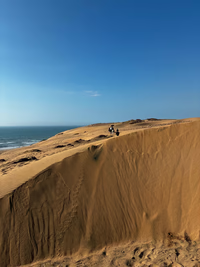
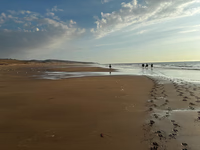
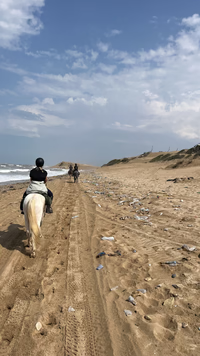
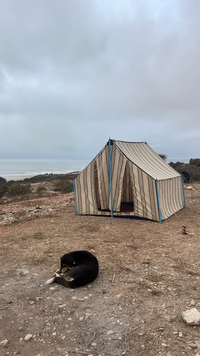
Horseback riding and camping on the Moroccan coast
Cynthia
- 26 ans
100% Verified Reviews: Only travelers who have booked with us can leave a review. All reviews are subject to human moderation. Reviews that do not comply with the moderation rules are rejected.
september 2026
In a group
A bivouac tour of the Cauterets valleys
Alice
- 25 ans
100% Verified Reviews: Only travelers who have booked with us can leave a review. All reviews are subject to human moderation. Reviews that do not comply with the moderation rules are rejected.
september 2026
In a group
Slow bivouacs in the Beaufortain
Frequently Asked Questions
Do you have questions? We have the answers!
Why camp in France?
Bivouacking isn't simply about pitching a lightweight tent haphazardly. It's a way of life in the natural environment, where every detail counts in transforming a night spent outdoors into a true adventure. Many begin with a bivouac initiation before venturing out on the trails for several days. The secret lies in preparation, but also in the ability to embrace minimalism: keeping only the essentials, appreciating the wild beauty around you, and fully enjoying the present moment.
Hiking all day, finding a secluded spot to spend the night, waking up to mountain views or by a lake… That's what backpacking and bivouacking offer. Complete freedom is guaranteed, provided you respect local laws and the areas you visit. The trips offered by Decathlon Travel introduce you to best practices and encourage responsible exploration of breathtaking landscapes.
Bivouac or wild camping: what are the differences?
Bivouacking doesn't mean camping anywhere without restrictions. There's a real distinction between bivouacking and wild camping. The former is synonymous with discretion: a single night, setting up at dusk, leaving at dawn. No permanent structures, only lightweight equipment like a suitable tent or a compact shelter.
Conversely, wild camping refers to the prolonged and often unauthorized setting up of a temporary campsite. Heavily regulated, it can lead to penalties if the law is not respected, particularly in certain national parks. Understanding these nuances allows you to peacefully enjoy the magic of a night under the stars, completely legally.
Where can one officially camp in France?
Regulations concerning bivouacking vary depending on the region and protected area. In many national parks, bivouacking is permitted in designated areas and during specific hours. On private land, obtaining the owner's permission remains essential. Checking with town halls, tourist offices, or the official park websites will help you avoid any unpleasant surprises.
- National parks: strict zones and opening hours
- Public lands: verification of tolerance via municipal decree
- Private land: authorization required
What equipment is essential for a successful bivouac?
A comfortable temporary campsite starts with a lightweight tent that's wind and moisture resistant. Other essentials follow: a self-inflating mattress, a sleeping bag appropriate for the season, a portable stove, and a headlamp. Choosing compact and robust equipment minimizes the weight you have to carry and maximizes comfort on site.
- Lightweight and compact tent
- Sleeping bag suitable for nighttime temperatures
- Self-inflating or foam mattress
- Stove, cooking pot, cutlery
- Headlamp, external battery
- Individual first aid kit
What is the difference between bivouacking and wild camping?
Bivouacking involves setting up a temporary camp for a short period (usually one night), with dismantling in the early hours and no lasting alteration to the environment. Conversely, wild camping refers to the prolonged establishment of a campsite outside of designated areas, often prohibited or heavily regulated. This distinction protects nature, especially in sensitive areas such as national parks.
How to minimize your impact during a bivouac?
Camping in the wilderness means leaving no trace: pack everything away, bury nothing, and use reusable equipment whenever possible. Pitching your tent away from water minimizes disturbance to wildlife. Respecting local fire regulations, keeping noise to a minimum, and using discreet lights all help preserve the tranquility of the site.
- No fires outside the designated area
- Zero single-use plastic
- Set up camp away from the rivers
- Do not disturb the surrounding wildlife.
Where to camp in France? Our recommended spots
Who hasn't dreamed of exploring protected areas, hiking between deep forests and soaring peaks? France is full of perfect spots for a first bivouac experience. Among the must-sees: the Écrins National Park , the Alps , the Vanoise massif, the Cévennes mountain ridges… So many promises of disconnecting and precious moments, far from the crowds, close to the stars.
The wild beaches of Brittany , the Ardèche plateaus, and certain state-owned forests readily welcome adventurers for a night or two. Check locally to identify the best permitted spots, always respecting nature and regulations.