Trips to the Dolomites
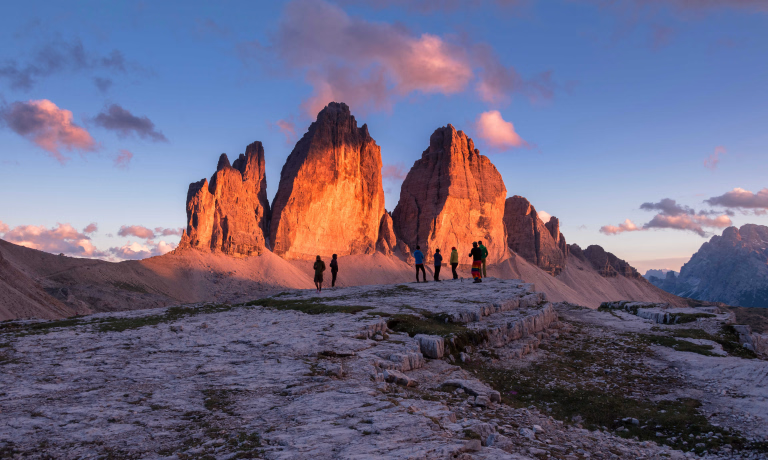
Stays in the Dolomites: get up close to the stone giants and experience the brilliance of the peaks rosy from twilight.
They traveled with us
Frequently Asked Questions
Do you have questions? We have the answers!
Why choose the Dolomites for your next sports holiday?
The Dolomites, a UNESCO World Heritage Site, are renowned for their exceptional natural beauty. Nicknamed the "pale mountains," they offer a striking spectacle, especially at sunrise and sunset, when their imposing peaks take on a reddish hue, a phenomenon known as Enrosadira.
This mountainous region, with its vertical walls, steep cliffs and numerous deep valleys, is a true paradise for nature lovers and outdoor enthusiasts.
What are the main iconic mountains?
The Tre Cime di Lavaredo (Three Peaks of Lavaredo) is undoubtedly the most recognizable symbol of the Dolomites. These three majestic peaks, a UNESCO World Heritage Site, offer breathtaking scenery and are accessible via a relatively easy hike. The more adventurous can even spend the night in one of the nearby mountain huts, such as the Rifugio Locatelli, to admire the sunrise or sunset over these stone giants. The popularity of this site, often described as a must-see, makes it a major point of interest for travelers.
Seceda offers spectacular panoramic views from its jagged ridge. Easily accessible by gondola and cable car from Ortisei, it's best to visit at sunset for an unforgettable experience, with the option of hiking back down. Seceda's reputation for exceptional views makes it a popular spot for photographers and nature lovers.
What are the main lakes to see?
Lake Braies (Pragser Wildsee), with its emerald waters and traditional wooden boats, is a true gem. Nicknamed the "Instagram Lake" due to its immense popularity on social media, it also offers a pleasant hiking trail around the lake. It's even possible to stay at the Hotel Lago di Braies to enjoy breathtaking views from the moment you wake up. Its strong online presence makes it a particularly attractive destination for a young, tech-savvy crowd.
Lake Sorapis captivates with its intensely blue waters, the result of a hike of approximately 1 to 1.5 hours, offering exceptional panoramic views of Mount Sorapis. This hike, considered a rewarding challenge, attracts travelers seeking adventure and spectacular scenery.
What are the most beautiful villages to visit?
Cortina d'Ampezzo, nicknamed the "Queen of the Dolomites," is an elegant town that hosted the 2026 Winter Olympics. Its lifestyle, a blend of Austrian sophistication and Italian joie de vivre, along with its pedestrianized Corso Italia, lined with boutiques, makes it a delightful place to explore. The approach of the Olympic Games gives Cortina a special appeal for sports enthusiasts.
Val Gardena, with its villages of Ortisei, Selva di Val Gardena, and Santa Cristina, is renowned for its woodworking, hiking trails, and ski slopes. Ortisei offers easy access to the Seceda ski area. Selva is connected to the famous Sella Ronda ski circuit. Santa Cristina offers trails suitable for families.
The Val Gardena woodcarving tradition adds a unique cultural dimension to the region.
What are some popular activities to do in the Dolomites?
- Hiking : One of the Dolomites' main activities, with trails suitable for all levels. Popular routes include the loop around the Tre Cime, the hike to Lago di Sorapis, and the Adolf Munkel Trail. Numerous mountain huts offer places to eat and spend the night at altitude. The diversity of the trails makes hiking a major driver of tourism in the Dolomites.
- Cycling and mountain biking: An excellent way to discover the Dolomite landscapes thanks to numerous scenic routes and dedicated circuits. Bike rentals and organized tours are available. The rise of cycle tourism in the Dolomites is opening up new opportunities for travelers.
What is the best time to hike in the Dolomites?
The best time for hiking is from July to mid-September, with generally sunny and warm weather. However, August can be busier and hotter. It's advisable to start hikes early in the morning due to the risk of afternoon thunderstorms.
June and September also offer excellent opportunities. June is ideal for admiring alpine flowers, although some high-altitude trails may still be snow-covered. September boasts stable weather, fewer crowds, and magnificent autumn colors. Photographers will particularly appreciate the "Enrosadira" phenomenon in September, when the rocks take on pink and red hues at sunset. October can be pleasant, but the risk of snow is higher, and some mountain huts close.
How to get to the Dolomites?
The nearest airports are Bolzano, Venice, Treviso, Verona, Innsbruck, Milan, and Munich. Renting a car is often recommended for exploring the region at your own pace. Driving times from these airports vary.
By train:
- It is also possible to travel to the Dolomites by train, aiming for the stations of Bolzano or Bressanone, and then using local buses.
- Rail links exist from major Italian cities such as Milan and Venice.
By bus:
- Direct bus services connect Venice and other cities to Cortina d'Ampezzo, notably with the companies Cortina Express and FlixBus.
For maximum flexibility in exploring the Dolomites, renting a car remains the preferred solution.
How to get around once you're in the Dolomites?
A bus network serves the various towns and the starting points of hiking trails. Cable cars and gondolas are essential for accessing higher altitudes, whether for hiking or skiing.
Mountain roads, such as the Great Dolomites Road and the Sella Pass, offer magnificent panoramas, but some sections may have many hairpin bends.
It is useful to inquire about the schedules and prices of cable cars and gondolas to plan your travel at altitude.