Trail training for 50km in Switzerland between ridges and glaciers
In summary
-
Sports
-
Duration2 days
-
LevelIntermediate
-
DestinationGreat St. Bernard Pass / Valais
-
AgeFrom 20 - 65 years
-
CO₂-Emissions18.17 kg CO2
-
Type of stayIn a group
-
Languages
 French
 English
In a few words
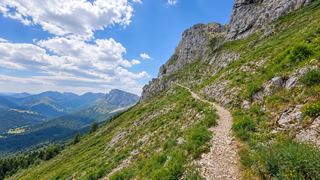
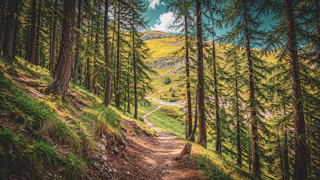
Immerse yourself in the heart of the Swiss Alps for an intensive two-day trail running course , ideal for preparing for a 50km race , in the spirit of the legendary Verbier Saint-Bernard Trail . In a small group, you'll traverse challenging trails between soaring ridges , magnificent glaciers , and iconic mountain passes , all within a spectacular alpine setting.
Designed to fine-tune your preparation for summer events , this training camp combines long runs in the mountains with practical advice on equipment , effort management , and trail running training strategies. Led by a professional, you'll benefit from personalized guidance to improve your technique, strengthen your endurance, and gain confidence on technical terrain.
A complete sporting immersion, at the rhythm of the mountain , to progress in a unique setting, while sharing the experience with other enthusiasts.
The highlights
-
Immersive training course following the Verbier Saint-Bernard Trail route in a small group
-
Supervised training sessions with personalized advice for effective progress
-
The magnificent landscapes of the Val de Bagnes
Photos


Sport
Level
Trail running
The expert's opinion
You've already completed a 20-30km trail race like Sierre-Zinal, Liddes-Verbier, or the Ultraks 19K, and you train for trail running several times a week. If you want to progress or are taking on a longer 40-50km race, then the intermediate level is for you.
You will be hiking on footpaths (marked in yellow) as well as mostly on trails (marked in white, red, and white) with a more mountainous character. Outings can be half-day or full-day hikes/runs.
A level to improve your skills and take on the marathon distance!
Minimum ascent rate: 400-500m/h
Average speed over the lap: 4-5 km/h
In figures
Trail and road running
- Average duration/day: 6h30
- Average distance/day: 25 km
- Average daily elevation gain: 1750 m
- Average daily descent: 1750 m
- Exposed Passages: Yes
Management
French
English

Originally from the Swiss village of La Fouly, at the foot of the Mont Blanc massif, he has always had a strong interest in the mountains. They attract him, shape him, and instill in him a taste for physical exertion and a love of natural spaces. Little by little, he began to explore the landscapes around him, first with his family, then by running the trails of the Tour du Mont Blanc.
At the dawn of his 20s, he embarked on the adventure of trail running, a world where the limits of human endurance are constantly pushed and where the struggle is more about battling oneself than other competitors. His passion for this sport has led him to discover numerous international trail races in Italy, France, Spain, Germany, and even Nepal, while always keeping enjoyment and self-improvement at the heart of his practice.
Program
-
Immersion in the Val de Bagnes
- Activity Trail and road running
- Duration of the activity 7h
- Distance 28 km
- Positive elevation gain 1900 m
- Negative elevation 1900 m
- Accommodation 3-star hotel
- Breakfast not included
- Lunch not included
- Dinner included
The first day begins in Le Châble, heading towards the hamlet of La Côt, then La Pasay and the Cabane de Mille, where the view is magnificent. The route continues towards Servay before returning to Le Châble.
Day 1 -
Immersion in the Corbassière valley
- Transportation Bus - 00h40 - 20km
- Activity Trail and road running
- Duration of the activity 6h
- Distance 22 km
- Positive elevation gain 1600 m
- Negative elevation 1600 m
- Exposed passages Yes
- Breakfast included
- Lunch included
- Dinner not included
This final stage begins in Lourtier with a climb to the Brunet hut , perched facing the peaks. You then enter the glacial Corbassière valley , characterized by a wilder atmosphere. The descent then takes you to Fionnay , before returning via Lourtier and then Verbier , the end point of this challenging alpine loop. Arrival back in Le Châble is expected at 3 pm.
Day 2
Note
In the event of too much snow on that date, it is possible that the reconnaissance will take a more suitable alternative route in order to guarantee the safety of the participants along the route.
Accommodation
Hotel A Lârze
Access
Go to the starting point
Price details
The price includes
- Supervision by a trail running guide
- Accommodation in a 3-star hotel in a shared room
- Half-board within the accommodation
- The Day 2 picnic
- Bus transfers
- A souvenir of your stay
The price does not include
- Dietary supplements (bars, energy drinks)
- Personal expenses
- Drinks during meals
- Day 1 picnic
Options
- Flex fare and insurance
Practical information
Specific formalities
Specifics
Before your departure, check with the embassy or consulate regarding the entry and stay requirements for your destination country. You can also find this information on the France Diplomatie website ( https://www.diplomatie.gouv.fr/fr/dossiers-pays/ ).
In the case of flights with stopovers operated by different airlines, also check the entry requirements of the countries you are transiting through.
It is your responsibility to ensure you are in compliance, particularly regarding the validity of your identity documents (for example, some countries require your passport to be valid for at least six months after your return) , visa requirements, necessary vaccinations, and health recommendations. And don't forget to consider any customs restrictions and other potential requirements of your destination or transit country.
ℹ️ Information may change up to the departure date, remember to regularly check official websites.
Equipment
Equipment to bring
- A travel bag
- Change of clothes for the stay
- An outfit for the evening
- Spare shoes
- A pair of lightweight shoes
- A sleeping bag liner (if staying in a gîte)
- A toiletry bag
- A bath towel
- A personal pharmacy
- Earplugs
- A headlamp
Clothing to bring
- A lightweight 10-15L backpack
- A Gore-Tex type jacket or similar, waterproof and breathable, suitable for withstanding bad weather in the mountains
- A warm long-sleeved top
- A survival blanket, a whistle, and a small first-aid kit
- A cap or headband
- A hat and thin gloves in case of bad weather
- Sunglasses suitable for running
- Long tights in case of bad weather
- Cereal bars and energy drinks
- Tissues
- A minimum water reserve of 1.5 liters
- A little cash