Sports trips to the Great St. Bernard Pass
Discover all our sports trips to the Great St. Bernard Pass for your next holiday.
4,7/5
(14 reviews)
Book with confidence with Decathlon Travel
Subscriber benefit
-5% off all stays
Best price guaranteed
we offer twice the difference
Free cancellation
more than 30 days before departure
Payment in 2 installments
free of charge
They traveled with us
Discover the authentic experiences of our travelers
4,7/5
(14 reviews)
Reviews displayed in reverse chronological order
Discover our other destinations - Alps
Discover our finest getaways
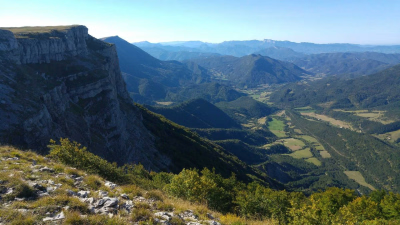
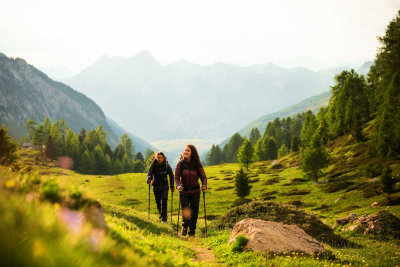
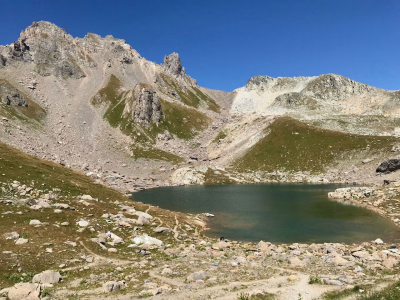
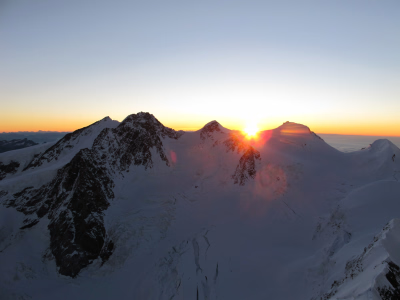
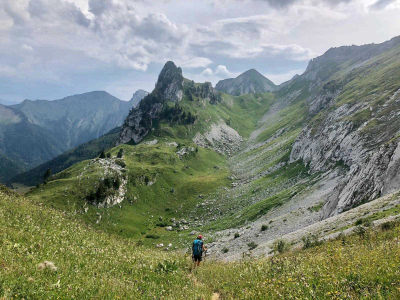
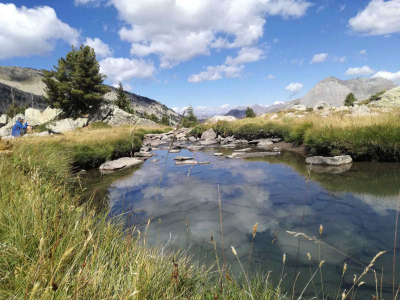
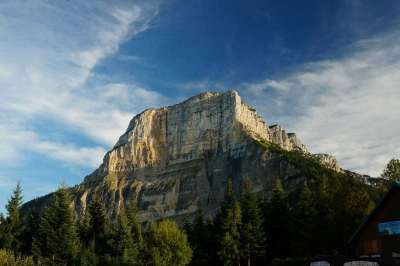
Explore the Great St. Bernard
Adventure and history in the heart of the Alps
Nestled in the French Alps , at the crossroads of Switzerland and Italy , the Great St. Bernard Pass is a destination where millennia of history and natural grandeur meet. Used by the Romans, medieval pilgrims , and even Napoleon , this legendary pass transports you through the centuries while offering an unparalleled playground for outdoor adventures.
Whether you are a hiker, skier, history buff or nature lover, the Great St. Bernard promises you an unforgettable experience , in summer as in winter.
An exceptional geographical location
Located at an altitude of 2,469 meters , the Great St. Bernard Pass connects Martigny (Switzerland) to Aosta (Italy) , between the Mont Blanc and Monte Rosa massifs. It is one of the highest Alpine passes, on the watershed between the Rhône and Po river basins.
Framed by imposing peaks such as the Grande Chenalette (2,889 m), Mont Mort (2,867 m) or the Pointe de Drône (2,949 m), the pass has always been a natural passageway , used since Antiquity to connect the north and south slopes of the Alps.
Mountain culture & local symbols
The Hospice: A thousand-year-old tradition of hospitality
For nearly 1,000 years , the canons of the Hospice have welcomed travelers in a spirit of solidarity and refuge . This unique, soulful place continues to uphold a rare tradition of hospitality in the high mountains.
Saint Bernard dogs: four-legged heroes
An iconic symbol of the pass, Saint Bernard dogs were bred at the Hospice from the 17th century onwards for mountain rescue . Today, thanks to the Barry Foundation , they can be seen at the pass in summer, representing loyalty, courage and kindness .
Outdoor adventures at the Great St. Bernard Pass:
Here, at nearly 2,500 meters altitude, the air is purer, the light brighter, and every step leads to a breathtaking panorama . The Great St. Bernard Pass is not just a legendary mountain pass; it is a constant invitation to adventure , a promise of unspoiled nature and intense emotions.
Hiking and trekking: following in the footsteps of pilgrims and summits
Summer transforms the Great St. Bernard Pass into a hiker's paradise. The famous Via Francigena , a thousand-year-old pilgrimage route, crosses the pass, linking spirituality, history, and magnificent alpine landscapes. Here, walking takes on a new meaning: every path tells a story, every turn reveals a majestic vista.
And for the most experienced, the pass also marks one of the stages of the Tour du Mont Blanc , one of the most legendary treks in Europe. Routes such as trail no. 16 (Ferret – Lacs de Fenêtre – Grand-Saint-Bernard) or no. 17 (Hide and Seek with the Ice) offer unforgettable adventures, between hanging lakes, shimmering glaciers and absolute silence .
Cycling & Mountain Biking: Climb the climb, reap the view
For road cyclists, the ascent of the Great St. Bernard Pass is legendary . Open from June to October, this climb is tough but magnificent, a true test for enthusiasts, where the effort is combined with the pleasure of overlooking the alpine landscapes from the summit.
Mountain biking enthusiasts are not left out: the surrounding valleys are home to gentler but equally immersive trails, perfect for discovering nature in a different way, with family or in quiet exploration mode.
❄️ Winter, nestled in a snowy setting
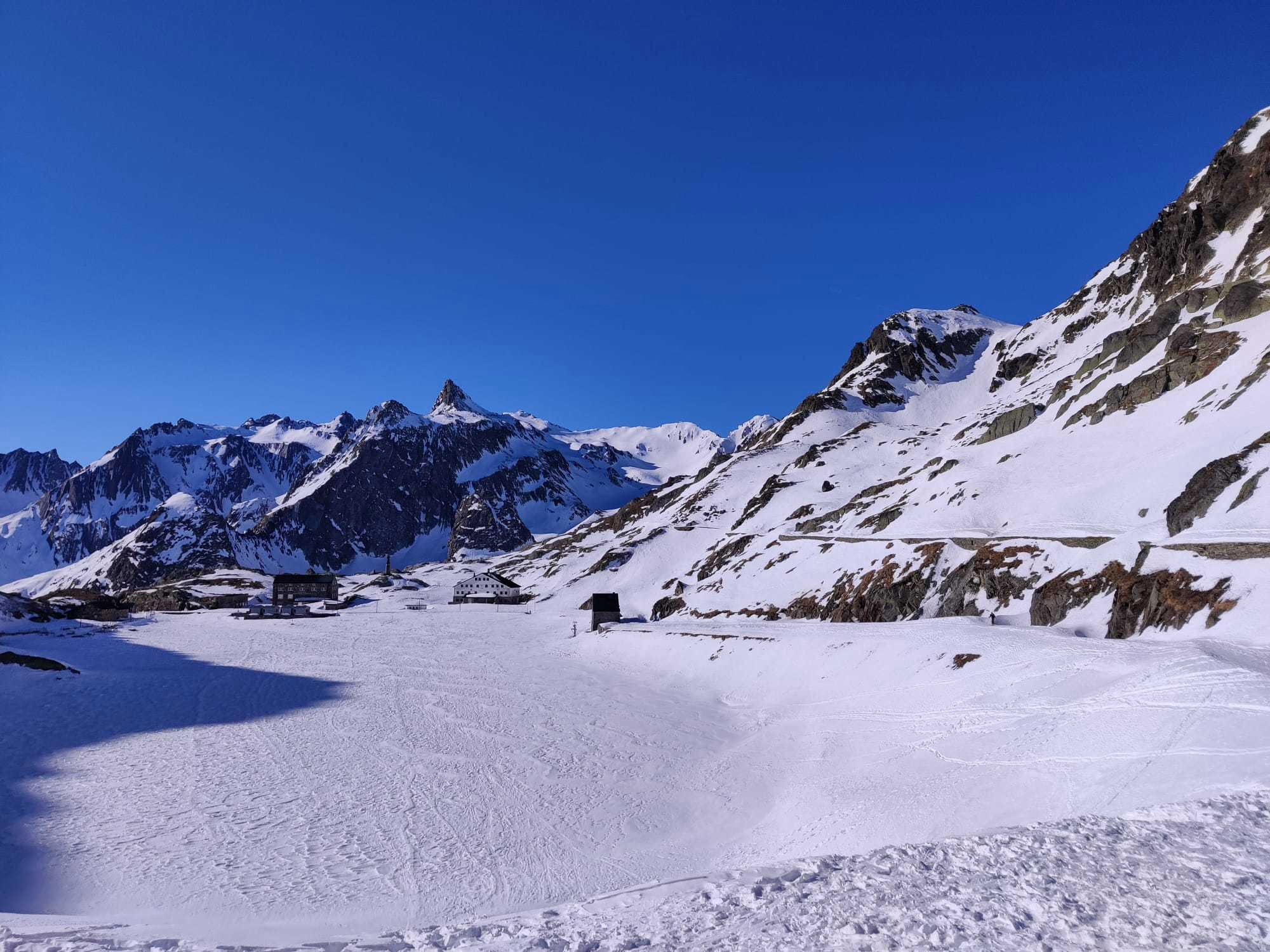
When snow covers the slopes and the road disappears under the white, the Great St. Bernard Pass becomes an exceptional winter refuge . Here, there are no ski lifts or crowds: you travel on snowshoes or touring skis , accompanied by a guide, to the Hospice, which remains open even in the heart of winter.
The snow is falling in abundance (up to 11 meters accumulated!), creating a magical setting for cross-country skiing enthusiasts, winter hikers, or simply those seeking white solitude and frosty silence . It's another way to experience the mountains, slower, deeper, more intense.
Mountaineering: where the challenge begins
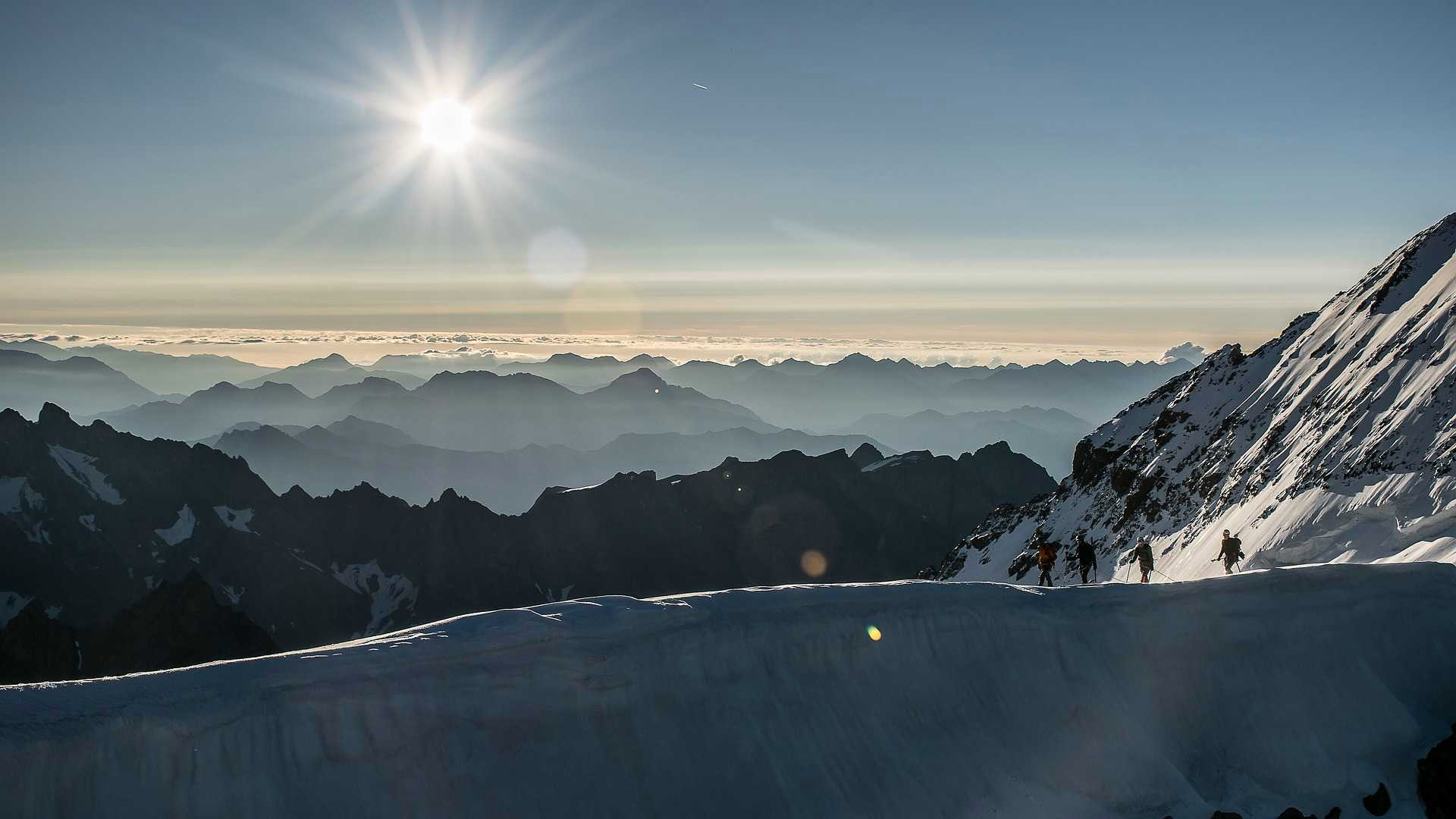
In the heart of the Alps, summits abound. With its steep ridges, couloirs, and rarely frequented routes, the Great St. Bernard Pass offers experienced mountaineers a demanding yet incredibly rewarding playground. This is not a mountain for the crowds: here, the challenge is pure , nature untouched.
Nature and contemplation: wild beauty within sight
Even above the tree line, life abounds. Chamois, marmots, eagles, alpine flowers… the surrounding valleys teem with treasures for those who know how to observe. And just a few kilometers away, the Flore-Alpe Botanical Garden in Champex-Lac immerses you in a fascinating world: more than 4,000 species of alpine plants , magnificently displayed in a sublime natural setting.
✨ The treasures of the Great St. Bernard Pass
The Great St. Bernard Pass is more than just an Alpine pass. It's a place of memory, humanity, and natural beauty , where every stone, every path, every building tells a story. By venturing here, you enter a world apart, between silent peaks, living traditions, and breathtaking high-altitude landscapes.
The Hospice Museum: a dive into Alpine history
Inside the Hospice, the museum offers a fascinating journey through time . Visitors can discover the history of the pass, the Roman road, Napoleon's passage, the pilgrims of the Via Francigena, the epic story of the rescue dogs...
The collections are as varied as they are unexpected: archaeological objects , ancient instruments, herbaria , insects collected by the monks , and even a library of over 30,000 books . This rich and discreet place will appeal to history buffs as well as lovers of the mountains and nature.
Lake of the Great St. Bernard: Mirror of the Sky
Just below the Hospice, a crystal-clear high-altitude lake stretches out in a magnificent, rocky landscape. Fed by snowmelt, it remains frozen for much of the year and is devoid of fish , but its quiet beauty and perfect reflection on the stone facades make it an ideal spot for contemplation and photography . At sunrise or sunset, the atmosphere becomes almost magical.
Bourg-Saint-Pierre, Champex-Lac, Orsières... villages that have a story to tell
Around the pass, alpine villages dot the valleys with their discreet charm and living heritage .
- In Bourg-Saint-Pierre , the last village before the pass on the Swiss side, history is written on the facades. It was here that Napoleon passed through in 1800. You can discover the Toules dam or the Hospice Treasury .
- Orsières , further down in the valley, is the administrative heart of the region, but also an ideal starting point for hikes.
- On the Champex-Lac side, the Flore-Alpe Botanical Garden awaits you with more than 4,000 alpine plant species, while the A 46 artillery fort testifies to the strategic position of the pass.
These villages offer you an authentic contact with alpine culture , between nature, military heritage, local gastronomy and pastoral traditions.
When to leave?
- Summer & autumn (June to October): perfect for hiking, cycling, cultural visits and panoramic views as far as the eye can see.
- Winter & spring (December to May): ideal for ski touring , snowshoeing and immersive stays in the snow, away from the crowds.
The Great St. Bernard Pass can be visited all year round , each season revealing a different face, but always spectacular, sincere and unforgettable .
Our other destinations in the Alps :
- Stay in the Chartreuse mountain range
- Stay in the Bauges mountains
- Stay in the Écrins mountain range
- Stay in the Vercors mountain range
- Stay in the Mercantour
- Trip and ascent of Mont Blanc
- Ascent of Monte Rosa
- Stay for the ascent of Mont Viso
- Stay at Mont Ventoux
- Stay in the Queyras
- Stay in the Jarjatte valley