Pulka initiation and bivouac: the high plateaus of the Vercors
In summary
-
Sports
-
Duration4 days
-
LevelConfirmed
-
DestinationVercors Massif / Grenoble
-
AgeFrom the age of 18
-
CO₂-Emissions20.7 kg CO2
-
Type of stayIn a group
-
Languages
 French
In a few words
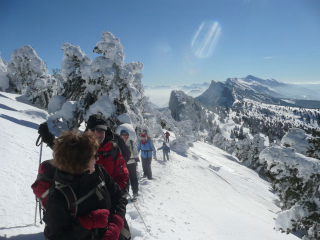
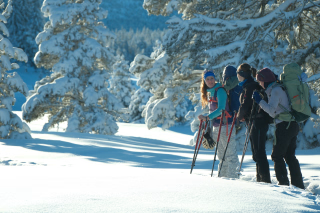
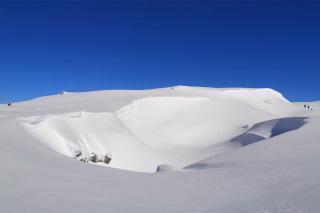
Immerse yourself in a true micro-adventure on the Vercors High Plateaus, nicknamed the "Little Scandinavia" of France. This introductory technical trip is ideal for learning how to master pulka trekking and manage the cold in real-world conditions. Led by an expert polar guide , you'll progress independently through wild landscapes.
Each day provides the essential skills to maneuver your equipment on all types of terrain (fresh snow, slopes, ice) and manage the logistics of a winter bivouac . This immersive experience offers invaluable physical and technical training , perfect for testing your abilities before venturing into future Arctic horizons.
The highlights
-
Winter road trips with a far northern feel, right on your doorstep.
-
A guide specializing in polar regions
-
All the equipment provided, just like at our bases
Photos


Sport
Level
Snowshoeing
The expert's opinion
Moderate, approximately 4 to 6 hours of walking per day.
This trip doesn't present any particular physical challenges, but at this time of year, the cold and strong winds can sometimes be intense and may put us in harsh conditions. To fully appreciate and enjoy this trip, you should love winter life and outdoor activities and not be afraid of the cold. This is a participatory trip where you will be actively involved.
This trip is not suitable for children, but for young adults aged 16 and over, provided they are used to practicing outdoor activities at a sustained level: hiking, mountain biking, skiing, sailing, etc.
In figures
Snowshoes
- Average duration/day: 4h
- Average daily elevation gain: 175 m
- Average daily descent: 162 m
Management
French
This trip is led by a mountain guide specializing in one or more Arctic regions. The aim of this trip is to train you, with the experience of a guide, in numerous details and techniques that will be useful during a future winter trip.
Program
-
Combeau Valley: the adventure begins!
- Transportation Minibus - 01h30 - 1km
- Activity Snowshoes
- Duration of the activity 4h
- Positive elevation gain 350 m
- Negative elevation 198 m
- Accommodation Bivouac / Tent
- Breakfast not included
- Lunch included
- Dinner included
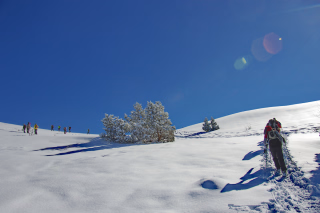
Meet us early in the morning at Grenoble train station for our transfer to the Vercors mountains. The adventure begins with trying on snowshoes and pulkas, the expedition sleds that will carry all our equipment. We'll head up towards the Chamousset plain to reach the Vercors High Plateaus, a pristine 170 km² area. It's in this exceptional setting that we'll set up our first bivouac. We'll learn about water management, meals in the mess tent, and sleeping in heavy-duty sleeping bags... a taste of Nordic expeditions!
Day 1 -
The heart of the Vercors High Plateaus
- Activity Snowshoes
- Duration of the activity 4h
- Positive elevation gain 150 m
- Negative elevation 150 m
- Accommodation Bivouac / Tent
- Breakfast included
- Lunch included
- Dinner included
After a warm night in our expedition sleeping bags, we meet our guide for a hearty breakfast in the mess tent. We break camp and load our pulkas, quickly getting into the swing of things. We head due north into a wild and sparsely populated area. This immersive experience demands cohesion and adaptability to fully appreciate the serenity offered by the vast snow-covered landscapes.
Day 2 -
Progression, exploration and summits
- Activity Snowshoes
- Duration of the activity 4h
- Positive elevation gain 150 m
- Negative elevation 150 m
- Accommodation Bivouac / Tent
- Breakfast included
- Lunch included
- Dinner included
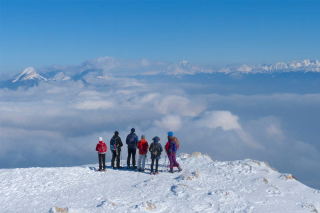
Today, we're gaining altitude, aiming for one of the many peaks that dot the plateaus. Depending on the conditions, we'll explore this unique environment with or without our pulkas for greater freedom of movement. From the ridges, the immensity of the mountain range unfolds before us. Our guide helps us decipher the countless signs of life on the snowpack. At the end of the day, we carefully choose our bivouac site based on the weather.
Day 3 -
End of this Pulka bivouac trip
- Transportation Minibus - 01h30 - 1km
- Activity Snowshoes
- Duration of the activity 4h
- Positive elevation gain 50 m
- Negative elevation 150 m
- Accommodation Bivouac / Tent
- Breakfast included
- Lunch included
- Dinner not included
Early in the morning, we might be lucky enough to spot a black grouse or a ptarmigan. We remain extremely discreet so as not to disturb this fragile wildlife in the depths of winter. Our expedition resumes its trek towards the Combeau valley for a final shared picnic overlooking the vast open spaces. A transfer takes us back to Grenoble train station in the late afternoon, our heads still full of our trapper memories.
Day 4
Note
- This trip was created in collaboration with Atalante and our local partners to offer you a greater number of guaranteed departures, combining our expertise and travel experience. As a result, you may find travelers from these agencies in your group.
- This itinerary is provided for informational purposes only: depending on weather and operational conditions, your tour guide may modify it for your safety and that of the group. For example, we may choose to follow the route in the opposite direction to the one announced if conditions appear more favorable.
Accommodation
Access
Dispersal at the end of the day on J4 around 5pm at Grenoble train station, Europole side, opposite Starbucks.
Go to the starting point
Price details
The price includes
- Travel and activities as described in the program
- Bivouac accommodation
- The meals mentioned as included in the program
- Loan of snowshoes, poles, pulkas
- Loan of bivouac equipment: tents, mattresses, sleeping bags adapted to the conditions.
- The provision of collective and safety equipment
- Supervision by a specialist tour guide
The price does not include
- The delivery to Grenoble
- Personal expenses
Options
- Supplement for individual tents during the stay : CHF59.46 / person
- Flex fare and insurance
Practical information
Specific formalities
Specifics
Before your departure, check with the embassy or consulate regarding the entry and stay requirements for your destination country. You can also find this information on the France Diplomatie website ( https://www.diplomatie.gouv.fr/fr/dossiers-pays/ ).
In the case of flights with stopovers operated by different airlines, also check the entry requirements of the countries you are transiting through.
It is your responsibility to ensure you are in compliance, particularly regarding the validity of your identity documents (for example, some countries require your passport to be valid for at least six months after your return) , visa requirements, necessary vaccinations, and health recommendations. And don't forget to consider any customs restrictions and other potential requirements of your destination or transit country.
ℹ️ Information may change up to the departure date, remember to regularly check official websites.
Equipment
Equipment provided on site
- Snowshoe equipment : snowshoes, poles, pulka.
- Camping equipment: 3-person tent for 2 people, Therm-a-Rest self-inflating mattress, extreme cold weather sleeping bag (comfort temperature: -25°C), thermos
Equipment to bring
- A pair of shoes suitable for snowshoeing must have several qualities: a high upper, a minimum of rigidity, warmth and suitability for winter, and waterproofing. (These shoes are compatible with both snowshoes and Nordic touring skis.) Sorel boots are ideal (Caribou or Glacier models).
- A jacket with a hood if possible (Gore-Tex type or equivalent)
- Ski touring trousers or overalls, or a windbreaker (Gore-Tex type or equivalent)
- A thick fleece jacket - synthetic or natural fiber
- A lightweight fleece
- A lightweight and compressible down jacket
- Two thick, collared, long-sleeved t-shirts (polypropylene, fleece or wool)
- Two thin, long-sleeved t-shirts (no cotton, synthetic or wool, worn directly against the skin)
- Two pairs of long underwear (polypropylene - fleece - wool)
- A few pairs of thin and thick socks (wool - polypropylene, to be worn over the thin ones)
- A thick-collared balaclava and a thin balaclava
- A beanie
- A pair of thick (wool) gloves
- A pair of overmitts
- A pair of thick, windproof gloves (windstopper or Gore-Tex)
- A pair of inner gloves
- Personal underwear (merino wool bras are highly recommended)
- A sleeping bag liner (to be used in sleeping bags for hygiene reasons)
- A small toiletry bag with the bare essentials and, if possible, biodegradable products (wipes, toothpaste, toothbrush)
- A lip balm
- Sunscreen (face and lips)
- Individual toilet paper
- An insulated thermos to keep your drink hot at lunchtime
- A Tupperware container, cutlery, and a cup
- A water bottle of at least 1 liter
- A ski mask
- High-protection sunglasses
- A headlamp, with spare batteries and bulbs
- A specialty from your region to discover and share together (excluding alcohol)
Optional:
- A knife
- An external battery
- A camera
- An inflatable pillow
- A pair of binoculars
- Some hand warmers
Clothing to bring
Plan for a "3-layer" system:
For clothing, the layering method is best. This involves wearing several layers of clothing, including...
Layers closer to the body allow sweat to escape easily. Other layers retain heat or
protect the body from external conditions.
1/ The base layer (directly against the skin)
Complete warm underwear set (tights and long-sleeved top)
2/ The intermediate layer
A warm sweater or thick fleece.
3/ The outer layer
It protects you from the wind and snow. We recommend a Gore-Tex type jacket or a warm ski jacket.
Basic rules
1. Loose-fitting clothing
Choose clothes in which you feel comfortable and do not wear them tightly fitted.
2. Insulated or waterproof clothing
Choosing the right materials, for the right diapers.
3. The extremities
A large part of the heat is lost through the head. As with the rest of the body, the 3 layers apply to the extremities: the head, the hands and the feet.
4. Getting dressed and undressed
You need to know how to put on and take off different layers of clothing depending on the situation.
5. Avoid humidity
You need to move to "create" heat, but without sweating...
They traveled with us