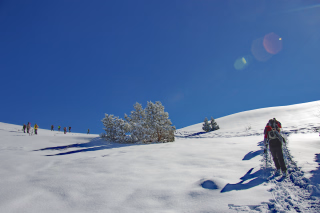
New Year's Eve in the wild Vercors region of the Drôme mountains
In summary
-
Sports
-
Duration4 days
-
LevelIntermediate
-
DestinationIsère / Vercors Massif
-
AgeFrom the age of 18
-
CO₂-Emissions45.55 kg CO2
-
Type of stayIn a group
-
Languages
 French
In a few words
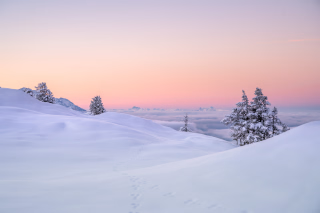
When the Vercors lands don their white coats… they reveal landscapes as magical as they are captivating.
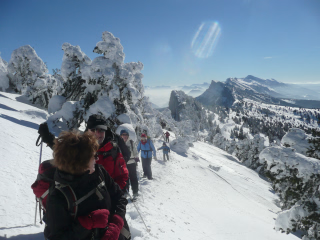
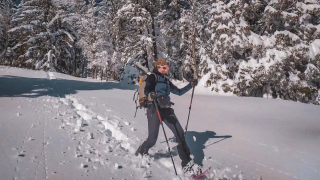
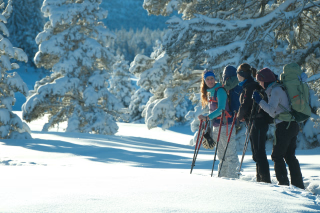
Come explore these vast wilderness areas in the heart of the Vercors Regional Natural Park : an exceptional atmosphere awaits. In this wild landscape, you'll hear nothing but the crunch of your snowshoes. Whether in the heart of majestic forests or along the mountain ridges, you'll venture off the beaten path , following in the footsteps of trappers. On the High Plateaus, we'll play along, channeling Jack London and tracking deer and… wolf footprints! All eyes on you!
Our base camp: a charming family-run hotel (spanning 5 generations!), offering every comfort, ideally located in the heart of the peaceful village of La Chapelle-en-Vercors. A cozy, mountain atmosphere.
If you're longing for a stay in the great outdoors, experiencing the tranquility of our authentic, unspoiled villages, let yourself be captivated by this hidden gem of the Vercors. Escape is guaranteed!
The highlights
-
Discover the trapper's world with your guide, who is passionate about his territory.
-
Your hotel at the gateway to the largest Nature Reserve in France
-
A truly authentic stay with a pulka day (subject to conditions) and a campfire!
Photos


Sport
Level
Snowshoeing
The expert's opinion
Average elevation gain: 430 m Maximum elevation gain: 500 m
Average length: 10.5 km Maximum: 12 km
Average time: 4 hours 30 minutes Maximum: 5 hours
For those who have never tried snowshoeing, there's nothing complicated about the activity. However, depending on the snow conditions, it can be more physically demanding than walking. The snow can be hard or soft, deep or stable. Furthermore, wearing snowshoes adds extra weight, which can significantly impact how you manage your effort.
For this trip, please note that the focus is primarily on discovering the natural environment.
In figures
Snowshoes
- Average duration/day: 5h
- Average distance/day: 11 km
- Average daily elevation gain: 434 m
- Average daily descent: 434 m
Management
French
Program
-
Welcome to La Chapelle-en-Vercors
- Accommodation 2-star hotel
- Breakfast not included
- Lunch not included
- Dinner included
Welcome to La Chapelle en Vercors! From 5 pm, Sandra welcomes us to her family-run hotel **, in the heart of the small village. Settle into our peaceful , cozy home .
Meet with our guide at 6:30pm.
Dinner and presentation of the stay.
Day 1 -
The Font d'Urle Plateau
- Transportation Car - 00h10 - 10km
- Activity Snowshoes
- Duration of the activity 5h
- Distance 10 km
- Positive elevation gain 400 m
- Negative elevation 400 m
- Accommodation 2-star hotel
- Breakfast included
- Lunch included
- Dinner included
Short transfer to the heights of Vassieux.
The Vercors, a true wild and unspoiled oasis, is aptly compared to the vast landscapes of Canada and Scandinavia. It is here that we will track the footprints of hares, foxes, roe deer, and red deer. And who knows? We might even find the tracks of wolves…
The Font d'Urle alpine pasture is an exceptional site, classified as a Sensitive Natural Area. An immense expanse overlooking the Drôme valley where the view stretches far: we can almost touch the peaks of the Massif Central, the Rhône valley and perhaps even Mont Ventoux!
On this vast plateau cleared of all vegetation, we will enjoy wandering over the natural "roundness" of the terrain.
We will fall asleep tonight with images filling our eyes…
Day 2 -
Butter Mountain, Vercors Wild!
- Transportation Car - 00h25 - 20km
- Activity Snowshoes
- Duration of the activity 5h
- Distance 12 km
- Positive elevation gain 500 m
- Negative elevation 500 m
- Accommodation 2-star hotel
- Breakfast included
- Lunch included
- Dinner included
After a good breakfast, transfer to the Butter Mountain.
A magnificent day begins with a hike in the Vercors High Plateaus Wild Nature Reserve , the largest in France. We'll cross the Montagne de Beurre and then the Pas des Econdus, facing the Grand Veymont (the massif's highest peak at 2,341 m). Majestic! Weather permitting, we'll have a picnic at the summit of Tête du Faisan, which offers a panoramic view, before taking shelter in the small Pré-Peyret cabin.
New Year's stay: a simple New Year's Eve evening around a delicious meal featuring the colours of the Vercors region, prepared by our hosts.
Day 3 -
The Great Woods and its stories of yesteryear... and a trapper's picnic
- Transportation Car - 00h10 - 10km
- Activity Snowshoes
- Duration of the activity 5h
- Distance 10 km
- Positive elevation gain 400 m
- Negative elevation 400 m
- Breakfast included
- Lunch included
- Dinner not included
Departure for our final hike. Vassieux is a land of forest. Here, logging is often a family tradition. This beautiful forest has always been coveted by the surrounding villages and the bishops of Die. Life has taken root here, and numerous cabins belonging to the villagers are hidden deep in the woods. Before cars, during logging season, families would live there for several days in the heart of the forest. At the Three Brothers' Cabin, on the edge of a beautiful clearing, stand two gigantic fir trees. Souvenirs of a lumberjack who is said to have planted them in memory of his deceased sons. Truth or legend? That was a long time ago...
Taking turns, we'll pull a pulka behind us—snow permitting . This small expedition sled will allow us to bring along a few comforts to enhance our lunch break. Along the way, we'll gather firewood for a campfire and enjoy a wonderful picnic . Of course, we'll still be modern-day trappers, since we'll be skipping the hunting: our guide has already prepared our lunch!
End of stay around 3:30 pm.
Day 4
Note
Note : We may sometimes need to make slight changes to the program due to organizational issues, weather conditions, snow conditions, the group's skill level, exceptional pandemic situations, etc. Rest assured, these changes are always made in your best interest, for your safety and comfort!
Snow conditions : We are, above all, outdoor enthusiasts. If there is insufficient snow, we will still run the hiking trip, without using a pulka. We will not cancel the trip under any circumstances. The winter atmosphere and light will be there even if we can't use snowshoes. The mountains are very different in winter; the colors are not the same as in summer, and the sun is lower on the horizon, offering warm sunset light throughout the day!
Note: The times were calculated based on a pace of 250 meters of elevation gain per hour uphill, 500 meters per hour downhill, and 3.5 km per hour on flat terrain, in order to allow for comparison of the different hikes on the same basis. It is, of course, obvious that when snowshoeing, the estimated time is only a guideline. Experienced hikers on hard snow will find the times overestimated, while less experienced hikers on fresh snow will find them significantly underestimated.
Accommodation
You're staying at the Hotel Bellier , our local partner's top pick! This 2-star hotel is located in the charming village of La Chapelle-en-Vercors, where your hosts Sandra, Sophie, and Céline will give you a warm welcome. The hotel is their "haven of peace." You're just a two-minute walk from shops, bars, and the Tourist Office.
The rooms are double or triple (non-mixed, except for couples) with private bathrooms. Bed linen and towels are provided. Single rooms are available upon request and subject to availability.
For the past 15 years, the hotel has been committed to a sustainable development approach (management of water, electricity and its food waste).
Access
Check-in at the hotel on the first day between 5pm and 6pm.
You will meet your guide at 6:30 pm at the hotel.
Go to the starting point
The village is located at an altitude of 1000m, you must equip your vehicle with snow equipment (snow tires/chains).
Directions: From the A49 (Grenoble/Valence), take exit 8 at La Baume d'Hostun. Follow signs for Pont-en-Royans then Les Baraques-en-Vercors. At the exit of the Grands Goulets tunnel, follow signs for La Chapelle-en-Vercors.
Within the Vercors Regional Natural Park, La Chapelle-en-Vercors is a small, isolated village on the southern plateau. As a protected area, access is restricted. Therefore, while we generally encourage this mode of transport, it is unfortunately not possible to reach La Chapelle-en-Vercors by public transport during your stay.
Price details
The price includes
- Accommodation in double or triple rooms depending on the group composition
- Half-board
- Picnics
- Hiking supervision
- Loan of snowshoe equipment
- The transfers planned in the program
The price does not include
- Round-trip transportation to the meeting point and dispersal
- Walking shoes for snowshoeing
- Free visits or activities
- Drinks
- Insurance
Options
- Single room : CHF100.63 / unit
- Flex fare and insurance
Practical information
Specific formalities
Specifics
Before your departure, check with the embassy or consulate regarding the entry and stay requirements for your destination country. You can also find this information on the France Diplomatie website ( https://www.diplomatie.gouv.fr/fr/dossiers-pays/ ).
In the case of flights with stopovers operated by different airlines, also check the entry requirements of the countries you are transiting through.
It is your responsibility to ensure you are in compliance, particularly regarding the validity of your identity documents (for example, some countries require your passport to be valid for at least six months after your return) , visa requirements, necessary vaccinations, and health recommendations. And don't forget to consider any customs restrictions and other potential requirements of your destination or transit country.
ℹ️ Information may change up to the departure date, remember to regularly check official websites.
Equipment
Equipment provided on site
- Snowshoes
- Sticks
Clothing to bring
Clothing, the principles :
For both your upper and lower body, opt for "multi-layering". This means wearing several layers of clothing that you can remove or add depending on the temperature and the level of exertion.
For example :
- a long-sleeved thermal undershirt made of breathable material (hollow fiber).
- a warm fleece jacket or a down jacket.
- a windproof, waterproof and breathable Gore-Tex type jacket
In calm, sunny weather, a base layer may be sufficient. In rain, snow, or wind, simply add this waterproof jacket. In very cold weather or during breaks, a fleece jacket is an essential addition.
Don't neglect your lower body. The "layering" principle also applies: trousers + over-trousers or tights + trousers.
Choose clothes that dry quickly , so avoid cotton. Opt for synthetic fibers that will keep you dry and warm for as long as possible.
Remember to dress warmly before you get cold , but especially to remove layers before you get too hot . Sweat is a hiker's enemy, as it dampens clothing that quickly becomes icy during breaks. Therefore, it's very rare to undertake a climb wearing a fleece jacket.
Avoid ski suits, which are too warm and bulky.
In your bag for the day:
- 1 small backpack (35 to 40 L) equipped with a waist belt, which must allow the snowshoes to be attached to the bag.
- If you have any, "forest hiking crampons".
- 1 thermos or a water bottle, preferably insulated (2 litres minimum).
- Picnic essentials: 1 pocket knife, 1 fork-spoon.
- Race snacks (energy bars, dried fruit or chocolate for those with a sweet tooth).
- 1 small waterproof pouch with identity card, health insurance card and assistance contract received upon registration if you took out this insurance or that of your personal insurance.
- 1 personal first aid kit (see complete kit suggestion below)
- 1 pack of tissues
- 1 pair of sunglasses + sunscreen.
- A scarf or a "buff" (neck warmer) provides a solution for all situations to cover the neck and head, whether it is hot or cold.
- 1 beanie
- 1 pair of gloves + 1 spare pair of gloves
- Thin silk or synthetic undergloves (very useful in very cold weather)
- Optionally: a rain cover (to protect it from the rain) + 1 sturdy plastic bag (to protect the inside) + 1 headlamp or flashlight + 1 survival blanket.
Your complete luggage:
- 2 short-sleeved t-shirts made of breathable material.
- 1 long-sleeved undershirt made of breathable material.
- 1 fleece jacket or 1 down jacket.
- 1 waterproof and breathable Gore-Tex type windproof jacket with hood.
- 1 rain cape.
- 1 pair of soft, thermal, comfortable and water-repellent trekking or outdoor trousers. Alpine ski trousers are not recommended.
- 1 pair of waterproof and breathable Gore-Tex type overtrousers.
- Hiking socks. Opt for wool or specific hiking socks like terry cloth, which prevent your feet from overheating. Be careful with cotton, as it can cause blisters.
- 1 pair of hiking boots in good condition, with good ankle support and waterproofing, with Vibram-type soles. Remember to "test" new boots and those that haven't been used for a long time beforehand (check in particular if the sole glue is still holding and re-waterproof them).
- 1 pair of lightweight casual shoes for the evening.
- 1 comfortable outfit for the evening.
- 1 pair of gaiters. If your trousers have "gussets", this is not necessary.
- Toiletries (opt for the essentials and small sizes).
- Earplugs or ear pads (optional).
- If you wear prescription glasses, remember to bring a spare pair.
Suggestions for a personal first aid kit:
- Your usual medications.
- Pain medication: Paracetamol preferred.
- Elastic adhesive strip, Elastoplast type, 8 cm wide.
- Disinfectant compresses.
- Adhesive bandages.
- Double skin (like Compeed or SOS blisters).
- Lozenges for sore throats.
- Vitamin C.
- 1 pair of tweezers.
- Hand sanitizer and disinfectant wipes.
And then:
- a dose of good cheer and why not a little specialty from your home to share during a picnic!
They traveled with us