In summary
-
Sports
-
Duration3 days
-
LevelAdvance
-
DestinationMonte Rosa Massif - France / Italy
-
AgeFrom the age of 18
-
CO₂-Emissions12.73 kg CO2
-
Type of stayIn a group
-
Languages
 French
 English
In a few words
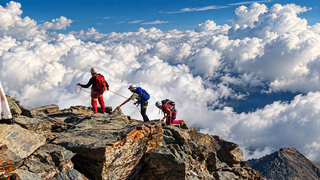
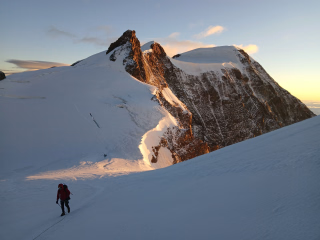
Set off to climb Monte Rosa ! This mountain range The Alps are the second highest mountain range in the Alps. A veritable bouquet of peaks over 4,000 meters high makes up these mountains straddling the border between Italy and Switzerland. The Dufourspitze, at 4,634 meters, is its highest point. Here, lovers of soaring summits and breathtaking views will find themselves in paradise.
The highlights
-
A unique glacial landscape, amidst peaks over 4000 m high
-
A three-day program for those with limited availability.
-
A unique and safe experience
Photos


 Alexandre - verified review - august 2025
 Alexandre - verified review - august 2025
 Alexandre - verified review - august 2025
 Alexandre - verified review - august 2025
 Sebastien - verified review - july 2025
 Sebastien - verified review - july 2025
 David - verified review - july 2025
 David - verified review - july 2025
 David - verified review - july 2025
 David - verified review - july 2025
Sport
Level
Mountaineering
In figures
Mountaineering
- Average duration/day: 4h
- Average distance/day: 8 km
- Average daily elevation gain: 700 m
- Average daily descent: 844 m
- Maximum altitude: 4634 m
- Exposed Passages: Yes
Management
French
English
This trip is supervised by a certified high mountain guide: 1 guide for a maximum of 4 people.
Program
-
Arrival at Staffal, review of cramponing fundamentals and refuge
- Activity Mountaineering
- Distance 2 km
- Positive elevation gain 200 m
- Negative elevation 500 m
- Maximum altitude 3436 m
- Accommodation Refuge
- Breakfast not included
- Lunch included
- Dinner included
Meet early in the morning in Staffal , located 4km from Gressoney-la-Trinité in Italy, at an altitude of 1850m. We'll check your equipment (you must arrive fully equipped) and distribute your packed lunches. We'll take the Punta Indren cable car and at the summit, we'll review some basic ice climbing techniques, including the fundamentals of cramponing and glacier safety, before heading towards the Mantova refuge.
Day 1 -
Monte Rosa tip Gnifetti (4554m) / Ludwig / Zumstein / ParrotSpitze (4634m)
- Activity Mountaineering
- Duration of the activity 7h
- Distance 13 km
- Positive elevation gain 1200 m
- Negative elevation 1200 m
- Maximum altitude 4634 m
- Exposed passages Yes
- Breakfast included
- Lunch included
- Dinner included
From the Mantova Hut, weather permitting, we begin the day by ascending the Garstelet Glacier northeast towards the Vincent Pyramid, then on to the small Lys Glacier along the western base of the Vincent Pyramid. After the rocky outcrop of Balmerhorn, we reach the Lys Pass at 4248m. We continue along the seracs of the north-facing base of the ParrotSpitze. After the Sesia Pass, we climb north, traversing the upper Grenzglacier. Shortly before reaching the Gnifetti Pass at 4454m, we turn either right to reach the final steep section to the Gnifetti Peak or Signalkruppe at 4554m, or left to reach the summit of the Zumsteinspitz. The effort was intense, but the reward of the magnificent view of the surrounding peaks is well worth the effort. Then descend back down to the Mantova refuge.
Day 2 -
Ascent of the Vincent Pyramid (4215m)
- Activity Mountaineering
- Duration of the activity 5h
- Distance 7 km
- Positive elevation gain 700 m
- Negative elevation 830 m
- Maximum altitude 4215 m
- Breakfast included
- Lunch included
- Dinner not included
After a final breakfast at our refuge, we set off again for a summit at 4215m: the Vincent Pyramid. Depending on the weather and the number of participants, it will also be possible to reach the Giordani Peak to conclude this weekend in the heart of the Monte Rosa massif.
Descent at the end of the raid via the Punta Indren cable car and dispersal of the rope team once back in Staffal.
Day 3
Note
This program may be modified at the guide's discretion if mountain conditions, weather or the physical condition of the participants require it.
For safety reasons and to ensure a consistent level corresponding to that announced, the management and organization reserve the right to interrupt your participation if your technical level and/or physical fitness do not correspond to those required.
Accommodation
Nights in the mountain huts are spent in dormitories, and blankets are provided. Toiletries will be kept to a minimum. Slippers are available, so there's no need to bring shoes for the hut.
Access
Go to the starting point
Price details
The price includes
- Supervision by a high mountain guide
- Half-board accommodation in dormitory-style mountain huts
- Picnics
- The ski lifts necessary for the normal running of the program
- The collective equipment necessary for safety
The price does not include
- Transportation to and from the meeting/dispersal point
- Individual technical equipment: mountaineering boots, crampons, ice axe, harness, etc...
- Drinks in mountain huts and personal expenses
Options
- Flex fare and insurance
Practical information
Specific formalities
Specifics
Before your departure, check with the embassy or consulate regarding the entry and stay requirements for your destination country. You can also find this information on the France Diplomatie website ( https://www.diplomatie.gouv.fr/fr/dossiers-pays/ ).
In the case of flights with stopovers operated by different airlines, also check the entry requirements of the countries you are transiting through.
It is your responsibility to ensure you are in compliance, particularly regarding the validity of your identity documents (for example, some countries require your passport to be valid for at least six months after your return) , visa requirements, necessary vaccinations, and health recommendations. And don't forget to consider any customs restrictions and other potential requirements of your destination or transit country.
ℹ️ Information may change up to the departure date, remember to regularly check official websites.
Equipment
Equipment provided on site
- Group equipment (ropes, ice screws) is provided.
- Slippers are available in the shelters.
Equipment to bring
- High mountaineering boots compatible with crampons (trekking boots are not sufficient).
- A comfortable, frameless, anatomically shaped backpack with a capacity of 50 liters.
- An ice axe, crampons with anti-balling plates, a harness equipped with two screw-gate carabiners, a helmet.
- A pair of telescopic poles.
- A small toiletry bag reduced to the bare minimum
- A sunscreen cream (face and lips).
- A headlamp (LED type), with spare batteries.
- A pocket knife.
- Toilet paper + lighter.
- Two to three plastic bags (100 litres) to protect the backpack in case of rain.
Clothing to bring
- Cap.
- Hat (or cap) for the sun and/or scarf.
- Glacier glasses (category 4)
- 1 pair of very warm mountain gloves or mittens.
- 1 pair of fleece or wool gloves.
- 1 pair of glove liners (optional)
- Breathable technical underwear.
- Breathable technical base layer (carline, lightweight fleece...)
- Fleece jacket.
- 1 windproof and waterproof Gore-Tex type jacket.
- 1 pair of breathable technical tights.
- 1 pair of comfortable mountain trousers.
- 1 pair of windproof and waterproof Gore-Tex type trousers
- 2 pairs of socks, one thin pair and one thicker pair
- A pair of gaiters.
- A sleeping bag type sheet (there are blankets in the refuge).
- 1 waterproof pouch with your money, identity papers, insurance/assistance contract and emergency telephone numbers.
This list is general and intended to cover all the weather conditions you might encounter; it should be adapted to the conditions expected during your stay. Always pack warm clothing, even when temperatures are high in the valley.
They traveled with us