Hiking on the French Riviera between Estérel and the Lérins Islands
In summary
-
Sports
-
Duration7 days
-
LevelIntermediate
-
DestinationFrench Riviera / Var
-
AgeFrom 18 - 80 years
-
CO₂-Emissions69.56 kg CO2
-
Type of stayIn a group
-
Languages
 French
In a few words
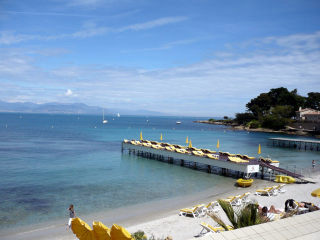
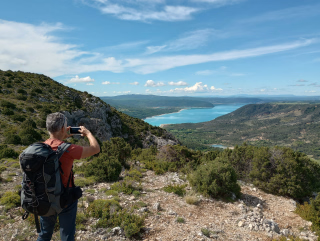
Between turquoise sea , red rocks , and verdant hills , this stay invites you to discover a wilder, more unspoiled side of the French Riviera. Far from the hustle and bustle of the coast, the Esterel Massif reveals spectacular landscapes where red porphyry contrasts intensely with the deep blue of the Mediterranean. Trails wind along steep ridges , overlooking secluded coves with crystal-clear waters along the Corniche d'Or , offering a unique atmosphere between sea and mountain.
The program is enhanced by a getaway to Sainte-Marguerite Island , a true haven of nature off the coast of Cannes, ideal for hiking among pine forests and peaceful shores.
Based in Saint-Raphaël , a charming seaside resort renowned for its pleasant climate, this trip offers a perfect balance between hiking , nature exploration , and the gentle Mediterranean lifestyle. A vibrant immersion, between volcanic landscapes and seascapes, to explore an authentic side of the French Riviera.
The highlights
-
L'Estérel, a Natura 2000 site and biological reserve
-
Very diverse hikes, with remarkable geological heritage
-
A getaway to Sainte-Marguerite Island amidst pine forests and crystal-clear waters
Photos


Sport
Level
Hiking / Trekking
The expert's opinion
PHYSICAL LEVEL:
For motivated, fit walkers who engage in varied and regular physical activity
Stages of 2 to 5 hours of walking. From 100 to 650m of positive elevation gain.
TECHNICAL LEVEL:
Numerous scree slope crossings without technical difficulty
High-top shoes with rigid soles are recommended for better comfort on scree slopes.
Telescopic poles are recommended.
In figures
Hiking
- Average duration/day: 4h
- Average daily elevation gain: 350 m
- Average daily descent: 350 m
Management
French
The stay will be supervised by a qualified mountain guide.
The swimming activities mentioned in the program are optional and undertaken at the participants' own risk during free time. They are not supervised by the guide.
Program
-
Saint-Raphaël
- Activity Hiking
- Duration of the activity 2h
- Positive elevation gain 50 m
- Negative elevation 50 m
- Accommodation 2-star hotel
- Breakfast not included
- Lunch not included
- Dinner included
Meet at 4:30pm at the hotel reception.
Installation and visit of the city's rich and varied heritage.
In the 19th century, the Mediterranean seafront saw the development of winter and aristocratic resorts, which fostered the emergence of a seaside heritage. A small fishing port until the 18th century, then a port for trade and export of bauxite, Estérelite paving stones from Dramont and corks, Saint Raphaël became a four-season climatic resort, unlike its neighbors Cannes or Nice, which were more winter-oriented.
Hiking and sightseeing in the city. Overnight stay in Saint Raphaël.
Day 1 -
Saint-Raphaël - Dramont - Saint-Raphaël
- Activity Hiking
- Duration of the activity 4h30
- Positive elevation gain 150 m
- Negative elevation 150 m
- Accommodation 2-star hotel
- Breakfast included
- Lunch included
- Dinner included
Transfer by train to Dramont (10 min). From Cap Dramont, one of the most beautiful spots in the Estérel, we take the coastal path to reach Saint Raphaël. A feast for the eyes with this coastline of red rocks dotted with small coves and beautiful sandy and pebble beaches with turquoise waters.
On this trail, progress is mainly over rocks with the help of stairs. Overnight stay in Saint Raphaël.
Day 2 -
Saint-Raphaël - Crossing the Esterel Massif - Agay - Saint-Raphaël
- Activity Hiking
- Duration of the activity 5h
- Positive elevation gain 500 m
- Negative elevation 500 m
- Accommodation 2-star hotel
- Breakfast included
- Lunch included
- Dinner included
Departure by train from Saint Raphaël to Le Trayas (20 min). A fragrant journey through the heart of the Esterel Massif via the Col Notre-Dame, the Mal Infernet ravine, and the Agay Valley. Pines, eucalyptus, oaks, chestnut trees, mimosas, and Judas trees thrive amidst the red rocks. A feast for the five senses. We reach the Bay of Agay, which offers a breathtaking view of the Massif above. Swimming is possible in Agay.
Return by train to Saint Raphaël (10 min).
Day 3 -
Saint-Raphaël - The peak of Cap Roux (454m) - Saint-Raphaël
- Activity Hiking
- Duration of the activity 5h
- Positive elevation gain 650 m
- Negative elevation 650 m
- Accommodation 2-star hotel
- Breakfast included
- Lunch included
- Dinner included
Transfer by train to Anthéor (15 minutes). An iconic feature of the Esterel Massif, Cap Roux offers a 360° panoramic view of the entire region. Before reaching the summit, we pass by the Sainte-Baume de Saint Honorat, an important pilgrimage site in the region. This is a perched hermitage where, according to local tradition, this saint retreated in the 5th century before founding the monastery on the Lérins Islands. Return to Saint Raphaël by train from Le Trayas station (20 minutes).
Day 4 -
Saint-Raphaël - Pic de l'Ours (492m) - Saint-Raphaël
- Activity Hiking
- Duration of the activity 5h
- Positive elevation gain 650 m
- Negative elevation 650 m
- Accommodation 2-star hotel
- Breakfast included
- Lunch included
- Dinner included
A short train transfer to Le Trayas (20 min). We ascend to the Pic de l'Ours (492 m), which offers breathtaking views of the Bay of Cannes, the Lérins Islands, the Bay of Fréjus, and the Massif des Maures. Jagged peaks, red cliffs, and ravines delight the eye… The Mediterranean vegetation is diverse: cork oak, maritime pine, heather, strawberry trees… We descend via the Dent de l'Ours to reach the train station along pretty paths overlooking the sea. Return to Saint-Raphaël by train (20 min).
Day 5 -
Saint-Raphaël - Île Sainte-Marguerite - Cannes - Saint-Raphaël
- Activity Hiking
- Duration of the activity 2h30
- Positive elevation gain 100 m
- Negative elevation 100 m
- Accommodation 2-star hotel
- Breakfast included
- Lunch included
- Dinner included
Transfer by train from Saint-Raphaël to Cannes (40 min) followed by a boat trip to Île Sainte-Marguerite (20 min). From Île Sainte-Marguerite, we'll take a step back to admire the entire Esterel Massif, which we explored in the previous days. See Cap Roux and Pic de l'Ours like you've never seen them before! Enjoy a stroll scented with eucalyptus trees on this island, which once held the mysterious Man in the Iron Mask within its fort. Transfer by boat (20 min) to Cannes, the star city of the French Riviera, where we'll stop before taking the train back to the hotel (40 min).
Day 6 -
End of stay
- Breakfast included
- Lunch not included
- Dinner not included
Separation at the hotel after breakfast.
Day 7
Note
The durations of our hikes are approximate. They may vary depending on several factors during our trip (participants' skill level, weather, trail conditions, etc.). Transfer times may also fluctuate depending on weather conditions and road conditions.
The swimming activities mentioned in the program are optional and undertaken at the participants' own risk during free time. They are not supervised by the guide.
The program was established based on the latest information available at the time of writing and may be subject to change in the interest of quality. Furthermore, circumstances beyond our control may alter the course of your stay (weather, road closures, cancelled or delayed flights, strikes, local festivals, etc.).
Accommodation
Accommodation is on a full board basis (picnic lunch) in a simple, family-run 2* hotel located 6 minutes from Sablettes beach in Fréjus and 10 minutes from Viellat beach in Saint-Raphaël.
Access
APPOINTMENT
Sunday at 4:30 pm at the hotel in Saint Raphaël. The hotel is located 10 minutes from the train station, so it is easy to get there if you arrive before the appointment to leave your luggage.
You will receive an email invitation approximately 2 weeks before your departure: it summarizes the useful information to get to the meeting point (contact details of your first accommodation, first name and telephone number of your guide, our emergency mobile number, plane tickets / e-ticket for stays with flight, etc...).
DISPERSION
Saturday after breakfast at the hotel in Saint-Raphaël.
Go to the starting point
It is possible to travel from Nice to Saint Raphaël by train (check SNCF for timetables).
The hotel does not have its own parking. There are several paid parking lots near the hotel. The Bernard Ricci parking lot, located 800 meters from the hotel, is the only free parking lot in Saint-Raphaël.
Price details
The price includes
- The trip will be supervised by a qualified mountain guide.
- Hotel accommodation with half-board (wine and drinks not included)
- Picnics at lunchtime except (except for Day 1)
- The boat transfer to Sainte Marguerite Island
- Transfers by public transport
- Tourist taxes
The price does not include
- Transportation to the meeting point
- Lunch on Day 1
- Drinks and personal expenses
- Anything not listed under "Price includes"
Options
- Single room : CHF265.29 / person
- Flex fare and insurance
Practical information
Specific formalities
Specifics
During the hike, you must have the following documents in your possession:
- Valid identity card or passport.
- Health insurance card.
- Your travel insurance leaflet received upon registration (if you purchased this insurance through our offices) or your personal insurance (contract number + telephone number).
Before your departure, check with the embassy or consulate regarding the entry and stay requirements for your destination country. You can also find this information on the France Diplomatie website ( https://www.diplomatie.gouv.fr/fr/dossiers-pays/ ).
In the case of flights with stopovers operated by different airlines, also check the entry requirements of the countries you are transiting through.
It is your responsibility to ensure you are in compliance, particularly regarding the validity of your identity documents (for example, some countries require your passport to be valid for at least six months after your return) , visa requirements, necessary vaccinations, and health recommendations. And don't forget to consider any customs restrictions and other potential requirements of your destination or transit country.
ℹ️ Information may change up to the departure date, remember to regularly check official websites.
Equipment
Equipment to bring
LUGGAGE
- One travel bag per person (or a rolling suitcase; recommended for trips with public transport included for transfers). Oversized luggage should be avoided as it would cause problems with bus capacity or logistical organization.
- One 35-40 liter backpack with a flexible frame, hip belt, and well-ventilated back panel for your comfort (to carry your personal belongings for the day: camera, packed lunch, water bottle, snacks, windbreaker, sweater, rain gear, etc.). This bag is usually placed in the cabin for any air travel (10kg maximum per person, typically).
On multi-day or semi-multi-day trips, you are asked to limit the weight of your luggage to a reasonable extent, as difficult access to some accommodations could compromise luggage delivery. We also advise you to avoid leaving fragile and/or valuable items behind.
FOR PICNICKS – MIXED SALADS
- Cutlery (reusable, not disposable)
- 1 airtight plastic container with a minimum capacity of 0.5 liters. It can be used as a plate and for storage, without getting your bag dirty.
- 1 sample of dishwashing liquid and a small sponge for washing your picnic equipment
- 1 plastic or aluminum cup with an insulated handle to prevent burns from hot drinks
- 1 folding pocket knife (optional)
- One insulated or aluminum water bottle of at least 1.5 liters, or a flexible water bottle (not recommended in winter). Especially useful in winter, also bring (optional) an insulated bottle to carry tea, coffee, etc. during the hike.
OTHERS
- 1 large plastic bag to slip into your backpack to protect your belongings from the elements and/or 1 rain cover
- 1 waterproof pouch containing: your assistance contract, your identity documents, health insurance card and any other document mentioned in the formalities section
- 1 sturdy and lightweight umbrella (optional but very useful in case of rain, or even heatwave)
- One pair of telescopic walking poles (optional, depending on your preferences or the technical difficulty of the hikes; refer to the "Technical Level" section of the trip information sheet). Using pole tips is essential to protect the soil and prevent erosion. These tips reduce the impact of the metal points on the trails, thus preventing damage to fragile terrain. We recommend using them (rubber or plastic). Some sites and national parks are gradually making them mandatory.
- 1 pair of good quality sunglasses (protection level 3 or 4) that provide good side coverage
- Sunscreen with a good protection factor (30 minimum)
- Toiletries kit (toothbrush, deodorant, etc.)
- Earplugs made of wax or foam (against neighbors' snoring or other noise pollution)
- Tissues
- 1 headlamp or flashlight + survival blanket: these should always be in your backpack, as an unexpected delay due to an incident can occur even during an easy hike
- Spare glasses (if you wear prescription glasses; optional)
- Camera
- Binoculars (optional)
Clothing to bring
For the upper body, the 3-layer principle allows you to manage almost all situations:
- a light and breathable layer
- a warm layer
- a waterproof and breathable layer
When hiking in calm, sunny weather, a base layer may be sufficient. In rainy or windy conditions, simply add this waterproof jacket. In very cold weather or during breaks, a fleece jacket is an essential addition.
Choose clothes that dry quickly, so avoid cotton. Opt for synthetic fibers that will keep you dry and warm for as long as possible.
Remember to dress warmly before you get cold, but especially to remove layers before you get too hot. Sweat is a hiker's enemy, as it dampens clothing that quickly becomes icy during breaks. Therefore, it's very rare to undertake a climb wearing a fleece jacket.
The complete and ideal list: (although this should be adapted depending on the hike, the season, and your habits)
- 1 sun hat or cap, or scarf
- 1 fleece hat or headband and/or a neck warmer
- 1 pair of lightweight gloves
- Short-sleeved T-shirts in breathable material preferred (1 for every 2 days of walking).
- 1 long-sleeved base layer in breathable material or a shirt (sometimes the peaks are windy and a light layer is welcome during the lunch break),
- 1 warm fleece-type jacket (or even water-repellent) or a warm and compressible type)
- 1 waterproof and breathable windproof jacket with hood
- 1 rain poncho (optional) and/or sleeping bag cover
- 1 pair of sturdy, loose-fitting, comfortable, water-repellent hiking trousers
- 1 pair of waterproof and breathable overtrousers
- 1 pair of shorts or capris, comfortable and durable
- Hiking socks (1 pair for 2 days of hiking). Opt for wool or specific hiking socks like terry cloth, which will prevent your feet from overheating prematurely.
- One pair of hiking boots that provide good ankle support and are waterproof, with a sole that grips well on uneven terrain and is abrasion-resistant. Consider testing new boots and those that haven't been used for a long time beforehand, or if you're used to hiking, a pair of low-cut trail shoes is ideal, especially for summer trips.
- 1 swimsuit and 1 quick-drying towel (optional in case of swimming)
- 1 pair of comfortable trousers for the evening
- 1 pair of lightweight casual shoes for the evening, like sneakers, which can also be used for sightseeing or walks in town.