Mountaineering course and ascent of Mont Blanc
In summary
-
Sports
-
Duration5 days
-
LevelExpert
-
DestinationChamonix-Mont-Blanc / Mont Blanc Massif - France
-
AgeFrom the age of 18
-
CO₂-Emissions26.84 kg CO2
-
Type of stayIn a group
-
Languages
 French
In a few words
The highlights
-
Mythical ascent of the summit of Mont Blanc via the Bosses ridge.
-
Complete technical preparation with snow and ice school.
-
Two days of gradual acclimatization to maximize success.
Photos




Sport
Level
Mountaineering
The expert's opinion
Climbing Mont Blanc is more difficult than commonly perceived. The vast majority of those who descend from the summit say that the experience was exceptional in every way, but more challenging than they had imagined.
Technical difficulty:
The main difficulties lie in the ascent to the Goûter refuge, with several sections requiring the use of hands (due to the presence of cables, ropes, or handholds). The Bosses ridge is exposed and demands good cramponing skills.
Physical difficulty:
The ascent is long and takes place almost entirely above 4000m. It is therefore imperative to be in very good physical condition and to be acclimatized to the altitude.
You need to be able to string together six days of intense physical activity, with elevation gain and mostly at altitude: your training during the year must be prepared accordingly.
Please note: the first two departures in June are without ski lifts for Mont Blanc, which increases the elevation gain and therefore the physical condition required.
In figures
Mountaineering
- Average duration/day: 5h30
- Average daily elevation gain: 836 m
- Average daily descent: 766 m
- Maximum altitude: 4806 m
Management
French
The trip is supervised by a high mountain guide for a group of 4 participants, who will provide the technical elements necessary for the smooth running of the trip.
For the ascent of Mont Blanc on days 4 to 5, one guide for every 2 participants is provided.
Program
-
Welcome to Chamonix and ice climbing school at the Albert 1er refuge
- Activity Mountaineering
- Duration of the activity 3h
- Positive elevation gain 750 m
- Maximum altitude 2732 m
- Accommodation Refuge
- Breakfast not included
- Lunch included
- Dinner included
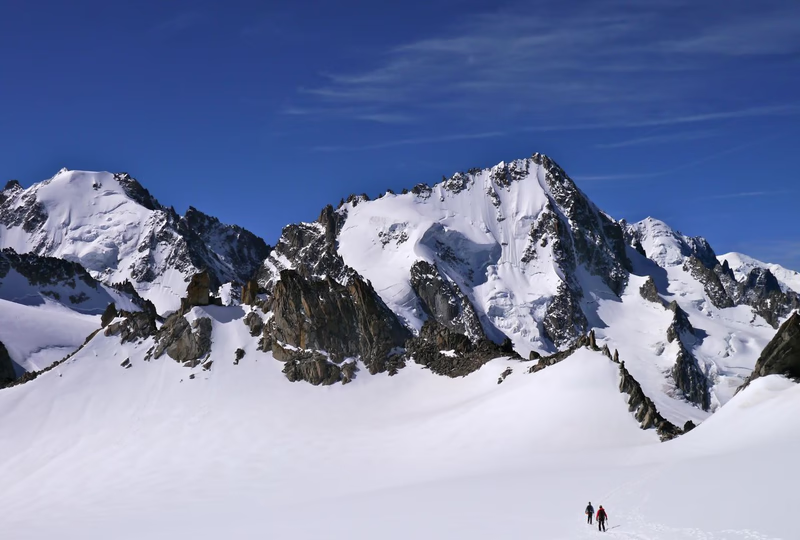
We meet our guide in Chamonix for the briefing and equipment check. We then head to the village of Le Tour and then on to the Col de Balme to ascend to the Albert 1er refuge at 2,702 meters. The afternoon is dedicated to a snow and ice training session to review safety procedures and ensure a first night at altitude for acclimatization.Day 1 -
Ascent of Tête Blanche and return to the valley
- Activity Mountaineering
- Duration of the activity 7h
- Positive elevation gain 930 m
- Negative elevation 1430 m
- Maximum altitude 3429 m
- Accommodation Refuge
- Breakfast included
- Lunch included
- Dinner included
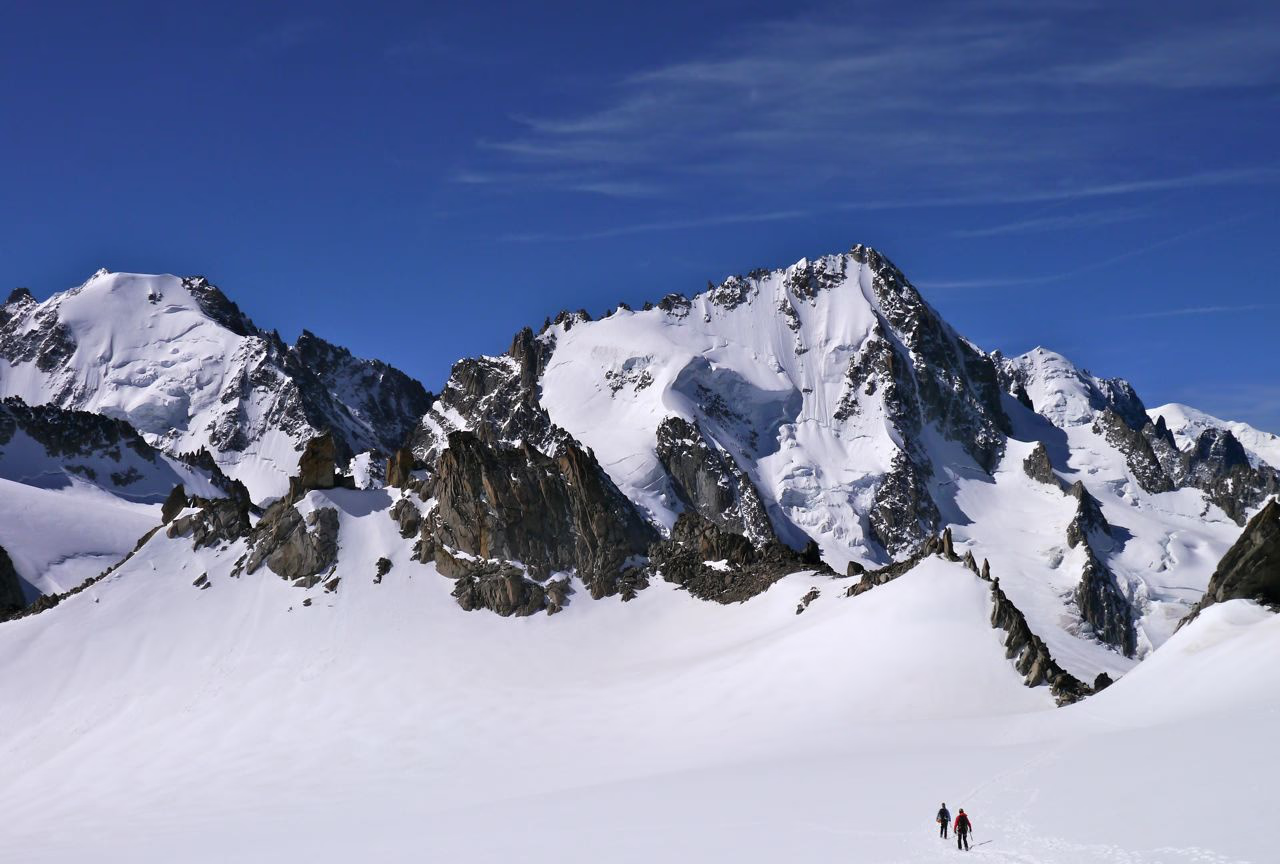
From the Albert 1er refuge, we put on our crampons to begin the ascent of Tête Blanche at 3,429 meters. This beautiful glacial climb allows us to refine our rope techniques and further acclimatize. We descend back into the valley in the early afternoon to settle into our mountain hut, take a thorough weather check, and form the rope teams for Mont Blanc.Day 2 -
Ascent to the Tête Rousse refuge via the Nid d'Aigle
- Activity Mountaineering
- Duration of the activity 4h
- Positive elevation gain 800 m
- Maximum altitude 3167 m
- Accommodation Refuge
- Breakfast included
- Lunch included
- Dinner included
We reach Les Houches where the additional guides join the group. We take the Bellevue cable car and then the famous Mont Blanc Tramway to the Nid d'Aigle. Our hike begins below the Rognes ridge before opening onto the snowy plateau leading to the Tête Rousse refuge at 3,167 meters. We enjoy the afternoon resting with a view of the north face of the Bionnassay.Day 3 -
Ascent of Mont Blanc and overnight stay at the Goûter refuge
- Activity Mountaineering
- Duration of the activity 8h
- Positive elevation gain 1700 m
- Negative elevation 1000 m
- Maximum altitude 4806 m
- Accommodation Refuge
- Breakfast included
- Lunch included
- Dinner included
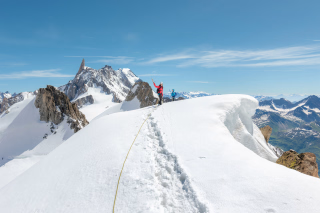
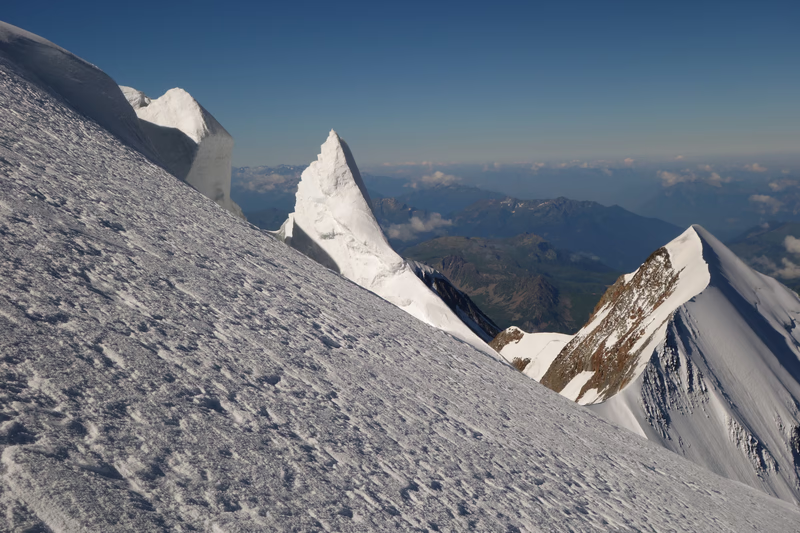
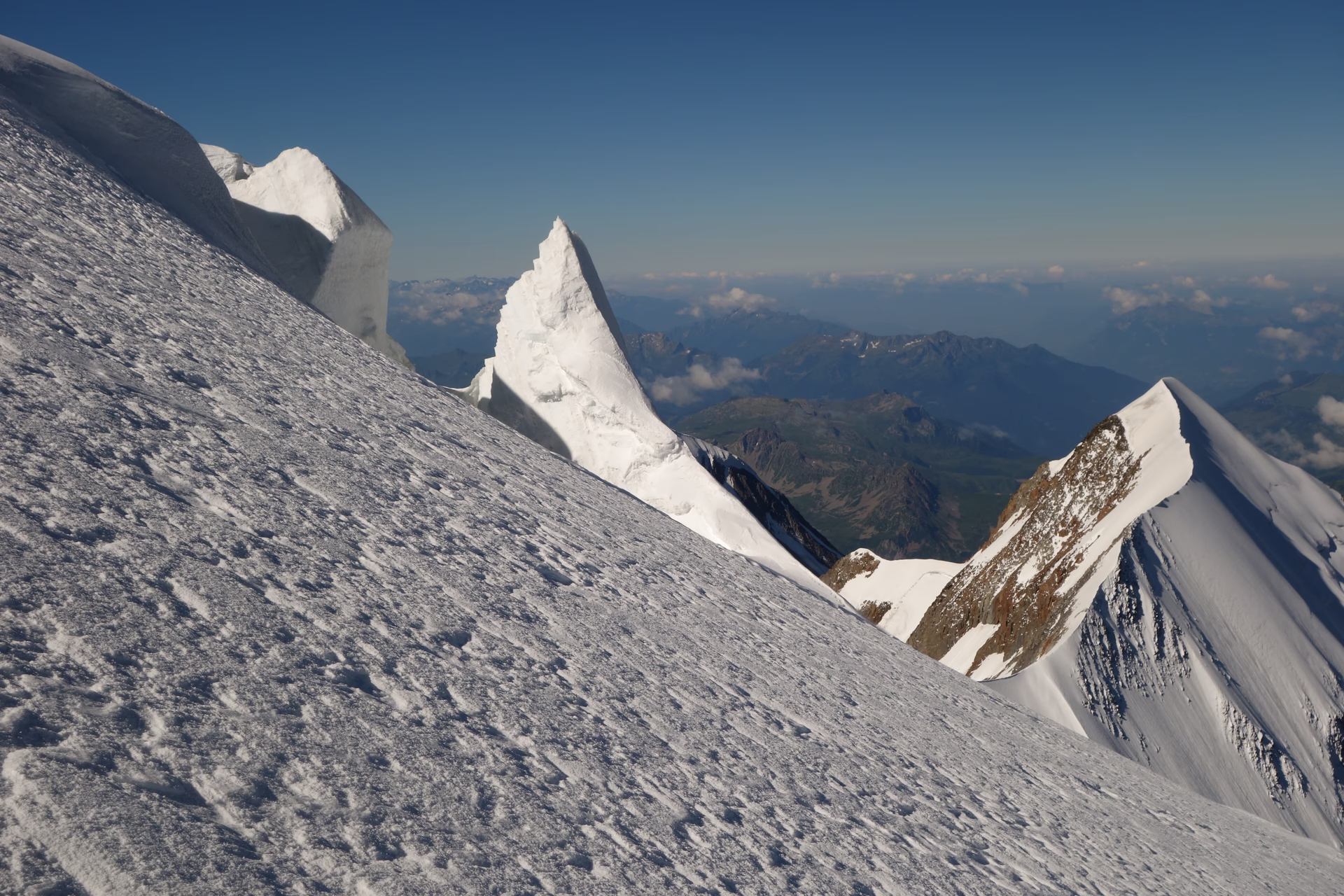
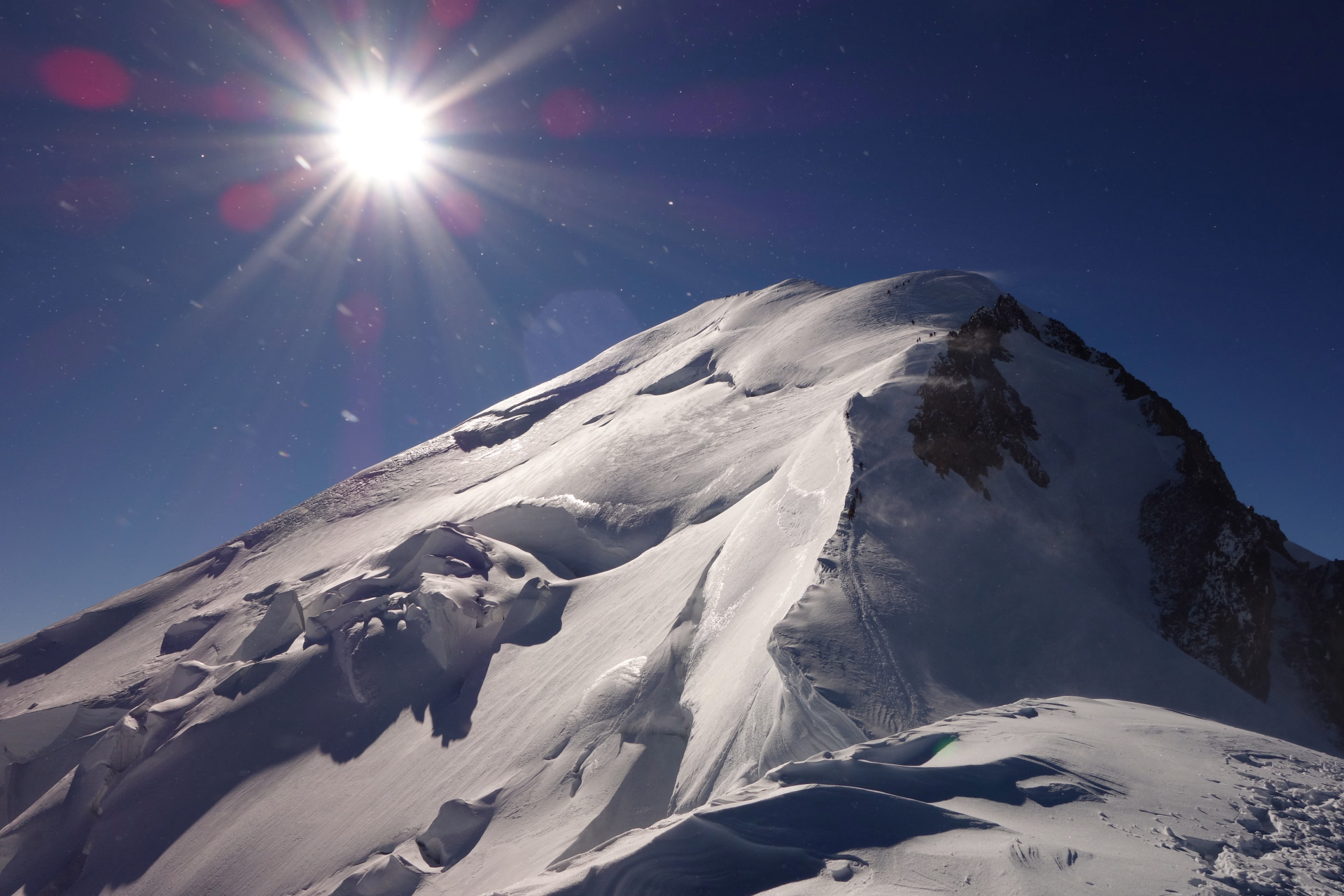
We set off at night via the rocky spur of the Aiguille du Goûter. We pass the Dôme du Goûter at 4,304 meters and then take a short break at the Vallot refuge-bivouac. At sunrise, we begin our ascent of the magnificent and airy Bosses ridge. After this final push, we reach the summit of Mont Blanc at 4,806 meters. We then descend to rest at the Goûter refuge.Day 4 -
Descent towards the eagle's nest and return to Chamonix
- Activity Mountaineering
- Duration of the activity 5h
- Negative elevation 1400 m
- Breakfast included
- Lunch not included
- Dinner not included
We begin our descent via the same route to reach the Nid d'Aigle. The Mont Blanc Tramway and then the cable car take us back to Les Houches where we find our vehicles. We celebrate the end of this wonderful alpine adventure with a convivial lunch either in Bellevue or Chamonix.Day 5
Note
This program may be modified at the guide's discretion if mountain conditions, weather or the physical condition of the participants require it.
For safety reasons and to ensure a consistent level corresponding to that announced, the management and organization reserve the right to interrupt your participation if your technical level and/or physical fitness do not correspond to those required.
Accommodation
Access
Go to the starting point
Price details
The price includes
- The technical organization of the internship
- Supervision by high-mountain guides: 1 guide for the group during preparation and 1 guide for 2 people during the ascent
- Half-board accommodation (dinner and breakfast) is provided throughout the stay, from midday on day 1 to midday on day 5, in mountain huts and gîtes.
- Lunch picnics during the five days of the training course
- The ski lifts necessary for the normal running of the program
The price does not include
- Transportation will be provided by participants' vehicles.
- The round trip to the Mont Blanc Tunnel
- Individual technical equipment
- Race snacks (cereal bars, dried fruit, chocolate bars and other snacks as you wish)
- Drinks (water, beer, cola, tea, coffee...) and personal expenses
- Anything not mentioned under 'the price includes'
- Equipment rental available (shoes, harness, helmet, crampons, ice axe, telescopic poles, backpack, headlamp, etc.)
- Water in the mountain huts (expect to pay €7-10 per bottle)
- Drinks in mountain huts and personal expenses
Options
- Flex fare and insurance
Practical information
Specific formalities
Specifics
Before your departure, check with the embassy or consulate regarding the entry and stay requirements for your destination country. You can also find this information on the France Diplomatie website ( https://www.diplomatie.gouv.fr/fr/dossiers-pays/ ).
In the case of flights with stopovers operated by different airlines, also check the entry requirements of the countries you are transiting through.
It is your responsibility to ensure you are in compliance, particularly regarding the validity of your identity documents (for example, some countries require your passport to be valid for at least six months after your return) , visa requirements, necessary vaccinations, and health recommendations. And don't forget to consider any customs restrictions and other potential requirements of your destination or transit country.
ℹ️ Information may change up to the departure date, remember to regularly check official websites.
Equipment
Equipment provided on site
- The group equipment (ropes) is provided
- Slippers (Crocs) and blankets/duvets are available in the shelters.
Equipment to bring
- High-altitude mountaineering boots with rigid soles and crampon compatibility are mandatory (trekking type boots are not sufficient).
- A comfortable 40/50 liter mountaineering backpack: it must have attachments for crampons, ice axe and helmet
- An ice axe, crampons and a harness equipped with a screwgate carabiner (note that carabiners cannot be rented, you will need to buy them if you do not have any)
- A helmet
- One or two telescopic ski poles (depending on your preferences): we highly recommend them, especially for downhill runs.
- A water bottle/thermos of at least 1.5 liters
- A headlamp, with spare batteries and bulbs
- A pocket knife
- A rain cover for the bag (not mandatory)
- 1 waterproof pouch with your money, identity documents (and if possible, blood type/contact lens wearer information, etc.), insurance/assistance contract and emergency telephone numbers
- A pair of gaiters (not available for rent)
- A sleeping bag liner is mandatory , and there are blankets available in the refuge ( sleeping bag unnecessary ).
- A Ziploc bag with medication and toiletries (bare minimum: toothpaste + contact lens solution + hand sanitizer): there is generally no running water in the shelters, so bring some alcohol-free wipes if you wish (be mindful of the weight).
- A small tube of SPF 50 sunscreen (face and lips) + after-sun lotion
Clothing to bring
- Cap
- Hat (or cap) for sun protection and/or scarf
- Glacier sunglasses (category 4 protection) + ski goggles
- A balaclava (like a balaclava that covers the whole head) (very useful in very cold weather)
- 1 pair of very warm mittens
- 1 pair of fleece or wool gloves
- 1 pair of glove liners
- 2 or 3 breathable, long-sleeved technical base layers
- Breathable technical base layer (carline, lightweight fleece...)
- Thick fleece jacket
- Down jacket or vest (not mandatory but appreciated if it's very cold on summit day)
- 1 windproof, waterproof and breathable Gore-Tex type jacket
- 1 pair of comfortable mountain pants for approach trails
- 1 pair of Gore-Tex type windproof trousers when you are on a glacier
- 1 pair of breathable technical tights
- Socks: 3 thin pairs and 2 thicker pairs
- 1 night outfit for the evening of Day 3 at the Tour chalet + toiletries
- A few hand and/or foot warmers can prove useful for those who get cold easily on summit day.
This is a general list intended to cover all the weather conditions you might encounter in the high mountains. It should be adapted to the specific conditions expected during your stay. Always pack warm clothing, even when temperatures are high in the valley.
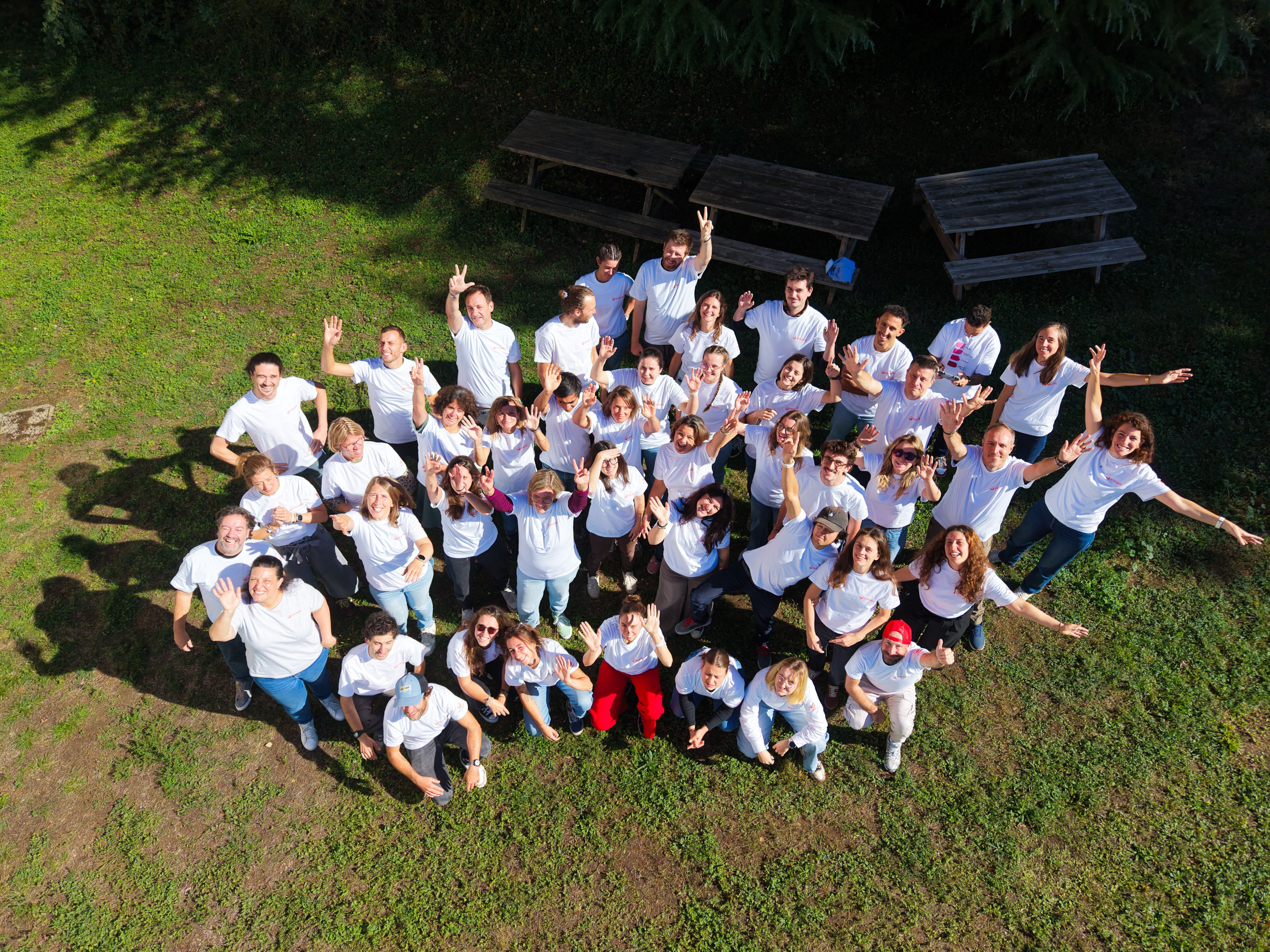
The Paulin team
Passionate about travel and connecting with people, our team will help you design meaningful adventures. From small group tours led by passionate local guides to tailor-made trips, experience unique journeys, immersing yourself in cultures and communities. From cultural discovery to challenging treks, explore the world's most beautiful destinations with us, far from the beaten path, at your own pace and according to your desires.