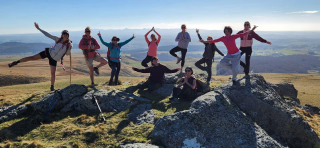
Occitanie
/ Massif Central
St. James of Compostela, from Figeac to Cahors via the Célé route
Réf : TRUHYA
In summary
-
Sports
-
Duration7 days
-
LevelIntermediate
-
DestinationOccitanie / Massif Central
-
AgeFrom 14 - 90 years
-
CO₂-Emissions70.58 kg CO2
-
Type of stayIndependent traveler
In a few words
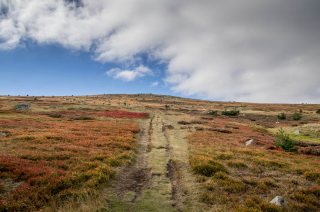
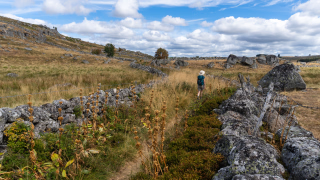
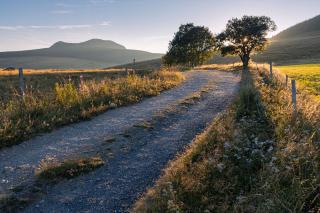
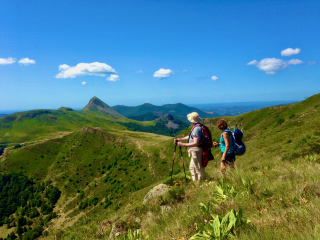
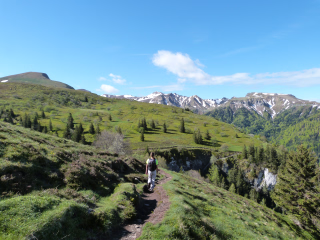
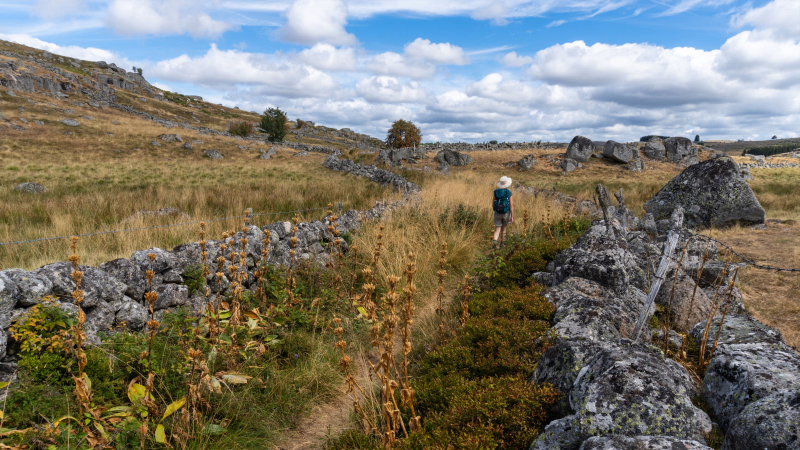
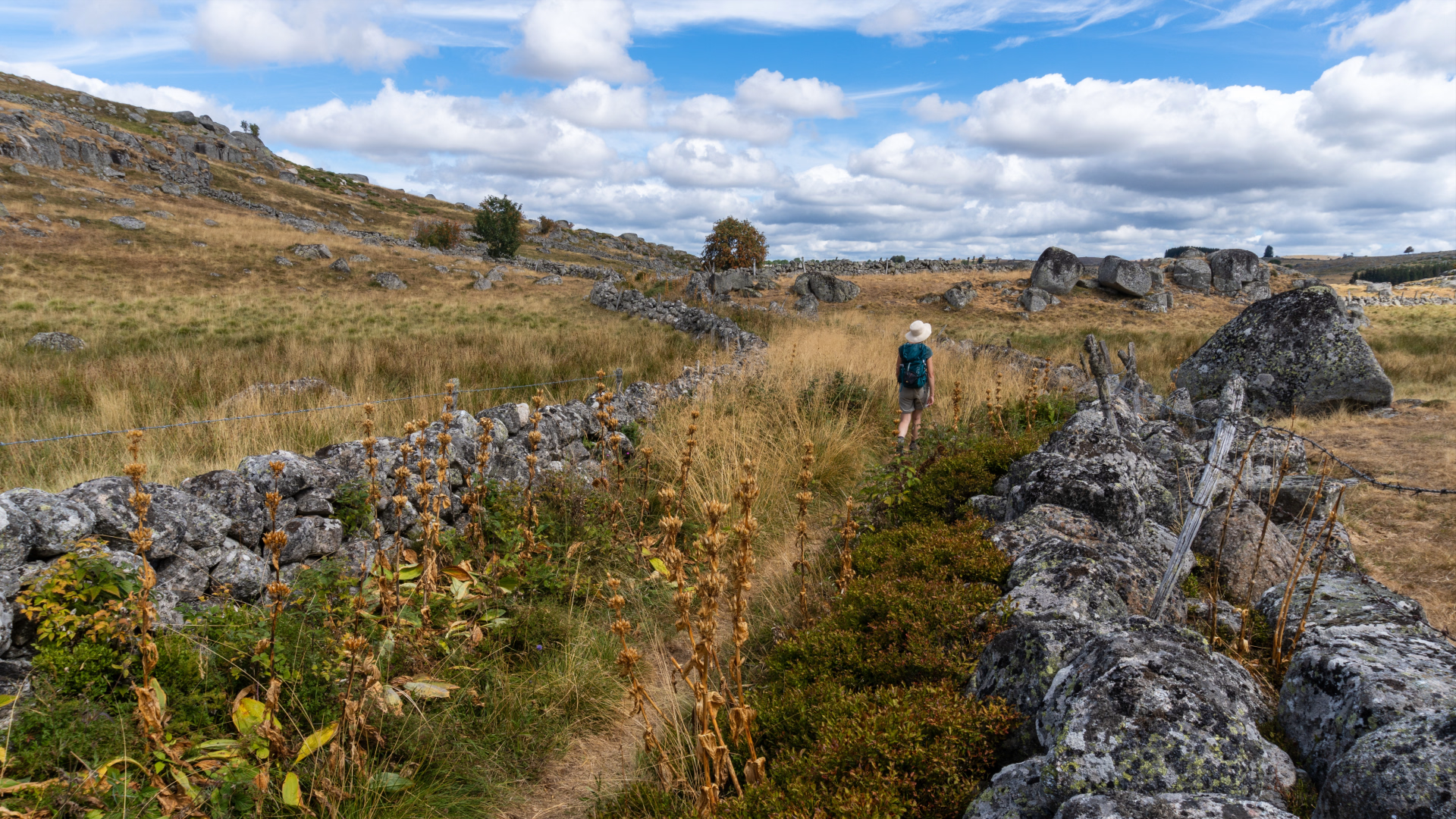
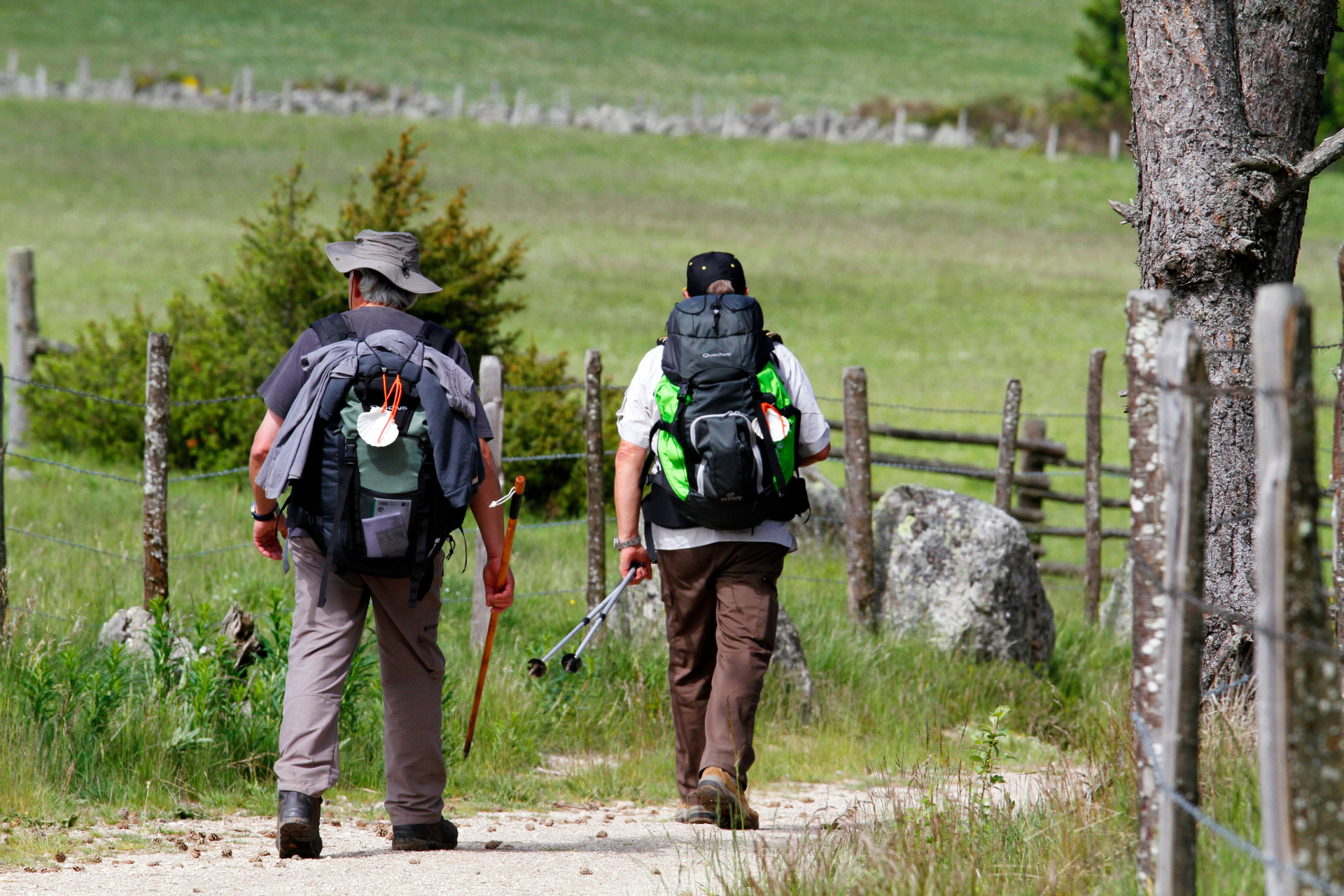
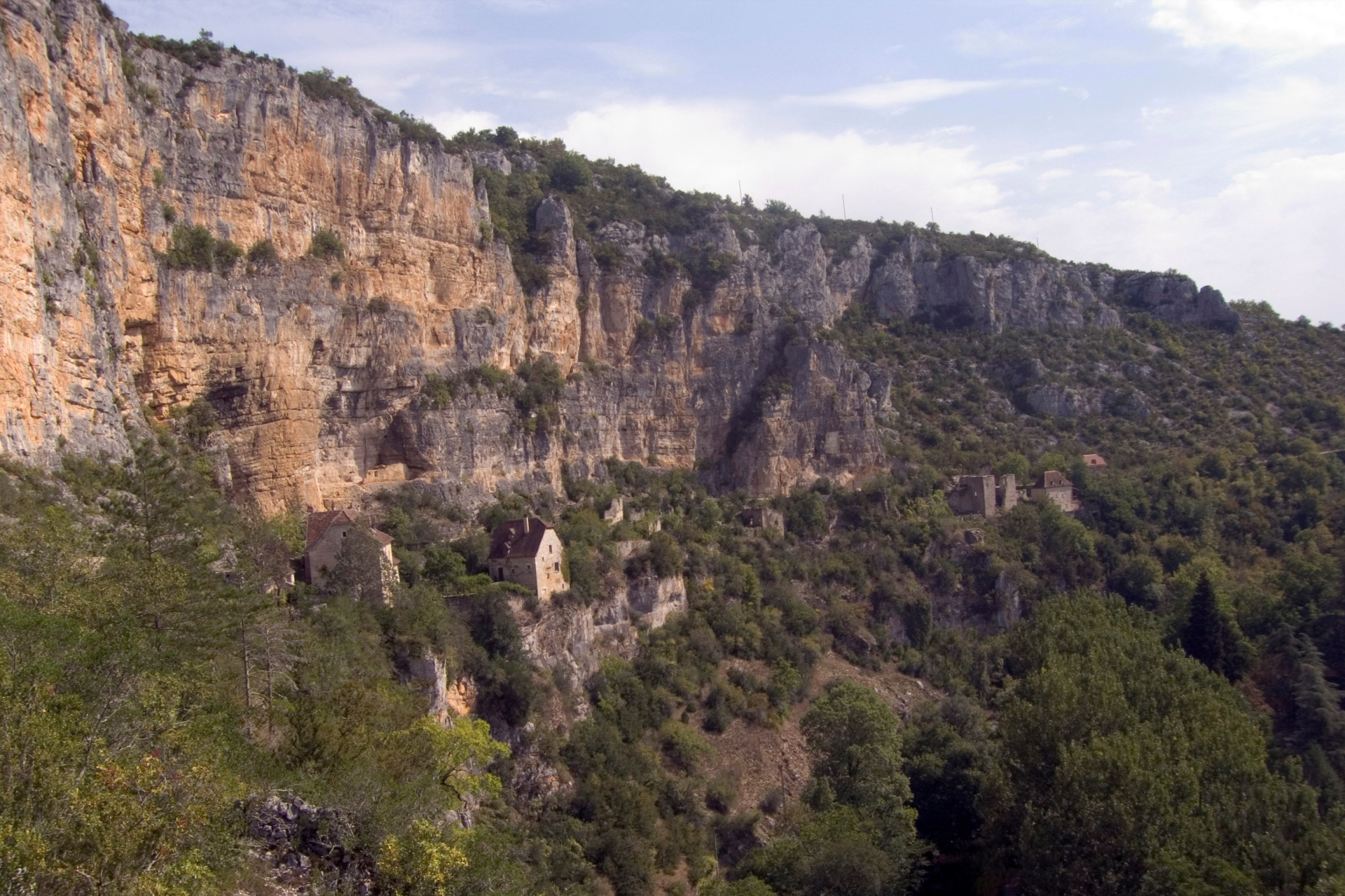
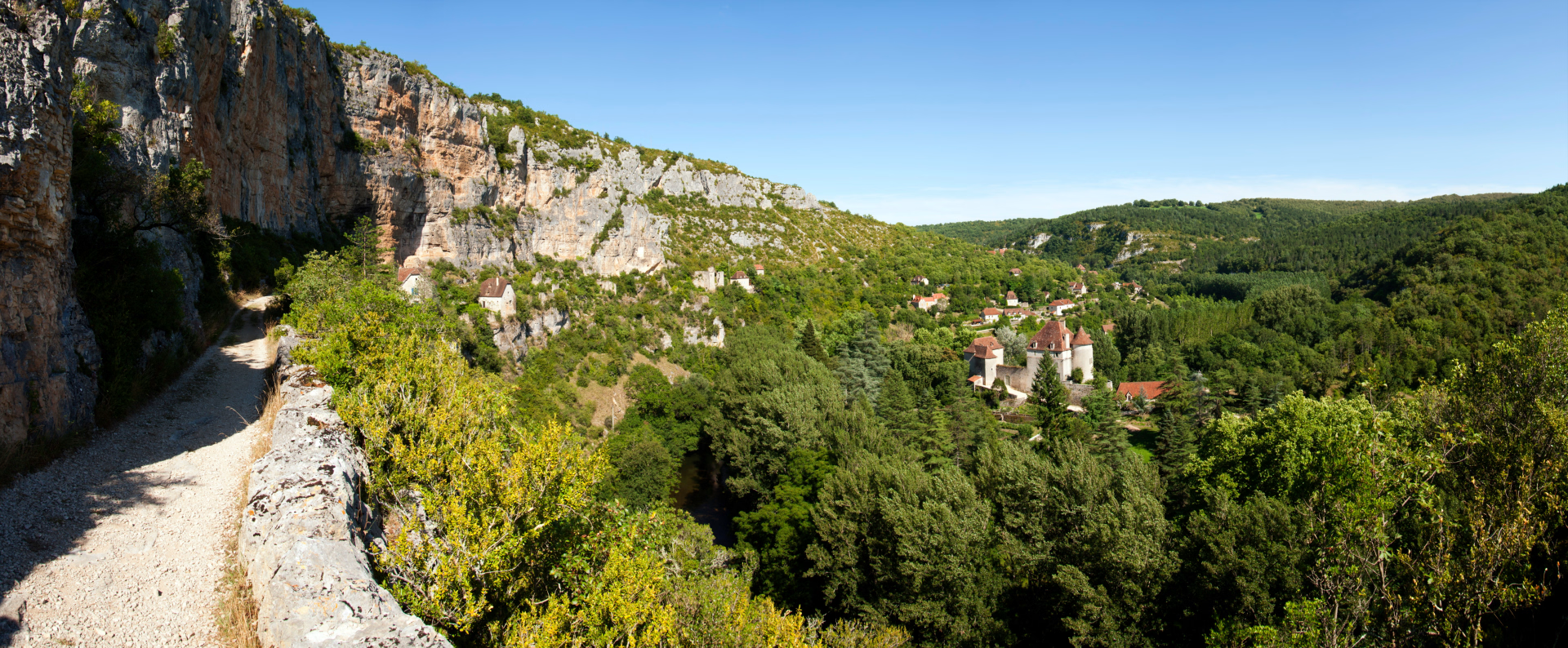
The Célé Way offers a peaceful hike between Figeac and Cahors, following a path framed by vegetation typical of the Causses region, both dry and arid. The trail runs alongside the Célé river and crosses limestone cliffs, offering hikers a natural setting conducive to serenity.
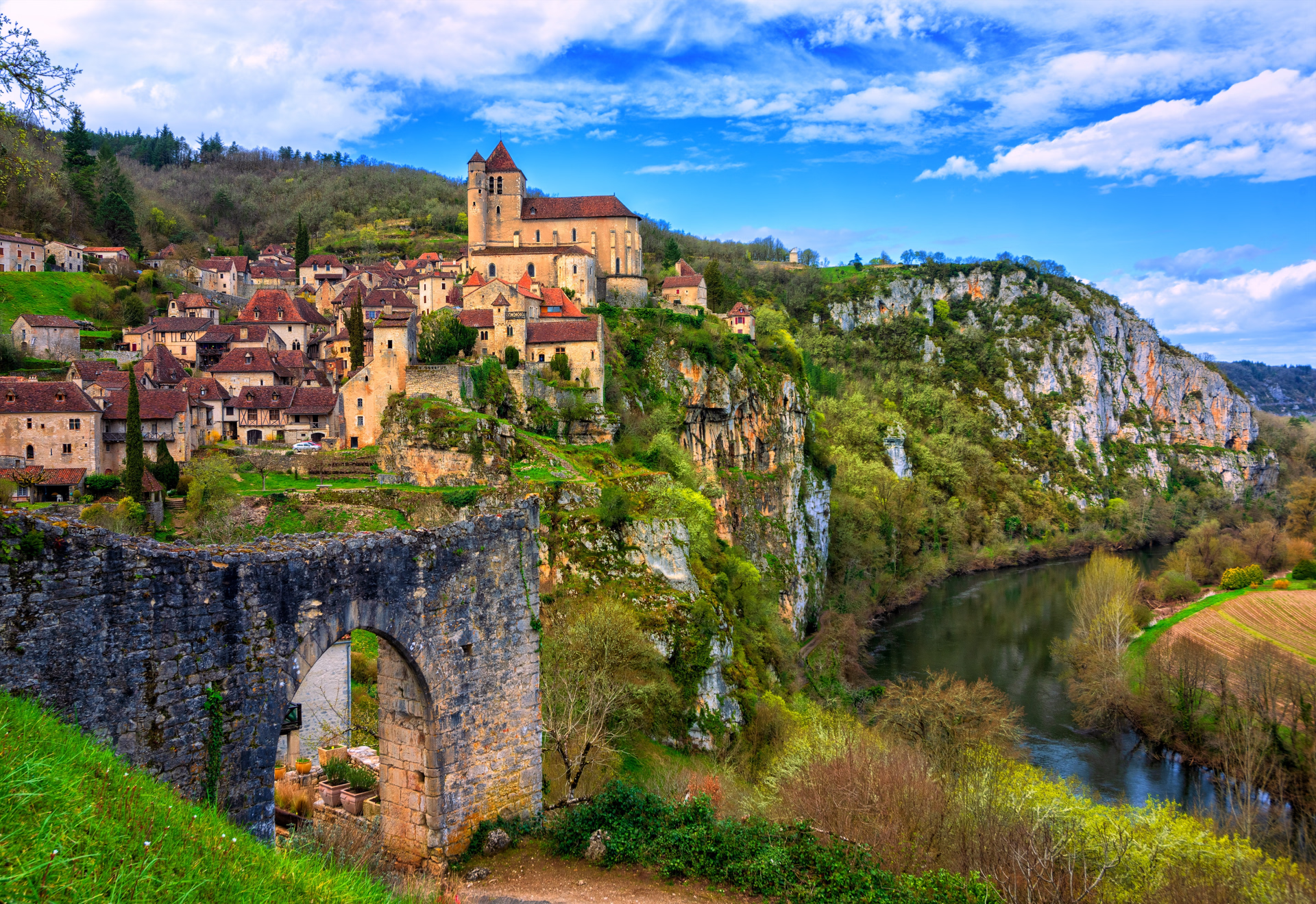
Among the highlights of the hike, the village of Saint-Cirq Lapopie stands out. Perched on a cliff, this medieval village offers spectacular views over the valley and is a major point of interest for hikers, with its preserved architecture and rich historical heritage .
The route also includes the discovery of other villages steeped in history, such as Marcilhac-sur-Célé, with its ruined abbey, and Cabrerets, famous for its Pech Merle caves.
The Célé Way is ideal for hikers seeking authenticity and special moments in nature , offering a retreat away from the most frequented trails, while immersing themselves in the natural and historical heritage of the region.
The highlights
-
A more secret and less frequented path
-
The village of Saint-Cirq Lapopie
-
Accommodation in hotels, lodges and guesthouses
Subscriber benefit
save 5%
by joining
our community
Decathlon Travel Benefits
Best price guaranteed:
We offer twice the difference
Free cancellation more than 30 days in advance
Payment in 2 installments
Learn more
Photos
Sport
Level
Hiking / Trekking
For those wishing to hike for 4 to 5 hours a day, covering an elevation gain of around 600m on trails. You hike occasionally and are in good physical condition.
The expert's opinion
The concept of "difficulty" of hikes is often mentioned, either through the comments you send us or through the guides during your trips.
It therefore seems important to us to take stock of the situation.
The idea is that a casual hiker can easily estimate the difficulty of the hike before committing to it:
- Route requiring a minimum of experience on generally well-marked mid-mountain trails.
- A little training in mountain walking may be necessary, especially to cope with the elevation gain and the length of the walk.
- The path is not always in good condition and there may be sections with stones, making the walk a little more difficult and strenuous.
- 4 to 6 hours of walking per day (excluding breaks)
- High-top hiking boots and weather-appropriate clothing are necessary.
- Positive elevation gain between 500 and 700m: It is better to be in good shape, or at least somewhat athletic, but it is still quite doable if you are used to a little physical activity, even light.
- If you are self-supported, there may be some off-trail sections, but the route generally remains obvious.
- Some sections may be exposed at times, and slips or missteps should be avoided by walking carefully.
- It may be necessary to pay attention to the practicability of the route depending on the weather conditions.
In figures
Hiking
- Average duration/day: 5h30
- Average distance/day: 22 km
- Average daily elevation gain: 528 m
- Average daily descent: 508 m
Management
Enjoy an independent stay, where you follow the program at your own pace.
Independently
Independently
Progress at your own pace and according to your desires 🌏
Program
-
Figeac
- Accommodation Hostel
- Breakfast not included
- Lunch not included
- Dinner not included
Arrival in Figeac and check-in to your accommodation.
Night in a B&B
Day 1 -
From Figeac to Espagnac-Sainte-Eulalie
- Activity Hiking
- Duration of the activity 6h30
- Distance 26 km
- Positive elevation gain 550 m
- Negative elevation 530 m
- Accommodation Hostel
- Breakfast included
- Lunch not included
- Dinner included
We continue our exploration along the Célé Valley, a hidden waterway often overlooked by traditional tourist guides. The valley's slopes rise between 100 and 200 meters, opening onto a rolling landscape typical of the Causses region. A captivating and welcoming setting awaits you, promising heartwarming views and moments at every turn.
Distance: 26.3km - Elevation gain/loss: +531m - -551m - Walking time: approximately 7 hours
Day 2 -
From Espagnac-Sainte-Eulalie to Sauliac-sur-Célé
- Activity Hiking
- Duration of the activity 5h30
- Distance 19 km
- Positive elevation gain 570 m
- Negative elevation 490 m
- Accommodation Hostel
- Breakfast included
- Lunch not included
- Dinner included
This time, we'll leave the valley to explore the treasures of the right bank, nestled in the limestone plateaus. This region is rich in geomorphological wonders, offering a natural spectacle of caves, peaks, valleys, and rocky escarpments. And despite the limestone and often arid nature of the plateaus, this area boasts soothing vegetation, adding to the beauty and diversity of the landscape.
Distance: 19km - Elevation gain: +570m - -490m - Walking time: approximately 5h30
Day 3 -
From Sauliac-sur-Célé to Saint-Cirq-Lapopie
- Activity Hiking
- Duration of the activity 5h30
- Distance 22 km
- Positive elevation gain 700 m
- Negative elevation 620 m
- Accommodation Hostel
- Breakfast included
- Lunch not included
- Dinner included
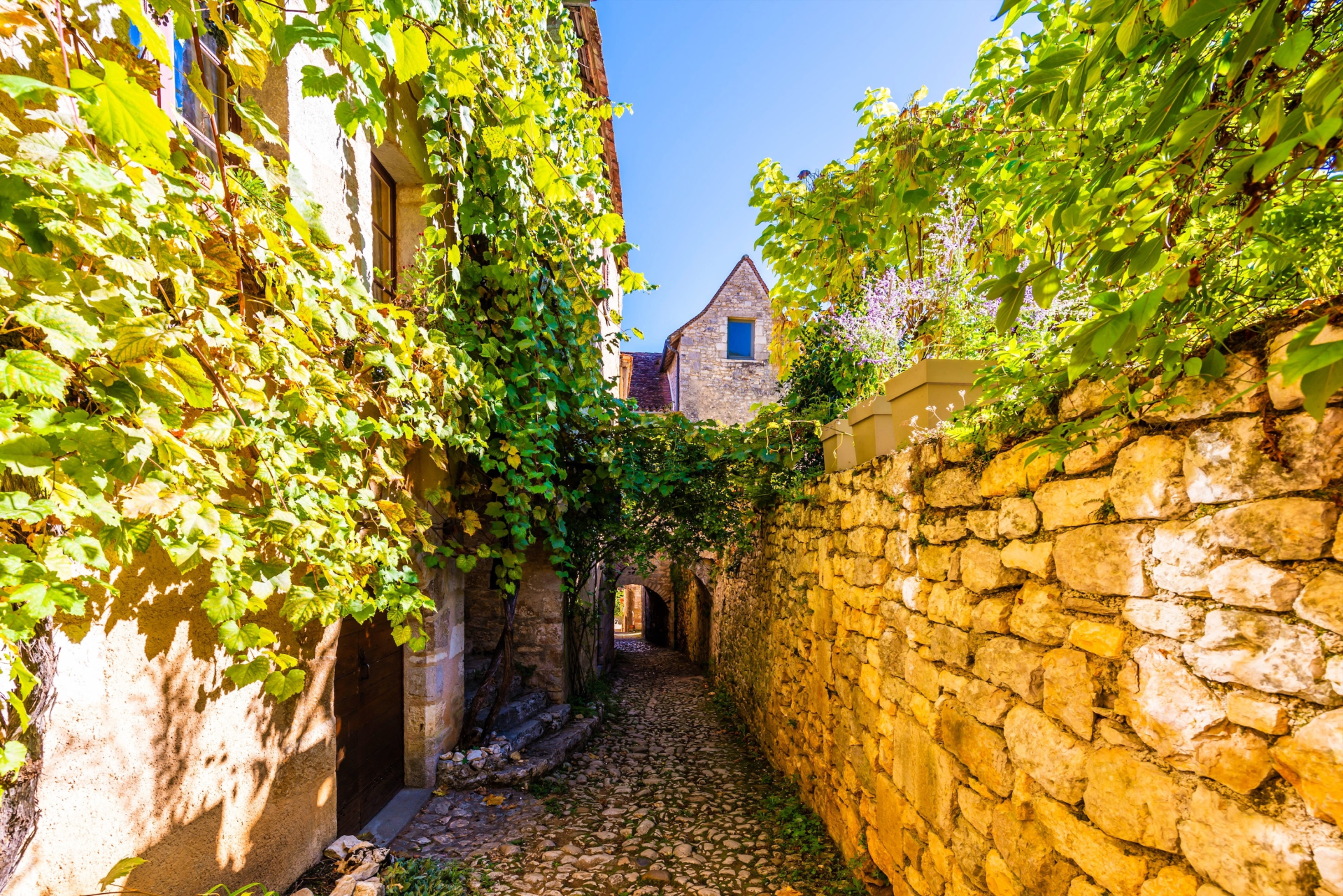
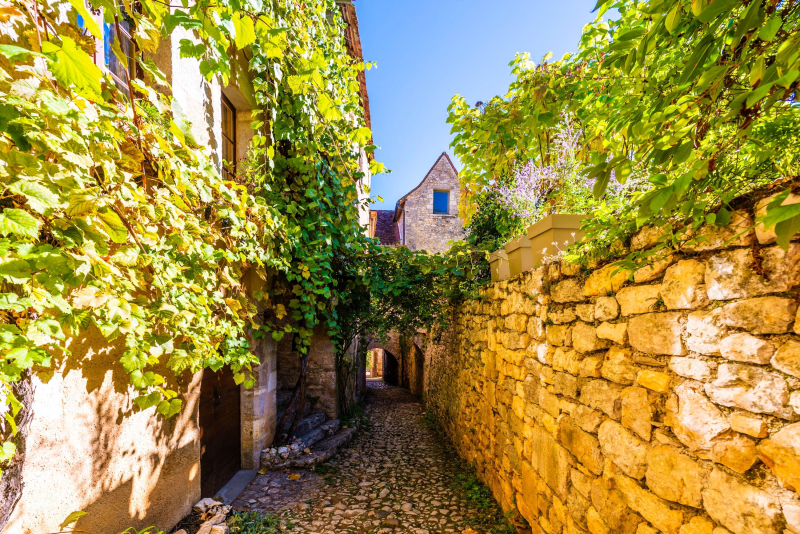
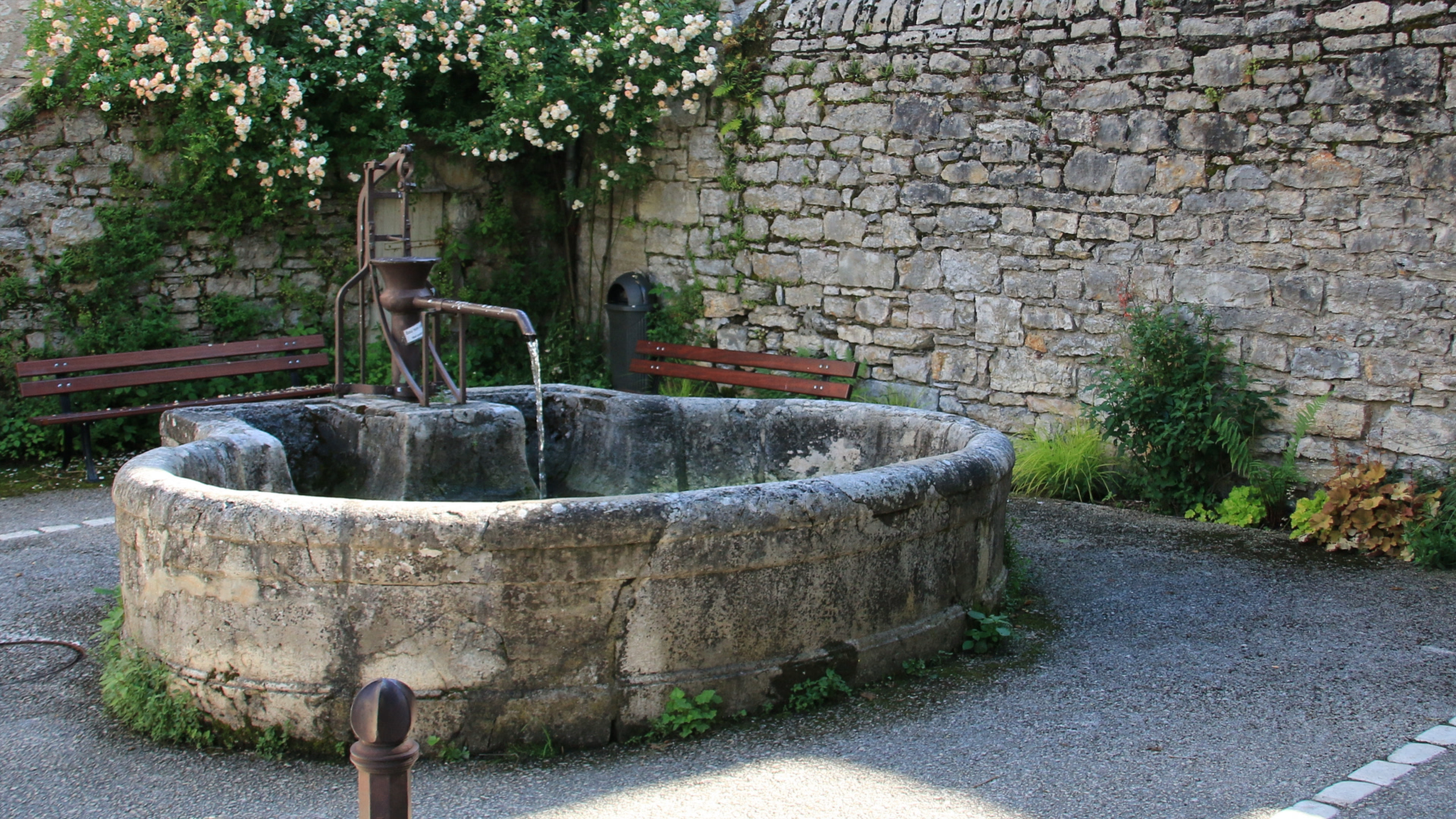
After a day of hiking, it's a pleasure to explore the village at your own pace, strolling through the alleyways that catch your eye. Classified as one of the "Most Beautiful Villages of France," the village boasts over 13 historical monuments. The cobbled streets will lead you to the Place du Sombral, the Rue de la Pelissaria, or the Maison de la Fourdonne, where the medieval architecture lends a unique beauty to every corner.
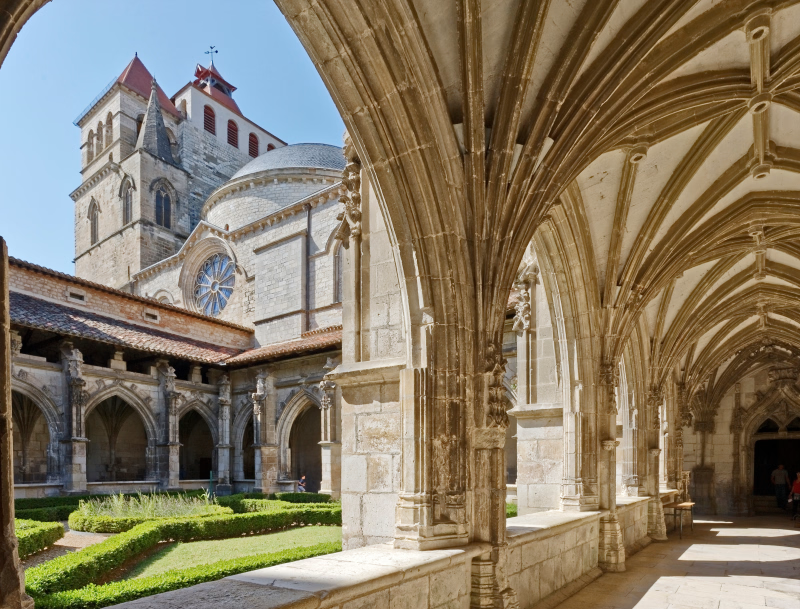
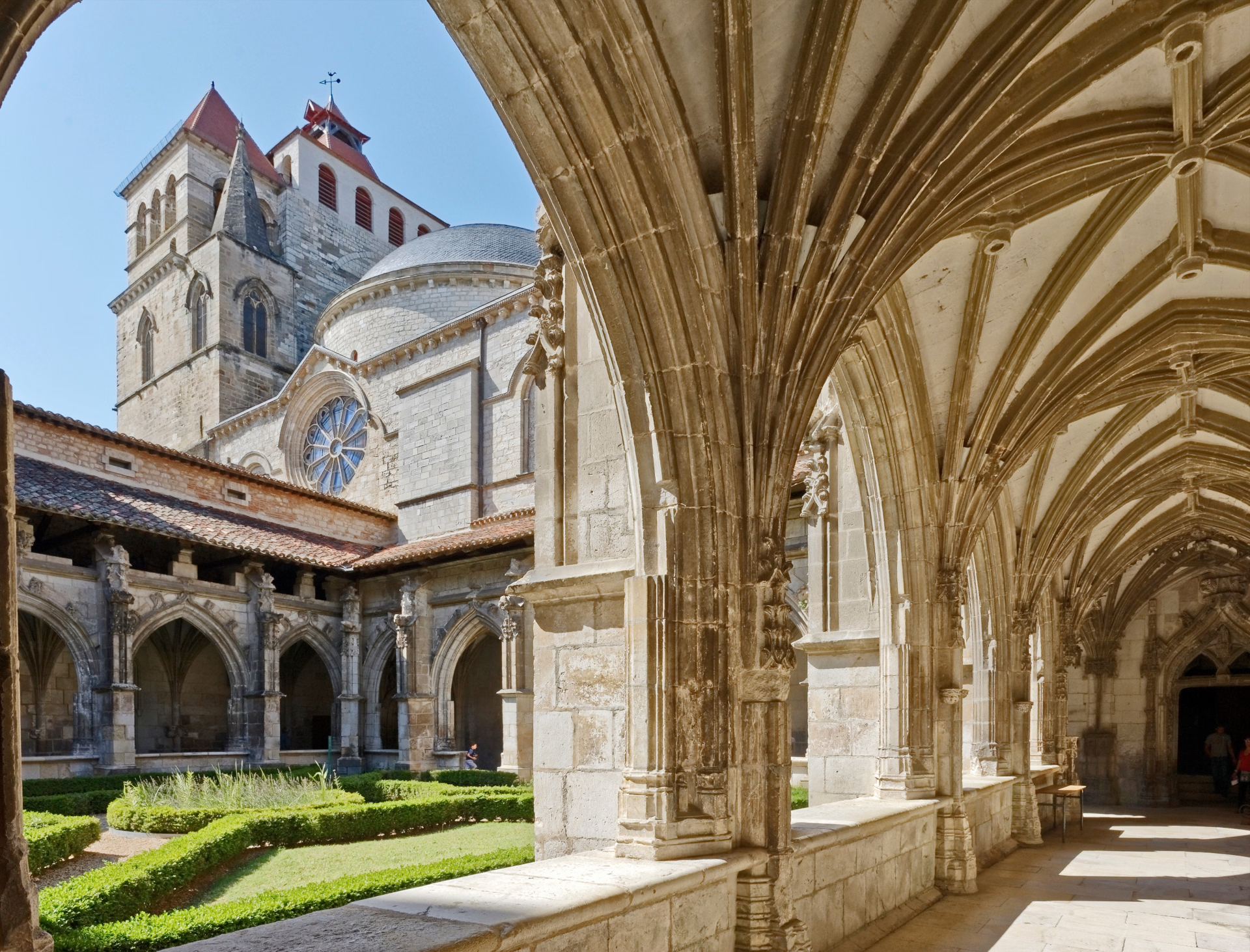
Don't miss a visit to the church of Saint-Cirq-Lapopie, dedicated to Saint Cyr and Saint Juliette. This impressive 15th-century religious building is a splendid example of Gothic architecture, adorned with beautiful frescoes inside, bearing witness to its fascinating history.
Distance: 22km - Elevation gain/loss: +700m - 620m - Walking time: approximately 5h30
Day 4 -
From Saint-Cirq-Lapopie to Vers
- Activity Hiking
- Duration of the activity 5h30
- Distance 21 km
- Positive elevation gain 570 m
- Negative elevation 640 m
- Accommodation Hostel
- Breakfast included
- Lunch not included
- Dinner included
The village of Vers has always been an essential transit point for armies, traders, and pilgrims traveling between Cahors and the northern and eastern regions of France. From the Middle Ages onward, a small castle was built there, not to house a local lord, but to monitor and control an important strategic route.
Vers also served as a stopover for bargemen transporting goods on flat-bottomed boats to Bordeaux. Before continuing their journey, they would stop at the chapel of Velles to pray to the Virgin Mary, imploring her protection for the rest of their perilous expedition.
Distance: 21km - Elevation gain/loss: +570m - -640m - Walking time: approximately 5h30
Day 5 -
From Vers to Cahors
- Activity Hiking
- Duration of the activity 4h30
- Distance 18 km
- Positive elevation gain 250 m
- Negative elevation 260 m
- Accommodation Hostel
- Breakfast included
- Lunch not included
- Dinner not included
The navigable Lot River:
The Lot River was once navigable along its entire length, from Entraigues to Aiguillon, but it was decommissioned in 1926. From 1945 onwards, the construction of small hydroelectric power plants made navigation impossible. However, since the 1990s, with the construction of locks, 110 km of the Lot are navigable again. During this leg of the journey, you will pass by or see four of these locks.
Cahors in the Gallo-Roman period:
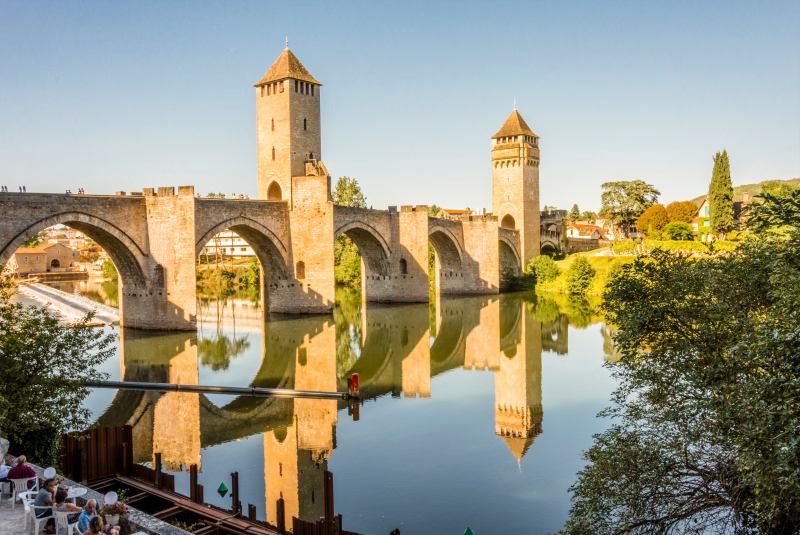
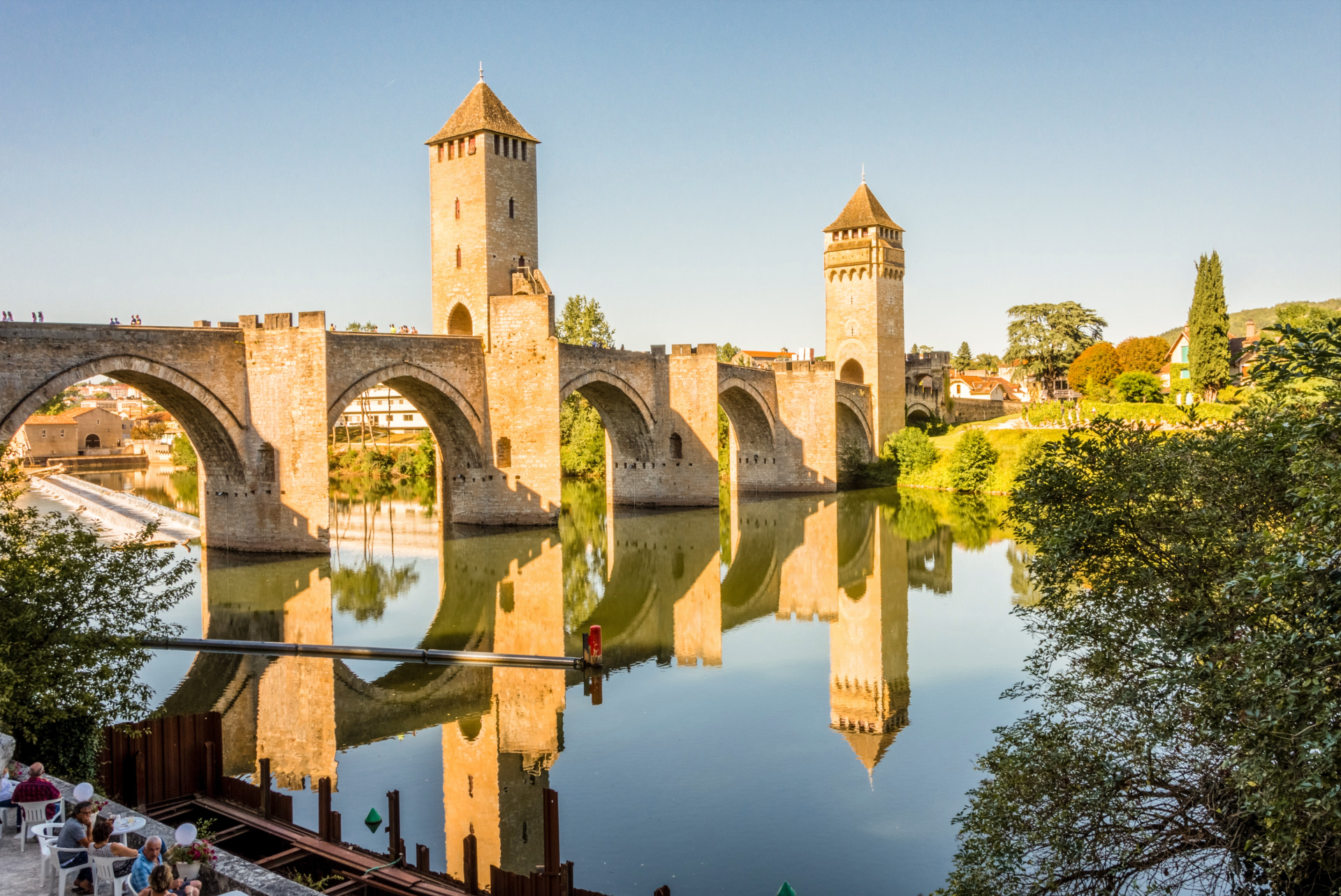
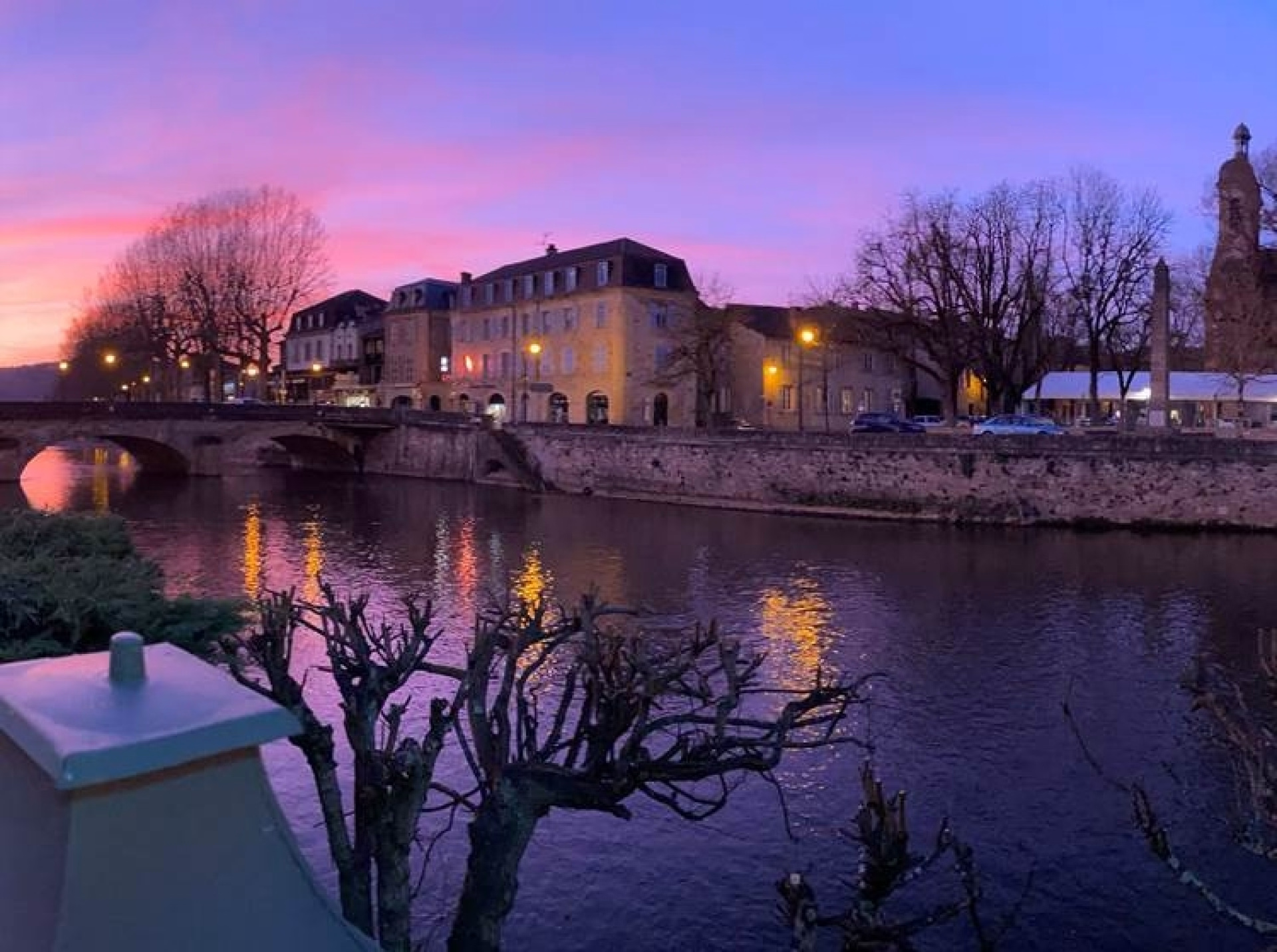
During the Gallo-Roman period, Cahors, formerly called Divona Cadurcorum, was the capital of the Cadurci tribe. The city developed around the sacred spring of the Cadurci, located at the Chartreux fountain, near the Valentré bridge. By the 1st century, Cahors had become a prosperous city, boasting a bridge over the Lot River, a theater seating 6,500, thermal baths, and luxurious villas. The city was already renowned for its wine and linen fabrics, which it exported extensively.
John XXII:
Jean Duèze, born in Cahors in 1244, became Pope John XXII in 1316. He died in 1334 in Avignon, but during his pontificate, he worked to develop his native city. In 1331, he founded the University of Cahors, one of the first in France, with faculties of theology, medicine, law, and arts. Its students enjoyed the same privileges as those at the universities of Paris and Toulouse. The university merged with the University of Toulouse in 1751.
Night in a B&B
Distance: 18km - Elevation gain/loss: +250m - -260m - Walking time: approximately 4h30
Day 6 -
Cahors
- Breakfast included
- Lunch not included
- Dinner not included
End of stay after breakfast.
Day 7
Accommodation
🏠 Inn - Days 1 to 6
Access
Departure
Figeac, France
Day 1
: 17h00
End of stay
Cahors, France
Day 7
- 10h00
It's possible to arrive and depart by train!
Go to the starting point
Take the train toGare de FigeacOrGare de Cahors
Travel to the place of stay
Find out about parking options nearby
Price details
The price includes
- 4 nights with half board
- 2 nights in a B&B
- Your digital roadbook
- The dedicated step-by-step guidance app
- The organization and preparation of the stay
- Our assistance throughout your stay
The price does not include
- Dinners on day 1 and day 6
- meal baskets
- Insurance
Options
- Return transfer : CHF26.60 / unit
- Luggage transport : CHF51.30 / unit
- Half board : CHF60.80 / unit
- Freedom file (paper version) : CHF30.40 / reservation
- Extra night before or after your stay - Double or twin room : CHF83.60 / unit
- Extra night before or after stay - Single room : CHF112.10 / unit
- Traveling with a pet : CHF76.00 / unit
- Flex fare and insurance
Practical information
Specific formalities
Equipment
S
Decathlon Travel Partner
Our partner team
4.3/5
(342 reviews)
• 81 stays
Depuis 1980, notre partenaire local façonne des randonnées sans intermédiaire, s'imposant comme un véritable artisan du voyage à pied. Fort d'une expertise de plus de 40 ans, chaque membre de l'équipe cultive une connaissance intime des territoires, notamment à travers des liens étroits avec le Parc Naturel Régional des Grands Causses. Engagée pour un tourisme responsable, l'agence arbore fièrement des labels tels que « Esprit Parc National » et la Charte Européenne du Tourisme Durable. En privilégiant des relations directes et durables avec ses prestataires, elle propose des expériences uniques et des « pas de côté » authentiques, validés par un taux de satisfaction exceptionnel de 98 %.
Are you satisfied with this page?
Subscriber benefit
save 5%
by joining
our community
Decathlon Travel Benefits
Best price guaranteed:
We offer twice the difference
Free cancellation more than 30 days in advance
Payment in 2 installments
Learn more