

Solidarity ascent of Kilimanjaro via the Marangu route
In summary
-
Sports
-
Duration8 days
-
LevelConfirmed
-
DestinationTanzania / Kilimanjaro
-
AgeFrom 14 - 90 years
-
CO₂-Emissions77.12 kg CO2
-
Type of stayIn a group
-
Languages
 French
In a few words
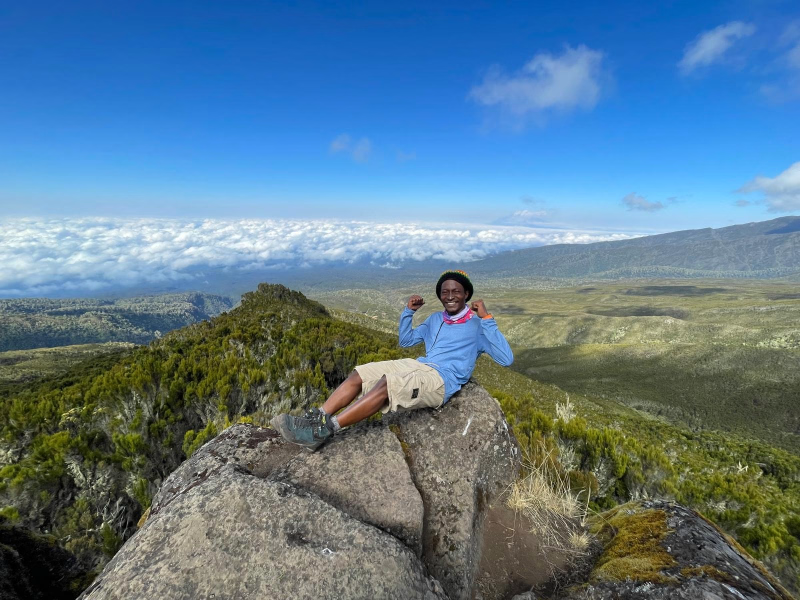
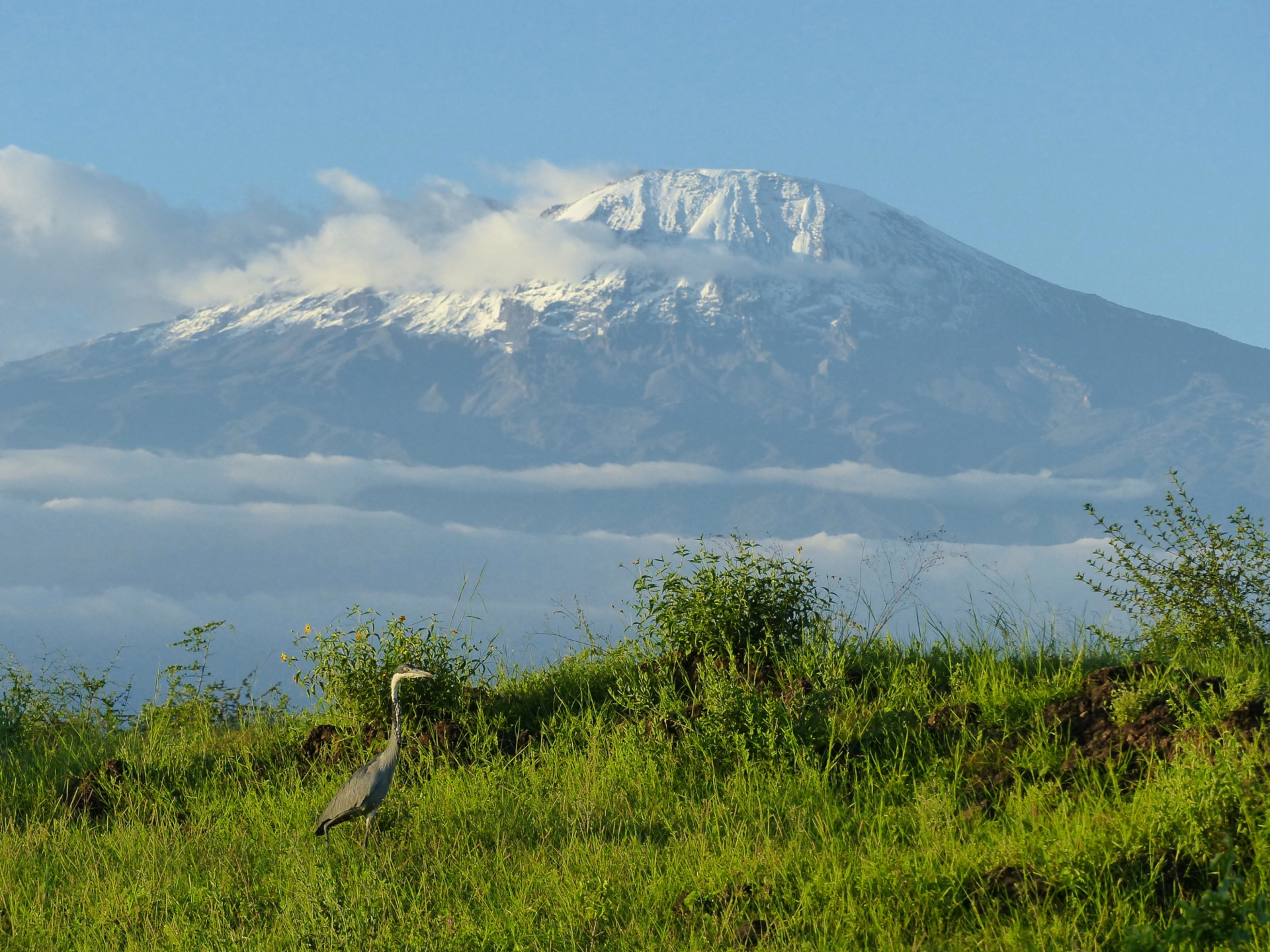
Climbing Kilimanjaro is more than a physical challenge: it's an encounter . An encounter with yourself, facing the immensity of the landscapes. An encounter with a dedicated local team, proud to accompany you step by step to Uhuru Peak, at 5,895 meters. We have chosen responsible mountain tourism, where every guide, every porter, every cook is fairly compensated from the outset.
By choosing the Marangu route – the only one with nights spent in mountain huts – you opt for a gradual, gentle, and accessible ascent, without sacrificing authenticity or challenge. And above all, you participate in a more equitable model , where people remain at the heart of the experience.
The highlights
-
Marangu Route: a unique itinerary with accommodation in mountain huts
-
Fair and responsible stay: tips included
-
The first route used by Kilimanjaro climbers
Photos



Sport
Level
Hiking / Trekking
The expert's opinion
A good basic level of physical fitness is required : you must be able to walk for several hours a day on varied terrain with elevation changes. Cardiorespiratory endurance and experience walking are essential to complete the stages without becoming exhausted. Finally, a certain degree of mental resilience is necessary to overcome accumulated fatigue and adapt to basic comforts or unpredictable weather .
In figures
Hiking
- Average duration/day: 7h30
- Average distance/day: 13 km
- Average daily elevation gain: 4177 m
- Average daily descent: 310 m
- Exposed Passages: Yes
Management
French

Stanley, founder of the partner agency and former porter for over 10 years on Kilimanjaro, will be there to welcome you, brief you and congratulate you at the end of your trek!
After observing for years the abuses surrounding the ascent of Kilimanjaro, Stanley chose to create his own agency in order to guarantee truly dignified conditions, both for the local teams and for the trekkers:
- 👟 Suitable equipment and footwear for guides and porters
- 🍲 Nutritious and decent meals for the whole team
A lunch together will also be organized at the end of your trek to share your anecdotes, moments of effort, suffering, joy and emotion during this unique adventure on the roof of Africa!

Stephen Peter, known as "Steve," is a 29-year-old guide with eight years of experience as a porter on Kilimanjaro. Always cheerful, he is very concerned about the well-being of his trekkers and knows how to get them to the summit safely.
Why is your rise to power ethical and based on solidarity?
- The guides and porters are fairly paid , with decent working conditions, appropriate equipment, and adequate meals throughout the climb.
- Tips are included in the price, to avoid putting any pressure on travelers or the local team.
- Part of the trip is donated to our partner's foundation , which supports development projects for the inhabitants of Kilimanjaro.
Program
-
Arrival in Moshi and overnight stay in a guesthouse
- Transportation Car - 00h20 - 10km
- Accommodation Bed and Breakfast
- Breakfast not included
- Lunch not included
- Dinner included
You arrive in Moshi! Porters' town at the foot of Kilimanjaro.
Take some time to relax, soak up the atmosphere, explore the surroundings, and then, after a delicious local dinner, spend your first night in Tanzania. Tomorrow, you'll set off to climb the roof of Africa!
Day 1 -
From Marangu Gate (1860m) to Mandara Hut (2700m)
- Activity Hiking
- Duration of the activity 7h30
- Distance 8 km
- Positive elevation gain 2700 m
- Accommodation Refuge
- Breakfast included
- Lunch included
- Dinner included
Here you are on the majestic Kilimanjaro massif. At the park entrance, after completing the necessary formalities, you begin your six-day ascent via the Marangu route. It's a day spent in the primary forest, a true feast for the senses. You might even be lucky enough to spot guereza colobus monkeys in the treetops. After a well-deserved rest, you can ask your guide to take you to the Maundi crater for a spectacular view of Kenya.
On this first day it will be important to find your walking pace, not too fast despite the ease, in order to maintain it each following day.
Habitat: Rainforest
Day 2 -
Mandara Hut (2700m) to Horombo Hut (3700m)
- Activity Hiking
- Duration of the activity 8h
- Distance 12 km
- Positive elevation gain 3700 m
- Accommodation Refuge
- Breakfast included
- Lunch included
- Dinner included
The day begins with a short walk to the edge of the forest, then you enter the heathland with its distinctive vegetation. About 4 to 6 hours later, the Horombo refuge will appear at an altitude of 3700 meters. From the cabin, you'll have a fantastic view of Mount Mawenzi, Kibo, and the vast plains of the Maasai steppe.
Habitat: Heathland
Day 3 -
Acclimatization day and return to Horombo Hut
- Activity Hiking
- Duration of the activity 5h
- Distance 5 km
- Positive elevation gain 4390 m
- Exposed passages Yes
- Accommodation Refuge
- Breakfast included
- Lunch included
- Dinner included
This acclimatization day should not be underestimated and significantly improves your chances of successfully reaching the summit. After a relaxing breakfast, a 4-hour hike takes you to Zebra Rocks (4020m). The distinctive black and white stripes give the rock formation its name. Upon your return to the Horombo Refuge, a hot lunch will be waiting for you. You can relax in the afternoon and recharge for the next day's hike.
Habitat: Heathland
Day 4 -
Horombo Hut (3700m) to Kibo Hut (4675m)
- Activity Hiking
- Duration of the activity 7h
- Distance 10 km
- Positive elevation gain 4675 m
- Accommodation Refuge
- Breakfast included
- Lunch included
- Dinner included
Today's stage is long and difficult . Not only is the elevation gain significant, but the trail passes by the "last water point" followed by the "Saddle" pass, which can be very windy. This plateau, almost devoid of vegetation, connects the main summit of Kibo to Mawenzi. The focus will be on the essentials: proper hydration and mental preparation for the night ascent. Upon arrival at the refuge, you'll appreciate a meal followed by an early bedtime, as the night will be short.
Habitat: Alpine desert
Day 5 -
Kibo Hut (4675m) to Uhuru Peak (5892m) and to Horombo Hut (3700m)
- Activity Hiking
- Duration of the activity 10h
- Distance 22 km
- Positive elevation gain 5892 m
- Accommodation Refuge
- Breakfast included
- Lunch included
- Dinner included
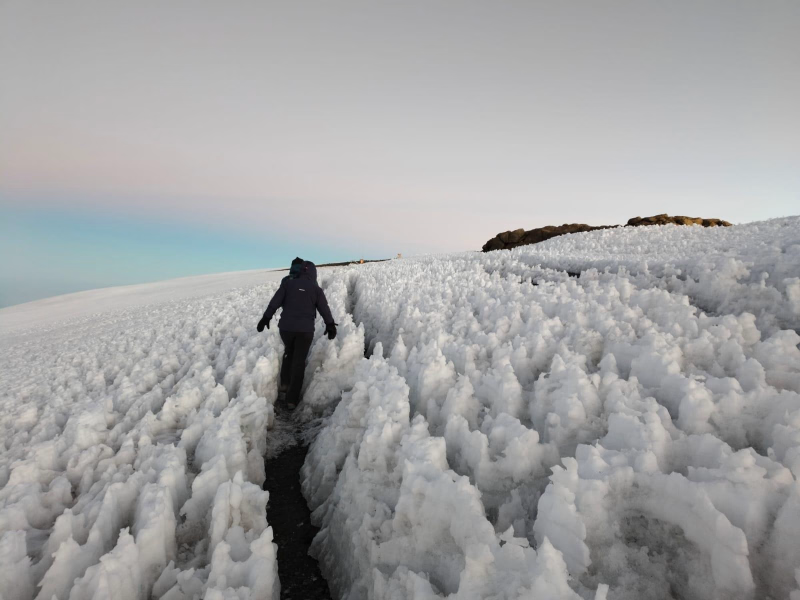
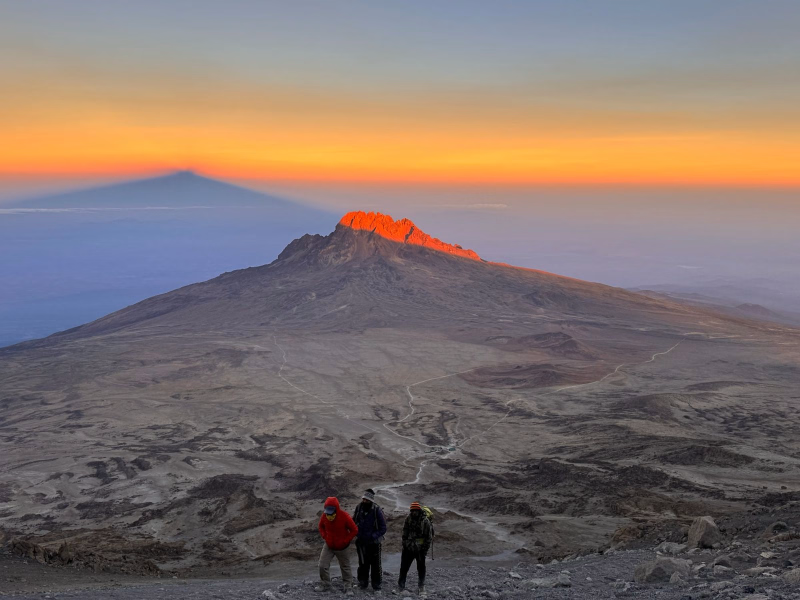
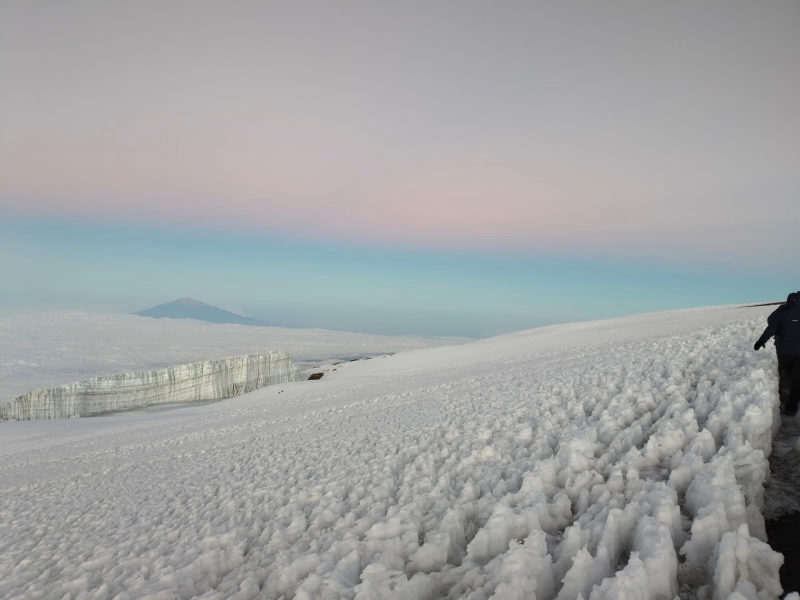
Between midnight and 2:00 a.m., you begin your trek to the summit. This is the most challenging part, both mentally and physically. The wind and cold at this altitude and time of day can be extreme. You ascend in darkness for several hours, taking frequent but short breaks. At Gilman Point (5,670 m), you are rewarded with a magnificent sunrise over Mawenzi Peak. Finally, you reach Uhuru Summit, the highest point of Mount Kilimanjaro and the African continent.
After spending a few moments observing the plains of Africa and congratulating ourselves, we descend back towards the Horombo refuge for a final dinner on the mountain and a well-deserved rest.
Kibo Hut at Uhuru Peak
- Altitude: 4675m to 5892m
- Distance: 6km
- Walking time: 6 to 8 hours
- Habitat: Alpine desert/Arctic zone
Uhuru Peak at Horombo Hut
- Altitude: 5892m to 3700m
- Distance: 16km
- Walking time: 4 to 5 hours
- Habitat: Arctic/Alpine desert/Heathland
Day 6 -
Horombo Hut (3700m) to Marangu Gate (1860m)
- Transportation Car - 00h20 - 1km
- Activity Hiking
- Duration of the activity 7h
- Distance 20 km
- Positive elevation gain 3700 m
- Negative elevation 1860 m
- Accommodation Bed and Breakfast
- Breakfast included
- Lunch included
- Dinner included
The final stage crosses the heathland to the Mandara Hut (2700m), where a hot lunch awaits you after approximately 5 hours of descent. A two-hour walk then leads to the entrance of the national park. After saying goodbye to your guides, porters, and cook, and collecting your certificate, you return to your hotel in Moshi. Once there, you can enjoy a relaxing hot shower and celebrate your achievement: you have climbed Mount Kilimanjaro!
Altitude: 3700m to 1860m
Habitat: Rainforest
Transfer for dinner and overnight stay at the guesthouse in Moshi
Day 7 -
Moshi's Departure
- Breakfast not included
- Lunch not included
- Dinner not included
This is the last day and the departure to return to France.
Day 8
Accommodation
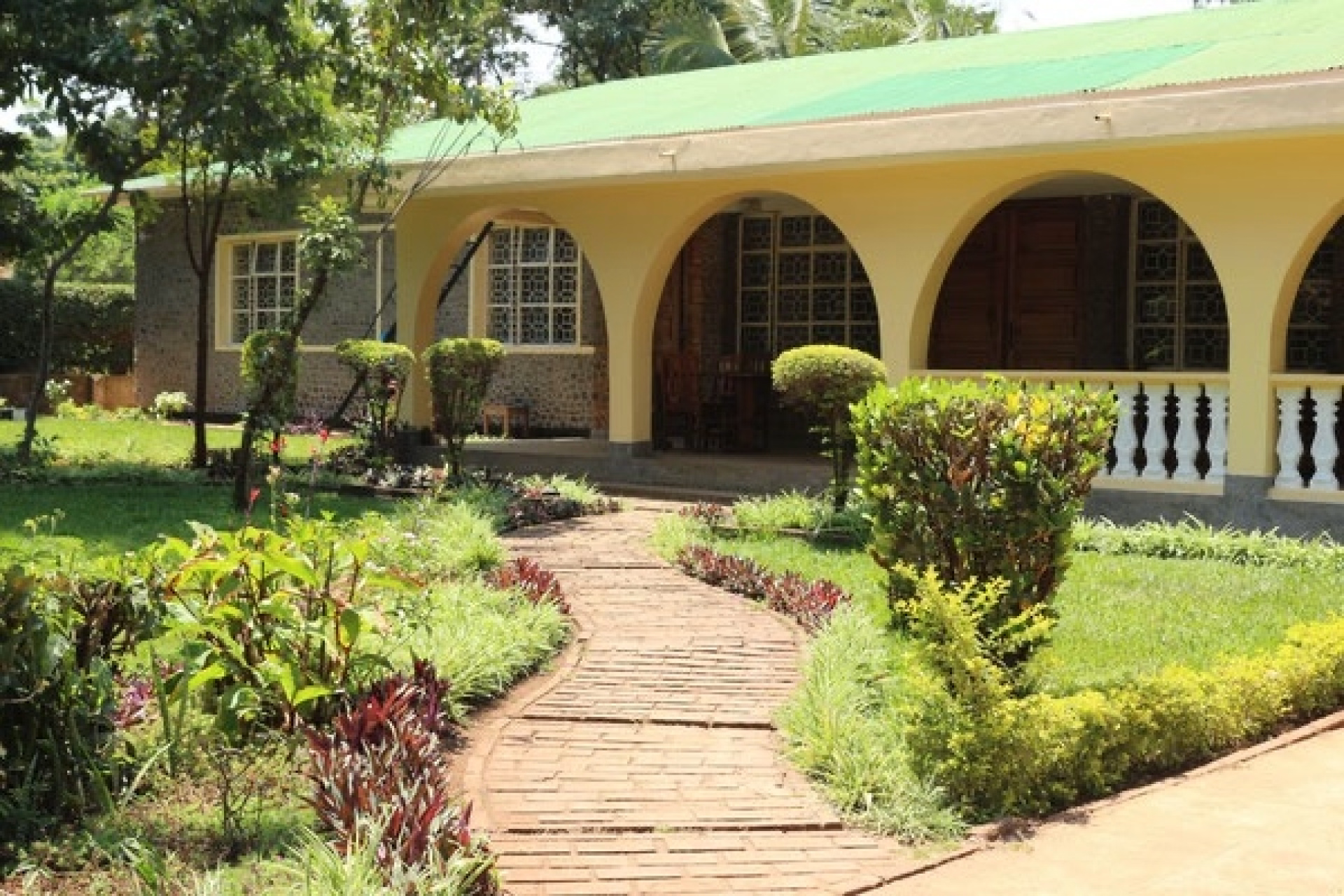
A guesthouse with a lovely garden, where you will be pampered by an amazing cook!

Located in a high, rocky valley, the forest here gives way to moorland and open landscapes. This is the largest camp on the route (twice the size of the others) because hikers make an extended stop here to acclimatize to the altitude before climbing higher.
The chalets here have the same architecture, accommodating 4 to 8 beds, as in Mandara, with shared dining facilities. The air is already much fresher and drier.

Perched at high altitude in the mineral and lunar landscape of the "Saddle" (Saddle plateau), the desert plateau between the Mawenzi and Kibo peaks. The landscape becomes rocky, arid and swept by cold winds.
Unlike the previous ones, this is a large stone building housing communal dormitories. The facilities are very basic due to the extreme altitude. You only spend a few hours there to rest, eat early, and get ready before the nighttime departure for Uhuru Peak.

Nestled in a clearing amidst the lush rainforest of Kilimanjaro, the camp is filled with the sounds of nature and offers the chance to spot monkeys (colobus monkeys, blue monkeys). It consists of small, triangular wooden cabins and includes a mess hall and restrooms. A small shop sells drinks and snacks.
Nearby, if you arrive early: a quick acclimatization walk allows you to reach the magnificent volcanic crater of Maundi.
Access
You depart from Moshi with the porters for the Marangu Gate, the starting point of the trek. On the last day, you descend via a different route and arrive at the Mweka Gate to receive your certificates. You will then enjoy a large meal with your entire team to celebrate your achievement and that of your porters!
Go to the starting point
You arrive at Kilimanjaro Airport. Your driver greets you and after passing through immigration, you head towards Moshi.
Price details
The price includes
- Airport pick-up and transfers between Kilimanjaro Airport (KIA/JRO) and the Guesthouse in Moshi on day 1 and day 8
- French-speaking private mountain guide and porters
- Cook, food, gas
- 6-day park admission
- Refuge fees for 5 nights
- Trekking equipment (portable toilet, sleeping bags)
- Rescue costs
- Mountain refuge accommodations
- 2 nights in a hotel with half-board
- All meals mentioned and unlimited water
- Tips for the teams
- 3% donated to our partner's foundation
All tips are included in the price of your climb. Our partner is the only fair and ethical agency in Tanzania that prioritizes fair compensation for guides and local staff in order to combat the abuses associated with tipping.
The price does not include
- International flights
- Domestic flights
- Visas
- Personal equipment
- Snacks
- Drinks in the mountain huts
- Hotel tourist taxes (to be paid at the hotel reception in Moshi if requested)
- Mandatory NIC Inbound Travel Insurance: USD 44 (approx. €39) per adult
Options
- Flex fare and insurance
Practical information
Specific formalities
Specifics
Signed personal waiver required before departure.
Before you leave, check with the embassy or consulate regarding the entry and stay requirements for your destination country. You can also find this information on the France Diplomatie website (https://www.diplomatie.gouv.fr/fr/dossiers-pays/).
In the case of flights with stopovers operated by different airlines, also check the entry requirements of the countries you are transiting through.
It is your responsibility to ensure you are in compliance, particularly regarding the validity of your identity documents (for example, some countries require your passport to be valid for at least six months after your return) , visa requirements, necessary vaccinations, and health recommendations. And don't forget to consider any customs restrictions and other potential requirements of your destination or transit country.
ℹ️ Information may change up to the departure date, remember to regularly check official websites.
We also invite you to provide us with your repatriation insurance for high peaks which will cover you in case of a problem on the mountain.
Equipment
Equipment provided on site
- Tents
- Duvets
- Mattress
- Portable toilets
- Cooking, food
Equipment to bring
- Large water bottles or several: 3 liters per day are absolutely necessary.
- Lightweight walking poles (carbon fiber)
- Headlamp and spare batteries
- Inflatable cushion (no pillow provided)
- Lightweight water bottle or Camel bag
- Your camera with spare battery
- Earplugs if you are a light sleeper
- Energy bars and energy drinks
- Medications: paracetamol for headaches (pain reliever) / cyclizine for nausea and dizziness (antihistamine) / Imodium (anti-diarrheal)
- Microfiber towel
- Blister plasters
For women: try to anticipate your period dates as much as possible and avoid starting a climb in the first few days. This can really lead to failure if you're tired or experiencing pain. A portable camping urinal can be useful during the day; worth a try!
Clothing to bring
Bags
- A soft, lightweight and sturdy duffel bag with reinforced straps is ideal for both your organization and the carriers, but a backpack is possible and the most common.
- It must contain a maximum of 15kg, so that the wearer can add a small bag with their belongings because the maximum weight allowed is 20kg.
- You can add a lightweight padlock.
- 1 small 20L backpack for the day where you put your rain gear, camera, sunscreen, snacks.
- Pouches to compartmentalize small items (medicines, etc.) including a waterproof one for your electronic devices.
Underwear
- Women's: 2 sports bras in synthetic material / Boxer briefs for 7 days
- Men's: 7-day boxer shorts
- No cotton to avoid skin irritation. Merino wool or synthetic fibers.
Socks
- 5 pairs of special trekking merino wool socks
- 1 pair of thick wool socks for the ascent (polar temperatures)
- Avoid cotton
Undercoat (from day 3)
- Long underwear and two warm long-sleeved T-shirts, preferably made of merino wool.
Base
- 1 short-sleeved T-shirt
- 1 Lightweight long-sleeved T-shirt
- 1 Warm long-sleeved T-shirt
- 1 pair of lightweight trekking trousers that can be converted into shorts (which can also be used for safaris)
- 1 pair of fleece-lined trekking trousers
Intermediate layer
- 1 lightweight fleece jacket
- 1 warm down-type jacket
Overlay
- 1 fairly large waterproof rain/wind jacket
- 1 pair of waterproof trousers
- Preferably made of Gore-Tex material
- Waterproof gaiters (prevent mud, moisture and pebbles from entering shoes)
Head
- A multi-functional headband: hat, scarf, balaklava
- A hat with a brim (which will be useful on safari)
- A pair of sunglasses for the mountains, category 4
- Sunscreen and lip balm are essential items to keep in your pocket.
Hands
- Undergloves made of merino wool, synthetic materials or silk
- Waterproof and warm "mitten" gloves
- Chemical hand warmer
Shoes
- A pair of comfortable low-top sneakers for the first day and for use in campsites.
- A pair of waterproof trekking shoes that aren't new! They need to be worn as much as possible before hiking.
- Tip: Wear them on the plane in case your luggage is delayed. You can rent everything there, but your own shoes are essential.


