Immersion in Japanese nature and culture
In summary
-
Sports
-
Duration22 days
-
LevelIntermediate
-
DestinationAsia / Japan
-
AgeFrom the age of 18
-
CO₂-Emissions8867.51 kg CO2
-
Type of stayIn a group
-
Languages
 French
In a few words
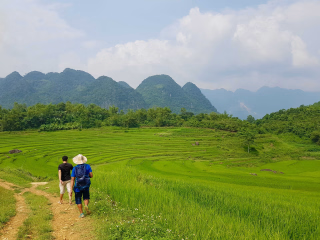
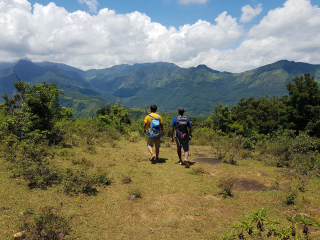
Japan 's rich culture, enchanting landscapes, and glorious past make it a land of mystery. Discover it on a 3-week trip combining hiking, sightseeing, and immersion in this very special country! From Tokyo, Kyoto, and Osaka , iconic cities of the Japanese mainland, to Miyajima and Magome , charming and magical villages, you'll experience something truly unique. Explore majestic temples and blooming gardens that adorn the cities. Nights spent in ryokan and minshuku add an authentic touch to this journey. Three dreamy weeks in the Land of the Rising Sun, from which you'll return with a head full of memories!
The highlights
-
An excursion to the contemporary island of Naoshima
-
Hikes with breathtaking views of Mount Fuji
-
A night in a traditional minshuku
Photos


Sport
Level
Hiking / Trekking
In figures
Hiking
- Average duration/day: 4h
- Average distance/day: 9 km
- Average daily elevation gain: 110 m
- Average daily descent: 123 m
Autre
- Average duration/day: 4h
Management
French
Program
-
France-Tokyo
- Transportation Plane - 19h - 14831km
- Breakfast not included
- Lunch not included
- Dinner not included
Flight to Tokyo. Meals and overnight stay on board.Day 1 -
Tokyo
- Transportation Minibus - 00h30 - 26km
- Accommodation 3-star hotel
- Breakfast not included
- Lunch not included
- Dinner included
Upon arrival at Tokyo Airport, we will take public transportation to our hotel in central Tokyo. Check-in for two nights. Depending on your arrival time, you will have lunch on your own and time to rest or begin exploring the city. You will meet your guide in the evening for dinner and a briefing (around 6:00 PM). (Dinner will be postponed to the following day in case of late arrival). Your transfer to the hotel will be by public transportation without an escort. Rest assured, we will provide you with all the necessary instructions to get to the hotel. If you arrive at the hotel after 6:00 PM, you will need to check in yourself. Your guide will meet you the following morning. *If you would prefer a transfer service to assist you during your transfer from the airport to the hotel, we can arrange this service for an additional fee (see details in the options). Please let us know if you would like to take advantage of this service. The cost of the public transport ticket from the airport (Haneda or Narita) to the hotel will be reimbursed by your guide upon your arrival at the hotel, in exchange for a bank receipt.Day 2 -
Guided tour of Tokyo
- Activity Hiking
- Duration of the activity 4h
- Distance 5 km
- Accommodation 3-star hotel
- Breakfast included
- Lunch included
- Dinner not included
The capital of Japan was originally a small fishing village called Edo, which in 1603 became the center of the Shogun's power. Tokyo has since become a fascinating, ultramodern metropolis in perpetual motion. We will visit the Asakusa district to immerse ourselves in the unique world of everyday Tokyo, where the spirit of "old Edo," steeped in tradition, still lives on. After passing through Kaminarimon—the Thunder Gate—and strolling through the Nakamise-dori arcade, lined with traditional shops (kimonos, dolls, combs, fans, etc.), we will visit Senso-ji Temple, the oldest and largest in Tokyo, dedicated to Kannon, the goddess of mercy. We will then head to the neighboring Ryogoku district, Tokyo's sumo district. It stretches across several streets, and in the middle of it, we will visit the Kokugikan (Sumo Stadium). His culinary specialty, Chanko nabe, will be served for our first lunch, a type of slow-cooked hot pot highly prized by the famous wrestlers. After lunch, we'll head to the trendy Harajuku district, passing through Takeshita Street, the mecca of "otaku" fashion, before reaching Omotesando Avenue, a hub of Japanese fashion, with its extraordinary modern boutiques of major brands. The day will end in Shibuya, where the statue of the legendary dog Hachiko is a popular meeting place in the area, before crossing the famous intersection where hundreds of pedestrians pass by at each red light. Return to the hotel at the end of the day. Dinner is on your own, or a welcome dinner if you arrive late the previous evening. Overnight at the hotel.Day 3 -
Free day or optional hike in Kamakura
- Transportation TER / Metro / Tram - 02h - 48km
- Accommodation 3-star hotel
- Breakfast included
- Lunch not included
- Dinner not included
Free day in Tokyo or optional excursion (see optional pricing section) to Kamakura: We'll enjoy a delightful off-the-beaten-path visit to this charming seaside resort town, less than an hour by train from Tokyo. The capital of Japan in the 13th century, Kamakura is the cradle of Zen Buddhism, which coincided with the rise to power of the samurai, led by the Shogun. We'll begin by visiting Engaku-ji Temple, one of the five great Zen temples of the city, all built in the 13th century. It is distinguished by its monumental size and the variety of its noteworthy features, some of which are designated Important Cultural Properties, making it a must-see in Kamakura. Next, the itinerary will take you along the less-traveled Genji mountain paths, which connect the various points of interest. After lunch, we'll visit the famous Great Buddha and then Hase-dera Flower Temple, which offers stunning views of the nearby Pacific Ocean. Return to Tokyo. Dinner at your leisure. Overnight stay at the hotel. (3 hours of walking in total if you choose the optional option, Elevation gain/loss: +200m, -200m / Recommendation: Walking stick). Breakfast and lunch are included if you choose the optional option. *See the excursion price in the "Options" section. Please note that this option must be booked before your departure.Day 4 -
Tokyo - Nikko: Day Trip to Oku Nikko
- Transportation TGV - 03h35 - 126km
- Activity Hiking
- Duration of the activity 4h
- Distance 10 km
- Positive elevation gain 100 m
- Negative elevation 100 m
- Breakfast included
- Lunch included
- Dinner included
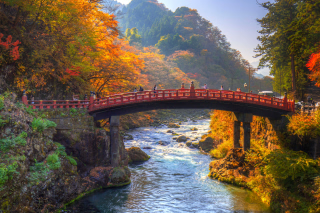
Departure by high-speed train to Nikko. On foot, we explore the surroundings of the small town of Nikko, nestled amidst forests of giant Japanese cedars. An important Buddhist and later Shinto center, Nikko National Park is brimming with treasures listed as UNESCO World Heritage Sites. "He who has not seen Nikko has no right to use the word magnificent," says a Japanese proverb. We will visit the Toshogu Shrine of Nikko and the Rinno-ji Temple. Local lunch. Nikko is first and foremost a hill upon which stands the mausoleum of the first Shogun of the Edo period, Tokugawa Ieyasu. After a long civil war for control of the country, Tokugawa finally prevailed in 1603. He moved his capital from Kyoto to Edo (present-day Kyoto) and established a dynasty in which 18 shoguns from his lineage reigned until 1868. The mausoleum is a masterpiece of Japanese Baroque art, built by Ieyasu's grandson. From Nikko, we will travel at the end of the day to a hot spring resort renowned for its waters. Dinner and overnight stay at a ryokan.Day 5 -
Nikko - Tokyo: Hiking in Oku Nikko
- Transportation TGV - 03h10 - 130km
- Activity Hiking
- Duration of the activity 4h
- Distance 10 km
- Breakfast included
- Lunch included
- Dinner not included
Today's walk takes place across a marsh. The boardwalk, slightly above the water level, offers an ideal vantage point for discovering the marsh's natural beauty and flowers while enjoying the songs of waterfowl. Return to Tokyo. Dinner at your leisure. Overnight at the hotel.Day 6 -
Tokyo - Hakone - Mishima: on the Tokaido road
- Transportation TER / Metro / Tram - 02h55 - 90km
- Activity Hiking
- Duration of the activity 3h
- Distance 10 km
- Positive elevation gain 400 m
- Negative elevation 400 m
- Accommodation 3-star hotel
- Breakfast included
- Lunch included
- Dinner included
After sending our suitcases (bring a small backpack with clothes for one night), the day begins with a train ride to Hakone, a mid-mountain hot spring resort. From there, a bus will take us along a section of the Tokaido Road, or "Eastern Sea Road." Established at the beginning of the Edo period (1603-1868), this road led from Tokyo (then Edo), the shogun's residence, to Kyoto, the capital and spiritual center of the country, where the Emperor lived in his palace, to 53 post stations. The 500-kilometer journey took approximately two weeks at the time (2 hours and 15 minutes today by Shinkansen, which follows the same route). Each post station was on average 8 to 12 kilometers from the next, and offered inns and restaurants. We will travel along a still-paved section of this road, which will lead us to Lake Ashi, one of the seven great lakes surrounding Mount Fuji. During our walk, we'll stop at a venerable period inn for a quick snack. Upon arrival at the lake, weather permitting, you'll be able to admire Mount Fuji, the symbol of Japan. After lunch, we'll visit the sekisho, a former border crossing. This route was indeed forbidden to women, for fear that the wives of the Daimyo, the regional lords, forced to live in Edo, might escape to join their husbands. All travelers were strictly controlled at these sekisho. From the lake, a bus will take us to Mishima, where we'll spend the night. Dinner in Mishima. Overnight at the hotel. *Sending your luggage to Hamamatsu (2 days' worth of currency to prepare for your trip)Day 7 -
Mishima - Nihondaira - Hamamatsu: Mt. Fuji and tea fields, fish market
- Transportation Minibus - 02h - 150km
- Activity Hiking
- Duration of the activity 3h
- Distance 10 km
- Accommodation 3-star hotel
- Breakfast included
- Lunch included
- Dinner not included
This morning, we're taking a private bus for a magnificent walk with views of Mount Fuji in Miho, a peninsula in the Shimizu district of Shizuoka City, located about 45 km southwest of Fuji. There are over 5 km of pine trees along the coastline. In the center of this pine grove called "Miho Pine Grove (Miho no Matsubara)" stands the "Feather Robe Pine (Hagoromo no Matsu)," the place where a celestial nymph and a fisherman are said to have met in the famous Japanese legend of the feather robe (Hagoromo). In 1922, the area was designated a "scenic spot," with the title "Best Viewing Area for Mount Fuji." Next, we'll visit the Nihon Daira Observatory for another view of the famous Mount Fuji. Lunch will be of fresh fish at the Yaizu Fish Market. Yaizu, facing Suruga Bay on the Pacific coast, is one of Japan's major fishing ports. If you're craving delicious seafood, Yaizu is the perfect destination. After lunch, we'll travel to Makinohara, a region renowned for its green tea production, to attend a tea ceremony in a traditional room at the Tea Museum. Splendid Views of rolling green tea fields await you. Arrival in Hamamatsu in the late afternoon. Dinner at your leisure. Overnight at the hotel.Day 8 -
Hamamatsu - Magome: Tsumago hike in Magome
- Transportation Minibus - 02h30 - 170km
- Activity Hiking
- Duration of the activity 3h
- Distance 10 km
- Positive elevation gain 300 m
- Negative elevation 500 m
- Accommodation 3-star hotel
- Breakfast included
- Lunch included
- Dinner included
This morning, we depart by Shinkansen and high-speed train towards the center of the country for today's hike in the Kiso Valley. Two mountain villages have remained as they were when the Nakasendo Road, which also led from Edo to Kyoto, served as stopping towns. The Nakasendo was preferred to the Tokaido Road in spring and summer, when the river mouths were impassable. Surrounded by cypress forests, the path we're walking will lead us from Magome to Tsumago, two typical villages. Dinner and overnight stay in a minshuku in Magome. *Ship luggage sent to Kyoto (1 day's exchange rate required for your trip).
Day 9 -
Magome - Nagoya - Kyoto: visit to Nagoya Castle and arrival in Kyoto
- Transportation Minibus - 02h20 - 216km
- Activity Hiking
- Duration of the activity 4h
- Distance 5 km
- Accommodation 3-star hotel
- Breakfast included
- Lunch included
- Dinner not included
We leave the Alps and head towards Nagoya and its magnificent castle. Nagoya Castle is a fortified monument located in the city of the same name, the capital of Aichi Prefecture in Japan. Rebuilt in 1959 to its original 1612 appearance, the main keep has eight stories. The two kinshachi, golden tiger-headed dolphins, that crown the structure serve as mascots. We will visit the luxurious and ornate palace that represented the Shogun's power. Lunch, then we drive to Kyoto. Kyoto is the cultural capital of Japan. The former residence of the Emperors and the first shoguns until 1868, this provincial city, although modern, jealously guards its traditions. The city is a blend of modern districts and countless pockets of traditional monuments, not to mention private residences with their gardens and tea pavilions, where ceremonies involving flower arranging, incense burning, dance, and lute and harp music are still commonly practiced. Enjoy a stroll through Kyoto's city center and the Nishiki Market. Dinner is on your own. Overnight at the hotel.Day 10 -
Kyoto: Walk in Arashiyama, Golden Pavilion and Royan-ji Temple
- Transportation TER / Metro / Tram - 01h35 - 35km
- Accommodation 3-star hotel
- Breakfast included
- Lunch included
- Dinner not included
The small town of Arashiyama is located west of the city, also on a hillside. It is very famous for its bamboo grove, which we will reach after a lovely walk up the hill, starting from Adashino Nenbutsuji Temple, with its thousand ancient statues of Buddha and his disciples. A surprising place, away from the crowds. The walk continues past old thatched cottages to the bamboo grove. We will have a local lunch. Afterward, we will visit Ryoan-ji Temple, famous for its mysterious rock garden, the most famous in Japan, which defies explanation. Surrounded by an earthen wall, fifteen carefully placed rocks seem to drift in a sea of raked white gravel. An observation platform just above the garden offers visitors a breathtaking view, although from whatever angle you look at the garden, you can never see the fifteen stones. Continue with a visit to Kinkaju-ji – a UNESCO World Heritage Site. Covered in gold leaf, the famous Golden Pavilion is nestled in a beautiful, romantic setting. It houses sacred relics of Buddha and is reflected in a pond, all within a park. Dinner at your leisure. Overnight at the hotel.Day 11 -
Kyoto: hiking on the eastern mountain, visiting the temples
- Transportation TER / Metro / Tram - 00h20 - 8km
- Activity Hiking
- Duration of the activity 5h
- Distance 5 km
- Accommodation 3-star hotel
- Breakfast included
- Lunch included
- Dinner not included
Kyoto is a basin surrounded by hills where the main temples are located. We will begin our morning with a visit to one of the most famous, the Silver Pavilion. Its buildings, as well as its gardens with white sand and moss, leave no one unmoved. The walk that follows will take us along Mount Higashiyama, the eastern mountain. After strolling through the narrow streets lined with beautiful old houses near the temple, we will take the famous Philosopher's Path, which leads to other temples and gardens, still clinging to the hillside. We will visit Tenju-an, a small, rather secluded temple with a beautiful garden and pond, quite different from the first, before arriving at Heian Jingu. This Shinto shrine, a replica one-third the size of the Emperor's first palace in the 9th century, is surrounded by a park that blooms in every season. As befits a city of traditional crafts, we will then visit the Kyoto Museum of Crafts, which showcases the finest creations of local artisans (this museum includes a small shop where all the products are genuinely made in Kyoto). Finally, we will return to the city center, passing the monumental entrance of Chion-in Temple before crossing Maruyama Park to reach Yasaka Shrine, the city's patron saint, just steps from the Gion district, the geisha district. Dinner at your leisure. Overnight at the hotel.Day 12 -
Kyoto - Uji and Nara - Mount Shigi
- Transportation TER / Metro / Tram - 02h - 65km
- Activity Hiking
- Duration of the activity 5h
- Distance 10 km
- Breakfast included
- Lunch included
- Dinner included
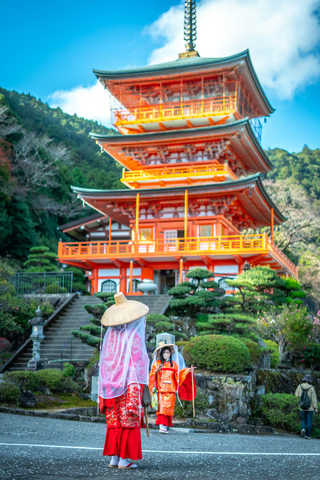
Departure for an overnight stay at the Shigi Monastery. In the morning, a visit to the beautiful and unique Byodoin Temple and its small adjoining museum in Uji, a renowned tea-producing region. We will then head towards Nara before lunch. Nara, a former capital of Japan in the 8th century, has preserved remarkable monuments and splendors from its past. The Todaiji Temple is the largest wooden building in the world, and its giant Buddha is truly impressive. Strolling through the paths of a large wooded park and a forest in the heart of the city, we will encounter and approach deer, tame messengers of the gods, before reaching the Kasuga Shrine, adorned with a thousand lanterns. After Nara, we will spend the night at Mount Shigi, a magical and sacred mountain, a smaller Mount Koya still relatively unknown to tourists. It is inhabited solely by monks whose rituals are extraordinary, and no motor vehicles are permitted. Chogosonshi-ji Temple is said to have been founded by Prince Shotoku in 587 following an apparition of the war god Bishamonten, which occurred during the hour of the tiger, the day of the tiger, the month of the tiger, and the year of the tiger! Hence the particularly visible veneration for this animal. Enjoy a leisurely evening stroll through this sacred place, wandering from one religious building to another, along paths and staircases lined with 3,000 lanterns. Your path will be illuminated by these thousands of lanterns, lit every night throughout the temple complex. The atmosphere is exceptional. Dinner and overnight stay at the monastery.Day 13 -
Mount Shigi - Kyoto: Optional Dinner with a "Maiko" Apprentice
- Transportation TER / Metro / Tram - 01h35 - 65km
- Accommodation 3-star hotel
- Breakfast included
- Lunch not included
- Dinner not included
Opportunity to attend morning prayers before breakfast. Vegetarian breakfast at the monastery. Return to Kyoto before noon. Free afternoon in Kyoto or optional extra (see price in the optional section): dinner with a maiko apprentice. A maiko's dances, musical talents, conversational skills, and radiant presence at an evening gathering make her a rare find. Both artist and work of art in her attire, makeup, and grace, the brevity of her appearance on a street corner leaves one wishing for more time in such charming company. Their excellence and the rigorous training these maiko apprentices undergo make them all the more rare and desirable in the eyes of their admirers. We invite you to spend an exceptional evening enjoying the talents of one of these young women, the epitome of Kyoto's art and refinement, with a Kaiseki ryori dinner. Kaiseki-ryori is a traditional Japanese multi-course dinner that places great emphasis on seasonal ingredients and presentation. Each dish offers a subtle balance of flavors, textures, and colors—a true feast for both the eyes and the palate. Meet your guide at the hotel at 5:00 PM. They will accompany you to the restaurant, where you will spend two hours in the company of a maiko (maiden) hired to entertain you. The interpreter will be available to help you start a conversation, but will you be quick-witted enough to respond to these cultured ladies? The evening and dinner will be punctuated with various forms of entertainment to make this an unforgettable experience. This is a truly rare opportunity to enjoy the unique charm of the maiko in the Imperial Capital! (Dinner begins at 6:00 PM) If you do not choose the option: Dinner is at your leisure. Overnight at the hotel. *See the excursion price in the "Options" section. Please note that this option must be booked before your departure.Day 14 -
Kyoto – kurashiki – okayama
- Transportation TGV - 01h40 - 200km
- Activity Hiking
- Duration of the activity 4h
- Distance 10 km
- Breakfast included
- Lunch included
- Dinner included
We depart Kyoto by Shinkansen, heading to Okayama, a large city on the Seto Inland Sea, where we will spend five days, often by the sea. After leaving our luggage at the hotel, a short train ride will take us to the neighboring city of Kurashiki, a former trading town that has preserved a district of old houses, very typical of the region. Upon arrival, we will visit the Ohashi Residence, built in 1796 by the Ohashi family, rice merchants who became wealthy through the development of new rice paddies. This impressive and sumptuous building, representative of the architecture of Kurashiki's wealthy merchant houses, with its grand, typical gate, is designated a National Cultural Property and allows visitors to immerse themselves in the atmosphere of old Japan. Afterward, you can stroll through the Bikan district, with its canals, houses converted into unique shops, museums, and distinctive atmosphere. Return to Okayama after the visits. Dinner and overnight stay at the hotel. *Sending luggage to Okayama (1 day's change required for your trip)Day 15 -
Okayama – Naoshima - Okayama: the island of contemporary art
- Transportation TER / Metro / Tram - 02h20 - 31km
- Activity Autre
- Duration of the activity 4h
- Breakfast included
- Lunch included
- Dinner not included
After a short local train ride to Uno Port, we'll take a ferry across a strait to Naoshima Island. In the early 1990s, a patron of the arts, owner of a major publishing house, decided to dedicate this small island to contemporary art. We'll visit the Chichu Art Museum, meaning "buried," a concrete structure designed by the renowned architect Tadao Ando. Only major works by three artists are exhibited in this truly unique space. Next, we'll travel to Honmura, the main village, where you can explore the various installations and house renovations created by contemporary artists. The villagers have taken advantage of this influx of visitors to preserve and beautify their homes. This self-guided tour will allow you to discover the charming atmosphere of a small island port. Return to Okayama by ferry and train at the end of the day. Dinner on your own. Overnight at the hotel.Day 16 -
Okayama - onomichi
- Transportation TER / Metro / Tram - 01h15 - 90km
- Activity Hiking
- Duration of the activity 4h
- Distance 10 km
- Positive elevation gain 140 m
- Negative elevation 140 m
- Accommodation 3-star hotel
- Breakfast included
- Lunch included
- Dinner not included
Before leaving Okayama, visit Korakuen Garden, one of the three most beautiful Japanese gardens, located around Enyo-tei House, built as the main residence. The garden covers 13 hectares and includes a Noh theater, ponds, a hill, plum groves, and a tea plantation. The garden is laid out with large expanses of lawn, reflecting an openness rarely seen in Japanese gardens. It is a strolling garden that allows visitors to enjoy the varied landscape as they wander. Depart for the town of Onomichi. This small town was fortunate enough to be spared from bombing in 1945, and the port area has been beautifully landscaped by the municipality. It is bordered by a hill on which old houses and temples are connected by a small paved path. At times, you might think you were in Greece or Portugal, but there's no doubt we're in Japan. From this vantage point, we can admire the breathtaking landscape: the inlet, crossed by small ferries connecting the city to the island opposite; to the left, the large bridge linking Honshu, the main island, to Shikoku, Japan's fourth largest island, overlooking the islets that, at this precise point, close off the Inland Sea. Dinner at your leisure. Overnight at the hotel. *Suitcases will be sent to Hiroshima (please prepare one day's worth of currency for your trip).Day 17 -
Onomichi - Saijo - Hiroshima
- Transportation TER / Metro / Tram - 02h10 - 88km
- Activity Hiking
- Duration of the activity 4h
- Distance 10 km
- Accommodation 3-star hotel
- Breakfast included
- Lunch included
- Dinner included
Departure for the city of Saijo for a sake tasting. Sake is the Japanese rice wine with an alcohol content of 15 or 16 percent. Thanks to the favorable climate and the groundwater used for brewing sake, the region has become an important brewing center known as Saijo, one of the sake capitals of Japan. Even today, seven sakagura, sake breweries, line the streets of Saijo and continue to produce sake using traditional techniques. The streets have a unique atmosphere with their red brick chimneys and latticework walls. Note: sake is a fermented, not brewed, product. Guided tour of Saijo with a local guide. Local lunch. After lunch, we will travel to Hiroshima, the infamous city that commemorated the 75th anniversary of the atomic bombing on August 6, 2020. At the site of the bomb's impact, once the administrative and commercial center of Hiroshima, where the skeleton of the Atomic Bomb Dome still stands, a park has been built as a memorial. It contains numerous monuments, statues, and the Cenotaph, where the eternal flame burns in memory of the victims. The Peace Museum, which we will visit, is a deeply moving experience. But the city, entirely rebuilt, with its wide avenues and small districts of restaurants and shops, has regained its character as the capital of southern Hiroshima, and it's pleasant to stroll through it in the evening and appreciate its relaxed atmosphere. For dinner, we'll try the local specialty, okonomiyaki, a kind of thick pancake prepared right before your eyes on a hot plate—a truly memorable experience. Overnight at the hotel.Day 18 -
Hiroshima – Miyajima – Hiroshima: Japan's sacred island Miyajima and Mount Misen
- Transportation TER / Metro / Tram - 02h35 - 60km
- Activity Hiking
- Duration of the activity 3h
- Distance 10 km
- Positive elevation gain 500 m
- Negative elevation 500 m
- Breakfast included
- Lunch included
- Dinner not included
Twinned with Mont Saint-Michel, Miyajima is a sacred island located about 20 kilometers south of Hiroshima. It is reached by ferry, allowing visitors to admire the most iconic monument of the great shrine: its Torii gate, which appears to float on the sea. At low tide, one can walk to the gate, and at high tide, the vermilion shrine itself seems to sail on the lagoon. We will visit this must-see site before strolling through the village's narrow streets, where deer, considered messengers of the gods, roam freely. After lunch, we will ascend Mount Misen (by cable car), where we will enjoy a magnificent panoramic view of the islands of the Seto Inland Sea. After reaching the summit, we will descend the mountain at a leisurely pace. Return to Hiroshima. Dinner at your leisure. Overnight at the hotel. We recommend bringing walking sticks for this day, as there are many stairs.Day 19 -
Hiroshima - Iwakuni - Hiroshima: The southern tip of the main island
- Transportation TER / Metro / Tram - 02h40 - 80km
- Activity Hiking
- Duration of the activity 4h
- Distance 10 km
- Positive elevation gain 200 m
- Negative elevation 200 m
- Accommodation 3-star hotel
- Breakfast included
- Lunch included
- Dinner not included
In the morning, depart by train for the city of Iwakuni. This small Japanese city, dating back to the 17th century, is located in Yamaguchi Prefecture, southwest of Hiroshima. Its historic city center is easily explored on foot and includes the unique architecture of the Kintai-kyo Bridge, a very photogenic five-arched bridge that was built in 1673 when its wooden frame, resting on majestic stone pillars, reached the banks of the Nishiki River. We will visit Iwakuni Castle, whose five-story keep overlooks the city from a height of 200 meters atop Mount Shiroyama, surrounded by a fairly dense forest that we will ascend by cable car. The visit continues with a small museum exhibiting samurai armor and other period artifacts, and includes a Japanese garden, offering a moment of relaxation. Return to Hiroshima. Dinner at your leisure. Overnight at the hotel.Day 20 -
Hiroshima - Himeji - Osaka
- Transportation TGV - 02h15 - 330km
- Activity Hiking
- Duration of the activity 4h
- Distance 10 km
- Breakfast included
- Lunch included
- Dinner included
In the morning, we'll travel to Himeji and visit the famous and very impressive White Heron Castle, one of the most beautiful in Japan and a UNESCO World Heritage Site. Its roof has been superbly restored recently, and its keep proudly rises above the city. Built in the early 17th century, this castle has never been attacked and retains all its surrounding buildings. A ten-minute walk from the moat leads to the entrance gate, and with each step, the monument reveals its splendor. We'll enjoy a local lunch. Finally, we'll travel to our last stop, Osaka. We'll stroll through the lively Shinsaibashi district to experience its unique and typical Osaka atmosphere. Osaka is the largest city in western Japan. Due to air raids during the war, Osaka doesn't retain many historical monuments like Nara or Kyoto, but its people still maintain their cheerfulness and exuberance, which you'll surely notice! It's a commercial and financial city, and it has other names, such as the city of "kui-daore," meaning to spend all your fortune on food. Farewell dinner. Overnight at the hotel.Day 21 -
Osaka - Return Flight
- Transportation Plane - 19h - 14831km
- Breakfast included
- Lunch not included
- Dinner not included
Free time. Then we'll head to Kansai International Airport, where we'll catch our flight back to Paris. Sayonara! If you're flying on a night flight, your return to Paris will be on day 23. The guide will be with you until the morning. For the transfer from your hotel to the airport, you'll need to make your own way using public transportation. Don't worry, the guide will provide you with all the necessary information. *If you prefer a transfer service from your hotel to the airport, we can arrange this for an additional fee (see details in the options). Please let us know if you'd like to take advantage of this service.Day 22
Note
Accommodation
During this stay, you will sleep in several types of accommodation:
- In a 3-star hotel in a double room
- In a ryokan, traditional Japanese inns with a public bath, rooms accommodate 2 to 4 people (mixed gender).
- In minshusku, traditional rooms for 2 to 3 people, mixed-gender, with shared toilets and showers
Price details
The price includes
- Flight Paris / Tokyo - Osaka / Paris
- Air taxes
- Transfers and local transport as mentioned in the program
- Meals as indicated in the day-by-day plan
- French-speaking Japanese tour guides
- Accommodation options include 3-star hotels in double rooms, ryokan and minshuku in double or quadruple rooms
- Entrance tickets to the sites visited, according to the program
The price does not include
- Transportation other than that mentioned
- Your personal expenses
- Meals not listed
- Tips for local staff (at your discretion)
- The transfer by public transport from the airport to the hotel on day 1, which will be reimbursed upon your arrival at the hotel.
Options
- Additional night in Tokyo in a single room with breakfast : CHF210.40 / person
- Additional night in Tokyo in a double room with breakfast : CHF178.39 / person
- Additional night in Osaka in a single room with breakfast : CHF182.96 / person
- Additional night in Osaka in a double room with breakfast : CHF155.52 / person
- English-speaking airport/hotel transfer service in Tokyo using public transport : CHF169.24 / person
- English-speaking airport/hotel transfer service in Tokyo using public transport (based on 2 people) : CHF86.91 / person
- English-speaking airport/hotel transfer service in Tokyo using public transport (based on 3 people) : CHF56.72 / person
- English-speaking airport/hotel transfer service in Tokyo using public transport (based on 4 people) : CHF41.17 / person
- Single room supplement for the entire duration of your stay : CHF809.60 / person
- Basic sushi class option for 2 people : CHF269.87 / person
- Basic sushi class option for 3 people : CHF228.70 / person
- Basic sushi class option for 4 people : CHF182.96 / person
- Basic sushi class option for 5 people : CHF155.52 / person
- Kamakura option based on 2 people : CHF251.57 / person
- Kamakura option based on 3 people : CHF196.68 / person
- Kamakura option based on 4 people : CHF160.09 / person
- Kamakura option based on 5 people : CHF146.37 / person
- Flex fare and insurance
Practical information
Specific formalities
Specifics
Before your departure, check with the embassy or consulate regarding the entry and stay requirements for your destination country. You can also find this information on the France Diplomatie website ( https://www.diplomatie.gouv.fr/fr/dossiers-pays/ ).
In the case of flights with stopovers operated by different airlines, also check the entry requirements of the countries you are transiting through.
It is your responsibility to ensure you are in compliance, particularly regarding the validity of your identity documents (for example, some countries require your passport to be valid for at least six months after your return) , visa requirements, necessary vaccinations, and health recommendations. And don't forget to consider any customs restrictions and other potential requirements of your destination or transit country.
ℹ️ Information may change up to the departure date, remember to regularly check official websites.
Equipment
Clothing to bring
- Comfortable clothes
- Sweater
- Fleece, undershirt or warm vest
- Windbreaker, plastic poncho, raincoat
- Cap
For women, avoid low-cut necklines and partially bare backs.