Hiking in Aubrac: between wide open spaces and traditions
In summary
-
Sports
-
Duration6 days
-
LevelIntermediate
-
DestinationMassif Central / Lozère
-
AgeFrom 18 - 80 years
-
CO₂-Emissions61.77 kg CO2
-
Type of stayIn a group
-
Languages
 French
In a few words
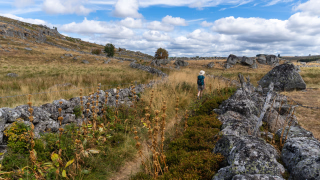
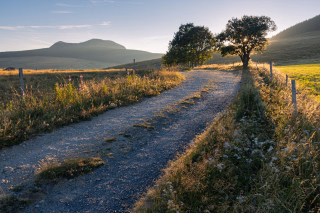
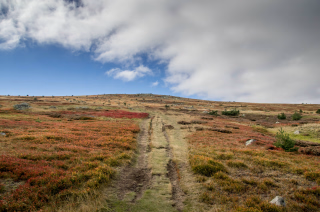
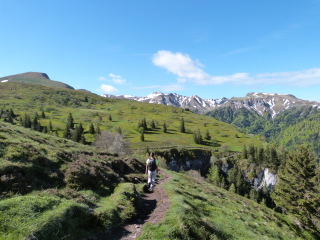
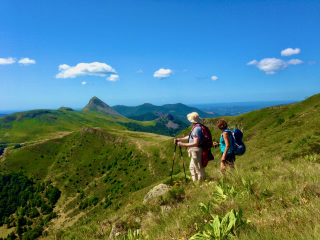
Discover a star-shaped stay in the heart of a wild land with vast preserved spaces . Each day takes you through varied landscapes , between vast high-altitude pastures and traditional burons , witnesses to ancestral know-how where the famous aligot is still made.
The hikes also lead you to discover a rich heritage with small listed medieval churches nestled in a peaceful environment. You progress through the heart of deep forests , habitat of the deer whose bellowing echoes according to the season, and explore exceptional flora shaped by pastoralism .
An iconic stop on the Way of St. James enriches this immersion, adding a cultural and historical dimension to your journey.
Each evening, return to the comfort of your accommodation and enjoy generous local cuisine , perfect for recharging after exertion.
A balanced stay between unspoiled nature , living traditions and gourmet delights , for an authentic and rejuvenating experience.
The highlights
-
The vastness of the plateau and the typical villages of the Aubrac
-
Immerse yourself in the local culture: traditional mountain huts, aligot (a cheesy potato dish) and living pastoral trad
-
Comfort every evening and generous local cuisine after the exertion
Photos


Sport
Level
Hiking / Trekking
The expert's opinion
Physical level:
For walkers who engage in varied and regular physical activity.
From 3.5 to 5.5 hours of walking, between 200m and 450m of elevation gain per day.
Technical level:
The paths are without technical difficulty. However, the sections through the pastures and summer grazing lands, including crossing fences, require a little more vigilance.
You will be above 1000m altitude all week, the weather conditions are very variable and the weather changes very marked.
In figures
Hiking
- Average duration/day: 4h30
- Average daily elevation gain: 296 m
- Average daily descent: 346 m
Management
French
The stay will be supervised by a state-certified mid-mountain guide.
Program
-
(Aumont-Aubrac Station) - Nasbinals - Saint Urcize
- Accommodation 2-star hotel
- Breakfast not included
- Lunch not included
- Dinner included
Meet at the hotel in Pont de Gournier, between Nasbinals and Saint Urcize, in the Aubrac Mountains region, at 7:15 pm. Transfer available from Aumont-Aubrac train station to the hotel for those arriving by train (25-minute journey, departure from the station at 6:55 pm, shared transport, free of charge; for other departure times, private taxi available at an additional cost).
Welcome drinks and presentation of the week.
Evening meal and overnight stay.
Day 1 -
Village of Saint Urcize
- Activity Hiking
- Duration of the activity 4h30
- Positive elevation gain 380 m
- Negative elevation 380 m
- Accommodation 2-star hotel
- Breakfast included
- Lunch included
- Dinner included
A circular walk to discover the village of Saint Urcize. Through woods and pastures, we reach Saint Urcize via the banks of the Hère River and the Gouteille waterfall. Visit this beautiful village in southern Cantal, perched at an altitude of 1000 meters on a basalt outcrop overlooking the Hère and Bès valleys. The gray slate and schist roofs frame a remarkable 12th-century Romanesque church, whose bell gable dominates the medieval village and testifies to its ancient origins.
Return to the hotel via the hamlets of Recoules and Recoulette.
Day 2 -
The summer pastures of Aubrac - Laguiole
- Activity Hiking
- Duration of the activity 5h15
- Positive elevation gain 200 m
- Negative elevation 450 m
- Accommodation 2-star hotel
- Breakfast included
- Lunch included
- Dinner included
After crossing the Bois de Saint Urcize forest, we traverse the vast pastures of the Aubrac plateau, dotted with numerous burons (traditional stone huts) and grazing cows with honey-colored coats. We continue into the beautiful Laguiole state forest, home to the renowned restaurant of Sébastien Bras, a mecca of Aveyron gastronomy. We then proceed to the unmissable village of Laguiole, where the famous knives are crafted. This vibrant village also houses the cheese cooperative that produces the cheese for Aligot (a local potato and cheese dish), as well as a distillery where Aubrac Whisky is produced. Visits are possible depending on arrival times.
Return by private bus to our hotel (20 min).
Day 3 -
Lakes and Déroc Waterfall Region
- Activity Hiking
- Duration of the activity 4h30
- Positive elevation gain 200 m
- Negative elevation 200 m
- Accommodation 2-star hotel
- Breakfast included
- Lunch included
- Dinner included
After a short transfer (15 min), we begin the hike through the summer pastures of the Aubrac high plateau. In this open and powerful landscape, the herders have built burons, dwellings made of local stone used during the summer months for the production of Aubrac tome cheese, still produced according to traditional methods.
We then continue through one of the most enchanting areas of the plateau, between peat bogs and glacial lakes. This natural setting, used as a backdrop for Jean-Jacques Beineix's film 37°2 le matin, is home to the mystical Lake Saint-Andéol and Lake Born.
At the edge of a meadow, we discover the Déroc waterfall, an impressive 32-meter waterfall, famous for its spectacular basalt prisms.
The hike ends in Nasbinals, the main town of the high plateau: visit and discover its rich heritage.
Return by private bus (5 min).
Access to the waterfall is limited during the second and third weeks of August due to the Mordorfest festival.
Day 4 -
On the Way of St. James in Aubrac
- Activity Hiking
- Duration of the activity 5h
- Positive elevation gain 400 m
- Negative elevation 400 m
- Accommodation 2-star hotel
- Breakfast included
- Lunch included
- Dinner included
After a short transfer (10 minutes), we follow the Way of St. James pilgrims, passing by Puy de Gudette (1,427 m), an iconic volcanic peak of the Aubrac region, offering a sweeping panorama of the summer pastures. We continue along the GR 65 long-distance hiking trail to reach the hospice in the village of Aubrac, a historic landmark.
Many traces of this period still remain: the church, the English Tower and the old hospital for the poor.
In the afternoon, we continued our hike across the vast summer pastures, which gave the impression of being suspended in the open sky. The elegant Aubrac cows, recognizable by their black-rimmed eyes, graze there with their calves from May to October.
Return by private bus (20 min).
Day 5 -
Village of La Chaldette (optional spa resort) - Aumont-Aubrac
- Activity Hiking
- Duration of the activity 3h45
- Positive elevation gain 300 m
- Negative elevation 300 m
- Breakfast included
- Lunch included
- Dinner not included
Short transfer (5 min) to the village of Grandvals, starting point of our last hike, to reach the charming village of La Chaldette, where thermal water springs naturally at 32°C.
Return to the hotel by private bus after the picnic (10 min).
For those who wish, it is possible to stay on site to enjoy the spa and its treatments (optional).
End of stay around 4pm at the hotel.
Transfer to Aumont-Aubrac train station is available at an additional cost.
Day 6
Note
- The durations of our hikes are approximate. They may vary depending on several factors during our trip (participants' skill level, weather, trail conditions, etc.). Transfer times may also fluctuate depending on weather conditions and road conditions.
- The program was established based on the latest information available at the time of writing and may be subject to change in the interest of quality. Furthermore, circumstances beyond our control may alter the course of your stay (weather, road closures, cancelled or delayed flights, strikes, local festivals, etc.).
- You can extend your stay with an optional spa treatment at the thermal resort in the village of La Chaldette (www.lachaldette.com). This center offers a wellness area, thermal treatments, massages, and more. A reflexologist is available on-site; reservations are required. In this case, we recommend staying an extra night on Saturday to enjoy La Chaldette on Sunday. Opening hours and dates: click on the link La Chaldette Opening Hours
Accommodation
A 2-star Logis de France hotel in Pont de Gournier , offering family-run accommodation with excellent cuisine. Our restaurant typically serves traditional dishes, based on regional specialties (hearty meals such as aligot, etc.). Located in the heart of the Aubrac region, in a peaceful, natural setting.
Access
APPOINTMENT
Monday at 7:15 p.m. at the hotel in Pont de Gournier (or at 6:55 p.m. at the Aumont-Aubrac train station, only if you have booked the shuttle with us in advance).
DISPERSION
The following Saturday around 4pm at the hotel in Pont de Gournier (or at 4:45pm at the Aumont-Aubrac train station).
Go to the starting point
- Access and departure station: Aumont-Aubrac . The hotel is then a 25-minute journey from the station, in Pont de Gournier.
- Shuttle service from Aumont-Aubrac train station to the hotel in Pont de Gournier (approximately 25-minute transfer): provided for those arriving by train (only one group trip on arrival day and one on departure day), but must be booked at the time of registration, or at least 15 days before the start of your stay to guarantee availability. Departure from the station at 6:55 pm on day 1, and departure from the hotel at 4:20 pm on day 6 to return to the station.
- In case of shuttle service between train station and hotel at a different time, it is possible to book it with a supplement of €57 per trip (€70 per trip if 4 to 6 of you from the same booking are booking this trip).
- Carpooling is possible among participants. Contact us to find out if others are coming by car; we can share your contact information with them if you wish.
- If you arrive by car, you can leave your vehicle free of charge, securely, at the hotel and without a reservation.
Price details
The price includes
- The trip will be supervised by a state-certified mid-mountain guide.
- Accommodation in a 2-star hotel, half-board
- Picnic lunches (from day 2 to day 6)
- The shuttle service from Aumont-Aubrac train station to the hotel and back (free for those arriving by train)
- The transfers planned in the program
- Tourist taxes
The price does not include
- Transportation to the meeting point
- The visits (the cutlery factory in Laguiole, as well as the cheese cooperative and the whisky distillery)
- Drinks and personal expenses
- Anything not listed under "Price includes"
Options
- Single room : CHF228.70 / person
- Flex fare and insurance
Practical information
Specific formalities
Specifics
During the hike, you must have the following documents in your possession:
- Valid identity card or passport
- Health insurance card
- Your travel insurance leaflet received upon registration (if you purchased this insurance through our offices) or your personal insurance (contract number + telephone number)
- European Health Insurance Card
Before your departure, check with the embassy or consulate regarding the entry and stay requirements for your destination country. You can also find this information on the France Diplomatie website ( https://www.diplomatie.gouv.fr/fr/dossiers-pays/ ).
In the case of flights with stopovers operated by different airlines, also check the entry requirements of the countries you are transiting through.
It is your responsibility to ensure you are in compliance, particularly regarding the validity of your identity documents (for example, some countries require your passport to be valid for at least six months after your return) , visa requirements, necessary vaccinations, and health recommendations. And don't forget to consider any customs restrictions and other potential requirements of your destination or transit country.
ℹ️ Information may change up to the departure date, remember to regularly check official websites.
Equipment
Equipment to bring
LUGGAGE
- One travel bag per person (or a rolling suitcase; recommended for trips with public transport included for transfers). Oversized luggage should be avoided as it would cause problems with bus capacity or logistical organization.
- One 35-40 liter backpack with a flexible frame, hip belt, and well-ventilated back panel for your comfort (to carry your personal belongings for the day: camera, packed lunch, water bottle, snacks, windbreaker, sweater, rain gear, etc.). This bag is usually placed in the cabin for any air travel (10kg maximum per person, typically).
On multi-day or semi-multi-day trips, you are asked to limit the weight of your luggage to a reasonable extent, as difficult access to some accommodations could compromise luggage delivery. We also advise you to avoid leaving fragile and/or valuable items behind.
FOR PICNICKS – MIXED SALADS
- Cutlery (reusable, not disposable)
- 1 airtight plastic container with a minimum capacity of 0.5 liters. It can be used as a plate and for storage, without getting your bag dirty.
- 1 sample of dishwashing liquid and a small sponge for washing your picnic equipment
- 1 plastic or aluminum cup with an insulated handle to prevent burns from hot drinks
- 1 folding pocket knife (optional)
- One insulated or aluminum water bottle of at least 1.5 liters, or a flexible water bottle (not recommended in winter). Especially useful in winter, also bring (optional) an insulated bottle to carry tea, coffee, etc., during the hike.
OTHERS
- 1 large plastic bag to slip into your backpack to protect your belongings from the elements and/or 1 rain cover
- 1 waterproof pouch containing: your assistance contract, your identity documents, health insurance card and any other document mentioned in the formalities section
- 1 sturdy and lightweight umbrella (optional but very useful in case of rain, or even heatwave)
- One pair of telescopic walking poles (optional, depending on your preferences or the technical difficulty of the hikes; refer to the "Technical Level" section of the trip information sheet). Using pole tips is essential to protect the soil and prevent erosion. These tips reduce the impact of the metal points on the trails, thus preventing damage to fragile terrain. We recommend using them (rubber or plastic). Some sites and national parks are gradually making them mandatory.
- 1 pair of good quality sunglasses (protection level 3 or 4) that provide good side coverage
- Sunscreen with a good protection factor (30 minimum)
- Toiletries kit (toothbrush, deodorant, etc.)
- Earplugs made of wax or foam (against neighbors' snoring or other noise pollution)
- Tissues
- 1 headlamp or flashlight + survival blanket: these should always be in your backpack; an unexpected delay due to an incident can occur even during an easy hike.
- Spare glasses (if you wear prescription glasses; optional)
- Camera
- Binoculars (optional)
Clothing to bring
For the upper body, the 3-layer principle allows you to manage almost all situations:
- a light and breathable layer
- a warm layer
- a waterproof and breathable layer
When hiking in calm, sunny weather, a base layer may be sufficient. In rainy or windy conditions, simply add this waterproof jacket. In very cold weather or during breaks, a fleece jacket is an essential addition.
Choose clothes that dry quickly, so avoid cotton. Opt for synthetic fibers that will keep you dry and warm for as long as possible.
Remember to dress warmly before you get cold, but especially to remove layers before you get too hot. Sweat is a hiker's enemy, as it dampens clothing that quickly becomes icy during breaks. Therefore, it's very rare to undertake a climb wearing a fleece jacket.
The complete and ideal list: (although this should be adapted depending on the hike, the season, and your habits)
- 1 sun hat or cap, or scarf
- 1 fleece hat or headband and/or a neck warmer
- 1 pair of lightweight gloves
- Short-sleeved T-shirts in breathable material preferred (1 for every 2 days of walking).
- 1 long-sleeved base layer in breathable material or a shirt (sometimes the peaks are windy and a light layer is welcome during the lunch break),
- 1 warm fleece-type jacket (or even water-repellent) or a warm and compressible type)
- 1 windproof, waterproof and breathable jacket with hood
- 1 rain poncho (optional) and/or sleeping bag cover
- 1 pair of sturdy, loose-fitting, comfortable, water-repellent hiking trousers
- 1 pair of waterproof and breathable overtrousers
- 1 pair of shorts or capris, comfortable and durable
- Hiking socks (1 pair for 2 days of hiking). Opt for wool or specific hiking socks like terry cloth, which will prevent your feet from overheating prematurely.
- One pair of hiking boots that provide good ankle support and are waterproof, with a sole that grips well on uneven terrain and is abrasion-resistant. Consider testing new boots and those that haven't been used for a long time beforehand, or if you're used to hiking, a pair of low-cut trail shoes is ideal, especially for summer trips.
- 1 swimsuit and 1 quick-drying towel (optional in case of swimming)
- 1 pair of comfortable trousers for the evening
- 1 pair of lightweight casual shoes for the evening, like sneakers, which can also be used for sightseeing or walks in town.