Mont Blanc Massif
/ Haute-Savoie
Hiking and secret panoramas of Mont Blanc
4,5/5
(2 reviews)
Réf : ALXMKQ
In summary
-
Sports
-
Duration6 days
-
LevelIntermediate
-
DestinationMont Blanc Massif / Haute-Savoie
-
AgeFrom 12 - 90 years
-
CO₂-Emissions59.25 kg CO2
-
Type of stayIn a group
-
Languages🇫🇷French
In a few words
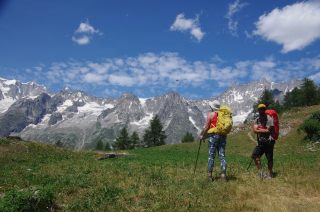
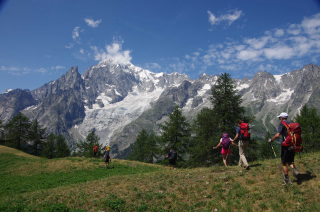
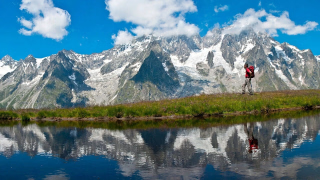
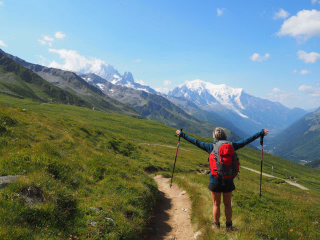
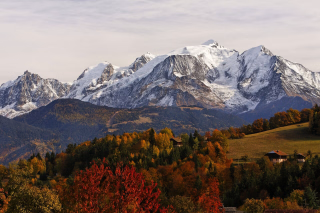
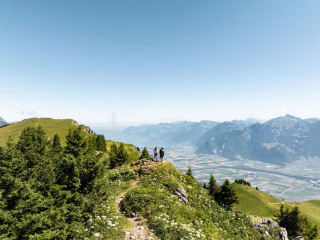
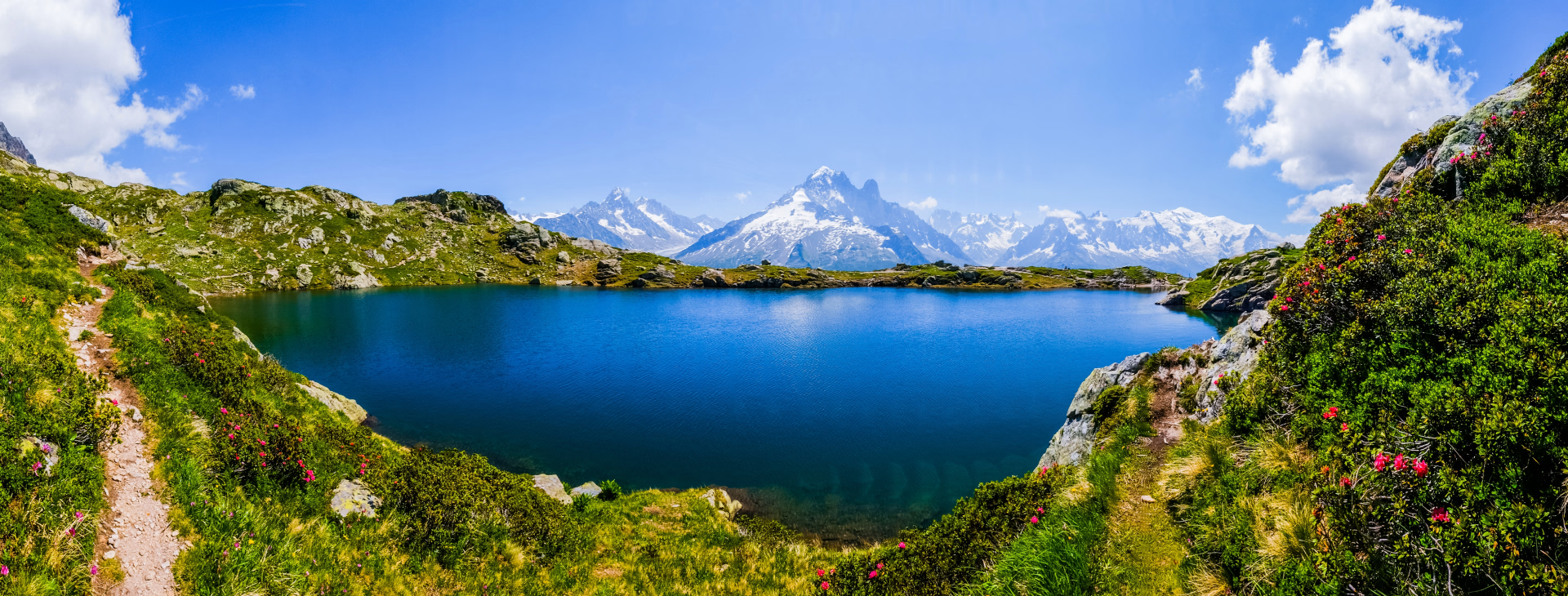
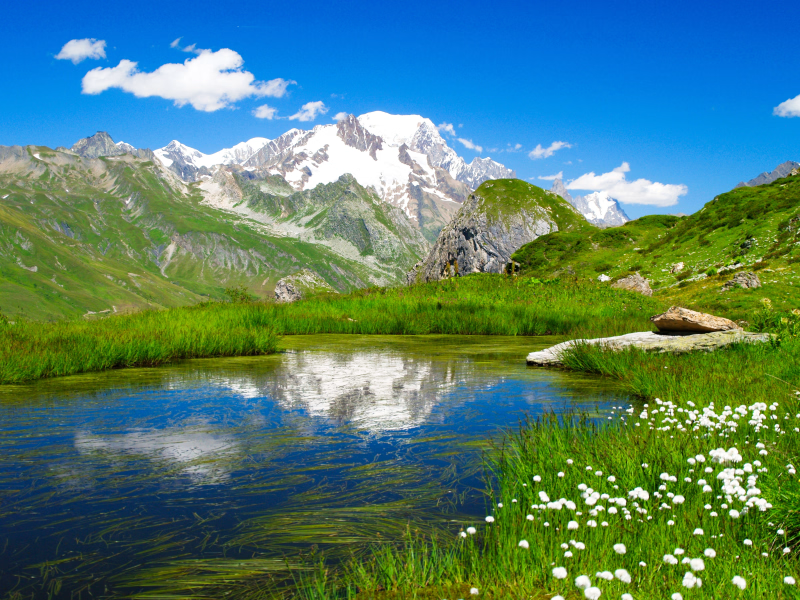
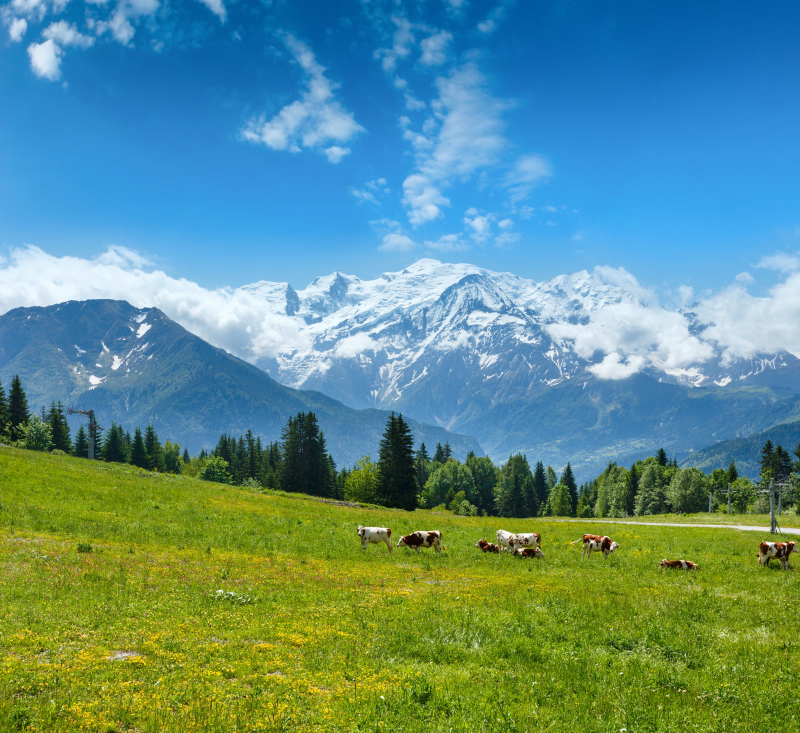
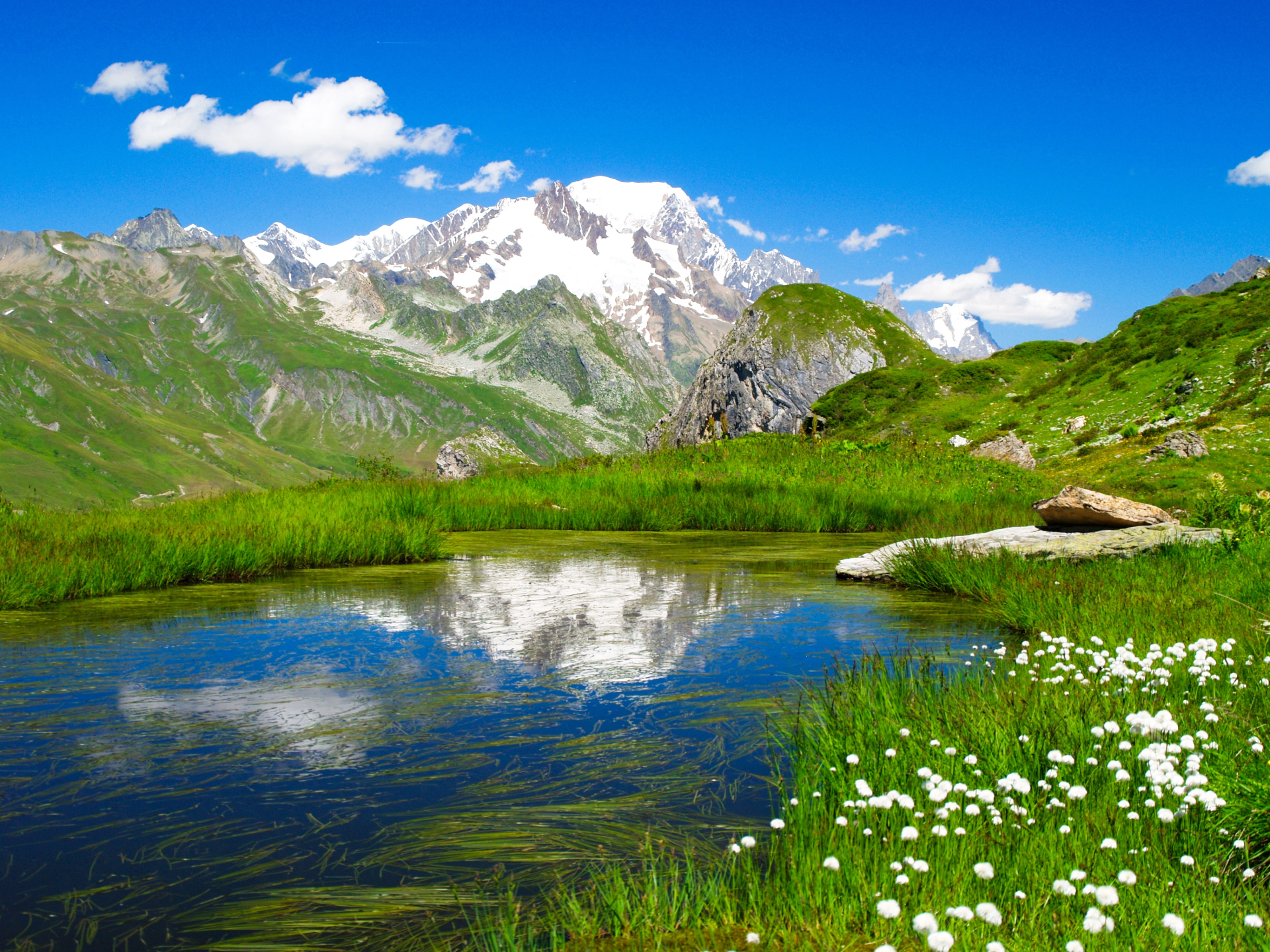
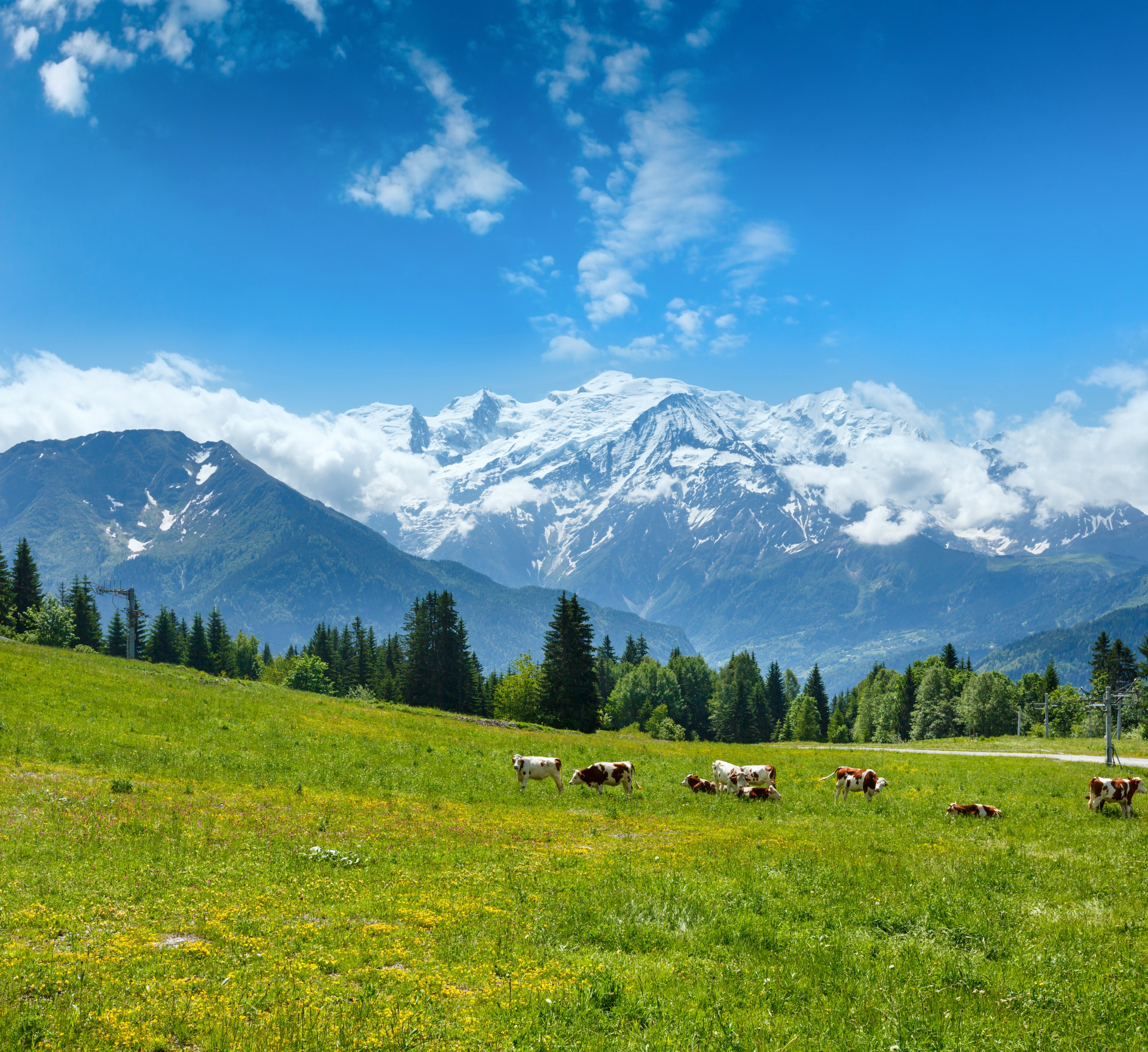
At the foot of Mont Blanc , this star-shaped hiking trip immerses you in the majestic world of the Alps . From your base camp in a warm chalet-hotel in the heart of Le Fayet , you explore the secret and unspoiled slopes of the massif, far from the hustle and bustle of the Chamonix valley.
Each day, a new immersion awaits you: spectacular panoramas of Les Houches, peaceful valleys of Les Contamines-Montjoie , alpine atmospheres around Megève, and iconic routes of Saint-Gervais . In a small group, you'll trek across panoramic ridges , shimmering glaciers , and jagged peaks , guided by a passionate leader who combines local knowledge with discretion.
The highlight of the stay: the ascent on board the Mont-Blanc train , up to more than 1900 meters , offering privileged access to unforgettable high-altitude hikes , facing the giants of granite and ice.
A stay designed for mountain lovers , in search of real emotions, preserved nature and authentic encounters , in a friendly and rejuvenating atmosphere.
The highlights
-
Star-shaped hikes facing the magnificent panoramas of Mont Blanc
-
Varied and unspoiled routes
-
A guided tour for a peaceful and enriching experience.
Subscriber benefit
save 5%
by joining
our community
Decathlon Travel Benefits
Best price guaranteed:
We offer twice the difference
Free cancellation more than 30 days in advance
Payment in 2 installments
Learn more
Photos
Sport
Level
Hiking / Trekking
For those wishing to hike for 4 to 5 hours a day, covering an elevation gain of around 600m on trails. You hike occasionally and are in good physical condition.
The expert's opinion
Average elevation gain: 600 m Maximum elevation gain: 800 m
Average length: 11 km Maximum length: 12 km
Average time: 5 hours
The walking pace is slow and steady, with a focus on discovery rather than sport. We take frequent breaks and enjoy the experience.
In figures
Hiking
- Average duration/day: 5h30
- Average distance/day: 10 km
- Average daily elevation gain: 660 m
- Average daily descent: 660 m
Management
During this stay, a supervisor will be present to guide and assist you.
Band :
1 supervisor for 6 to 12 people
Languages spoken:
🇫🇷
French
Supervisor
Supervisor
State-certified mountain guide, specialist in the region. A mountain professional, he is committed to:
- Manage your hike safely and effectively: route selection, pace, logistics, health, and adapting to weather and snow conditions.
- To ensure the group's dynamism and cohesion
- To make it easier for you to approach the mountain environment and to passionately share its knowledge of nature with you
- Being available and listening to you
Program
-
Welcome and Installation
- Accommodation 2-star hotel
- Breakfast not included
- Lunch not included
- Dinner included
Head to your accommodation located in the heart of the village of Le Fayet, just a few dozen meters from the SNCF train station – very convenient. Meet at 6:30 PM for check-in and welcome. Meet your guide for the week, have a short briefing, and enjoy a welcome drink.
Day 1 -
The Miage Valley
- Activity Hiking
- Duration of the activity 5h30
- Distance 8 km
- Positive elevation gain 700 m
- Negative elevation 700 m
- Accommodation 2-star hotel
- Breakfast included
- Lunch included
- Dinner included
We begin our stay by heading to the Contamines-Montjoie valley, at the foot of the towering peaks of the Mont Blanc massif. We start in the forest on a lovely, varied, and gradually ascending trail, before emerging into one of the most spectacular valleys in the area, the Miage valley (1600 m). We truly feel like we've discovered "the ideal" at the foot of the Dômes de Miage (3700 m). That's the guide's word! It's our first panoramic view of the Mont Blanc massif.
Day 2 -
The Mont Blanc tramway and the Bionnassay valley
- Activity Hiking
- Duration of the activity 5h
- Distance 8 km
- Positive elevation gain 500 m
- Negative elevation 500 m
- Accommodation 2-star hotel
- Breakfast included
- Lunch included
- Dinner included
At the foot of the "normal" route up Mont Blanc, a wonderful adventure begins with the ascent to the summit plateau and the viewpoint at 1900m via the St. Gervais train. This spot is renowned among film buffs as the natural setting for the famous movie "Malabar Princess." Facing the Mont Blanc glaciers, this site offers a spectacular panorama that will leave no one unmoved. The view is magnificent and allows for a 360° panoramic vista. A truly exceptional day. Ascent and descent by train.
Day 3 -
The Contamines Valley
- Activity Hiking
- Duration of the activity 5h
- Distance 12 km
- Positive elevation gain 800 m
- Negative elevation 800 m
- Accommodation 2-star hotel
- Breakfast included
- Lunch included
- Dinner included
From the Contamines Valley, a renowned hiking destination, we set off for a truly breathtaking natural setting! Thanks to a shaded path, the ascent will be gradual, and you'll be captivated by local stories about this corner of the Mont Blanc region. This is a generally quiet route that combines all aspects of hiking. The descent in the afternoon, mainly through the forest, will be wonderfully refreshing! This is our guide's secret spot, where he'll share some truly special moments with you.
Day 4 -
The Aravis mountain range
- Activity Hiking
- Duration of the activity 6h
- Distance 9 km
- Positive elevation gain 700 m
- Negative elevation 700 m
- Accommodation 2-star hotel
- Breakfast included
- Lunch included
- Dinner included
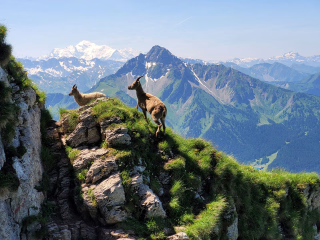
Today we are exploring the foothills of the Aravis mountain range. Above the village of Sallanches, a forest path leads us to Plaine Joux. We emerge into high-altitude meadows dominated by the summit of the Quatre Têtes and the Pointe Percée, the highest point of the Aravis (2750 m). At the foot of beautiful cliffs, the view of this valley evokes strong emotions; wildlife is abundant here, and with a little patience, we can observe wild animals.
Day 5 -
The Belvedere on Mont Blanc
- Activity Hiking
- Duration of the activity 5h
- Distance 9 km
- Positive elevation gain 600 m
- Negative elevation 600 m
- Breakfast included
- Lunch included
- Dinner not included
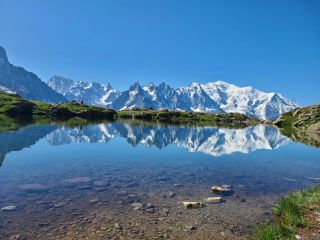
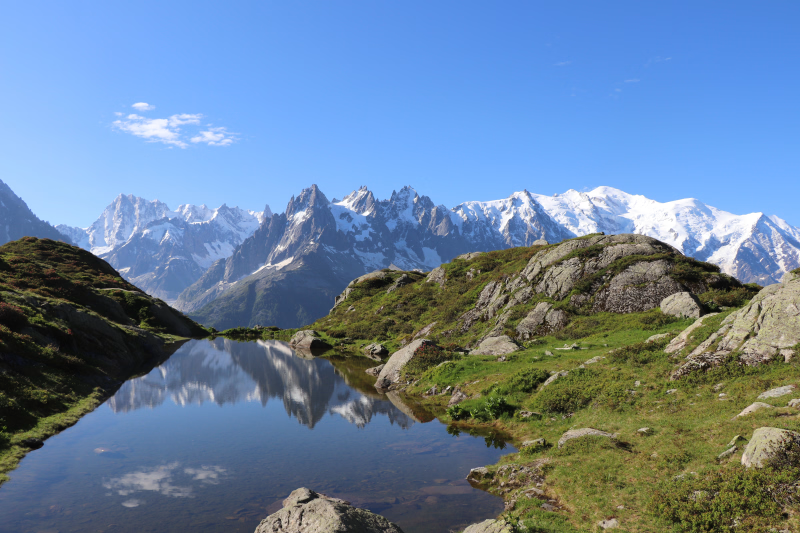
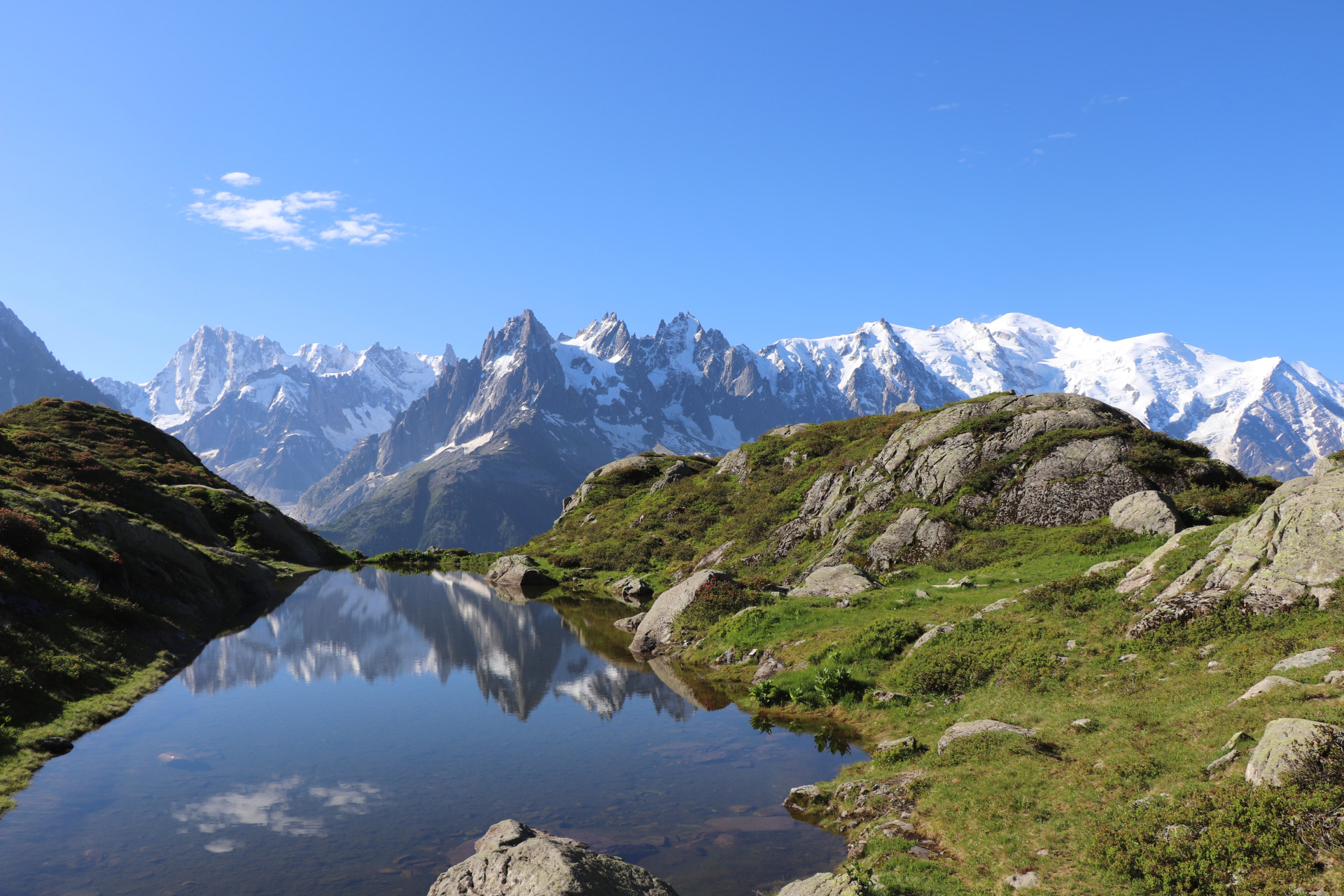
From Les Houches, on the foothills of the Aiguilles Rouges massif, a climb through the forest leads to the Plan de la Cry (1400 m). The landscape opens up to reveal the Chamonix valley. After a steady ascent through the forest, we arrive at the Plan de Benoï (1900 m). From there, the view of Mont Blanc, with its famous peaks and domes, cannot be described; it must be experienced intensely… Certainly one of the most spectacular panoramic views.
The program ends in the late afternoon with the return to the hotel.
Day 6
Note
The times were calculated based on a pace of 300 meters of elevation gain per hour uphill, 500 meters of elevation gain per hour downhill, and 4 km per hour on flat terrain, in order to allow for a comparison of the different hikes on the same basis. They only include actual walking time; all meal breaks, rest stops, or periods of quiet contemplation must be added.
We may sometimes need to slightly modify the indicated itinerary: either due to organizational issues (overbooked accommodations, changes in trail conditions, etc.) or directly at the guide's discretion (weather, group level, etc.). Rest assured, these modifications are always made in your best interest, for your safety and comfort!
Accommodation
🏨 2-star hotel - Days 1 to 5
You will be accommodated at the 2-star hotel LA CHAUMIÈRE in Le Fayet / Saint-Gervais
Access
Departure
222 Av. de Genève, 74170 Saint-Gervais-les-Bains, France
Day 1
: 18h30
End of stay
222 Av. de Genève, 74170 Saint-Gervais-les-Bains, France
Day 6
- 17h00
Go to the starting point
Take the train toSaint‑Gervais‑Les‑Bains Le Fayet
The hotel for this stay is located in the Fayet district, a few minutes' walk from the SNCF train station.
Travel to the place of stay
with parking
available
You can park your vehicle near the accommodation or in the stadium car park at the entrance to the village.
Would you like to travel on other dates?
Create an alert and we'll notify you by email if new departures are added.
Price details
The price includes
- The trip will be supervised by a state-certified mountain guide.
- Accommodation in a comfortable 2-star hotel, in a shared room
- Full board from dinner on Day 1 to lunch on Day 6
- The transfers planned in the program
- The loan of hiking poles
- The welcome drink
- The tourist tax
The price does not include
- Drinks and personal expenses
- The journeys to and from the reception location.
- Anything not listed under "Price includes"
Options
- Single room : CHF171.00 / person
- Flex fare and insurance
Practical information
Specific formalities
Equipment
They traveled with us
Discover the authentic experiences of our travelers
4,5/5
(2 reviews)
Reviews displayed in reverse chronological order
R
Decathlon Travel Partner
Our partner team
4.4/5
(76 reviews)
• 78 stays
A local team specializing in the Chartreuse and Pre-Alps regions, our partner is based in Chapareillan. Their work revolves around sharing, discovering unspoiled landscapes, and enjoying the warm hospitality of the mountains. Since 2021, this small, friendly organization has been inviting travelers on an authentic adventure in the heart of exceptional mountain ranges. They prioritize encounters and immersion in these natural paradises to offer an unforgettable human experience.
Are you satisfied with this page?
Subscriber benefit
save 5%
by joining
our community
Decathlon Travel Benefits
Best price guaranteed:
We offer twice the difference
Free cancellation more than 30 days in advance
Payment in 2 installments
Learn more