Sports holidays in Marsala
Discover all our sports trips to Marsala for your next holiday.
4,4/5
(8 reviews)
Book with confidence with Decathlon Travel
Subscriber benefit
-5% off all stays
Best price guaranteed
we offer twice the difference
Free cancellation
more than 30 days before departure
Payment in 2 installments
free of charge
They traveled with us
Discover the authentic experiences of our travelers
4,4/5
(8 reviews)
Reviews displayed in reverse chronological order
Marsala: a sunny pearl of western Sicily
Nestled at the westernmost tip of Sicily , in the province of Trapani , Marsala is a city full of charm and surprises. Its name, derived from the Arabic “Marsa Allah” – the Port of God – evokes a spiritual and welcoming atmosphere. But Marsala is not just a city… it’s a complete sensory experience that blends history, nature, culture, and gastronomy .
Affectionately nicknamed "the city of wine and salt," it charms visitors with its authenticity and contrasts: lively alleyways, peaceful salt marshes, majestic monuments, and mouthwatering cuisine. Its manageable size allows you to explore everything on foot, at your own pace.
A historic center on a human scale, but rich in treasures.
In the heart of Marsala, the historic center , as intimate as it is vibrant, is full of iconic places . Two majestic gates mark the old entrances to the city: Porta Garibaldi , through which Giuseppe Garibaldi and his troops entered in 1860, and Porta Nuova , equally imposing.
Via XI Maggio , also known as Cassaro , is the city's main thoroughfare. It pulsates with the energy of passersby, souvenir shops , cozy bars , artisanal bakeries , and inviting restaurants . Along this street, one can admire elegant residences such as Palazzo Fici and Palazzo Burgio-Spanò , which add a touch of nobility to the whole scene.
In the center, the Piazza della Repubblica naturally draws the eye. Dominated by Marsala Cathedral , dedicated to Saint Thomas of Canterbury , it offers a harmonious contrast between a Norman-era structure and a more recent Baroque façade . Right next door, the Palazzo VII Aprile stands out with its Clock Tower , an unmistakable landmark in the cityscape.
The city's churches add to its architectural charm. The Chiesa del Purgatorio , with its sumptuous two-tiered Baroque façade, and the Chiesa dell'Addolorata , surrounded by miraculous tales, enrich the spiritual soul of the place.
Art and history enthusiasts can explore the Museo degli Arazzi Fiamminghi , home to precious 16th-century Flemish tapestries. On the waterfront, in a tastefully restored former wine cellar, the Museo Archeologico Regionale di Lilibeo – Baglio Anselmi offers a fascinating journey into the city's past: here, visitors can discover Phoenician and Roman remains from Lilybaeum , including the wreck of a Punic ship linked to the Battle of the Aegadian Islands.
And to experience Marsala like a local, don't miss the fish market : bustling during the day with fresh catches from the Stagnone and the Strait of Sicily , it transforms in the evening into a true epicenter of nightlife , animated by the surrounding bars and restaurants.
Nature, history and poetry: the Stagnone lagoon
Venturing away from the city center, you'll discover the incredible Stagnone Lagoon Nature Reserve . It's a magical place where natural beauty , historical heritage , and a peaceful atmosphere intertwine. The ancient salt marshes , traditional windmills , and the site's rich birdlife create an unforgettable landscape.
Guided walks through the salt flats are available, as well as boat trips to explore the lagoon from a different perspective. At its heart lies the island of Motya ( San Pantaleo ), an ancient Phoenician colony. A short ferry ride is all it takes to reach this unique archaeological site, where you can explore the ruins of the ancient city and visit the Whitaker Museum , which houses a rich collection of artifacts found on the island.
A city shaped by wine
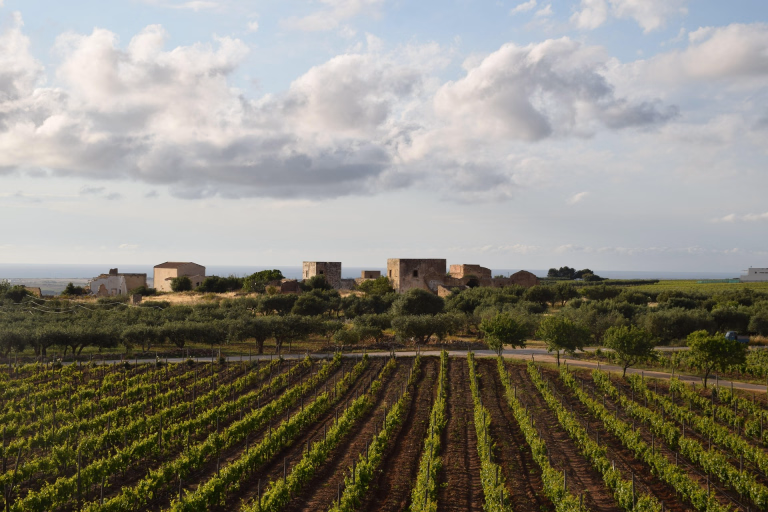
Marsala's identity is inextricably linked to the production of its renowned wine. Visitors can explore several historic wineries , such as Florio , Pellegrino , and Donnafugata . These establishments offer immersive tours that recount the history and secrets of Marsala winemaking , culminating in delightful tastings .
And if you feel like going further, many UNESCO World Heritage sites are accessible by car: the Valley of the Temples in Agrigento , the Arab-Norman cathedrals of Palermo , Cefalù and Monreale , or the spectacular Doric temple and ancient theatre of Segesta .
Outdoor activities: between wind, sea and nature
For adventure seekers, Marsala is a true open-air playground. The Stagnone Lagoon , with its shallow waters and consistent winds , is a must-visit European spot for kitesurfing and windsurfing . Several schools offer lessons for all levels, and conditions are ideal year-round.
Besides water sports, the lagoon can also be explored by boat or on horseback , which are particularly magical at sunset .
Cycling enthusiasts will appreciate the 7.6 km Stagnone di Marsala cycle path , which winds through the salt flats and offers breathtaking views. There are also routes to Trapani or Gibellina , perfect for a change of pace. For walkers, the lagoon's shores and surrounding area offer gentle strolls , while for the more adventurous, Erice or the Zingaro Nature Reserve offer spectacular hikes .
Marsala also offers facilities for tennis , running , fitness and even land sailing , a discipline as original as it is exciting!
Sicilian Flavors: A Journey on a Plate
No visit to Marsala would be complete without sampling its local cuisine . Here, every dish reflects Sicily's cultural fusion and its regional produce . The star of the show? Fish couscous , a specialty of the province of Trapani. This flavorful dish blends the North African tradition of couscous with fresh Mediterranean seafood . A must-try!
While strolling through the streets, you can also discover classic Sicilian street food , such as panelle (crispy chickpea fritters) or arancine (stuffed rice balls, often with ragù or mozzarella).
Traditional dishes abound: caponata di melanzane , pasta con i broccoli , and a multitude of seafood recipes showcasing the freshest catch of the day. And for those with a sweet tooth, it's hard to resist the cannoli con la ricotta , the Christmas cassatelle , or the frutta di Martorana , those sublime marzipan fruits decorated by hand.
When to go? Marsala through the seasons
With its mild Mediterranean climate , Marsala is pleasant all year round , but each season has its own charm:
- In spring (April to June), temperatures are ideal (19 to 26°C) and nature is in bloom. Perfect for walks, sightseeing and cycling.
- Summer (July to September) is hot (up to 33°C) and sunny, ideal for the beach, water sports and excursions to the Egadi Islands.
- Autumn (October to December) offers a milder climate (16 to 23°C), perfect for discovering the city without the crowds, and enjoying the grape harvest.
- Winter (January to March) is calm, with temperatures of 15 to 16°C: ideal for visiting museums, enjoying local cuisine and avoiding tourists.
Finally, for a total immersion, consider visiting during one of the city's flagship events : the wine festival in September, the Settimana delle Culture in May, the historical parade , the Fish & Music Festival in June, or the Marsala Kite Fest in July.