Book with confidence with Decathlon Travel
Subscriber benefit
-5% off all stays
Best price guaranteed
we offer twice the difference
Free cancellation
more than 30 days before departure
Payment in 2 installments
free of charge
They traveled with us
Discover the authentic experiences of our travelers
4,4/5
(5 reviews)
Reviews displayed in reverse chronological order
Discover our other destinations - Egypt
Discover our finest getaways
A unique adventure in Egypt:
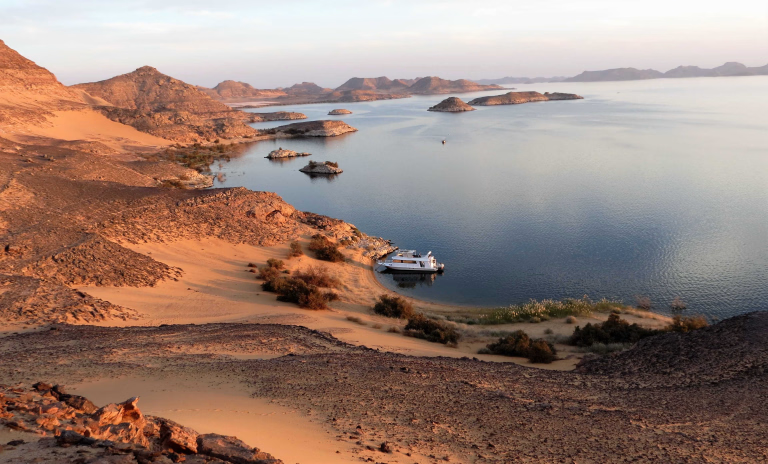
In the heart of Egypt's iconic desert landscapes, where one would expect an endless expanse of sand, an impressively large aquatic surprise reveals itself: Lake Nasser. This vast artificial body of water, one of the largest in the world, invites you on an adventure off the beaten track, offering an experience that blends the tranquillity of the desert with rich history and nature. Born from a monumental engineering project, Lake Nasser stretches across southern Egypt, sharing a border with Sudan, where it is known as Lake Nubia. For travellers seeking exploration, connection with nature and cultural discoveries, Lake Nasser is a fascinating and highly promising destination.
History and Origins of a Mythical Lake:
Lake Nasser would not exist without the construction of the Aswan High Dam, a huge project launched between 1958 and 1970 to replace the old British dam of 1902. The goal? To regulate the Nile, support agriculture, and generate electricity for a rapidly modernising Egypt. ⚡?
This project, championed by President Gamal Abdel Nasser (after whom the lake is named), profoundly transformed Upper Egypt. However, it also came with a significant human and cultural cost: more than 100,000 Nubians were displaced, their villages submerged under water. While the Egyptian part is called Lake Nasser, the Sudanese portion is named Lake Nubia, highlighting its transboundary dimension.
At 500 km long and with a surface area of 6,000 km², Lake Nasser is one of the largest artificial lakes in the world. It plays a vital role in maintaining a stable flow of the Nile, irrigating land and powering hydroelectric dams. ?⚙️
On the nature side, a surprising ecosystem has emerged: wetlands, migratory birds, foxes and gazelles now find refuge on the shores of this freshwater expanse in the middle of the desert. But not everything is perfect: the lake retains a large portion of the Nile's silt, impoverishing the delta lands, while evaporation is very high in this arid climate.
The rising waters threatened priceless archaeological treasures. Thanks to an international mission coordinated by UNESCO, iconic temples such as Abu Simbel and Philae were dismantled and rebuilt higher up. A spectacular rescue that has become a symbol of preserved heritage. ?
Others, like the Buhen Fortress, were not so lucky and now lie beneath the lake. The mass displacement of Nubian populations marked a painful turning point in their history, making their cultural memory all the more precious for today's visitors.
Must-do tourist activities around Lake Nasser:
- Lake cruises: an adventure between desert and temples
Exploring Lake Nasser on a cruise is a truly unique experience. These comfortable and well-organised trips provide access to iconic archaeological sites that are often otherwise inaccessible. Highlights include the temples of Abu Simbel, Philae, Kalabsha, Wadi es-Seboua and Qasr Ibrim.
Sailing on this huge artificial lake in the heart of the desert offers a rare and spectacular perspective, blending historical discovery with relaxation on the water. Some cruises even add a “safari” dimension with activities focused on fishing or birdwatching, to satisfy travellers in search of wild nature.
- Sport fishing: thrills guaranteed
Lake Nasser is a premier destination for sport fishing enthusiasts, renowned for its Nile perch and tigerfish, which can reach impressive sizes. Thanks to the lake's depth and vastness, these species thrive in a virtually untouched environment.
Excursions are available, ranging from day trips to multi-day expeditions to reach more isolated areas. It is the dream location to take on real fishing challenges and experience unforgettable moments in the heart of the desert.
- Wildlife watching: unexpected life in the arid landscape
The lake is home to an astonishing biodiversity, starting with the famous Nile crocodile. It is also a vital refuge for migratory birds: with over a hundred species recorded, making it a haven for birdwatchers.
Among the inhabitants of the surrounding desert, you can also spot gazelles, foxes or even more discreet species. This contrast between freshwater and desert expanses gives rise to a unique ecosystem, shaped by man but adopted by nature.
- Archaeological treasures: in the footsteps of the pharaohs
It is impossible to mention Lake Nasser without talking about its majestic ancient sites. Headlining the list is Abu Simbel, a masterpiece carved into the rock and dedicated to Ramesses II and Nefertari. These colossal temples are also famous for their spectacular rescue, having been moved stone by stone to escape the rising waters.
You can also visit Philae, dedicated to Isis, which is just as enchanting, as well as Kalabsha, Amada (the oldest), Wadi es-Seboua, Derr, Dakka, and of course Qasr Ibrim – the only site that remained in its original location, perched on a rocky island.
These temples, often preserved thanks to titanic engineering efforts, make Lake Nasser a must-visit destination for history and archaeology enthusiasts. Each stop is an immersion into the mysteries of ancient Egypt, set against a breathtaking natural backdrop. ✨?
Cultural immersion:
A thousand-year-old heritage between sand and water
Before the waters of Lake Nasser reshaped the landscape, this region belonged to a fascinating civilisation: Nubia. Far more than just a neighbour to ancient Egypt, this people had their own pharaohs and powerful kingdoms, which at times even ruled Egypt. ???
The construction of the Aswan High Dam disrupted this ancestral land: many Nubian villages were submerged, forcing thousands of inhabitants to leave their land. Yet despite this trauma, Nubian culture endures and still shines today. Its colours, music and traditions can be found in the villages that remain near Aswan, where travellers can experience an authentic encounter with a vibrant culture.
A living culture to experience
Visiting a Nubian village is much more than an excursion: it is a warm immersion into an ancestral way of life. You will discover:
- Colourful houses, hand-painted with symbolic patterns ?
- Rhythmic music, telling the story of a people
- A rich craft heritage, from pottery and weaving to jewellery
To deepen this discovery, do not miss the Nubian Museum in Aswan, a true goldmine for understanding the roots of this unique culture. Combining an exploration of Lake Nasser with an immersion into Nubia means experiencing Egypt in all its human and historical depth.
Practical information for your trip
☀️ When to go? The best time to explore the lake
The climate around Lake Nasser can be extreme in summer, with temperatures exceeding 40°C between June and August. To make the most of the region, choose the following periods:
- January to May
- September to December
The most pleasant months are often February to April, as well as November and December. These periods are ideal for hiking, cruises or fishing, with more moderate heat and often clear skies. ?
Where to stay? Between a charming cruise and a comfortable hotel
For an unforgettable stay, nothing beats a cruise on Lake Nasser. The boats offer accommodation ranging from simple cabins to luxurious suites, with onboard services that add a touch of comfort to the change of scenery.
The M/S Steigenberger Omar El Khayam is one of the most renowned vessels sailing the lake, offering a premium experience. If you travel with Decathlon Travel, the "Hiking and sailing" tour suggests onboard accommodation, a wonderful way to experience the lake from the inside while exploring its shores on foot. ?️
⚠️ Health and safety: travelling well prepared
A few essential recommendations to enjoy your stay with peace of mind:
- Do not drink tap water ??: opt for bottled or purified water
- Protect yourself from the sun ☀️ with a hat, sunglasses and sunscreen
- Use an insect repellent, especially in the evening
- Ensure your vaccinations are up to date and seek medical advice before departure
- Avoid any contact with stagnant freshwater due to the risk of schistosomiasis
- Nile crocodiles live in the lake ?: swimming is only permitted in well-supervised areas
- Respect local safety guidelines and cultural customs
Discover all our active holidays in Egypt:
Discover all our sports activities in Egypt:
- Our trekking and hiking trips in Egypt
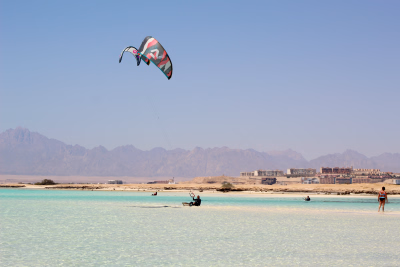
- Our kitesurfing trips in Egypt
- Our diving trips in Egypt
- Our multi-activity trips in Egypt
- Our snorkelling trips in Egypt
- Our wingfoiling trips in Egypt