Les Contamines-Montjoie
New Year's Eve snowshoeing in the Mont Blanc region
5/5
(2 reviews)
Réf : FAMBREVX
In summary
-
Sports
-
Duration4 days
-
LevelConfirmed
-
DestinationHaute-Savoie / Les Contamines-Montjoie
-
AgeFrom the age of 18
-
CO₂-Emissions21.87 kg CO2
-
Type of stayIn a group
In a few words
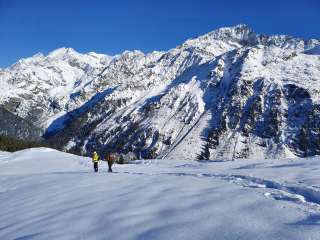
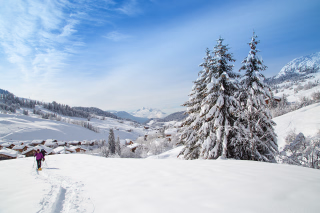
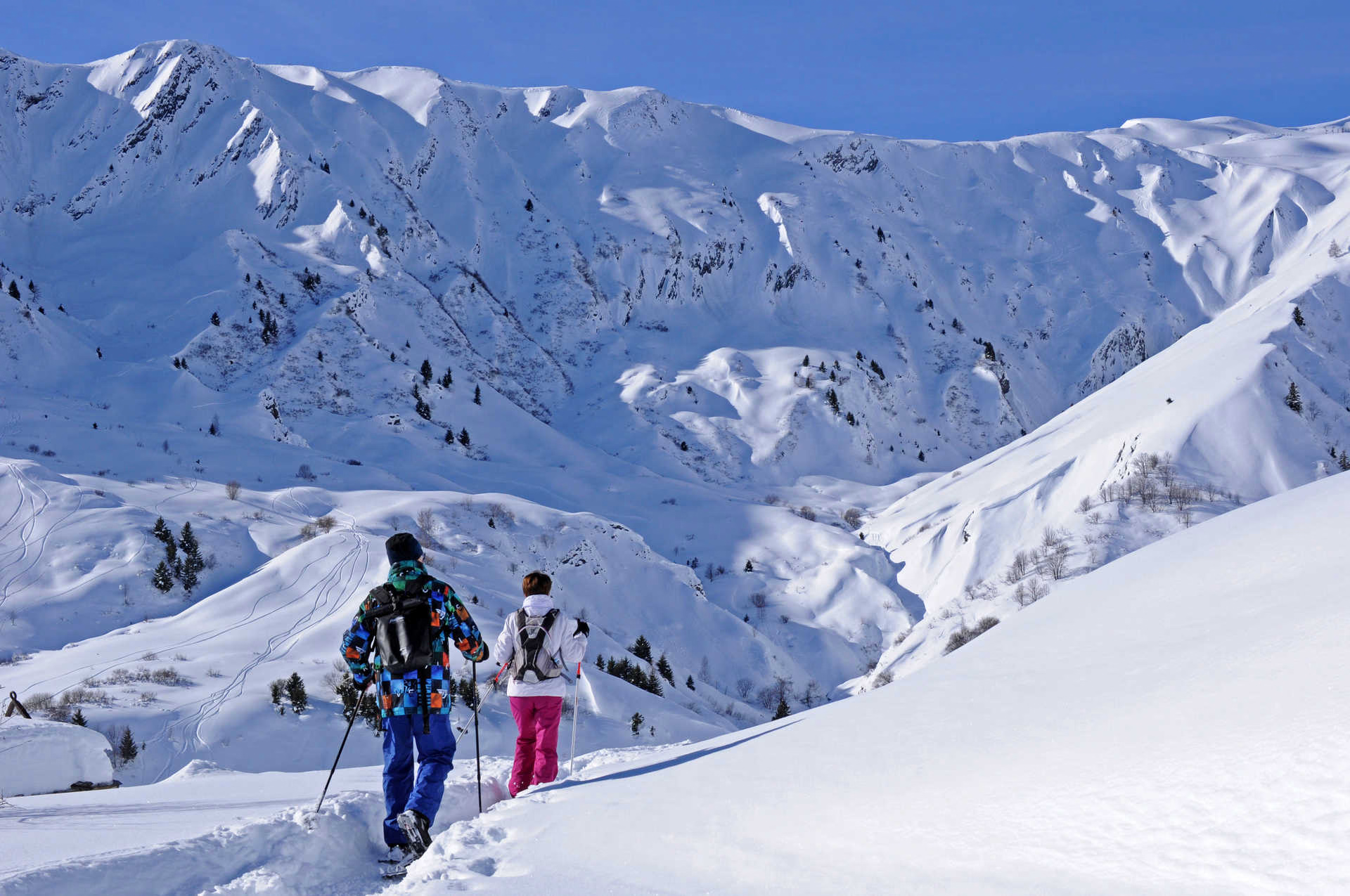
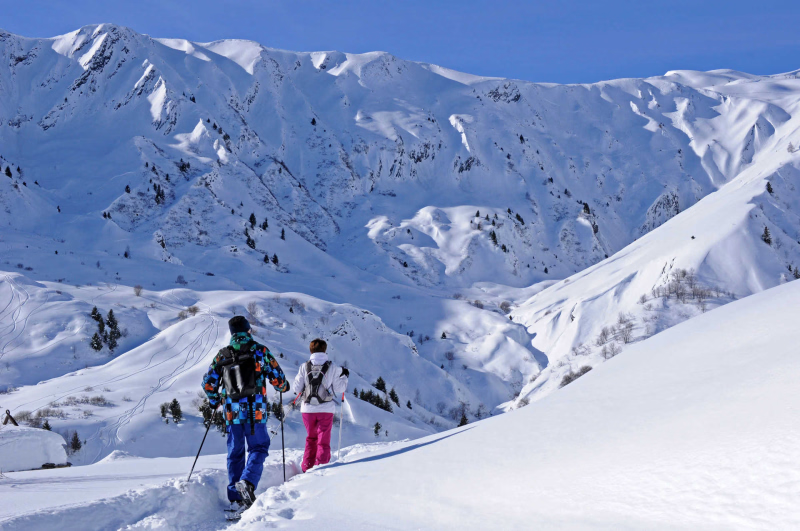
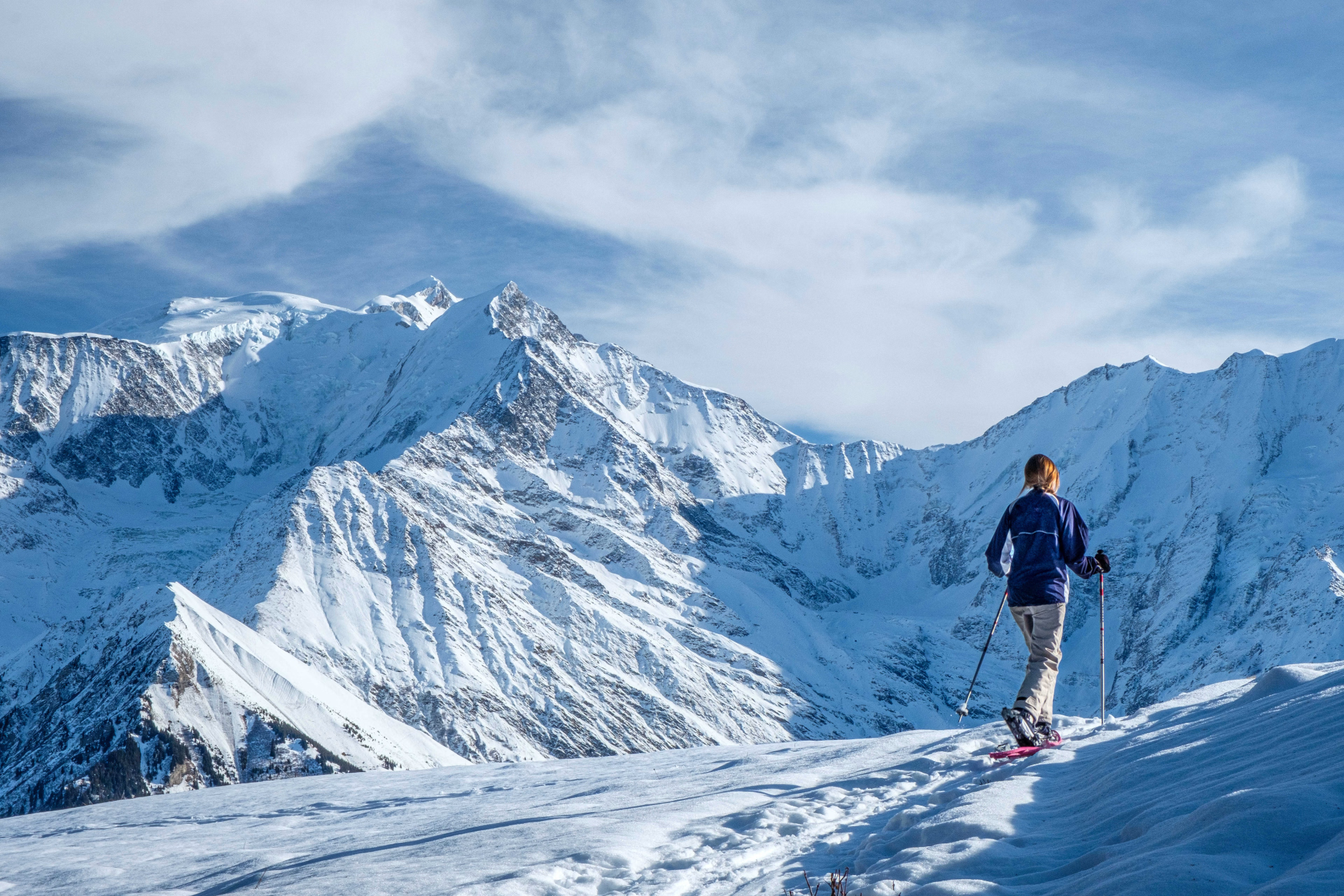
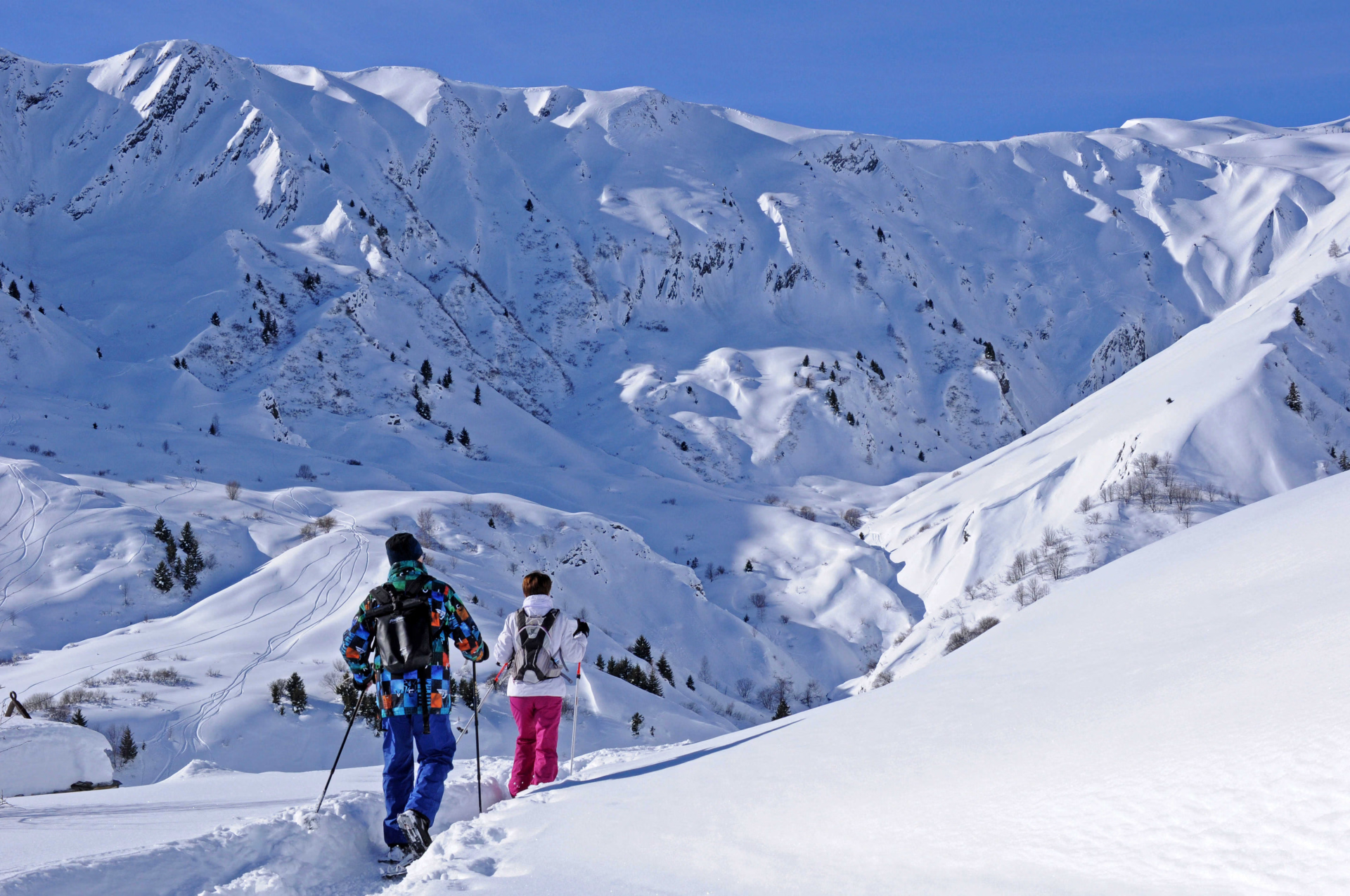
Immerse yourself in the heart of the Contamines-Montjoie nature reserve , a wild route revealing spectacular panoramas of the Mont Blanc massif . This preserved winter landscape provides the ideal setting for a profound reconnection with raw and majestic nature.
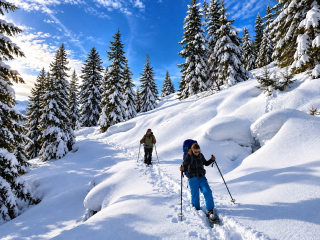
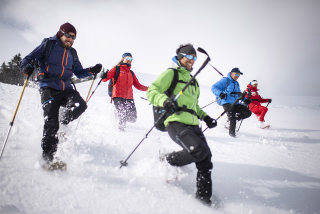
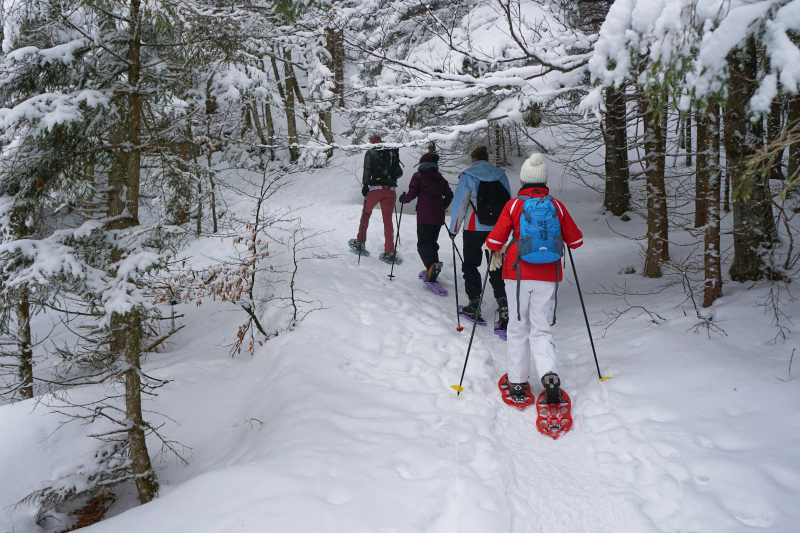
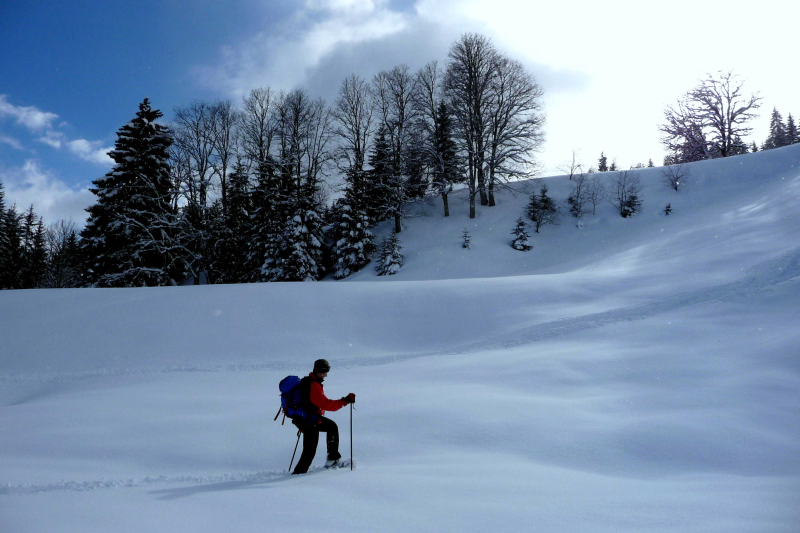
Your adventure revolves around a secluded mountain refuge , a true base camp facing the icy giants, for your three nights in the mountains. From this cozy haven, strap on your snowshoes to explore vast, untouched landscapes. Crossing snow-covered forests and discovering hidden valleys offers a complete immersion in the heart of alpine wildlife .
An authentic experience designed for lovers of wide open spaces and winter travel.
The highlights
-
Immerse yourself in the heart of the Contamines Montjoie nature reserve!
-
Isolated refuge on an alpine plateau
-
A warm New Year's Eve celebrated in the heart of the snow-covered mountains
Subscriber benefit
save 5%
by joining
our community
Decathlon Travel Benefits
Best price guaranteed:
We offer twice the difference
Free cancellation more than 30 days in advance
Payment in 2 installments
Learn more
Photos


Sport
Level
Snowshoeing
For those wishing to hike for approximately 6 hours a day and/or cover an elevation gain of 500 to 800 meters, both on and off-trail. High-altitude sections are possible. You engage in sports activities 1 to 2 times a week, hike regularly, and are in very good physical condition.
In figures
Snowshoes
- Average duration/day: 4h
- Average daily elevation gain: 425 m
- Average daily descent: 425 m
Management
During this stay, a supervisor will be present to guide and assist you.
Band :
1 supervisor for 5 to 10 people
Supervisor
Supervisor
Our hike is led by a guide.
He was chosen for his field experience, his specific knowledge of a geographical area and its associated culture, as well as for his passion for showcasing his region.
This tour is organized in collaboration with partners. You may be required to travel with clients from other agencies.
Mountain areas far from inhabited areas often remain outside the coverage of mobile phones or are affected by many unpredictable dead zones.
Program
-
Welcome to Les Contamines - Ascent to the refuge (1935m)
- Activity Snowshoes
- Duration of the activity 4h
- Positive elevation gain 730 m
- Accommodation Refuge
- Breakfast not included
- Lunch included
- Dinner included
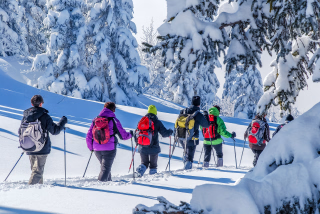
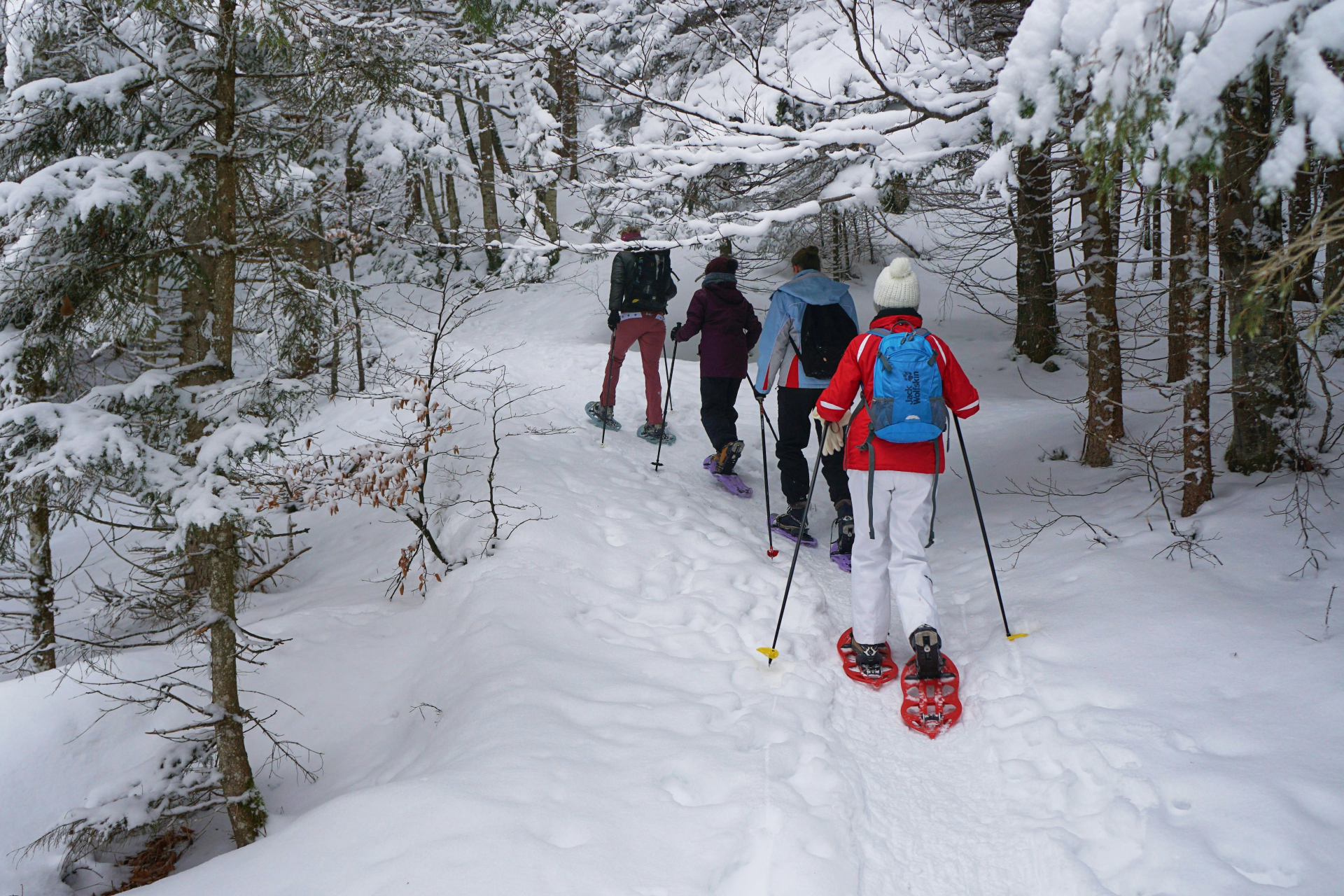
After meeting our guide in Les Contamines (accessible by bus from Le Fayet train station) in the morning, we began our trek along the Roman Road, which led us to the Rosière plateau, carrying all our belongings to the refuge. Crossing a pristine forest, we witnessed the tracks left by local wildlife in the fresh snow, offering the chance for some wonderful encounters. Respectful of the environment, we continued towards Nant Borrant and the Bois de la Rollaz forest. After a final climb, we arrived at the Refuge des Prés (1935 m), our home for the next three nights, offering breathtaking views of the surrounding peaks.
Day 1 -
Snowshoeing exploration of Val Montjoie
- Activity Snowshoes
- Duration of the activity 4h30
- Positive elevation gain 450 m
- Negative elevation 450 m
- Accommodation Refuge
- Breakfast included
- Lunch included
- Dinner included
We venture into the Val Montjoie valley, first traversing the Plan de la Fenêtre, then heading towards La Balme. Our route is determined by the snow conditions, providing a perfect opportunity to deepen our understanding of the mountains in winter thanks to our guide's explanations. In the late afternoon, we return to the Refuge des Prés.Day 2 -
Hike to the Col de la Fenêtre - New Year's Eve
- Activity Snowshoes
- Duration of the activity 4h
- Positive elevation gain 480 m
- Negative elevation 480 m
- Accommodation Refuge
- Breakfast included
- Lunch included
- Dinner included
We took advantage of the day to explore a new area starting from the refuge, climbing towards the Col de la Fenêtre and then looping back through the forest to return to the refuge. The evening was festive as we celebrated the arrival of the new year!Day 3 -
Bois de la Rollaz - Les Contamines
- Activity Snowshoes
- Duration of the activity 4h
- Positive elevation gain 40 m
- Negative elevation 770 m
- Breakfast included
- Lunch included
- Dinner not included
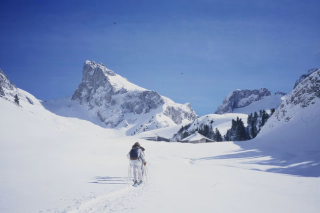
We leave the refuge and continue across the plateau to enjoy the view of the Mont Blanc massif before reaching the Bois de la Rollaz and then the Val Montjoie valley. We return to Les Contamines in the late afternoon.Day 4
Note
- The itineraries may be modified depending on weather conditions or the participants' fitness level. Ultimately, the guide retains sole discretion over the program and may adapt it according to any unforeseen circumstances.
- This tour is organized in collaboration with partners. You may be required to travel with clients from other agencies.
Accommodation
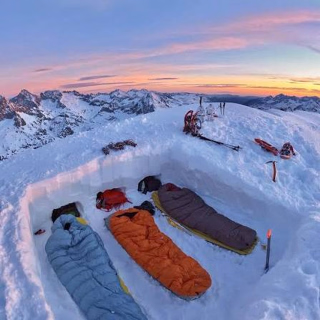
🏔️ Mountain refuge - Days 1 to 3
Accommodation in a mountain refuge in dormitory-style rooms for 4 people.
The communal sanitary facilities consist of four showers, four toilets and brand new sinks.
The refuge also includes a heated and ventilated "Mountain Room" equipped with individual boot dryers.
Access
Departure
Parking Notre-Dame-de-la-Gorge, Les Contamines-Montjoie
Day 1
: 09h00
End of stay
Parking Notre-Dame-de-la-Gorge, Les Contamines-Montjoie
Day 4
- 17h00
Go to the starting point
Take the train toFayet, Saint Gervais
Saint Gervais les Bains - Le Fayet train station, 12 km away
TGV Direct "Paris / Saint Gervais" on weekends.
Direct trains to Paris - Lyon - Nice - Marseille...
TGV connection at Annecy - Aix Les Bains - Bellegarde.
Connection between Saint-Gervais les Bains train station and the village
- Taxi : Taxi Besson with 8-seater minibuses and 6-seater minivans, on request.
- Tel: +33 (0)4 50 93 62 07 - Taxi Christian Parso - +33(0)6 43 32 16 65
- Bus : Sat Mont-Blanc
- Tel: +33 (0)4 50 78 05 33
Travel to the place of stay
with parking
available
- From PARIS:
A6 motorway then A40 to Mâcon nord, direction Geneva, then motorway Blanche to exit Passy n°21 (12km from the station).
- From Lyon:
A42 Lyon - Pont d'Ain, then A40 Mâcon-Geneva.
A43 Lyon - Chambéry - Annecy - Le Fayet n°21.
- From the SOUTH:
Marseille - Lyon A7 or Marseille - Valence A7, then Valence - Grenoble A41 - Passy A40 exit n° 21.
Would you like to travel on other dates?
Create an alert and we'll notify you by email if new departures are added.
Price details
The price includes
- Dormitory accommodation in mountain huts
- Full board except for breakfast on day 1 and dinner on day 4
- Safety equipment (avalanche transceiver, shovel and probe => batteries not included)
- Snowshoes and poles
- Supervision by a certified mountain guide
The price does not include
- Round-trip transportation to the meeting/dispersal location
- Personal expenses
- Drinks
- Material costs (if necessary)
- Any tips
- 3 AAA (LR3) batteries for the avalanche transceiver
Options
- Flex fare and insurance
Practical information
Specific formalities
Specifics
Before your departure, check with the embassy or consulate regarding the entry and stay requirements for your destination country. You can also find this information on the France Diplomatie website ( https://www.diplomatie.gouv.fr/fr/dossiers-pays/ ).
In the case of flights with stopovers operated by different airlines, also check the entry requirements of the countries you are transiting through.
It is your responsibility to ensure you are in compliance, particularly regarding the validity of your identity documents (for example, some countries require your passport to be valid for at least six months after your return) , visa requirements, necessary vaccinations, and health recommendations. And don't forget to consider any customs restrictions and other potential requirements of your destination or transit country.
ℹ️ Information may change up to the departure date, remember to regularly check official websites.
Equipment
Equipment provided on site
- Snowshoes and poles.
- Depending on snow conditions, it may be necessary to be equipped with an avalanche transceiver (ARVA). Information will be provided beforehand regarding the use of this safety equipment, which is becoming increasingly common.
- Group equipment (compass, altimeter, maps, first aid kit...)
Equipment to bring
- 1 backpack of 35/40 litres with a flexible frame, equipped with a waist belt (you will have to carry your belongings to the refuge)
- 1 pair of waterproof hiking boots or snowshoeing boots that provide good ankle support and are waterproof, with Vibram-type soles (Absolutely avoid boots and après-ski boots which are not suitable for snowshoeing)
- 1 sleeping bag liner for nights at the refuge
- 1 large plastic bag to protect the inside of the backpack
- 1 pair of category 3 to 4 sunglasses
- 1 thermos for a hot drink
- 1 cup, knife and fork for picnics
- race food of your choice
- toilet paper with a small lighter to burn it
- 1 survival blanket
- Sunscreen and lip balm
OPTIONAL:
- 1 small pouch (preferably waterproof) to put your money, identity card, bank card, health insurance card, assistance contract (the rest of your papers and car key can be left at the hotel during your stay)
- 1 pair of high gaiters that cover your shoes and lower leg well
Clothing to bring
When hiking, the 3-layer system remains the recommended equipment for your comfort and safety.
- a long-sleeved undershirt made of breathable material (hollow fiber).
- a warm fleece fur jacket
- a windproof, waterproof and breathable jacket (gore-tex type)
Depending on the weather and the effort involved, you can always choose the most effective approach.
When walking in calm, sunny weather, a base layer may be sufficient.
In rainy, snowy or windy weather, simply add the waterproof jacket.
In very cold weather, or during breaks at altitude, a fleece jacket is an essential addition under a windproof jacket.
Pack quick-drying clothes, so avoid cotton. Opt for wool, silk, and synthetic fibers, which will keep you dry and warm for as long as possible. Sweat is a hiker's enemy, especially in winter, as it dampens clothing, which quickly becomes freezing cold during breaks.
Avoid anoraks and ski suits, which are too hot and bulky.
Recommended clothing for hiking
- 1 beanie
- 1 pair of warm gloves (bring 1 spare pair)
- 2 short-sleeved t-shirts suitable for exertion (made of breathable material)
- 1 long-sleeved base layer also suitable for exertion
- 1 fleece fur jacket
- 1 windproof, waterproof and breathable jacket with a hood if possible (gore-tex type or equivalent)
- 1 protective cover for the backpack against bad weather (often integrated into the bags)
- 1 pair of trousers suitable for walking (jeans are not allowed as they freeze when wet!)
- 1 pair of waterproof and breathable overtrousers (gore-tex type or equivalent)
- 1 pair of warm underwear (it can also be used for the evening in the mountain hut)
- 2 pairs of hiking socks, high and warm, suitable for walking
- 1 swimsuit if you wish to use the sauna during your stay
For the evening at the accommodation
- toiletries
- your spare clothes
- 1 headlamp or flashlight
- 1 sleeping bag liner for the night in the refuge
They traveled with us
Discover the authentic experiences of our travelers
5/5
(2 reviews)
Reviews displayed in reverse chronological order

Decathlon Travel Partner
The Paulin team
4.4/5
(1435 reviews)
• 429 stays
For over 30 years, our local partner has been designing adventure walking trips around the world. Specializing in small-group treks, they cater to both casual hikers and seasoned trekkers seeking unspoiled natural environments and a return to the essentials. Their key strength? They own their own agencies in over 30 countries, guaranteeing complete trip creation from start to finish, without intermediaries. This direct, on-the-ground expertise ensures memorable active experiences and total freedom amidst breathtaking landscapes.
Are you satisfied with this page?
Subscriber benefit
save 5%
by joining
our community
Decathlon Travel Benefits
Best price guaranteed:
We offer twice the difference
Free cancellation more than 30 days in advance
Payment in 2 installments
Learn more