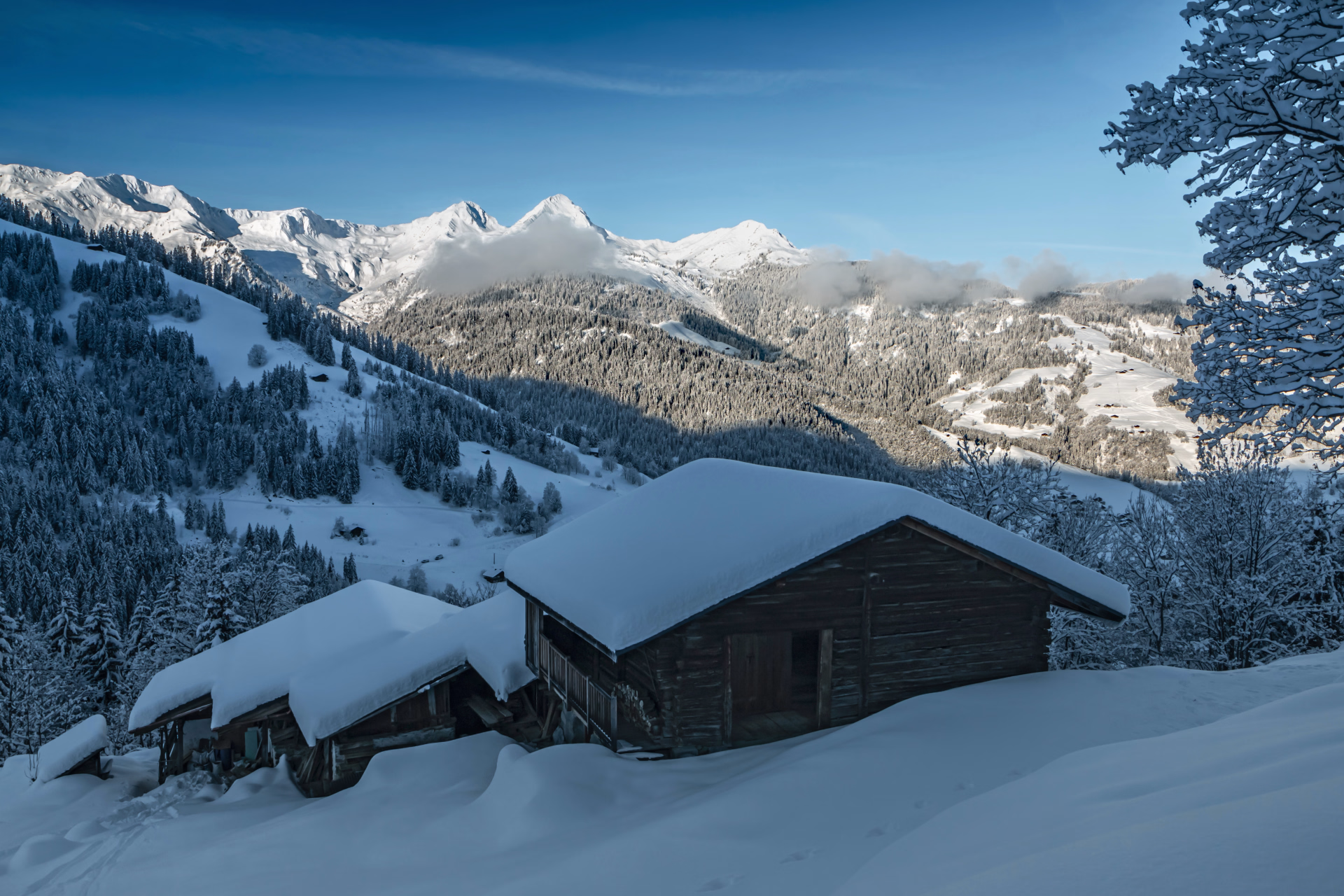
Beaufortain Massif
/ Savoy
New Year's Eve snowshoeing in the heart of the Beaufortain
Réf : FNQLBH
In summary
-
Sports
-
Duration5 days
-
LevelIntermediate
-
DestinationBeaufortain Massif / Savoy
-
AgeFrom 12 - 90 years
-
CO₂-Emissions45.06 kg CO2
-
Type of stayIn a group
-
Languages🇫🇷French
In a few words
Celebrate the New Year in the Heart of the Beaufortain: An Authentic Mountain Escape
Escape to the magnificent Beaufortain mountain range, a favorite among hikers, for an unforgettable New Year's celebration. This is your chance to reconnect with the authentic charm and traditional spirit of the mountains, far from the usual crowds. Brigitte will give you a warm welcome, and Alain, your passionate guide, will accompany you on an experience steeped in the unique history of pastoralism, skiing, and the majestic presence of nearby Mont Blanc.
Explore Untouched Winter Landscapes
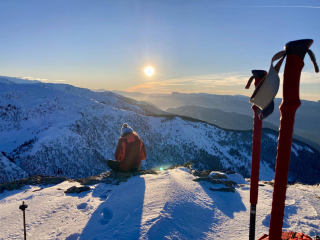
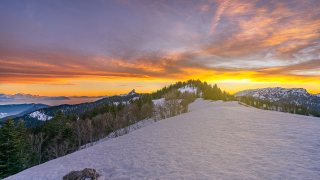
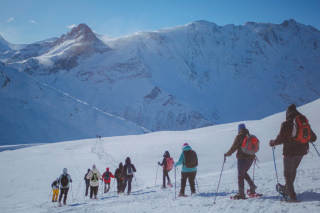
Staying in a historic hotel in the valley, your adventure will take you off the beaten path to discover the serene beauty of the Beaufortain region. Each day, Alain will guide you on snowshoe hikes across different slopes, revealing new panoramas and immersing you in breathtaking winter landscapes. You'll experience the tranquil atmosphere of the mid-mountain region in winter, while savoring the rich flavors of the area's time-honored traditions.
The Taste of Mountain Life and Local Delicacies
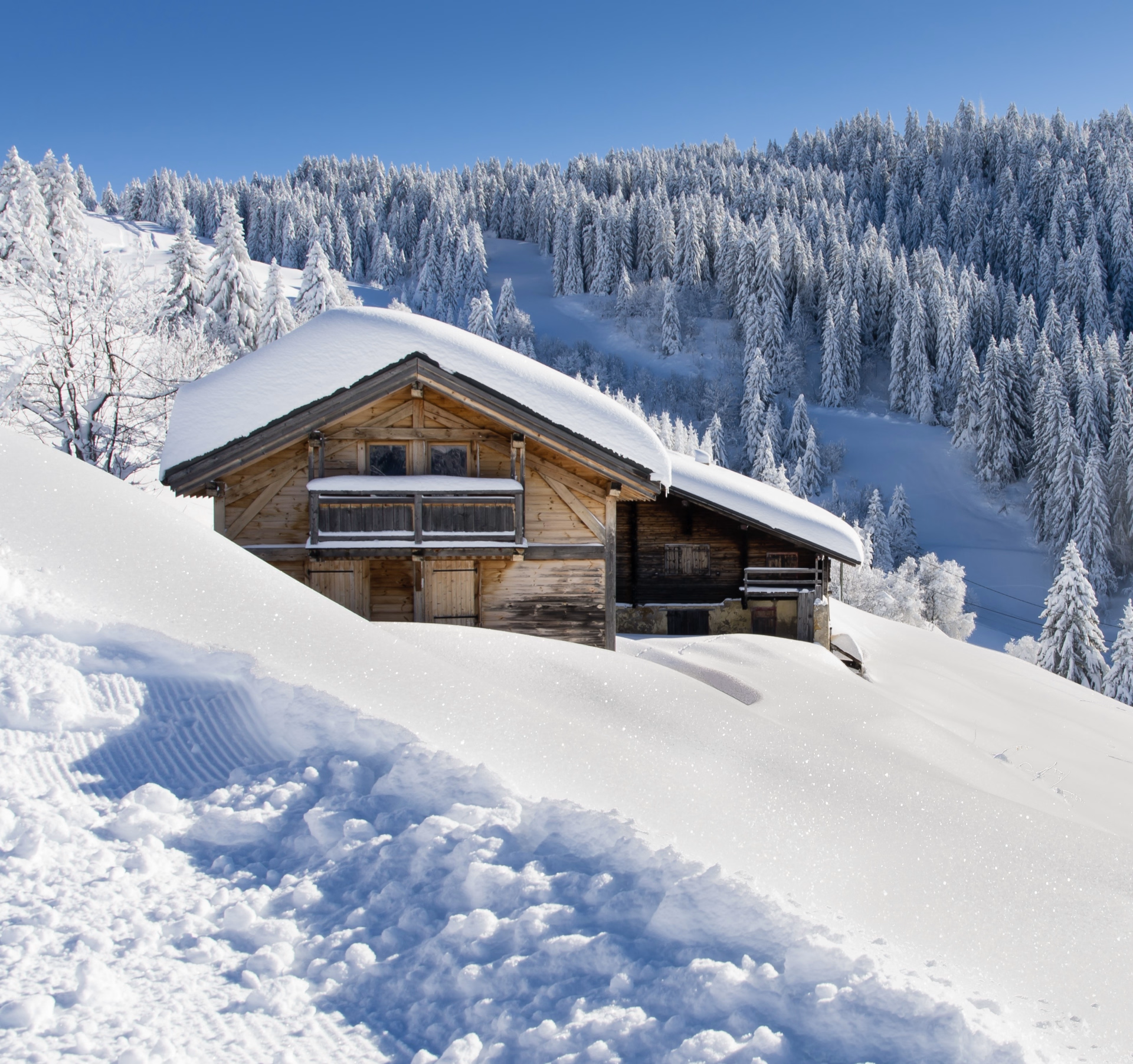
You are entering the realm of the "Prince of Cheeses," Beaufort. After your invigorating hikes, Brigitte will be delighted to offer you delicious mountain specialties, perfectly complementing the simple and friendly atmosphere of a large chalet that exudes the scents of winter and the mountains. Prepare to embrace the true spirit of the mountains!
The highlights
-
A New Year's Eve celebration focused on local produce and gastronomy, in the heart of the village.
-
A true winter atmosphere at the foot of Mont Blanc.
-
Accompaniment by a passionate local guide, an expert on the mountain range
Subscriber benefit
save 5%
by joining
our community
Decathlon Travel Benefits
Best price guaranteed:
We offer twice the difference
Free cancellation more than 30 days in advance
Payment in 2 installments
Learn more
Photos




Sport
Level
Snowshoeing
For those who wish to hike for 4 to 5 hours a day, covering an elevation gain of approximately 300 to 500 meters on trails. You hike occasionally and are in good physical condition.
The expert's opinion
For average walkers
Hiker level 2 on a scale of 5.
Mountain route with elevation gains of 400 to 600 meters/day.
Average elevation gain: 500 m Maximum elevation gain: 600 m
Average length: 10 km Maximum length: 12 km
Average time: 5 hours
In figures
Snowshoes
- Average duration/day: 4h30
- Average distance/day: 10 km
- Average daily elevation gain: 467 m
Management
During this stay, a supervisor will be present to guide and assist you.
Band :
1 supervisor for 6 to 13 people
Languages spoken:
🇫🇷
French
Supervisor
Supervisor
Mountain outings are led by our local guide who knows the mountain range well and will be able to adapt according to the weather.
Program
-
Welcome and setup
- Accommodation 2-star hotel
- Breakfast not included
- Lunch not included
- Dinner included
You are expected at the Hotel in the late afternoon from 5:30 pm. If you arrive by train you can choose to take the regular ALBERTVILLE / BEAUFORT shuttle or opt for the private transfer from the agency at 5:30 pm, at Albertville station.
Installation and welcome drinks.
Day 1 -
The pass of the meadow and the chalets of Entrus
- Activity Snowshoes
- Duration of the activity 5h
- Distance 12 km
- Positive elevation gain 450 m
- Accommodation 2-star hotel
- Breakfast included
- Lunch included
- Dinner included
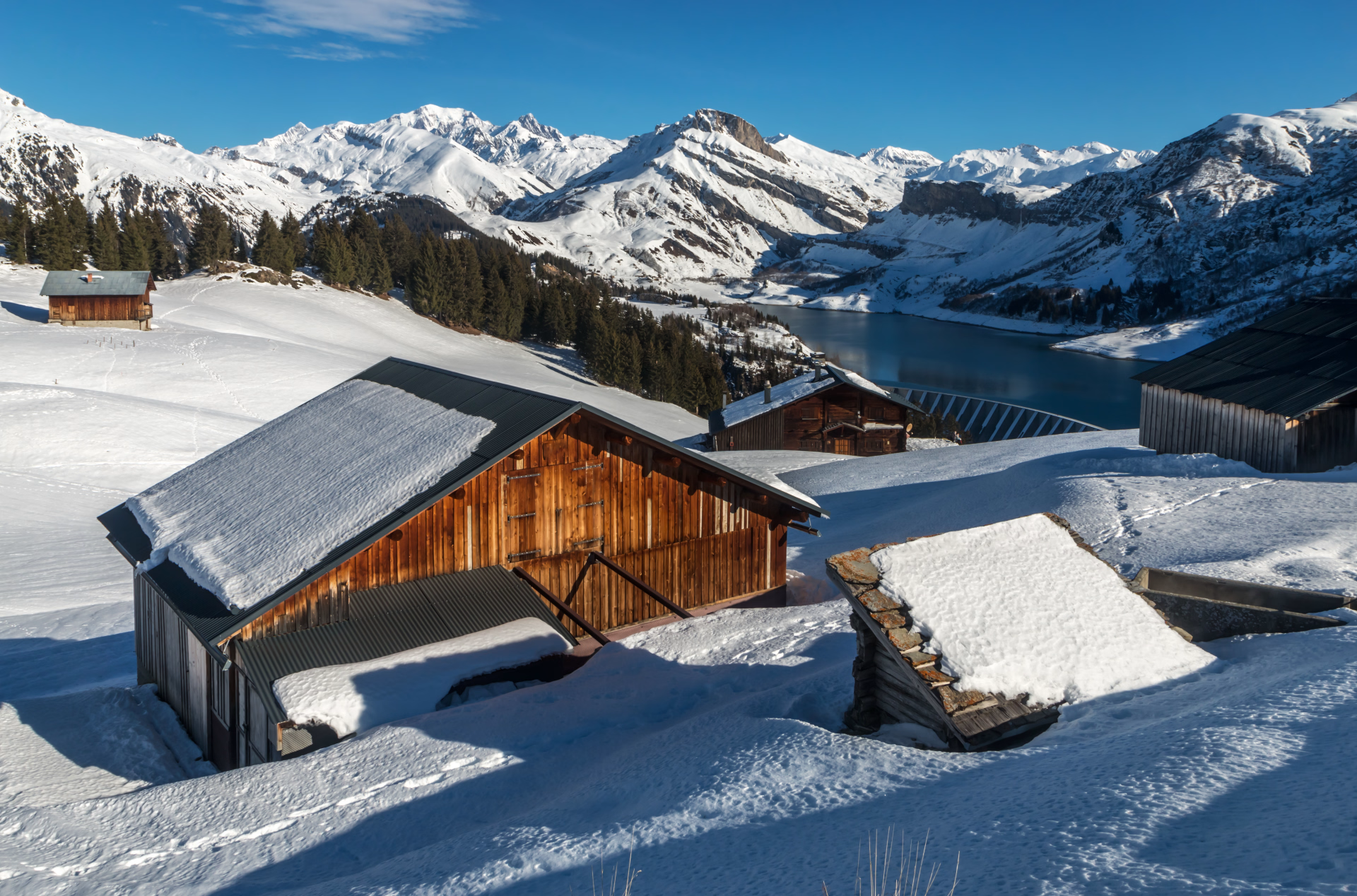
Starting from the historic hamlet of Boudin, a gentle climb along a snow-covered road leads us to the Col du Pré (1703 m), a superb pass in the heart of the massif that opens onto the vast Roselend lake basin. We continue towards the Entrus chalets. A breathtaking view then unfolds, encompassing the highest peaks of the Beaufortain, the famous Pierra Menta, and, as always, Mont Blanc. On the return, we take advantage of the setting sun to wander through the steep, narrow streets of the village of Boudin.
At the end of the day, let's gather around the festive dinner prepared by Jean Pascal and Brigitte and actively participate in this beautiful New Year's Eve celebration to move towards the next year.
Elevation gain: 450 m Length: 12 km Time: 5 hours
Day 2 -
Lake Clou seen from the hamlet of Chozeaux
- Activity Snowshoes
- Duration of the activity 5h
- Distance 10 km
- Positive elevation gain 550 m
- Accommodation 2-star hotel
- Breakfast included
- Lunch included
- Dinner included
We set off to discover a small, secret lake hidden between spruce trees and high-altitude peat bogs covered in abundant snow... Quiet and peaceful places enjoying a magnificent view of the Beaufort valley and Mont Blanc!
Elevation gain: 550 m Length: 10 km Time: 5 hours
Day 3 -
Around the Alpine Pastures of St Guérin
- Activity Snowshoes
- Duration of the activity 4h
- Distance 8 km
- Positive elevation gain 400 m
- Accommodation 2-star hotel
- Breakfast included
- Lunch included
- Dinner included
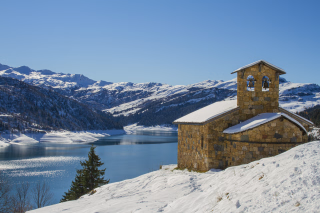
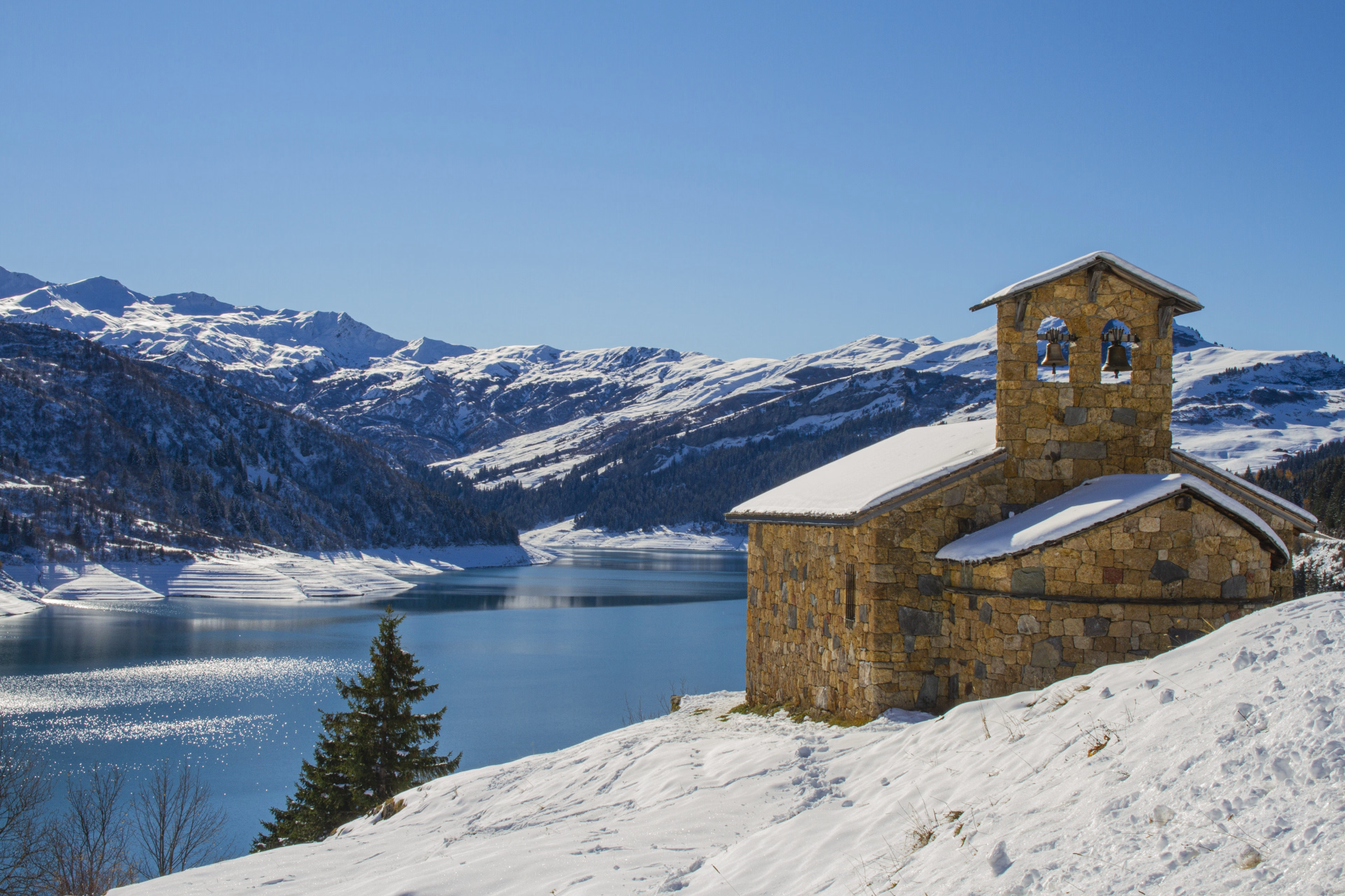
The Beaufortain massif was the subject of numerous developments in the 1960s to produce hydroelectricity. The Saint Guérin dam and lake are one example.
Our round-trip route begins at the bottom of the valley and opens into the Saint Guérin basin, dominated by vast alpine pastures bordering the Tarentaise Valley. We pass near the chapel of Saint Guérin, the patron saint of flocks...
Elevation gain: 400 m Length: 8 km Time: 4 hours
Day 4 -
Dispersion
- Breakfast included
- Lunch not included
- Dinner not included
The stay ends after breakfast.
If you wish, you can stay an extra day and enjoy a day of skiing at the resort or spend a little time in nature.
Please note that in this case you will need to make arrangements to get to Albertville train station.
Day 5
Note
This program is indicative; it may be modified by your guide to adapt to weather and snow conditions.
SNOW COVER
We are primarily hikers, and even if there isn't enough snow, we will still run our trips. The winter atmosphere and light will be there, even if we can't use snowshoes.
The mountain is very different in winter, the colours are not the same as in summer, and the sun is lower on the horizon offering sunset lights throughout the day!
Accommodation
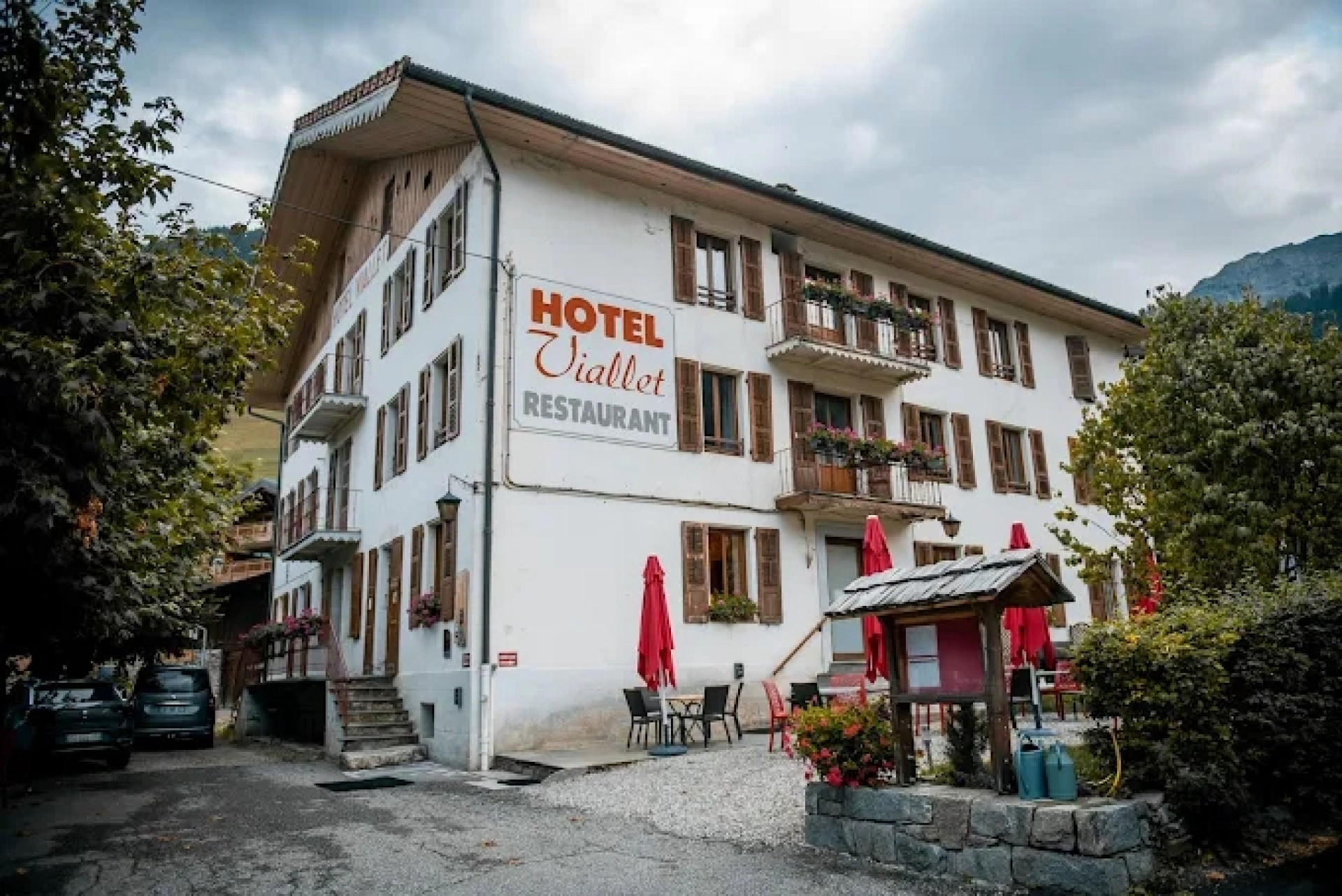
🏨 2-star hotel - Days 1 to 4
You will be staying in a historic hotel in the heart of the village of Arêches Beaufort. The atmosphere is friendly and reflects the colors of the mountains. It truly embodies the ambiance of a mountain village. Meals are taken in the hotel restaurant, where the cuisine is local and made with quality mountain products.
If you have any allergies, you must inform us of any restrictions and allergies when booking.
Accommodation is provided in double or triple rooms and/or single rooms with a supplement.
Access
Departure
Arèches Beaufort
Day 1
: 17h30
End of stay
Arèches Beaufort
Day 5
- 09h00
Welcome :
Day 1 in the late afternoon from 5:30 pm at the Hotel in Arèches Beaufort.
Car access:
Parking: You can park your vehicle without worry near your accommodation.
Train access: Albertville TGV station
You can register for the agency's private shuttle which will meet you at 5:30 p.m. or take the line bus between Albertville station and Arèches Beaufort, line open on Mondays at 6:30 p.m. at Albertville station (TRA MOBILITE network line 21).
Dispersion:
The last day in the morning after breakfast.
If you wish to stay longer, if you came by train you will need to arrange with the regular shuttles between Arêches and Albertville (TRA MOBILITE network line 21).
Go to the starting point
Take the train toAlberville
Train access: Albertville TGV station.
You can register for the agency's private shuttle which will meet you at 5:30 p.m. or take the line bus between Albertville station and Arèches Beaufort, line open on Mondays at 6:30 p.m. at Albertville station (TRA MOBILITE network line 21).
Travel to the place of stay
with parking
available
You can park your vehicle without worry near your accommodation.
Would you like to travel on other dates?
Create an alert and we'll notify you by email if new departures are added.
Price details
The price includes
- Organization and supervision costs
- Food and accommodation (based on double or twin room) with full board
- the loan of snowshoes and poles
- the transfers and visits included in the program
- the welcome drink on the first evening
- New Year's Eve
The price does not include
- drinks and personal expenses
- Single room supplement €200 (subject to availability)
- the means of transport to the meeting place
- personal equipment
- everything not mentioned in the price includes
- Insurance
Options
- Round-trip transfer to Albertville train station : CHF19.00 / unit
- Single room supplement : CHF190.00 / unit
- Flex fare and insurance
Practical information
Specific formalities
Equipment
R
Decathlon Travel Partner
Our partner team
4.4/5
(76 reviews)
• 78 stays
A local team specializing in the Chartreuse and Pre-Alps regions, our partner is based in Chapareillan. Their work revolves around sharing, discovering unspoiled landscapes, and enjoying the warm hospitality of the mountains. Since 2021, this small, friendly organization has been inviting travelers on an authentic adventure in the heart of exceptional mountain ranges. They prioritize encounters and immersion in these natural paradises to offer an unforgettable human experience.
Are you satisfied with this page?
Subscriber benefit
save 5%
by joining
our community
Decathlon Travel Benefits
Best price guaranteed:
We offer twice the difference
Free cancellation more than 30 days in advance
Payment in 2 installments
Learn more