In summary
-
Sports
-
Duration5 days
-
LevelIntermediate
-
DestinationRhône / Lyon
-
AgeFrom 16 - 90 years
-
CO₂-Emissions42.3 kg CO2
-
Type of stayIndependent traveler
In a few words
You'll set off from the heart of Lyon to follow in the footsteps of pilgrims from the North and East. France's second-largest city has a very rich history. We recommend spending a day or two exploring it before your hike.
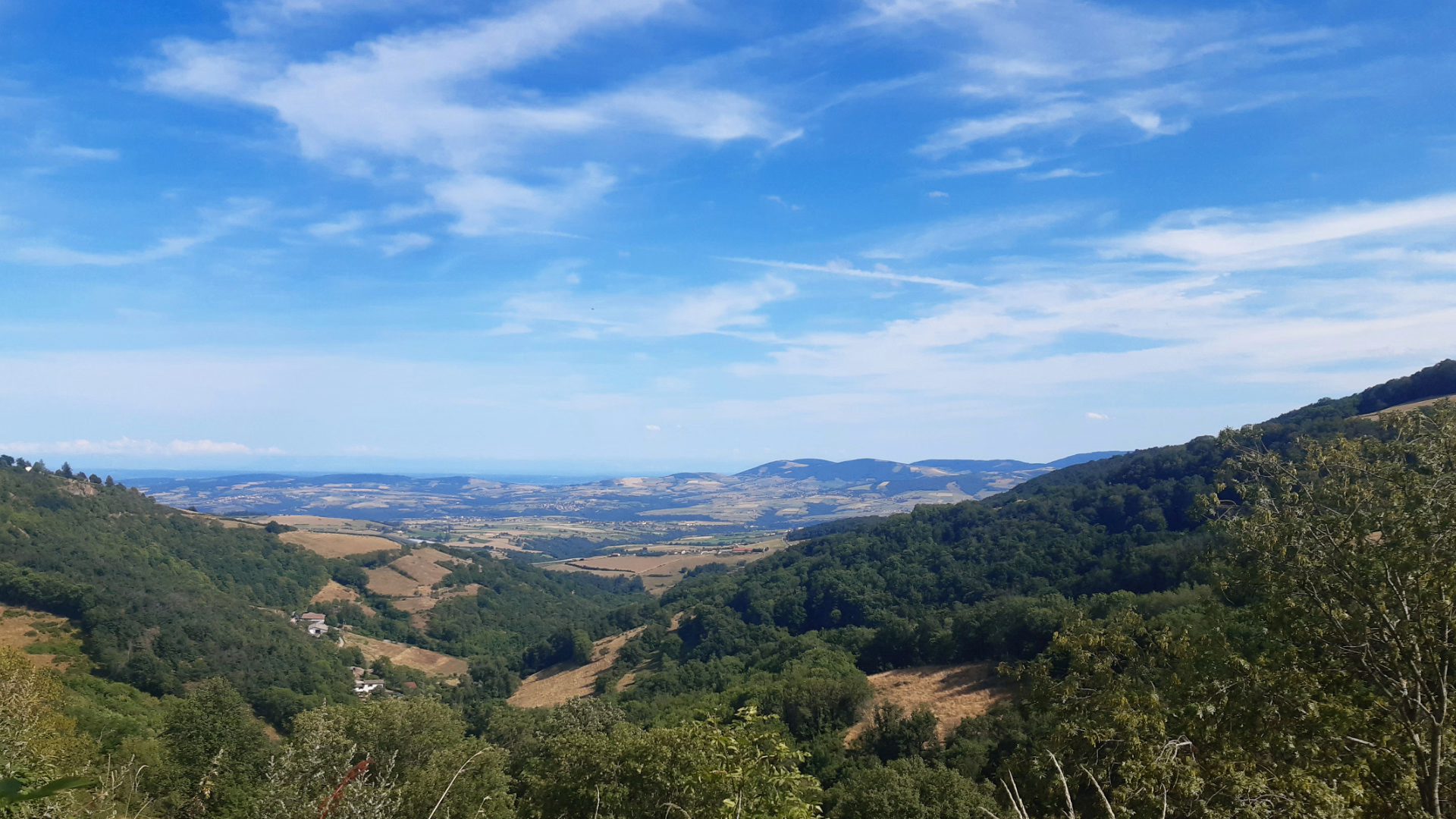
You leave Lyon, passing through the iconic Saint-Jean district and its cathedral. After crossing the gentle Monts du Lyonnais and their orchards, you cross the watershed between the Mediterranean and the Atlantic. You then leave the Rhône Valley on foot to reach the Loire Valley. The terrain is gentle and the stages easy. This stage joins the Cluny Way and ends at the foot of the Monts du Forez.
The highlights
-
A varied and interesting hiking trail away from the crowds
-
The visit to Lyon
-
The Roman aqueducts of the Gier
Photos
Sport
Level
Hiking / Trekking
In figures
Autre
- Average distance/day: 5 km
Hiking
- Average duration/day: 5h
- Average distance/day: 20 km
- Average daily elevation gain: 335 m
- Average daily descent: 275 m
Management
Program
-
Lyon
- Activity Autre
- Distance 5 km
- Accommodation 2-star hotel
- Breakfast not included
- Lunch not included
- Dinner not included
Arrival in Lyon in the late afternoon. Visit the city, a UNESCO World Heritage Site. If you arrive during the day, we recommend the very interesting St. James Way (Camino de Santiago) in Lyon.
Day 1 -
Lyon - Thurins (326 m)
- Activity Hiking
- Duration of the activity 5h30
- Distance 22 km
- Positive elevation gain 370 m
- Negative elevation 200 m
- Accommodation Bed and Breakfast
- Breakfast included
- Lunch not included
- Dinner included
Starting from St. Nizier Cathedral, after crossing the Saône River, you'll reach the Saint Jean district and its cathedral. The warm-up begins here with the climb up the Gourguillon, a favorite among Lyonnais. You'll pass near Fort St. Irénée, heading towards Sainte-Foy-lès-Lyon, Beaunant, and Chaponost. Although urban, the route follows quiet country roads. You'll encounter several aqueducts, remnants of the water supply system that brought water from the Pilat Massif to Lugdunum (Lyon) during the Gallo-Roman period. The Garon Valley offers a bucolic respite just before Soucieu-en-Jarrest. Beautiful houses and landscapes of meadows, fields, and orchards accompany you to Thurins, your next stop (or to Soucieu-en-Jarrest, 5 km shorter, 1 hour 15 minutes further), at the foot of the Monts du Lyonnais.
Length: 22 km
Day 2 -
Thurins - St Symphorien sur Coise
- Activity Hiking
- Duration of the activity 5h30
- Distance 20 km
- Positive elevation gain 690 m
- Negative elevation 420 m
- Accommodation 2-star hotel
- Breakfast included
- Lunch not included
- Dinner included
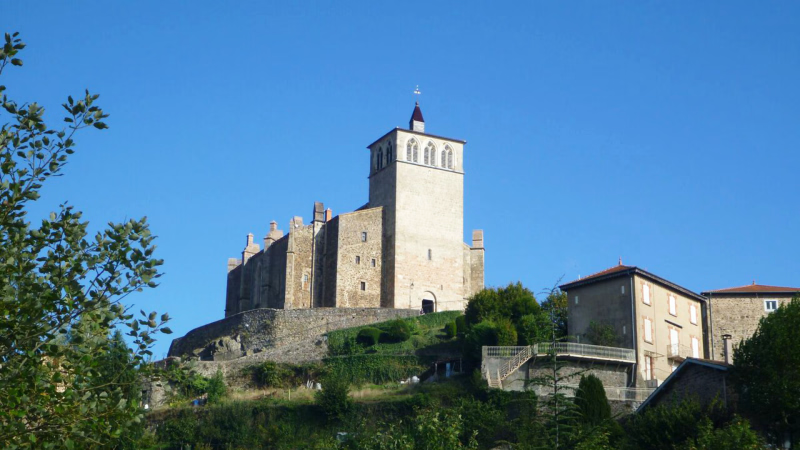
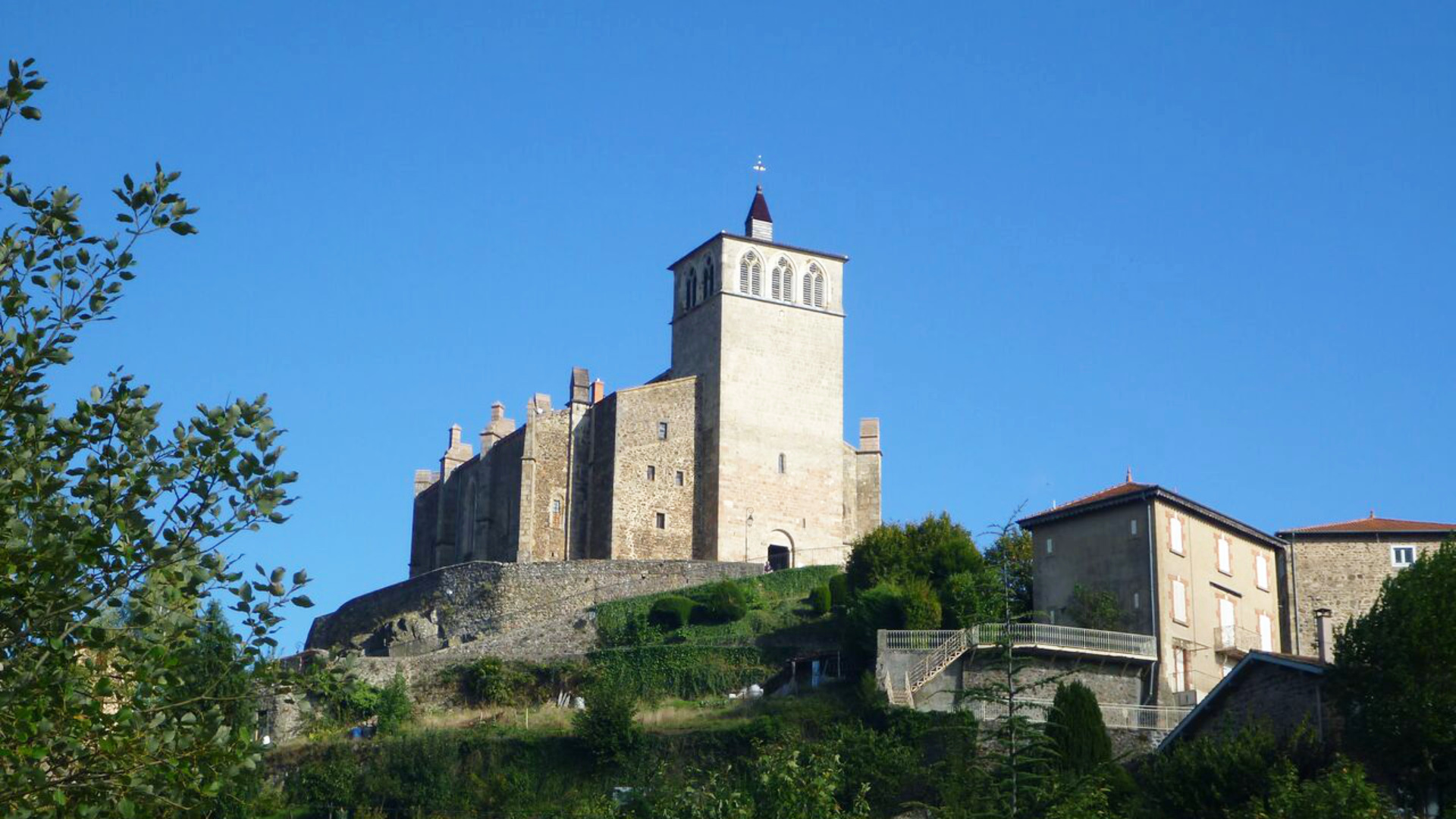
You'll find this section of the route through the Monts du Lyonnais very pleasant, with its gentle ascents and descents. From now on, paths and trails predominate. Your stage begins with a slow climb, passing near the villages of Rontalon and the aptly named St Martin en Haut. Your highest point, at 814 meters, marks the watershed between the Mediterranean and the Atlantic. The waters now flow towards the Loire. You manage to St Symphorien sur Coise, formerly a medieval fortified town. This will be your stop for the day, dominated by its imposing Gothic-style fortified church.
Length: 20 km
Day 3 -
St Symphorien sur Coise - St Galmier (440 m)
- Activity Hiking
- Duration of the activity 3h30
- Distance 15 km
- Positive elevation gain 200 m
- Negative elevation 360 m
- Accommodation Bed and Breakfast
- Breakfast included
- Lunch not included
- Dinner included
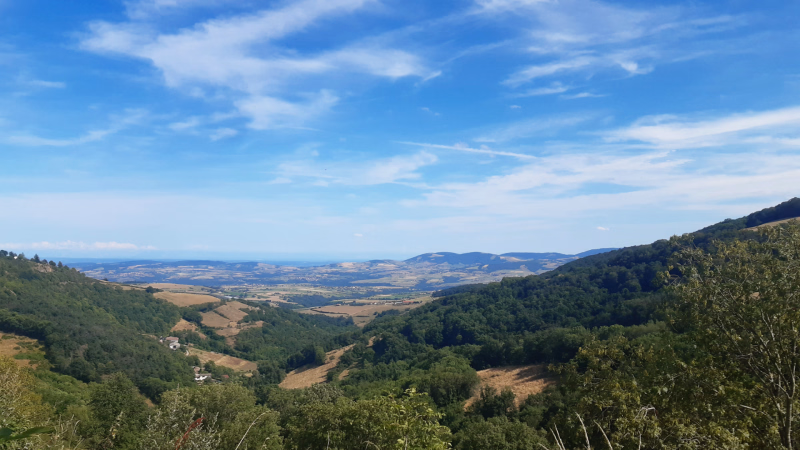
The stage is short, so we recommend spending a good part of the morning exploring the village of Saint Symphorien sur Coise. You'll leave the Monts du Lyonnais and enter the Loire region. The presence of numerous watermills on the Coise River testifies to the economy and development of the villages since Gallo-Roman times. You'll pass near Chazelles-sur-Lyon, the home of the hat. Here, Saint James is said to have invented the felt-making technique that brought wealth to the town. Today's stage offers beautiful views of the nearby Forez plain. You'll arrive in Saint-Galmier. Here again, water has shaped the landscapes and the economy since Roman times, and then in the Middle Ages. The Badoit spring is now the best-selling bottled water in France. Enjoy it to your heart's content!
Length: 15 kmDay 4 -
St Galmier - St Romain le Puy or Montbrison
- Activity Hiking
- Duration of the activity 5h
- Distance 21 km
- Positive elevation gain 80 m
- Negative elevation 120 m
- Breakfast included
- Lunch not included
- Dinner not included
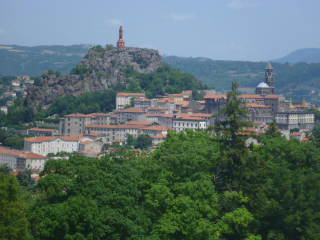
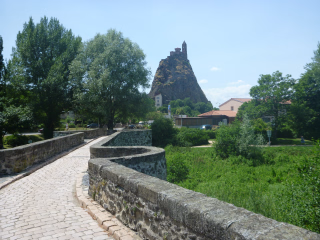
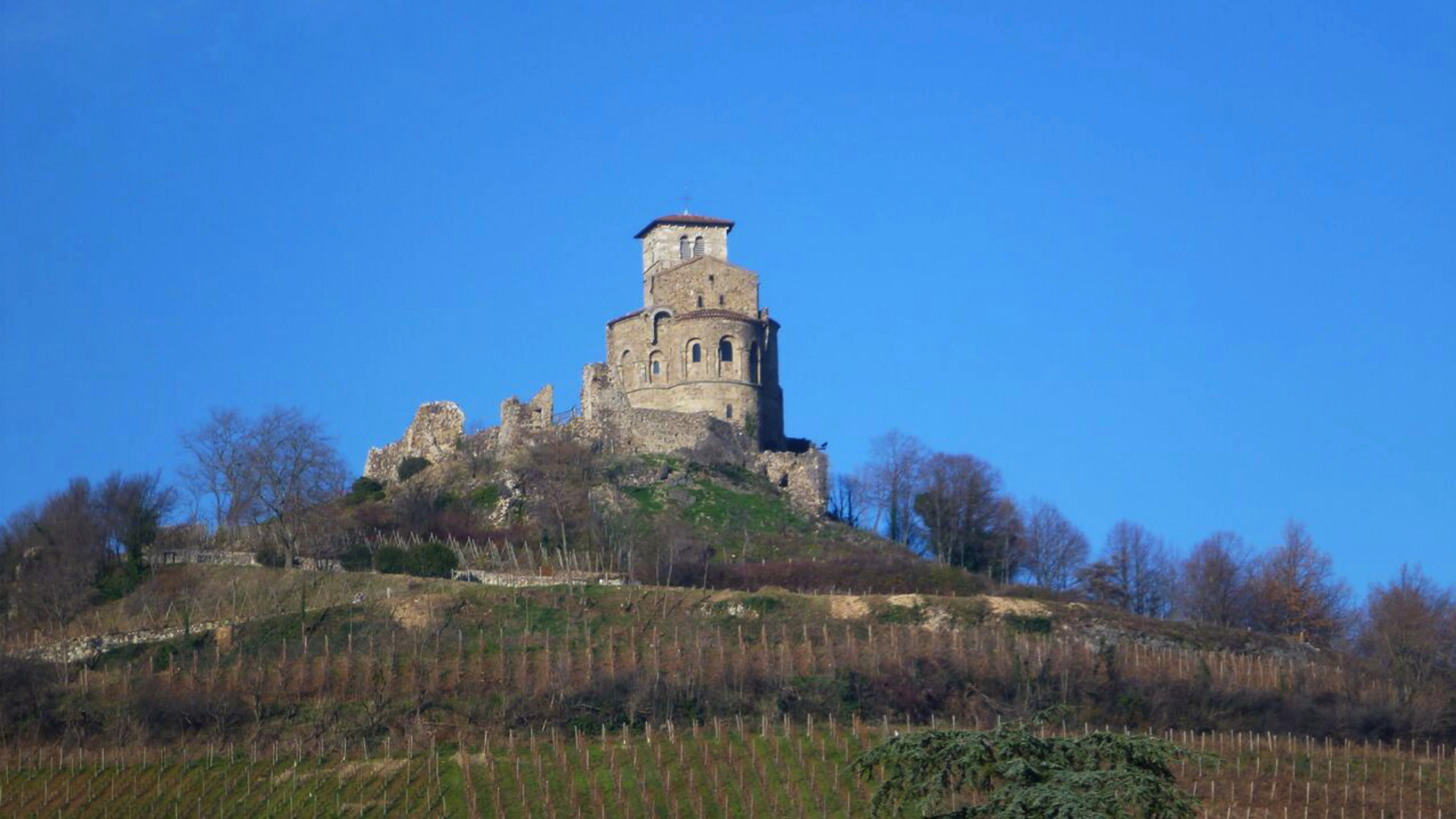
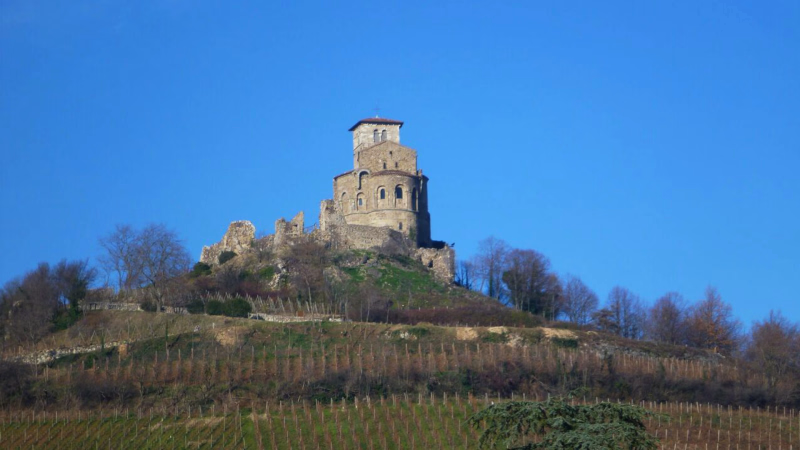
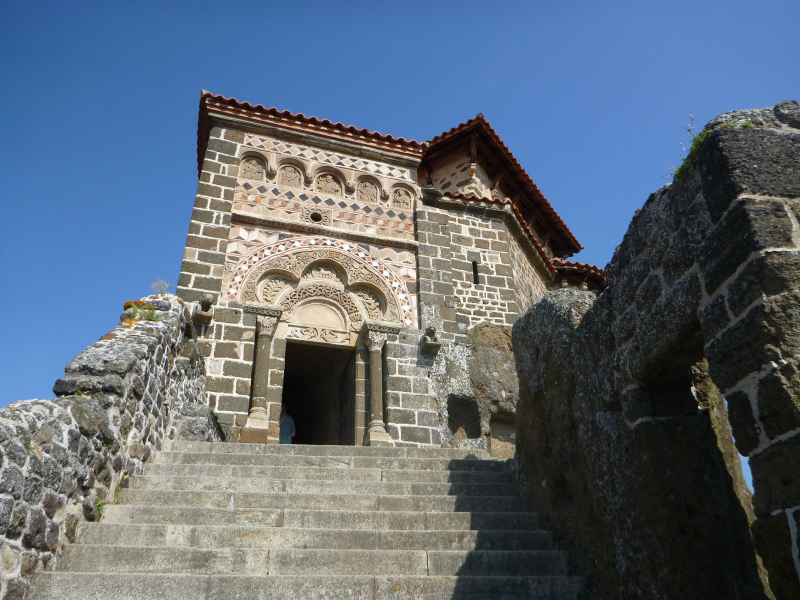
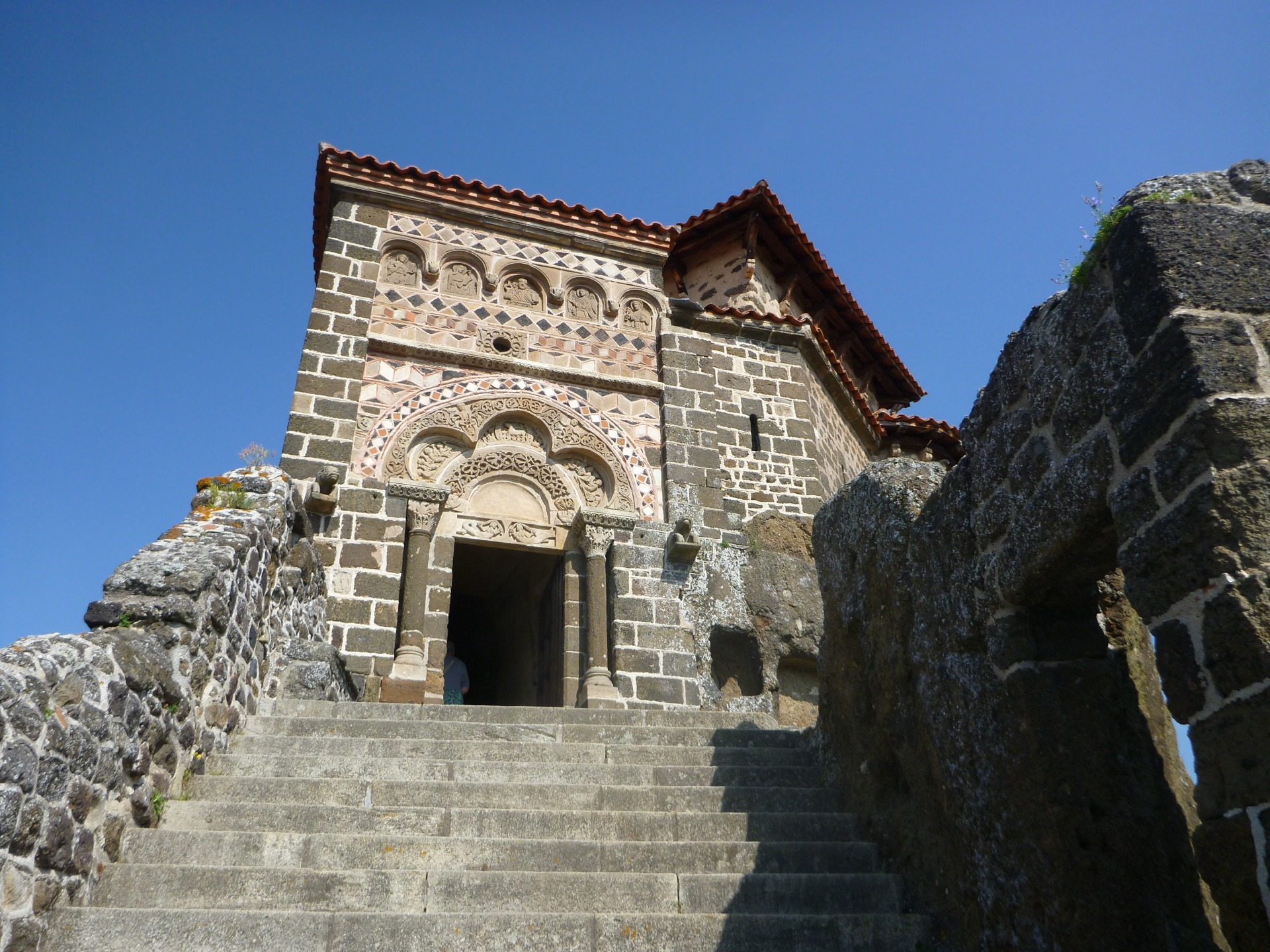
The path leads you into the Forez plain where you cross the Loire River at Rivas, a leisurely stroll (via the bridge!). No doubt you'll spare a thought for the medieval pilgrims who had to cross it in perilous conditions, taking long detours, relying on ferrymen, or even drowning. You arrive at St. Romain le Puy, where you'll be under the protection of St. James, like all the pilgrims who have admired the small 10th-century chapel perched atop its volcanic outcrop. As the rest of the day is flat, we encourage you to climb the 90 meters to reach the summit of the Puy, which offers a beautiful view over the entire plain, the stages you've passed, and perhaps even the stages to come. The trip ends in the afternoon.
The stage ends in St Romain le Puy; if you have booked an extra night, you will be accommodated in Montbrison, which you can reach by train (duration 7 min – cost €2.40 to be paid on site).
Elevation gain: +80 m, -120 m Length: 21 km Time: 5 hours
Day 5
Note
The times were calculated based on a pace of 300 meters of elevation gain per hour uphill, 500 meters of elevation loss per hour downhill, and 4 km per hour on flat terrain, in order to allow for a comparison of the different hikes on the same basis. They only include actual walking time; all meal breaks, rest stops, or periods of quiet contemplation must be added.
We may need to modify your itinerary if the planned accommodations are unavailable during your travel dates. Alternative accommodations will be of a similar standard and their location will have minimal impact on your route.
Trust us, these changes are always made in your best interest, for your safety and greater comfort !
Note : On this section of the Camino de Santiago, accommodations are limited and small. Depending on closure days, the various possible accommodations at certain stages are often several kilometers apart. The stage lengths mentioned in this guide are based on typical locations along the route and are therefore only indicative. Once you have the complete itinerary, you will have all the information needed to recalculate the actual distance.
Accommodation
Access
Go to the starting point
Train access : Lyon Part Dieu or Lyon Perrache train stations
Timetables available from SNCF at 36 35 or www.oui.sncf or www.ter-sncf.com/rhone_alpes.
You use public transport (bus or metro) to get to your accommodation.
SNCF train stations near the route:
If you would like a personalized program:
Veauche train station (2 km from St Galmier)
Bus access : Lyon Perrache train station
We recommend comparing the cost and schedules of different modes of transport to the starting point of the tour using the website www.comparabus.com. This site will offer you other options for the same journey, such as plane, train, bus, or carpooling.
Access by car : Lyon
Route: www.viamichelin.fr
Price details
The price includes
- Organization costs.
- Food and accommodation on a half-board basis (except for days 1 and 5 which are B&B).
- The provision of a complete hiking pack.
- The provision of the guidebook.
The price does not include
- Luggage transport
- The “solo supplement” if you are travelling alone
- Dinners on days 1 and 5.
- Lunchtime meals.
- Wine during meals.
- Drinks and personal expenses.
- Possible visits.
- Personal equipment.
- The journeys to and from the reception location.
- The different types of insurance
- Luggage transport
- All options not included in the price
- Everything that is not listed under "The price includes".
Options
- Single room : CHF141.79 / person
- Luggage transfer for 1 person : CHF283.59 / person
- Luggage transfer for 2 to 3 people : CHF164.66 / person
- Luggage transfer for 4 or more people : CHF82.33 / person
- Additional night in St Romain le Puy - Single room : CHF91.48 / person
- Extra night in St Romain le Puy - Double room : CHF45.74 / person
- Return transfer: Montbrison - Lyon : CHF256.14 / reservation
- I live in Lyon : CHF-32.02 / person
- Flex fare and insurance
Practical information
Specific formalities
Specifics
Before your departure, check with the embassy or consulate regarding the entry and stay requirements for your destination country. You can also find this information on the France Diplomatie website ( https://www.diplomatie.gouv.fr/fr/dossiers-pays/ ).
In the case of flights with stopovers operated by different airlines, also check the entry requirements of the countries you are transiting through.
It is your responsibility to ensure you are in compliance, particularly regarding the validity of your identity documents (for example, some countries require your passport to be valid for at least six months after your return) , visa requirements, necessary vaccinations, and health recommendations. And don't forget to consider any customs restrictions and other potential requirements of your destination or transit country.
ℹ️ Information may change up to the departure date, remember to regularly check official websites.
Equipment
Equipment to bring
- 1 backpack of 35/40 litres with a flexible frame, equipped with a waist belt.
- A large plastic bag to protect the inside of the backpack.
- 1 pair of excellent quality sunglasses with side protection.
- A water bottle (1.5 liters minimum).
- 1 Opinel-type pocket knife.
- 1 small pouch (preferably waterproof) to put your money, identity card, health insurance card and assistance contract in.
- Toilet paper + 1 lighter to burn it.
- Sunscreen + lip balm.
- Airtight plastic container (minimum capacity 0.5 litre) + cup + cutlery.
- 1 survival blanket.
- Camera, binoculars (optional).
- A pair of poles is recommended.
Clothing to bring
For the upper body, the 3-layer principle allows you to manage almost all situations:
- A long-sleeved undershirt made of breathable material (hollow fiber).
- A warm fleece fur jacket.
- A windproof, waterproof and breathable Gore-Tex type jacket.
When hiking in calm, sunny weather, a base layer may be sufficient. In rain, snow, or wind, simply add a waterproof jacket. In very cold weather or during breaks, a fleece jacket is an essential addition.
Choose quick-drying clothes, so avoid cotton. Opt for wool (merino wool underwear is comfortable and doesn't develop unpleasant odors), silk, and synthetic fibers that will keep you dry and warm for as long as possible.
Remember to dress warmly before you get cold, but especially to remove layers before you get too hot. Sweat is a hiker's enemy, as it dampens clothing that quickly becomes icy during breaks. Therefore, it's very rare to undertake a climb wearing a fleece jacket.
The ideal list : (to be adapted according to the hike and the season)
- 1 sun hat or cap.
- 1 scarf or neck warmer.
- Short-sleeved T-shirts in breathable material preferred (1 for 2 to 3 days of walking).
- 1 long-sleeved undershirt in breathable material or a shirt.
- 1 fleece fur jacket.
- 1 windproof, waterproof and breathable Gore-Tex type jacket with hood.
- 1 rain cape or a bivvy bag if you own the jacket above.
- 1 pair of loose-fitting trekking trousers.
- 1 pair of shorts or bermudas.
- Hiking socks (1 pair for 2 to 3 days of hiking). Opt for wool or hiking-specific socks. Be careful with cotton as it can cause blisters.
- 1 pair of high-top hiking boots with good ankle support and waterproof soles (Vibram type). Remember to test new shoes and those that haven't been used for a long time beforehand.
- Underwear.
They traveled with us