In summary
-
Sports
-
Duration7 days
-
LevelAdvance
-
DestinationQueyras Massif / Hautes-Alpes
-
AgeFrom the age of 18
-
CO₂-Emissions70.38 kg CO2
-
Type of stayIn a group
-
Languages
 French
In a few words
The highlights
-
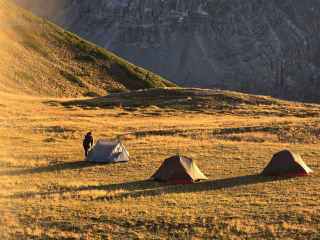
A wild, original route away from the usual hiking trails.
-
A trip for experienced hikers.
-
A true high mountain trek.
Photos


Sport
Level
Hiking / Trekking
In figures
Hiking
- Average duration/day: 6h30
- Average daily elevation gain: 937 m
- Average daily descent: 955 m
Management
French
Program
-
Meet at Ceillac (1650 m)
- Accommodation Cottage
- Breakfast not included
- Lunch not included
- Dinner included
The meeting point is at your accommodation at 6:45 pm on day 1 if you are arriving by car. Meet your guide and receive an overview of the trip.
Day 1 -
Ceillac (1650 m) - Val d’Escreins (1750 m)
- Activity Hiking
- Duration of the activity 6h
- Positive elevation gain 1000 m
- Negative elevation 1050 m
- Accommodation Cottage
- Breakfast included
- Lunch included
- Dinner included
A beautiful and varied introduction to the hike, as the trail alternates between lovely forests, alpine pastures, ridges, and panoramic summits. The descent from Pic d'Escreins (2734 m) to the hamlet of Basse Rua is truly splendid, and the welcome at the refuge provides all the necessary comfort!
Day 2 -
Val d'Escreins (1750 m) - Fouillouse (1910 m)
- Activity Hiking
- Duration of the activity 7h
- Positive elevation gain 900 m
- Negative elevation 1000 m
- Accommodation Cottage
- Breakfast included
- Lunch included
- Dinner included
Hiking up the Escreins valley in the morning light will leave you with beautiful memories! The long, idyllic valley gives way to a world of stone and the ascent of the Serenne pass at over 2650m. We descend towards the wild Ubaye valley to discover the incredible Chatelet bridge (1700m). From there, we have to climb a little to reach the gîte near the hamlet of Fouillouse.
Day 3 -
Fouillouse (1900 m) - Larche (1680 m)
- Activity Hiking
- Duration of the activity 5h30
- Positive elevation gain 750 m
- Negative elevation 700 m
- Accommodation Cottage
- Breakfast included
- Lunch included
- Dinner included
A more relaxed day: we ascend the beautiful Plate Lombarde valley, observing its military remains, before crossing the Vallonet pass (2524 m). We then continue up the Mallemort military track (2558 m) for a breathtaking panorama! A pleasant descent leads to the village of Larche.
Day 4 -
Larche (1680 m) - Chiappera (1800 m)
- Activity Hiking
- Duration of the activity 6h30
- Positive elevation gain 1000 m
- Negative elevation 1050 m
- Accommodation Cottage
- Breakfast included
- Lunch included
- Dinner included
Following the beautiful Rouchouse stream, we reach the Sautron pass (2685 m), which allows us to cross over to the Piedmont side. A beautiful descent into Italy follows, through the Croce Paesanu valley towards Saretto, dominated by the Rocca Bianca peak (3104 m). We spend the night in a comfortable mountain refuge in the village of Chiappera (1640 m), a remarkable and typical Piedmontese hamlet.
No luggage transfer possibleDay 5 -
Chiappera (1600 M) - Maljasset (1900 M)
- Activity Hiking
- Duration of the activity 6h30
- Positive elevation gain 1150 m
- Negative elevation 880 m
- Accommodation Cottage
- Breakfast included
- Lunch included
- Dinner included
We start the day with a pleasant, gentle climb towards Granges Collet, then on to the Col de Mary (2641 m). This pass was an important trading point, and many families crossed paths on either side of the border! We make a short detour to the beautiful Lacs Marinet (2590 m), overlooked by the faces of the Aiguille de Chambeyron (3412 m), before joining the path that descends towards Maljasset, following the Mary stream.
Day 6 -
Maljasset (1900 M) - Ceillac (1650 M)
- Activity Hiking
- Duration of the activity 6h
- Positive elevation gain 820 m
- Negative elevation 1050 m
- Breakfast included
- Lunch included
- Dinner not included
We ascend the wild slope of the Col Giradin (2700 m), a route frequented on the descent by hikers heading towards the Mediterranean via the GR5. The descent towards Ceillac allows us to discover two magnificent lakes in the valley: Sainte Anne and Miroir, which beautifully crown this lovely hike.
Day 7
Note
Please consider this program a flexible itinerary! Due to variables such as weather, trail conditions, or other factors beyond our control, we may occasionally make adjustments. However, rest assured, our guide is an expert on the mountain range, knowing its every secret, and will strive to guarantee you an exceptional experience. For example, if certain routes are crowded, he will show you magnificent and unspoiled paths to ensure your stay is truly memorable. Get ready to explore enchanting places!
Accommodation
- 3 nights in guesthouses
- 3 nights in a mountain refuge
Access
Go to the starting point
Price details
The price includes
- Full board from Sunday noon to Saturday noon.
- Supervision by a state-certified mountain professional
- Luggage transport between accommodations (except on day 5).
- Return transfers between the train station and the accommodation.
The price does not include
- Drinks and wine during meals
- Insurance
- Your personal expenses
Options
- Extra night before the stay - Dormitory bed : CHF35.68 / unit
- Extra night before stay - Twin room : CHF89.65 / unit
- Extra night after the stay - Dormitory bed : CHF35.68 / unit
- Extra night after stay - Twin room : CHF89.65 / unit
- Flex fare and insurance
Practical information
Specific formalities
Specifics
In the case of flights with stopovers operated by different airlines, also check the entry requirements of the countries you are transiting through.
It is your responsibility to ensure that you are in compliance, particularly regarding the validity of your identity documents (
For example, some countries require your passport to be valid for at least six months after your return date. Consider visa requirements, necessary vaccinations, and health recommendations. And don't forget to take into account any customs restrictions and other potential requirements of your destination or transit country.
ℹ️ Information may change up to the departure date, remember to regularly check official websites.
⚠️ For this stay, you must also bring your health insurance card.
Equipment
Equipment provided on site
None
Equipment to bring
Your survival gear for the day:
- 1 x 30/35 litre backpack with a flexible frame and a waist belt
- 1 pair of hiking boots that provide good ankle support and are waterproof, with Vibram-type soles. Remember to "test" new boots and those that haven't been used for a long time beforehand (low-cut boots are not recommended for level 3 hikes and above).
- 2 telescopic poles,
- 1 pair of category 3 sunglasses,
- 1 water bottle (allow at least 1.5L/person) or hydration bladder such as a CamelBak with a drinking tube,
- 1 cup, 1 folding knife/fork for picnics,
- race food of your choice (we also provide additional supplies),
- 1 small pouch (preferably waterproof) to put your money, identity card, bank card, health insurance card, assistance contract (the rest of your papers and car key can be left at the hotel during your stay),
- 1 survival blanket,
- toilet paper with a small lighter to burn it,
- Sunscreen without nanomaterials, SPF 4, and lip balm.
- a penknife,
- a whistle.
Race food / Snacks
You must provide your own food for the hike. The nutritional value of the various snacks consumed during the hike should not be overlooked. These snacks can consist of dried fruits (figs, dates, dried apricots, or prunes), cereal bars (feel free to browse the internet for inspiration and homemade recipes – it can be a fun activity during your preparation!), marzipan, quince paste, etc.
To feel at home in the evening, don't forget:
- Your essential beauty kit to pamper yourself (try to be minimalist and favor small containers, include a bar of soap + a solid shampoo, a microfiber towel and a washcloth),
- Your sleeping bag liner to snuggle up in under the covers,
- A pair of lightweight shoes, such as Crocs or slippers, for walking comfortably indoors.
- Your spare clothes to adorn yourself with your best features,
- A headlamp or flashlight to devour your favorite book late into the night,
- A sleep mask and earplugs to ensure a good night's sleep.
Clothing to bring
Attention, here comes the trickiest part. Let's tackle preparing your wardrobe! In the mountains, the most important thing is to be comfortable in your clothes and free to move so you can scamper like a hare across the meadows or scramble like a chamois up steep trails. We recommend following the three-layer system, also known as the onion technique (but without the smell):
- a short-sleeved t-shirt made of breathable material such as merino wool or thermal clothing,
- a warm jacket made of fleece, Polartec, or stretch polyester
- a windproof, waterproof and breathable jacket (gore-tex type).
This principle can be adapted to your preferences and, of course, the weather! In sunny weather, if you're maintaining a steady effort, you can wear just a t-shirt. If a breeze picks up when you reach a summit or ridge, it can be useful to have a warm, long-sleeved t-shirt, such as one made of merino wool, that you can quickly put on. Similarly, avoid wearing wet clothes after sweating. A spare t-shirt or your long-sleeved t-shirt can be very useful to prevent catching a chill! You can, for example, take advantage of your lunch break to dry your damp t-shirt in the sun.
For your lower body, you can choose shorts or loose-fitting trousers (avoid styles that constrict your stomach!) and lightweight ones. In case of rain, you can wear breathable and water-repellent over-trousers, such as your Gore-Tex windproof jacket.
As an experienced hiker, you're probably aware that cotton is a no-go. It's much better to opt for quick-drying materials like wool (merino), silk, or synthetic fibers. Be sure to choose soft, breathable fabrics for hiking. Rain jackets and other waterproofs are out of the question, unless you want to create a sauna effect underneath your clothes!
The wardrobe typically needed for hiking:
- 1 sun hat or cap,
- 1 multifunctional hat or neck warmer (BUFF© type) and 1 pair of lightweight gloves to protect against the wind,
- 2 short-sleeved t-shirts suitable for physical activity (synthetic or natural microfiber type),
- 1 insulating garment type: fleece or down jacket,
- 1 windproof, waterproof and breathable jacket with a hood if possible (Gore-Tex type or equivalent),
- 1 rain poncho or a protective cover for the backpack in bad weather (often integrated into the bags),
- 1 pair of loose-fitting trekking trousers,
- 1 pair of shorts or bermudas suitable for walking,
- 1 pair of waterproof and breathable overtrousers (gore-tex type or equivalent)
- 2 to 3 pairs of hiking socks.
They traveled with us