Laos from north to south
In summary
-
Sports
-
Duration18 days
-
LevelIntermediate
-
DestinationAsia / Laos
-
AgeFrom the age of 18
-
CO₂-Emissions176.25 kg CO2
-
Type of stayIn a group
-
Languages
 French
 English
In a few words
Embark on a comprehensive exploration of Laos , from the northern mountains to the southernmost reaches. Your adventure begins in Vientiane , the capital, where you'll admire the Patuxai monument and the Vat Ho Phra Kheow museum. Next, you'll travel to Luang Prabang , a UNESCO World Heritage gem renowned for its golden temples and historic quarter.
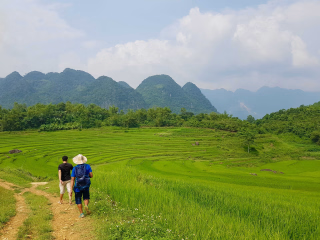
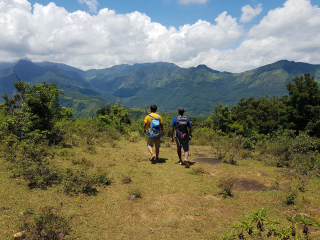
A boat trip along the Mekong River takes you to Pakbeng to meet elephants and their mahouts. Then, head north to the mountains: a 3-day trek immerses you in a landscape of limestone karsts, bamboo groves, and rice paddies, connecting traditional villages of the Akkha and Khamu ethnic groups. After a descent of the Nam Ou River, a stop in Muang Ngoi reveals its spectacular karst formations.
The journey finally heads south with a flight to Pakse. You'll experience a dramatic change of scenery as you explore the Bolaven Plateau and its impressive waterfalls, before ending gently in the heart of the enchanting 4,000 Islands region, on the Cambodian border. A diverse and authentic immersion.
The highlights
-
An in-depth exploration of Laos from north to south
-
Peaceful cruises on the Nam Ou and Mekong rivers, amidst unspoiled landscapes.
-
Exploration of Luang Prabang and Vat Phou, UNESCO World Heritage Sites
Photos


Sport
Level
Hiking / Trekking
The expert's opinion
This trip is classified as easy and is accessible to anyone in good physical condition. However, please note that on days 7 and 9, we walk for approximately 5 hours each day, with some steep climbs. Therefore, these two days of hiking could be classified as moderate.
In figures
Autre
- Average daily elevation gain: 272 m
- Average daily descent: 179 m
Management
French
English
Based in Laos for many years, our local agency guarantees a successful active travel experience, thanks to our guides and logistical infrastructure. During your trip, you will be accompanied by our adventure guides, fully committed to helping you discover unique places in the heart of nature.
Upon your arrival in Luang Prabang, you will be greeted by your French-speaking guide.
Throughout your stay, you will have one or more local, non-French-speaking drivers.
During the 3-day trek, we use porters to carry our luggage. We would like to clarify something about this. In Laos, you won't have a team of porters for the entire trek as you might be used to, but rather different porters each day. It is also customary for your guide to gather the village chief and the men of the village to negotiate this work.
Program
-
Paris - Luang Prabang
- Breakfast not included
- Lunch not included
- Dinner not included
Overnight flight with a stopover to Luang Prabang.Day 1 -
Arrival in Luang Prabang
- Accommodation 2-star hotel
- Breakfast not included
- Lunch not included
- Dinner included
We are met at Luang Prabang airport by our French-speaking guide and transferred to our hotel for check-in. Depending on our flight schedules, we may have some free time to explore the city. A UNESCO World Heritage Site, Luang Prabang is considered one of the most beautiful cities in Southeast Asia, with its traditional architecture, shimmering temples, and peaceful atmosphere on the banks of the Mekong River. Dinner will be at a local restaurant.Day 2 -
Visit to Luang Prabang
- Accommodation 2-star hotel
- Breakfast included
- Lunch included
- Dinner not included
Breakfast at the hotel. We set off on foot with our guide to explore Luang Prabang, a UNESCO World Heritage city. We begin with the Ban Pakham morning market, a wonderful immersion into the daily life of the locals, before climbing the steps of Mount Phousi to admire the view of the city and the surrounding mountains. We then visit the Royal Palace, now the National Museum, and discover Wat Mai, a typical temple with a five-sided roof and gilded bas-reliefs. Lunch at a local restaurant. In the afternoon, we continue by tuk-tuk to the traditional Heuan Chan house, the TAEC Museum dedicated to the country's ethnic groups, and then the temples of Wat Visoun and Wat Xieng Thong, two important sites of Lao Buddhism. Suggestion: For early risers, there is the option to freely observe the Tak Bat ritual, a daily ceremony during which locals offer gifts to monks who silently walk through the streets. This important moment in local spiritual life requires discretion and respect: we take care to observe the scene from a distance, without disturbing the procession (without a guide or driver).Day 3 -
Mekong River Cruise - Pak Ou Caves - Pakbeng
- Accommodation Staying with a local resident
- Breakfast included
- Lunch included
- Dinner included
Boarding a traditional boat, we'll travel up the Mekong River to Pakbeng. This marks the beginning of our exploration of the banks of the Mekong, the legendary river that flows through China, separates Laos from Myanmar and Thailand, plunges into Cambodia, and empties into Vietnam. The scenery is magnificent. The Mekong is the main artery connecting northern Vietnam to Luang Prabang and is a busy waterway lined with villages. At the confluence with the Nam Ou River, we'll visit the sacred caves of Pak Ou, home to Buddha statues (this visit will take place on the return journey on day 11 if we're traveling on a public boat). The caves offer a breathtaking view of the Mekong. We'll arrive in Pakbeng in the late afternoon. Transfer and check-in at our guesthouse. The rest of the day is free for a stroll through the village. Dinner will be at a local restaurant.Day 4 -
Pakbeng: Morning with the elephants - Muang Xay
- Accommodation Staying with a local resident
- Breakfast included
- Lunch included
- Dinner included
Our morning will be dedicated to meeting the ancient and faithful inhabitants of Laos: our venerable and respected friends, the pachyderms! We'll cross the Mekong River in a dugout canoe and reach the elephant park, where the mahouts will show us around. With them, we'll set off on a short walk amidst the vegetation and surrounding bamboo forest. Upon our return, relaxation awaits! We'll witness the elephants bathing in the river, a delightful moment of connection between animal and keeper. Lunch will be at the park's restaurant, followed by a return trip to Pakbeng by dugout canoe for a transfer to Muang Xay. This major road and trade hub in northern Laos lies at the crossroads of routes connecting Luang Prabang with China, Vietnam, and Thailand. We follow the Nam Beng River valley, passing through predominantly rural landscapes (rice paddies, but also many vegetable and fruit crops mainly destined for the Chinese market), as well as numerous villages of ethnic minorities, primarily Lao, Khmu, Hmong, and Tai Lue. Dinner at a local restaurant and overnight stay in a guesthouse.Day 5 -
Muang Xay - trek in the Akha and Khamu villages - Ban Seng Kham Neua
- Activity Autre
- Positive elevation gain 350 m
- Accommodation Staying with a local resident
- Breakfast included
- Lunch included
- Dinner included
After breakfast, we travel by private vehicle to the town of Ban Sinxay. From there, we embark with our local guides on a three-day trek through the mountains of Pongsaly province, passing through small, traditional Akkha and Khamu villages. We arrive in the afternoon at Ban Seng Kham Neua, an Akkha village. We settle into our homestay and then stroll through the village, discovering its traditional activities. Dinner and overnight stay at the homestay.Day 6 -
Ban Seng Kham Neua - Ban Koknioo
- Activity Autre
- Positive elevation gain 400 m
- Accommodation Staying with a local resident
- Breakfast included
- Lunch included
- Dinner included
Enjoy a local breakfast. We set off for a beautiful day of trekking. We hike through a landscape of small mountains, forests, and cultivated fields, along the hillside. We'll have a picnic lunch along the way in a large Akha village before continuing our trek alongside a river. We arrive in the afternoon at the Khmu village of Ban Koknioo. Dinner and overnight stay with a local family.Day 7 -
Ban Koknioo - Muang Khua - Muang Ngoi
- Activity Autre
- Positive elevation gain 150 m
- Negative elevation 250 m
- Accommodation Staying with a local resident
- Breakfast included
- Lunch included
- Dinner included
In the morning, we hike for about three hours through rice paddies and grain fields to the village of Ban Bouamphanh. Then, we drive to Muang Khua. We board small traditional boats for a trip down the Nam Ou River to Muang Ngoy, navigating around a hydroelectric dam. We pass through beautiful scenery and observe scenes of daily life. We have a picnic lunch. We arrive in Muang Ngoy in the late afternoon and check into our guesthouse. Dinner is at a local restaurant.Day 8 -
Muang Ngoi – Ban Kiookhan
- Activity Autre
- Positive elevation gain 800 m
- Negative elevation 200 m
- Accommodation Staying with a local resident
- Breakfast included
- Lunch included
- Dinner included
After breakfast, we hike to Tham Kaang Cave, which was used as a shelter by locals during the Indochina War, which began in the 1960s. We walk through rice paddies, admiring beautiful countryside landscapes and karst cliffs. We stop in a Khmu village for lunch, giving us a glimpse into local life. After lunch, we cross a small river several times. Then, we climb under a canopy of bamboo… A challenging ascent that makes the day a bit more demanding than the previous ones, but the reward at the top is a stunning 360° view of the surrounding mountains. We spend the night in a charming little Khmu village.Day 9 -
Ban Khioukhan – Muang Ngoi – Nong Khiaw
- Activity Autre
- Positive elevation gain 200 m
- Negative elevation 800 m
- Accommodation Staying with a local resident
- Breakfast included
- Lunch included
- Dinner included
Breakfast at a local's home. Then, we resume our hike to meet the inhabitants of another village of the same ethnic group, nestled on the banks of the Nam Ou River. This hike offers beautiful panoramic views of the mountains and the Nam Ou River. At the end of the hike, we board a small traditional boat to reach Muang Ngoi. Towering karst peaks and vertiginous cliffs line the Nam Ou, creating breathtaking landscapes. We enjoy this beautiful spectacle as we cruise along the peaceful Nam Ou. Lunch at a local restaurant in Muang Ngoi. Then, we continue our descent of the Nam Ou River to Nong Kiaw. Check-in at the hotel and the rest of the day is free. Dinner at a local restaurant. Overnight at the hotel.Day 10 -
Nong Khiaw - Luang Prabang
- Accommodation Staying with a local resident
- Breakfast included
- Lunch included
- Dinner included
Breakfast at the hotel, then we'll depart for Luang Prabang. If the visit to the Pak Ou Caves wasn't done on day 4, we'll make a detour to Ban Pak Ou, crossing the Mekong River in a traditional boat to explore its sacred caves. Lunch at a local restaurant. Afterwards, we'll visit the villages of Ban Xang Khong and Ban Xieng Lek: two small traditional weaving villages where a few small workshops also produce mulberry paper crafts. In the evening, dinner with a Lao family and overnight at the hotel.Day 11 -
Luang Prabang - hiking villages and Kuang Si waterfalls - Luang Prabang
- Activity Autre
- Accommodation Staying with a local resident
- Breakfast included
- Lunch included
- Dinner not included
Early in the morning, at sunrise, those who wish can witness the monks' procession as they collect alms from the faithful. After breakfast, we depart by vehicle for the Hmong village of Ban Long Lao. We hike for approximately four hours through fields of grain, rubber plantations, and forests, eventually reaching the Kouang Sy Falls. Lunch is at a restaurant at the foot of the falls, a popular spot for locals. There's also the opportunity to swim in the crystal-clear pools downstream from the waterfall. After this refreshing and idyllic break, we return to Luang Prabang. The evening and dinner are at your leisure.Day 12 -
Luang Prabang - Vientiane
- Accommodation 2-star hotel
- Breakfast included
- Lunch not included
- Dinner not included
Breakfast at the hotel and free morning. Transfer to Luang Prabang train station to catch a train to Vientiane. In the afternoon, depending on our train schedule, visit the capital city and its main sites (That Luang, Patuxai, Wat Sisakhet, etc.). Note: Sharp objects (knives, scissors, etc.) and flammable liquids in containers larger than 100ml (spray deodorants, mosquito repellent, etc.) are prohibited on board the train between Vientiane and Luang Prabang.Day 13 -
Vientiane - Pakse - Champasak - Khong Island
- Accommodation Staying with a local resident
- Breakfast included
- Lunch included
- Dinner included
We are transferred to Vientiane airport for our flight to Pakse. From there, we travel by road towards Champasak. Eight kilometers away lie the ruins of the magnificent Khmer temple of Vat Phu. A UNESCO World Heritage Site since 2002, Vat Phu was built at the foot of a mountain considered sacred in the region. We have lunch at a local restaurant and then continue on to the 4,000 Islands region in the far south of the country. We arrive at the end of the day on Khong Island, larger but more peaceful than the smaller, more popular islands of Khone and Don Det.Day 14 -
Khong Island - 4000 Islands - Khong Island
- Accommodation Staying with a local resident
- Breakfast included
- Lunch included
- Dinner included
Early in the morning, we board a motorized canoe and cruise the Mekong River through the 4000 Islands region to Khone Island, which we explore on a pleasant bicycle ride. Our first stop is the Li Phi Falls. We continue with a visit to the village, which houses colonial-era remnants (former colonial administration buildings, a bridge, the Det Island pier, and an old locomotive). After lunch at a local restaurant, we cruise to the Ban Nakassang pier before discovering the impressive Phapheng Falls. We return to Khone Island in the late afternoon and enjoy some free time.Day 15 -
Khong Island - Bolaven Plateau
- Activity Autre
- Accommodation 2-star hotel
- Breakfast included
- Lunch included
- Dinner included
We depart early in the morning for the Bolaven Plateau. The Bolaven Plateau is a vast expanse of particularly fertile land, where the altitude (around 1000 m) and a cooler, more humid climate than in the Mekong Valley have allowed for the development of coffee cultivation and, more recently, rubber trees, cereals, as well as numerous fruit and vegetable crops to supply the large urban centers in the surrounding area. Some tea and pepper are also grown. The Bolaven Plateau is also characterized by vast, lush forests and numerous waterfalls due to its rugged terrain. En route, we stop in a village where many of the inhabitants are blacksmiths. We visit the workshops where the tools sold in the small shops lining the road are made. We then explore the Plateau, visiting the most beautiful waterfalls in the region: Tad Ngeuang and then Tad Fane, considered one of the highest in Laos. In the late afternoon, we'll visit a typical coffee plantation in the region. This will be an opportunity to discover the various fruit trees that grow in these fertile lands. At the end of the day, we'll transfer to our hotel and check in.Day 16 -
Bolaven Plateau - Pakse - Vientiane
- Breakfast included
- Lunch not included
- Dinner not included
According to our schedule, we are transferred to Pakse. Transfer to the airport and flight to the capital Vientiane, to catch our international return flight.Day 17 -
Arrival in Paris
- Breakfast not included
- Lunch not included
- Dinner not included
Arrived in Paris on day 18.Day 18
Note
Accommodation
Access
Go to the starting point
Price details
The price includes
- International flights departing from Paris
- Domestic flights
- The train between Luang Prabang and Vientiane
- Air taxes
- Land transport
- Accommodations as indicated in the itinerary
- Full board except for the meals not included in the program
- The excursions detailed in the trip itinerary
- Entry to the sites mentioned in the program
- The tour is led by a French-speaking tour guide from day 2 upon arrival in Vientiane until departure from Pakse on day 17.
- The services of a logistics team for the trek: porter, cook, local guide
- One refillable bottle per person
The price does not include
- Visa fees
- Contribution to carbon neutrality: €10 per person
- The supplement between Christmas and New Year's Day, from December 20th to January 10th
- Drinks
- The optional meals mentioned in the program (approximately €8 to €10 per meal)
- Personal expenses
- Tips for the management team
Options
- Flex fare and insurance
Practical information
Specific formalities
Specifics
Before your departure, check with the embassy or consulate regarding the entry and stay requirements for your destination country. You can also find this information on the France Diplomatie website ( https://www.diplomatie.gouv.fr/fr/dossiers-pays/ ).
In the case of flights with stopovers operated by different airlines, also check the entry requirements of the countries you are transiting through.
It is your responsibility to ensure you are in compliance, particularly regarding the validity of your identity documents (for example, some countries require your passport to be valid for at least six months after your return) , visa requirements, necessary vaccinations, and health recommendations. And don't forget to consider any customs restrictions and other potential requirements of your destination or transit country.
ℹ️ Information may change up to the departure date, remember to regularly check official websites.
Equipment
Equipment to bring
- Sleeping bag sheet
- A sleeping bag (useful from November to March for nights spent with locals): Comfortable, the right size for you, with a side zipper for easy opening. Nights can be cool (0 to 10°C) in December, January, February, and March at higher altitudes in the north.
- A toiletry bag and bath towel
- Hiking poles
- Sunscreen cream (face and lips)
- Mosquito repellent
- Headlamp
- Shoes suitable for walking in water (we will be crossing several rivers).
- Plastic bags for waterproofing your belongings
- Earplugs
- Notepad or travel map.
- Hydrochlorazone tablets or Micropur (for water)
Clothing to bring
Clothing, from head to toe:
- A pair of hiking boots. They're a hiker's best friend. They must have three qualities: sturdiness, good foot and ankle support (high-tops). Choose boots with non-slip soles, good traction, and a relatively rigid build; they need to grip the ground well. Vibram soles have a long-standing reputation; choose them if you have the option.
- a pair of light shoes (tennis shoes) or sandals to put on during stops in towns and villages.
- Pairs of socks for hiking
- trekking pants
- loose-fitting cotton trousers and light shirts
- Lightweight short-sleeved and long-sleeved T-shirt
- Underwear
- Fleece jacket and windproof jacket. Best worn in the evening, especially during December, January and February.
- Rain cape
- Hat for sun protection and/or scarf
- Good sunglasses