Discovering Central Tibet
In summary
-
Sports
-
Duration15 days
-
LevelIntermediate
-
DestinationAsia / China
-
AgeFrom 16 - 90 years
-
CO₂-Emissions4610.76 kg CO2
-
Type of stayIn a group
-
Languages
 French
In a few words
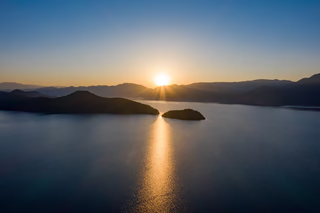
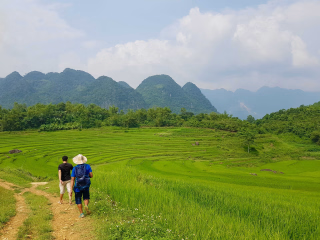
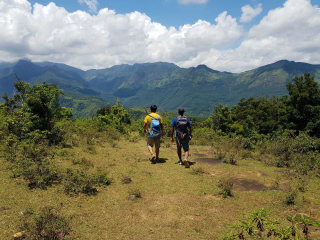
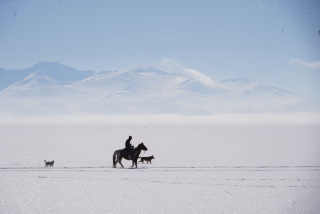
Explore the soul of Central Tibet on an unforgettable journey to the heart of the mythical Roof of the World . From the sacred city of Lhasa to the emerald waters of Lake Namtso , passing through the high Himalayan plateaus and Everest Base Camp , this itinerary combines spiritual immersion with the discovery of breathtaking landscapes . For fifteen days, you will trek between iconic monasteries , sacred valleys , and high-altitude lakes , following in the footsteps of millennia-old traditions. The Potala Palace , the Jokhang Monastery , and the legendary routes connecting sacred religious sites bear witness to the country's rich cultural heritage. Panoramic hikes , encounters with local people , and the raw power of nature offer a unique experience, blending contemplation , spirituality , and high-altitude adventure .
The highlights
-
A comprehensive exploration of Central Tibet, from Lhasa to the Himalayas
-
Beautiful hikes in the best places
-
Rongbuk and Everest Base Camp
Photos


Sport
Level
Hiking / Trekking
The expert's opinion
This trip is accessible to anyone in good health. The hikes and activities do not require any particular level of fitness. However, Tibet is a high-altitude region: the sun, cold, aridity, and lack of oxygen can be quite demanding. We recommend consulting your doctor beforehand.
---------
INFORMATION ON HIGH ALTITUDE AND ACUTE MOUNTAIN SICKNESS
Trips involving nights above 3000 meters altitude are suitable for people in very good health, with appropriate physical condition.
High mountains are a unique environment, often harsh on the body (cold, dryness, sun, hypoxia, etc.). Among the various altitude-related illnesses, the symptoms of Acute Mountain Sickness (AMS) must be recognized and never underestimated. These are signs of an excessively rapid ascent: your body hasn't had time to adapt to the lack of oxygen (hypoxia). Headaches, insomnia, loss of appetite, edema, and nausea are the most common symptoms. These symptoms are frequent and relatively mild when they remain moderate. They disappear over time, provided you slow down or stop the ascent.
In figures
Hiking
- Average duration/day: 2h30
Management
French
Program
-
Paris - Lhasa
- Transportation Plane - 16h20 - 7439km
- Breakfast included
- Lunch not included
- Dinner not included
Flights to Lhasa.Day 1 -
Arrival in Lhasa
- Breakfast not included
- Lunch not included
- Dinner included
Arrival in Lhasa during the day. Welcome by our Tibetan guide and transfer to the hotel.Day 2 -
Visit to Lhasa: Barkhor, Jokhang and Sera
- Breakfast included
- Lunch included
- Dinner included
We begin our exploration of the capital in the heart of the old city: we wander through the narrow streets of the Barkhor, then visit the Jokhang Palace, currently the most revered monument for Buddhists in Tibet. A few kilometers away, at Sera Monastery, the monks gather every afternoon in the monastery courtyard for a traditional debate on Buddhist philosophy—usually a lively one! Return to the hotel.Day 3 -
Visit to Lhasa: Potala Palace, Norbulingka and Drepung
- Breakfast included
- Lunch included
- Dinner included
This morning we're heading to downtown Lhasa to visit the famous Potala Palace, the former residence of the Dalai Lamas since the 17th century. This 13-story fortress was one of the tallest buildings in Tibet in its time. It has always represented Tibet itself, a true national symbol, and an unmissable monument for us visitors! Next, we'll visit the Norbulingka complex, whose pavilions and gardens served as the Dalai Lamas' summer residence. We'll end the day with a visit to Drepung Monastery, a veritable monastic city that housed nearly 15,000 monks at the beginning of the last century!Day 4 -
Lhasa - Samye Monasteries - Tsetang
- Transportation Car - 03h - 200km
- Activity Hiking
- Duration of the activity 4h
- Breakfast included
- Lunch included
- Dinner included
We now leave Lhasa and head towards another unmissable Tibetan monument, Samye Monastery. Built around the 8th century, Samye is known as the very first Buddhist monastery in Tibet! After visiting the monastery, we set off on a short hike in the surrounding area. We are in the upper Chimphu Valley, a vast natural amphitheater containing a temple and a complex of hermitage caves. It's common to find more than a hundred hermits here! We walk to Padma Sambhava Cave (optional), the very place where Guru Rinpoche imparted the teachings of Tibetan Buddhism to his disciples. We then travel to Tsetang. There, the ruins of the ancient Gajiu Monastery rest on the slopes of Mount Gangpori. The site is known as the cradle of Tibetan civilization.Day 5 -
Tsetang - Yumbu Lakhang Monastery - Yamdrok Lake - Gyantse
- Transportation 05h - 300km
- Activity Hiking
- Duration of the activity 2h
- Breakfast included
- Lunch included
- Dinner included
We begin the day with a short drive to Yumbu Lakhang Palace. Perched proudly atop its promontory, it is the oldest building in the entire region, built on the orders of the first king of Tibet (the building was destroyed during the Cultural Revolution and then rebuilt identically in 1982). We then travel south to reach the shores of one of Tibet's great sacred lakes: Yamdrok Lake. This turquoise lake is surrounded by the towering ochre mountains of Shannan, offering a striking contrast of colors. It is also a lake of paramount spiritual and symbolic importance to Tibetans, as well as an important migratory stopover for birds. From the banks of Yamdrok Tso, we reach Rito Monastery, located on a small island. We visit and explore the surrounding area in a magnificent setting. We then continue our journey to Gyantse. Overnight in Gyantse.Day 6 -
Monuments of Gyantse and Shigatse
- Transportation 02h
- Breakfast included
- Lunch included
- Dinner included
At the foot of magnificent ancient fortresses, Gyantse, an ancient city now a major metropolis, has preserved the atmosphere that characterized Tibetan life in the last century. We visit Palcho Temple, the city's most important temple, a significant site for Sakya Buddhists. Its 15th-century khumbum, an immense terraced stupa with interior chapels on several levels, is one of Tibet's most remarkable works of art. We then travel to Shigatse, Tibet's second-largest city, located at the confluence of the Nyang Chu and the Yarlung Tsangpo, the famous Brahmaputra River. Here, we visit Tashilunpo Monastery, the seat of the Panchen Lamas, built in 1447 by the very first Dalai Lama. It is one of the largest Gelugpa monasteries, having once housed up to 4,700 monks! We then head to Shigatse Market and stroll through the narrow streets to soak up the lively atmosphere and local life. For those who wish, it's also the perfect place to buy handcrafted souvenirs. Overnight in Shigatse.Day 7 -
Shigatse - Sakya Monastery - Shelkar
- Transportation 05h
- Breakfast included
- Lunch included
- Dinner included
We set off early this morning to reach Sakya Monastery, 130 km southwest of Shigatse. This is the historical seat of the Sakya school, one of the four major schools of Tibetan Buddhism. From 1268 to 1365, all of Tibet was governed from this place! We then take the famous Friendship Highway, which connects Lhasa to Kathmandu, and soon cross the Gyatso Pass, at an altitude of over 5,000 meters. We immediately descend into the arid plains of Lato and follow the Lolo Chu River. From here, we can see the Everest massif. We arrive in Shelkar this evening.Day 8 -
Shelkar - Rongbuk, Mount Everest
- Transportation 03h - 200km
- Activity Hiking
- Duration of the activity 1h
- Breakfast included
- Lunch included
- Dinner included
We cross the Lamar Pass (5600 m) and descend to the village of Choezong. From there, we take a shared shuttle bus for a 30-minute road transfer to Rongbuk. Rongbuk Monastery is the highest monastery in the world and boasts a magnificent view of the Tibetan side of Chomolungma, Mount Everest (8848 m). We explore the surrounding area and take our time admiring the view. We stay overnight in the monastery's guesthouse, the only accommodation in the region.Day 9 -
Rongbuk - Everest Base Camp - Shigatse
- Transportation 06h - 400km
- Activity Hiking
- Duration of the activity 2h
- Breakfast included
- Lunch included
- Dinner included
We woke up very early to admire the sunrise over Everest. In good weather, it's an unforgettable sight! We hiked to the new North Base Camp, whose official location has been moved near Rongbuk. We enjoyed the exceptional surroundings and explored the area as we pleased before returning to Rongbuk. Now it was time to leave the great barrier of the Himalayas behind us and begin the journey back to Shigatse...Day 10 -
Route to Damxung
- Transportation 06h - 500km
- Activity Hiking
- Duration of the activity 3h
- Breakfast included
- Lunch included
- Dinner included
We headed north for a long journey across the high plateaus of central Tibet. Alpine meadows stretched across the landscape, and snow-capped mountains unfolded on the horizon. We encountered a few nomads with their herds, as well as some small rural villages, seemingly lost in the vast Tibetan expanse. We crossed the Nyainqêntanglha Mountains via the Sugu Pass and arrived at the foot of Mount Chomokangar, which rises to over 7,000 meters. It was impossible not to stop and admire the view. We set off for a short walk in the surrounding area, a chance to stretch our legs. We then completed our road journey to Damxung, our stop for the night on the road to Lake Namtso.Day 11 -
Namtso Lake and Tashi Dor Kora
- Transportation 06h - 500km
- Activity Hiking
- Duration of the activity 3h
- Breakfast included
- Lunch included
- Dinner included
We cross a series of mountain passes and finally, the road leads us to the shores of the great Lake Namtso. This immense lake, covering 1,920 square kilometers, is one of the highest in the world (4,718 meters), set in a wild and enchanting natural landscape. It is also a holy site for Tibetan Buddhism, an essential pilgrimage destination for centuries. Like good pilgrims, we too perform the kora around Tashi Dor, a small peninsula dominated by a hill upon which sits a monastery. Here are hermit caves, one of which is said to have been frequented by Padmasambhava himself, the founder of Tibetan Buddhism. We set off for Lhasa in the afternoon.Day 12 -
Free time in Lhasa and flight to Chengdu
- Breakfast included
- Lunch not included
- Dinner not included
Free time in Lhasa. If the return domestic flight is scheduled for today, transfer to the airport and flight to Chengdu. If the return flight is scheduled for the following morning: overnight stay at the hotel and early morning transfer to the airport (overnight stay not included).Day 13 -
Free day in Chengdu - Flight to Paris
- Breakfast included
- Lunch not included
- Dinner not included
Free time in Chengdu. Transfer to the airport and flight to Paris.Day 14 -
Arrival in Paris
- Transportation Plane - 16h20 - 7439km
- Breakfast not included
- Lunch not included
- Dinner not included
Arrived in Paris during the day.Day 15
Note
Accommodation
Access
Go to the starting point
Price details
The price includes
- International and domestic flights
- Road transfers
- The accommodations included in the program
- Supervision by a French-speaking guide
- The services of a local team
- All meals, except those marked as "free" in the daily schedule
- Entry permit for the Tibet Autonomous Region
- Entrance fees to the sites included in the program
The price does not include
- Drinks
- Meals not included in the program
- Personal expenses
- Tips from the home team
Options
- Single room supplement for hotel-only nights during your stay : CHF471.12 / unit
- Hotel/Airport Transfer in Beijing (based on 1 person) : CHF96.05 / unit
- Hotel/Airport transfer in Beijing (based on 2 people) : CHF50.31 / unit
- Hotel/Airport transfer in Beijing (based on 3 people) : CHF41.17 / unit
- Flex fare and insurance
Practical information
Specific formalities
Specifics
Before your departure, check with the embassy or consulate regarding the entry and stay requirements for your destination country. You can also find this information on the France Diplomatie website ( https://www.diplomatie.gouv.fr/fr/dossiers-pays/ ).
In the case of flights with stopovers operated by different airlines, also check the entry requirements of the countries you are transiting through.
It is your responsibility to ensure you are in compliance, particularly regarding the validity of your identity documents (for example, some countries require your passport to be valid for at least six months after your return) , visa requirements, necessary vaccinations, and health recommendations. And don't forget to consider any customs restrictions and other potential requirements of your destination or transit country.
ℹ️ Information may change up to the departure date, remember to regularly check official websites.
Equipment
Equipment to bring
- Telescopic hiking poles
- Sunglasses (category 3 minimum)
- Toiletries kit and bath towel
- Sunscreen cream (face and lips)
- Water bottle of at least 1 liter
- Toilet paper
- Water filter or water purification tablets
Clothing to bring
Equipment needed for this trip:
- Comfortable clothing for travel
- Cap or hat
- Scarf or neck warmer
- Warm hat
- Gloves
- Thermal underwear (tops and bottoms)
- T-shirt or shirt suitable for hiking (quick-drying)
- Windproof, waterproof and breathable jacket
- Puffy jacket
- Warm fleece jacket
- Comfortable walking pants
- Short long
- Walking socks
- Sturdy and comfortable mountain hiking boots
- Lightweight shoes for travel
Bring a container to collect your hazardous waste (batteries, aerosols, tubes of ointment, etc.) so you can take it back to France, where recycling is well-organized and efficient. A tip: avoid using packaging from any equipment or supplies you may have purchased before leaving… That's one less thing to bring back to France.