In summary
-
Sports
-
Duration16 days
-
LevelConfirmed
-
DestinationAsia / Mongolia
-
AgeFrom the age of 18
-
CO₂-Emissions227.65 kg CO2
-
Type of stayIn a group
-
Languages🇫🇷French
In a few words
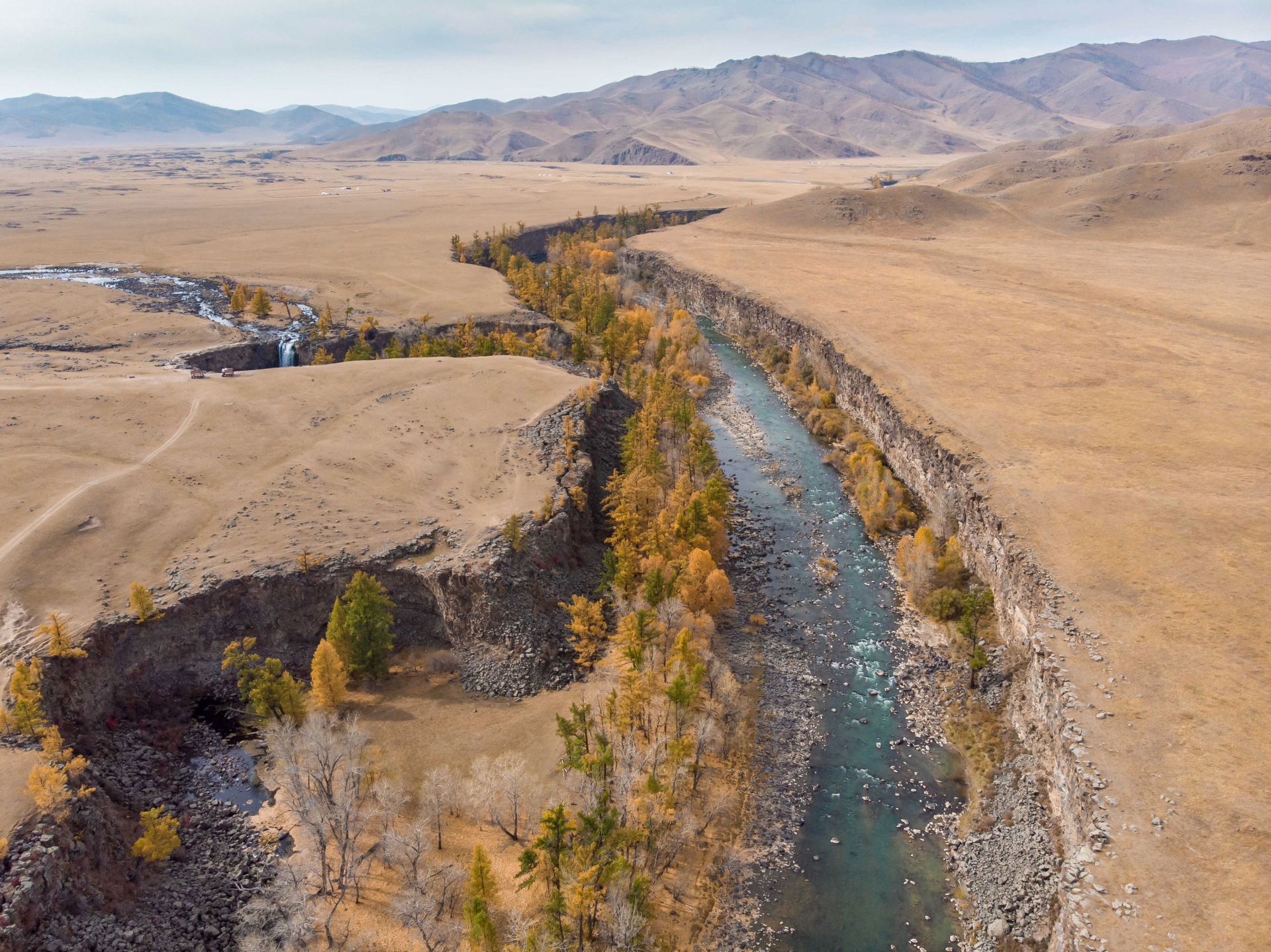
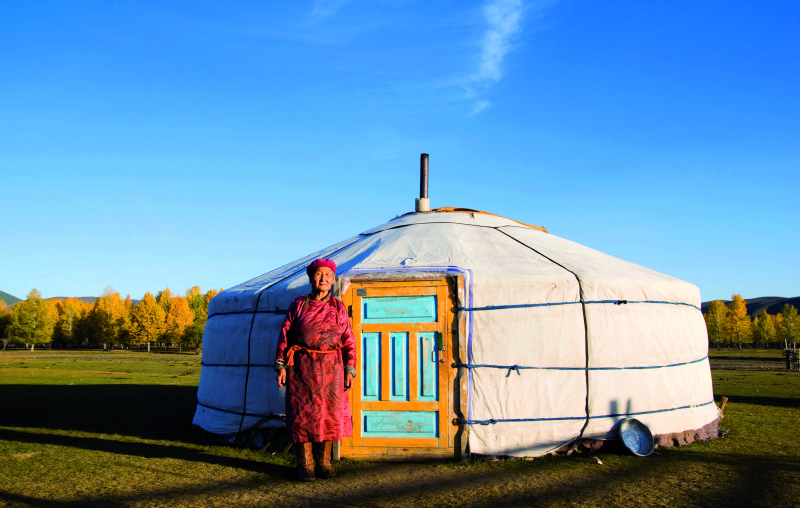
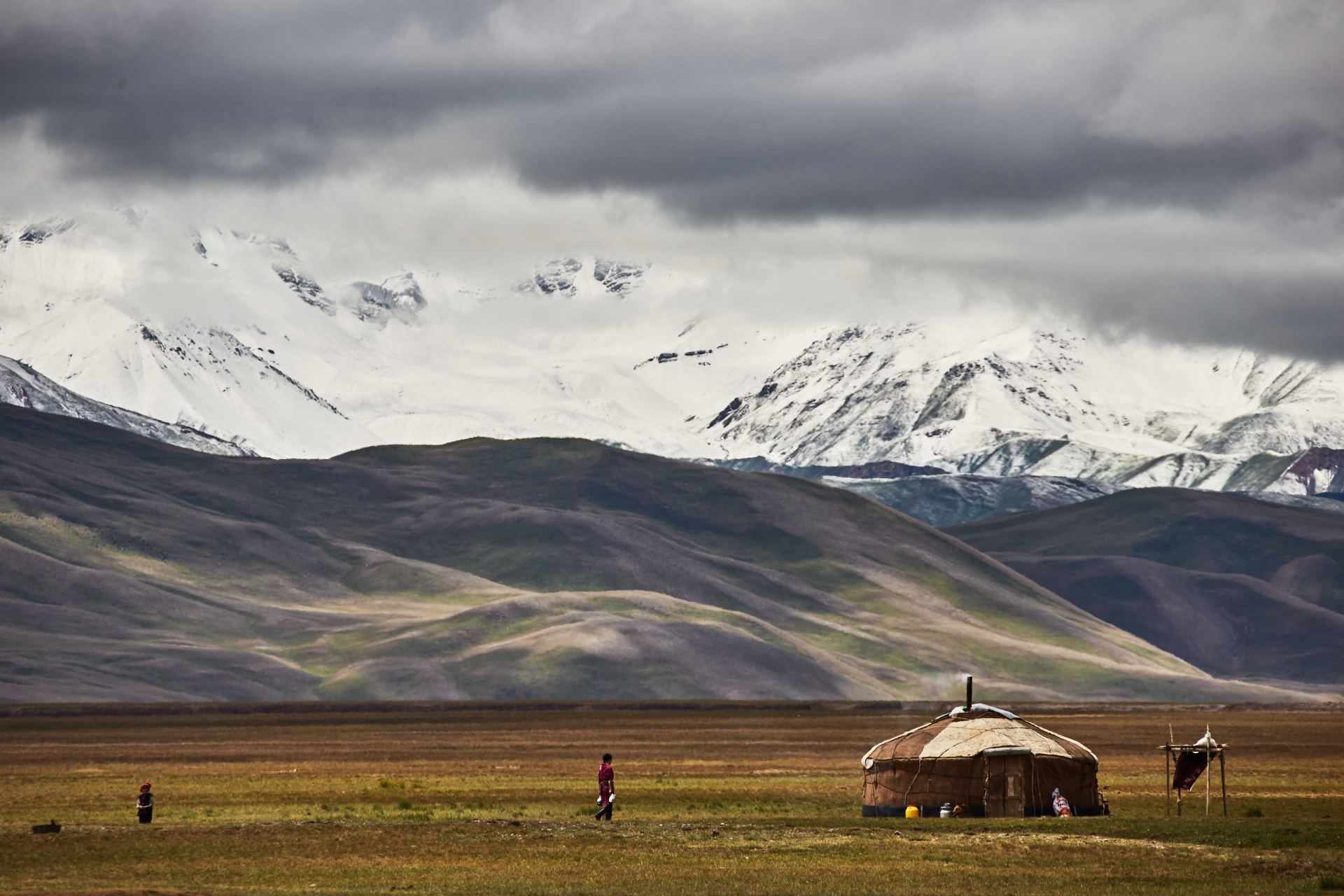
An immersive trek among the nomads of Khangai, from the Orkhon Valley to the Eight Lakes . We'll visit on foot the "must-sees" of Khangai National Park, the iconic landmarks of Mongolia! Mongolia, a land of wide-open spaces, still lives to the rhythm of nature and its herds. During these two weeks, we'll delve into the heart of nomadic Mongolia. Far from the tourist trails, we'll discover the immensity of this steppe empire on foot . We'll first visit Lake Ugii before heading to the Tovkhon Monastery. From there, our self-guided trek begins, taking us at our own pace to the border of Arkhangai, the Orkhon Valley, and the Eight Lakes region (Naiman Nuur). Finally, we'll take advantage of the return journey to visit Karakorum, the ancient capital of Genghis Khan. Not forgetting the magnificent dunes of the Little Gobi and the Erden Zuu monastery, undoubtedly the most famous in the country. This trek in the company of our horse caravan is a journey back in time and a powerful experience of nomadic life : an immersion in Mongolia as we dream and imagine it...
The highlights
-
Seven days of trekking with porterage by horses.
-
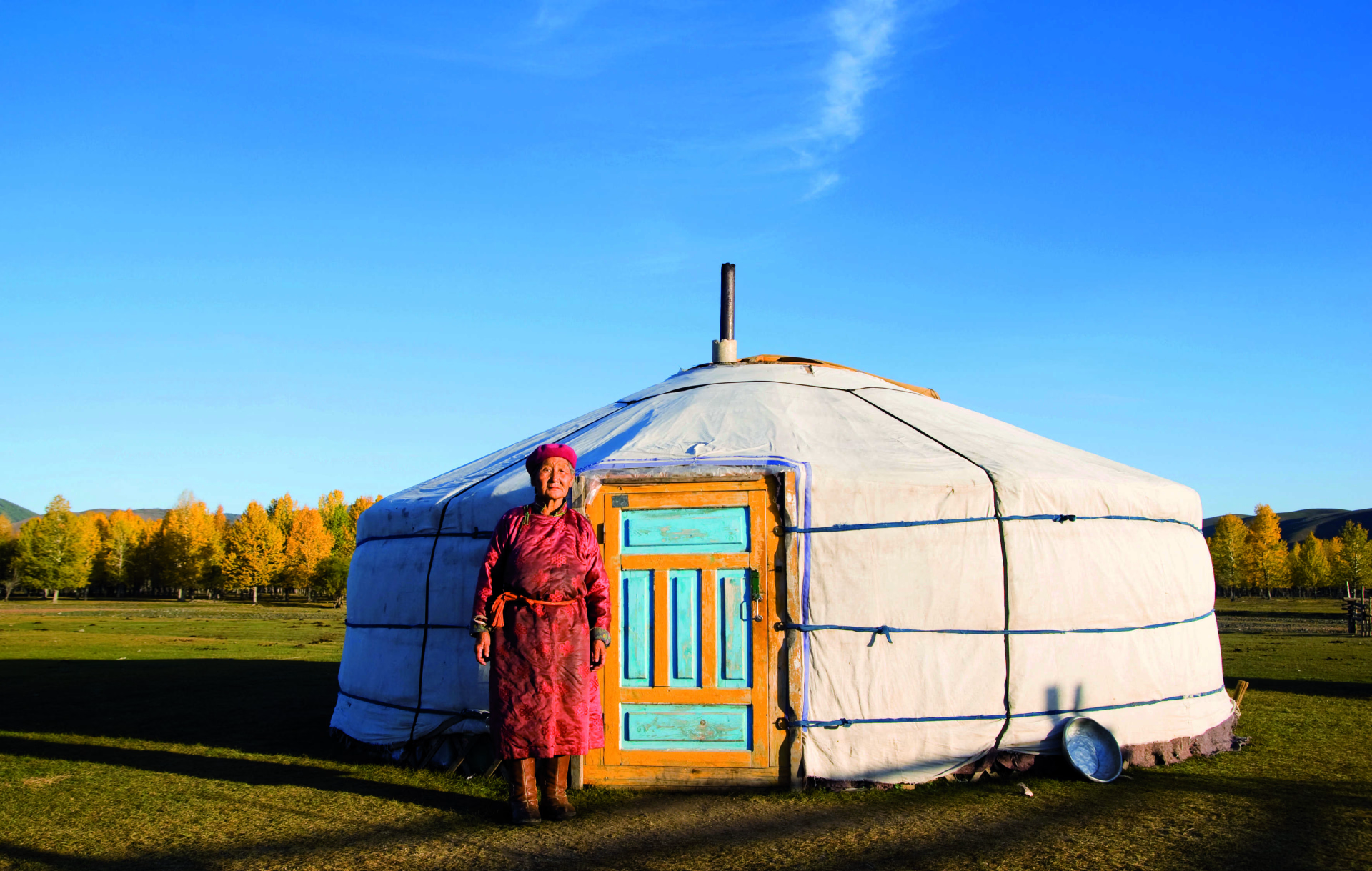
Spend as many nights as possible in a yurt with a local family to experience nomadic Mongolia!
-
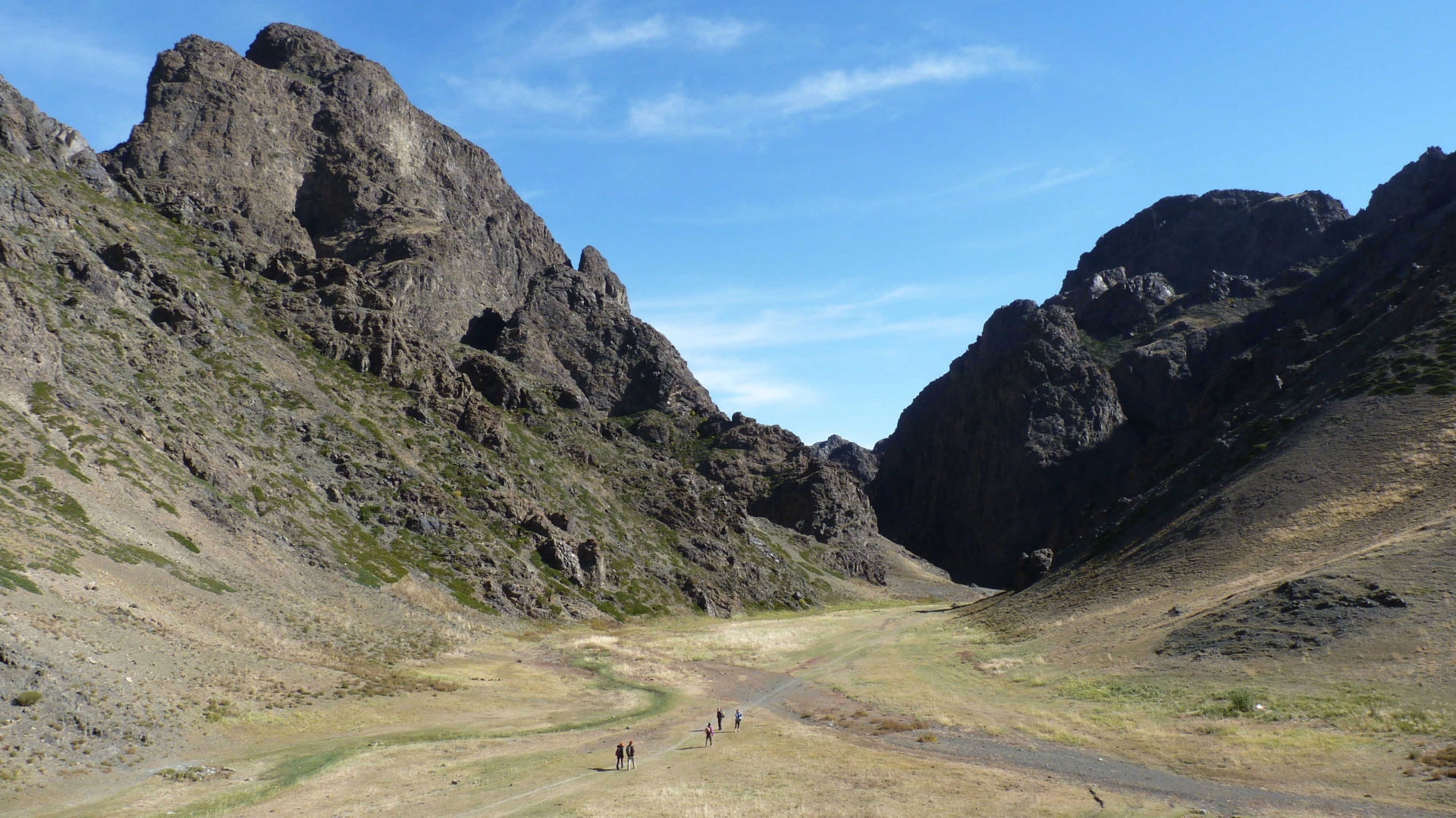
Varied landscapes of forests, lakes, deserts, mountains and steppe.
Subscriber benefit
save 5%
by joining
our community
Decathlon Travel Benefits
Best price guaranteed:
We offer twice the difference
Free cancellation more than 30 days in advance
Payment in 2 installments
Learn more
Photos
Sport
Level
Hiking / Trekking
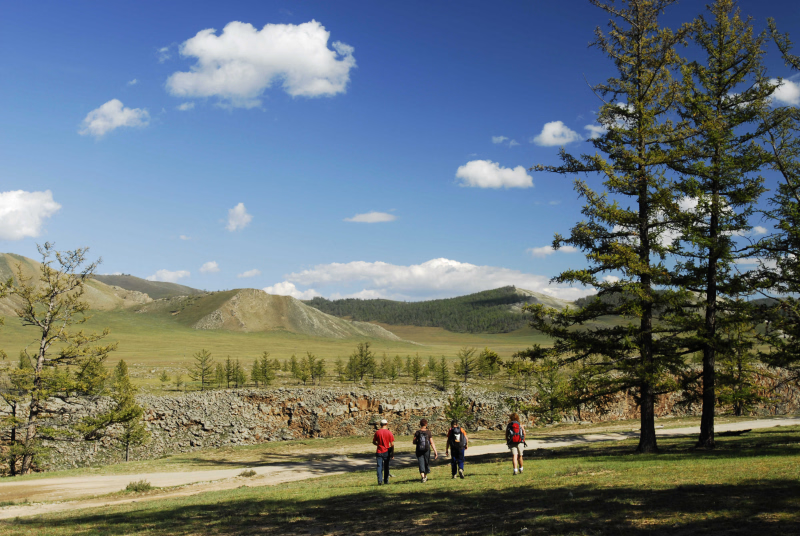
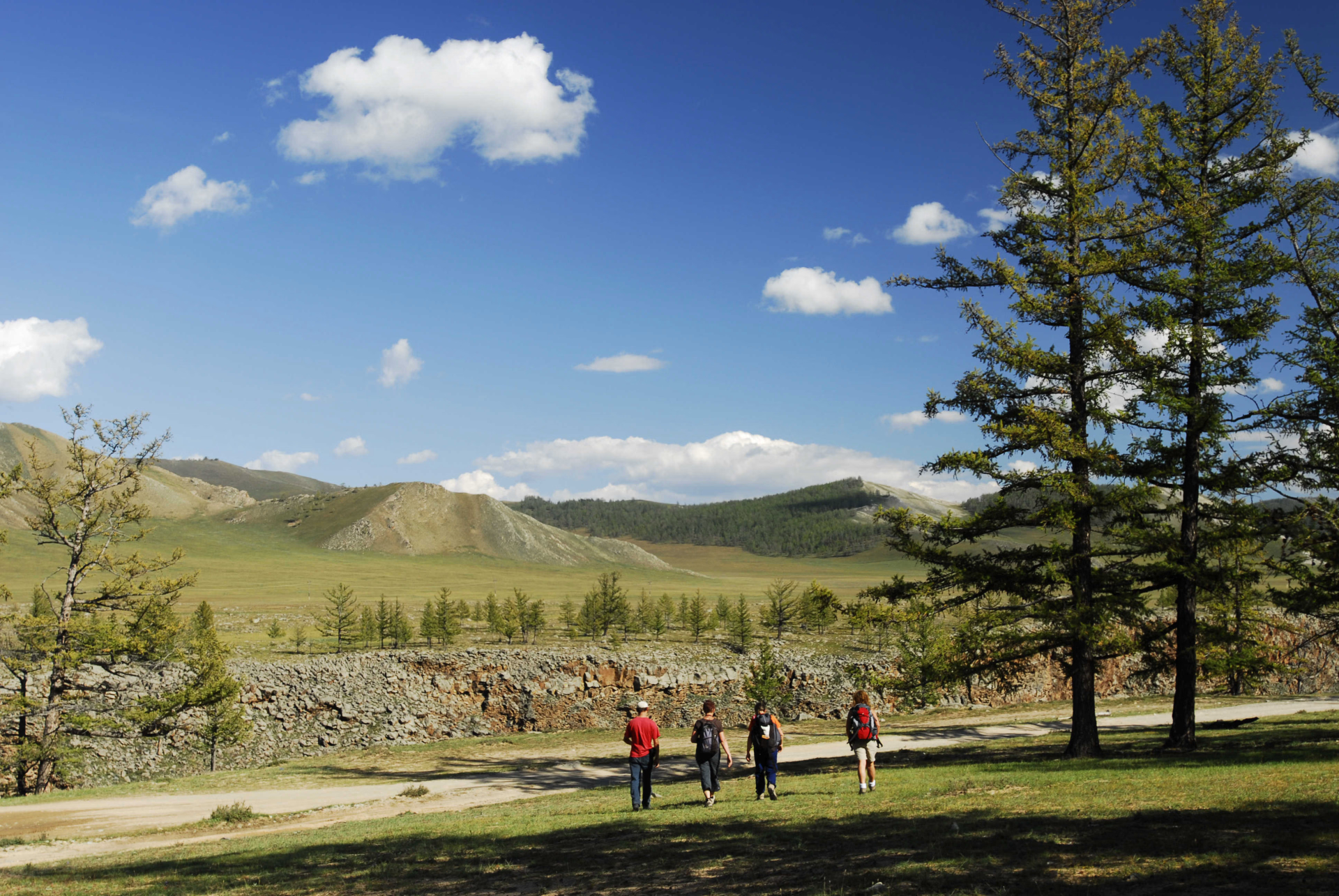
For those wishing to hike for up to 6 hours a day and/or cover an elevation gain of 600 to 800 meters, both on and off-trail. High-altitude sections are possible. You engage in a sporting activity once a week, hike regularly, and are in very good physical condition.
In figures
Autre
- Average duration/day: 1h
- Average daily elevation gain: 239 m
- Average daily descent: 217 m
Management
During this stay, a supervisor will be present to guide and assist you.
Languages spoken:
🇫🇷
French
Supervisor
Supervisor
A local French-speaking guide-interpreter will accompany you throughout your stay. An additional local guide will join you during the Orkhon and 8 Lakes trek.
Program
-
Paris - Ulaanbaatar
- Breakfast included
- Lunch not included
- Dinner not included
We are flying from Paris to Ulaanbaatar, the capital of Mongolia.Day 1 -
Visit to Ulaanbaatar (1350 m)
- Breakfast included
- Lunch not included
- Dinner not included
Airport pick-up and transfer to the hotel. Check-in and optional guided tour of the Mongolian capital. We will see Sukhbaatar Square (named after the national hero of the revolution), the main square in the center of Ulaanbaatar. In the afternoon, we will visit the National Museum of Mongolian History, which houses national historical and ethnographic collections. Lunch and dinner are at your leisure in the city. Overnight at the hotel.Day 2 -
Ulaanbaatar - Lake Ugii (1400 m)
- Breakfast included
- Lunch included
- Dinner included
This morning, we set off to begin our journey into the countryside. Along the way, we stop at the ruins of Khar Bukh, dating back to the 9th and 10th centuries, during the Khitan period. The site stretched over an area approximately 500 meters long. In the 17th century, a stone monastery was built there. Remarkably, the buildings were constructed from volcanic rock, millstone grit, and schist.
We then continue to Lake Ugii, a beautiful body of water renowned for its abundance of fish—14 species have been recorded there, including perch, pike, trout, and silver carp. The lake is also a stopover for many migratory birds, notably the wild goose and the Dalmatian pelican. Free time and swimming are possible for the more adventurous. Overnight stay in a yurt camp. Showers are available this evening.
Day 3 -
Lake Ugii - Tsagaan Sum - Tovkhon (1900 m)
- Breakfast included
- Lunch included
- Dinner included
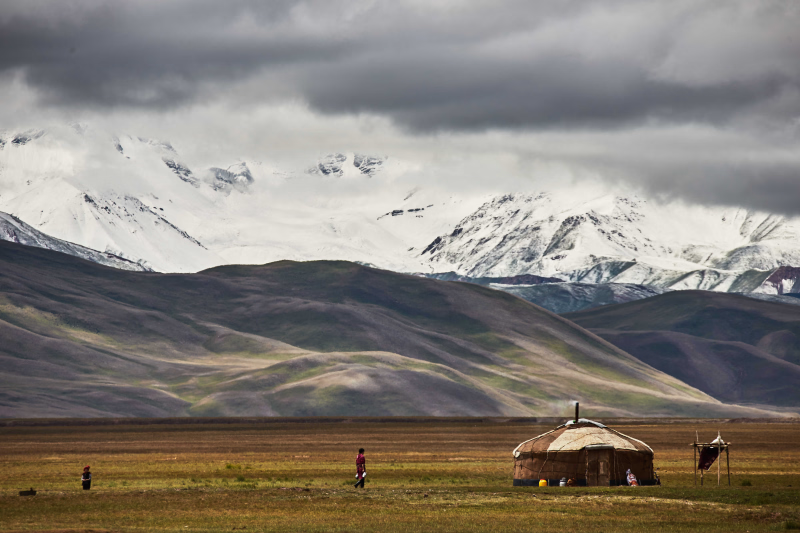
A day's drive towards Tovkhon Monastery. A magnificent landscape, almost like an open-air safari, where sheep, goats, cows, yaks, and horses roam freely across the steppe. Along the way, we pass the ruins of an ancient city called Shiveet Ulaan, dating back to the Turkic period in the 7th-8th centuries. We arrive at our host family's home and discover nomadic life and culture. Dinner and overnight stay in a guest yurt.
Day 4 -
Trek to Tovkhon Monastery (2300 m)
- Activity Autre
- Positive elevation gain 300 m
- Negative elevation 600 m
- Breakfast included
- Lunch included
- Dinner included
In the morning, we can watch the yaks being milked with the family and even try it ourselves! Afterward, we are taken to the foot of the mountain and the Tovkhon Monastery. We hike up to the charming little Tovkhon Khiid monastery-hermitage, located on the summit of this sacred mountain. It was the place of meditation and retreat for Zanabazar, a famous 17th-century Mongolian lama who introduced Buddhism to Mongolia in 1648. He was also a great intellectual and sculptor of his time. The climb takes us to the summit and the temple, where we enjoy a splendid view of the surrounding area. In the afternoon, we may have the opportunity to cook some Mongolian dumplings and try on the traditional costume (deel) that the lady of the family makes herself. Overnight in a guest yurt.
Day 5 -
Trek in the Orkhon valley (1700 m)
- Activity Autre
- Positive elevation gain 300 m
- Negative elevation 100 m
- Breakfast included
- Lunch included
- Dinner included
After breakfast, we hike to the site of Uurtiin Tokhoi. It was here that the religious conflict between Zanabazar (of the Yellow Hat Buddhist sect) and Galdan Bushit (of the Red Hat sect) took place in the 17th century. We follow the valley of the White Orkhon River (Tsagaan Sum) before arriving near the small village of Bat-Ulziit. The Orkhon River is one of Mongolia's largest rivers, originating in the Khangai Mountains and flowing 1,124 km north to join the Selenge River just before the Russian border and then Lake Baikal. The valley is a true crossroads of civilizations, connecting East and West along the Silk Road. We arrive at the home of our second nomadic family, who welcome us for a pleasant stay. Dinner and overnight in a yurt.
Day 6 -
Orkhon Valley and Waterfalls (Ulan Tsutgalan 1900 m)
- Activity Autre
- Positive elevation gain 150 m
- Breakfast included
- Lunch included
- Dinner included
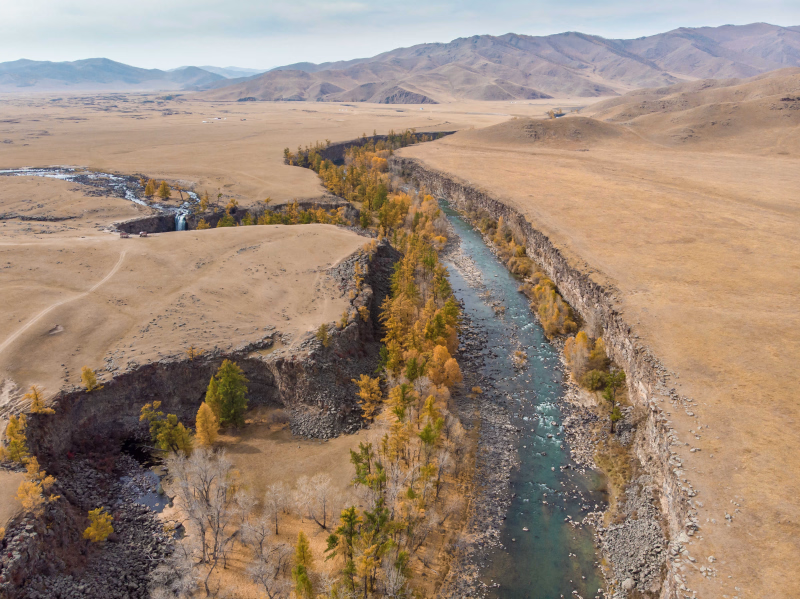
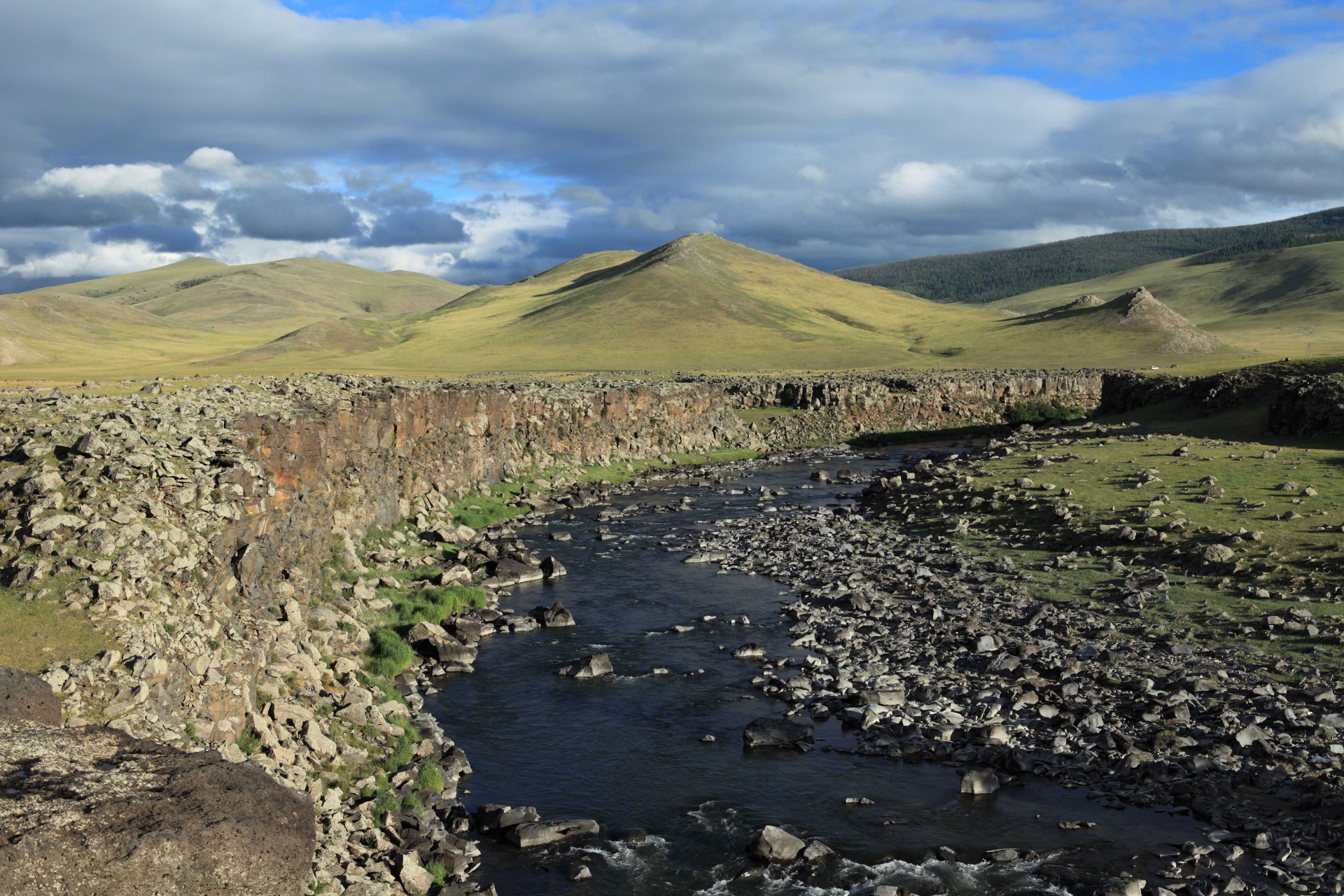
We continue our journey through the famous Orkhon Valley, a UNESCO World Heritage Site renowned for its rich cultural and historical heritage. The scenery gradually changes: mountains appear on the horizon, the steppe becomes covered with volcanic rocks, and larch trees become more prevalent. We arrive at the home of our nomadic family, who will host us this evening. There's an option to take a trip to the Ulaan Tsutgalan River Falls, where the water cascades down in a beautiful waterfall, well-known to both Mongolians and travelers. Dinner and overnight stay in a yurt. We'll have the opportunity to shower at a nearby yurt camp this evening.
Day 7 -
Trek to the Eight Lakes (Naiman Nuur) - Khangai National Park (1900 m)
- Activity Autre
- Positive elevation gain 150 m
- Breakfast included
- Lunch included
- Dinner included
On our journey today, we have the opportunity to admire the Orkhon River waterfall. Then, we head towards the Eight Lakes National Park. These lakes were all formed on ancient volcanoes, now covered in larch, pine, and cedar trees. The entire area is protected and inaccessible to vehicles; horseback riding or hiking are the only ways to explore this remote and wild place. Our local guide shows us around the Eight Lakes region, nestled in the heart of the Khangai Mountains. We spend the night with a new nomadic family in a yurt.
Day 8 -
Nomadic day trip and Khyatruun Valley (1900 m)
- Activity Autre
- Positive elevation gain 300 m
- Negative elevation 300 m
- Breakfast included
- Lunch included
- Dinner included
Today, we're enjoying a well-deserved day off, sharing nomadic life with our Mongolian guide's family. The plan includes a short hike in the morning to a viewpoint, and for those who wish, we can then help with daily activities such as making Mongolian cheese or yogurt, or playing with the children. We can also take a walk in the Khyatruun Valley, where we can spot wildlife including wild boars, wolves, and deer. We'll spend our second night in a guest yurt with the same family.
Briefing and bag preparation before departure for the 3-day, 2-night trek in the Eight Lakes Park.
Day 9 -
Eight Lakes Trek - Lake Khuis (2200 m)
- Breakfast included
- Lunch not included
- Dinner not included
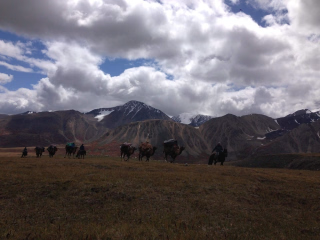
In the morning, we travel along the edge of vast coniferous forests, accompanied by packhorses carrying all the supplies, and arrive at Lake Khuis, situated at an altitude of 2,200 meters. In the evening, we join our host family to spend the night in a yurt in this idyllic setting.
Day 10 -
Eight Lakes Trek: Lake Shireet (2450 m)
- Activity Autre
- Positive elevation gain 250 m
- Negative elevation 250 m
- Breakfast included
- Lunch included
- Dinner included
Today, we hike to the largest lake, Lake Shireet. We pass by Lakes Shanag, Bugat, and Khaliun. Lake Shireet is one of the most beautiful lakes in the region, covering approximately 10 square kilometers, 3.4 kilometers long, 1.2 kilometers wide, and 16 meters deep. It's a small blue treasure nestled amidst lush green landscapes. Only the sounds of nature accompany us here. We return to the same family's home on the shores of Lake Khuis for a second night there, marking the end of this semi-itinerant trek.
Day 11 -
Eight Lakes Trek - Horseback Riding Available - Orkhon River (1900 m)
- Transportation 01h - 20km
- Activity Autre
- Duration of the activity 4h
- Positive elevation gain 200 m
- Negative elevation 500 m
- Breakfast included
- Lunch included
- Dinner included
Let's enjoy our last day of trekking! We return to the Orkhon Valley via a different route than on the way in and arrive at a place called "Bodongiin Khamar." We continue by car to our local guide's home where we'll spend the night. A one-hour horseback ride is available (at no extra cost). In the evening, our guide's family prepares a traditional Mongolian dish called "Khorkhog," and then it's time to say goodbye to the local team. Overnight in a guest yurt.Day 12 -
Karakorum ruins - Erdene Zuu monastery - Khogno Khan mountain
- Transportation 05h - 130km
- Breakfast included
- Lunch included
- Dinner included
We made a stop in Karakorum early in the morning, where we discovered an important part of Mongolian history. In 1220, Genghis Khan decided to establish his base camp there, leaving his wives and central administration on the left bank of the Orkhon River during his military campaigns. We then visited Erdene Zuu Monastery, whose name means "one hundred treasures," and which was the first Buddhist monastery with a permanent structure to be established in Mongolia. Finally, we were taken by vehicle to the Khogno Khan Mountain Reserve and National Park. There, we discovered astonishing rock formations. Our last nomadic family welcomed us, and we had time to spend a pleasant moment with them. Dinner and overnight stay in a yurt.Day 13 -
Khogno Khan Trek - camel ride possible - Little Gobi Dunes
- Activity Autre
- Duration of the activity 5h
- Breakfast included
- Lunch included
- Dinner included
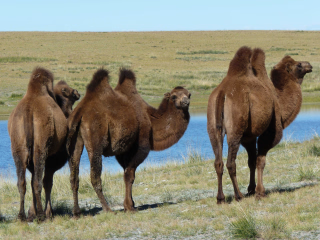
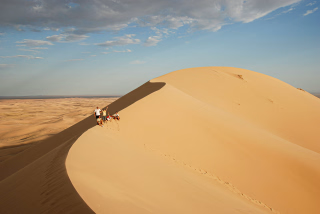
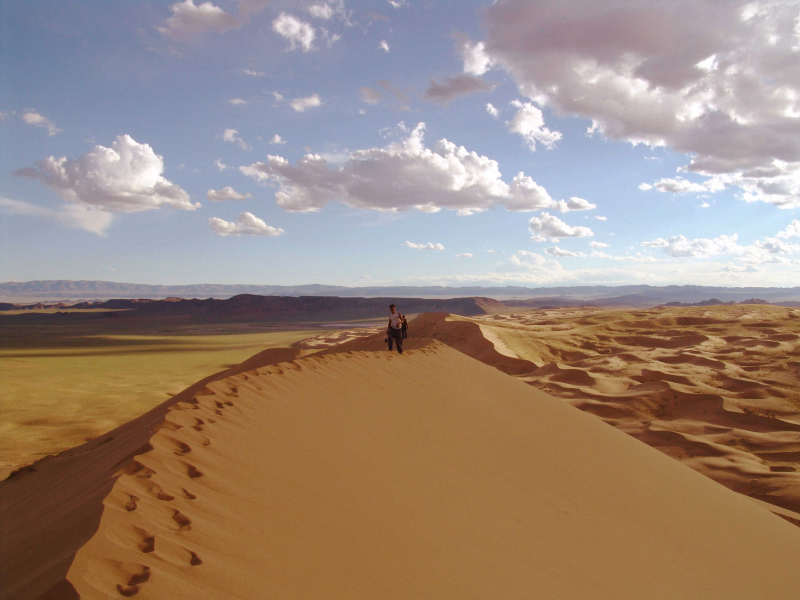
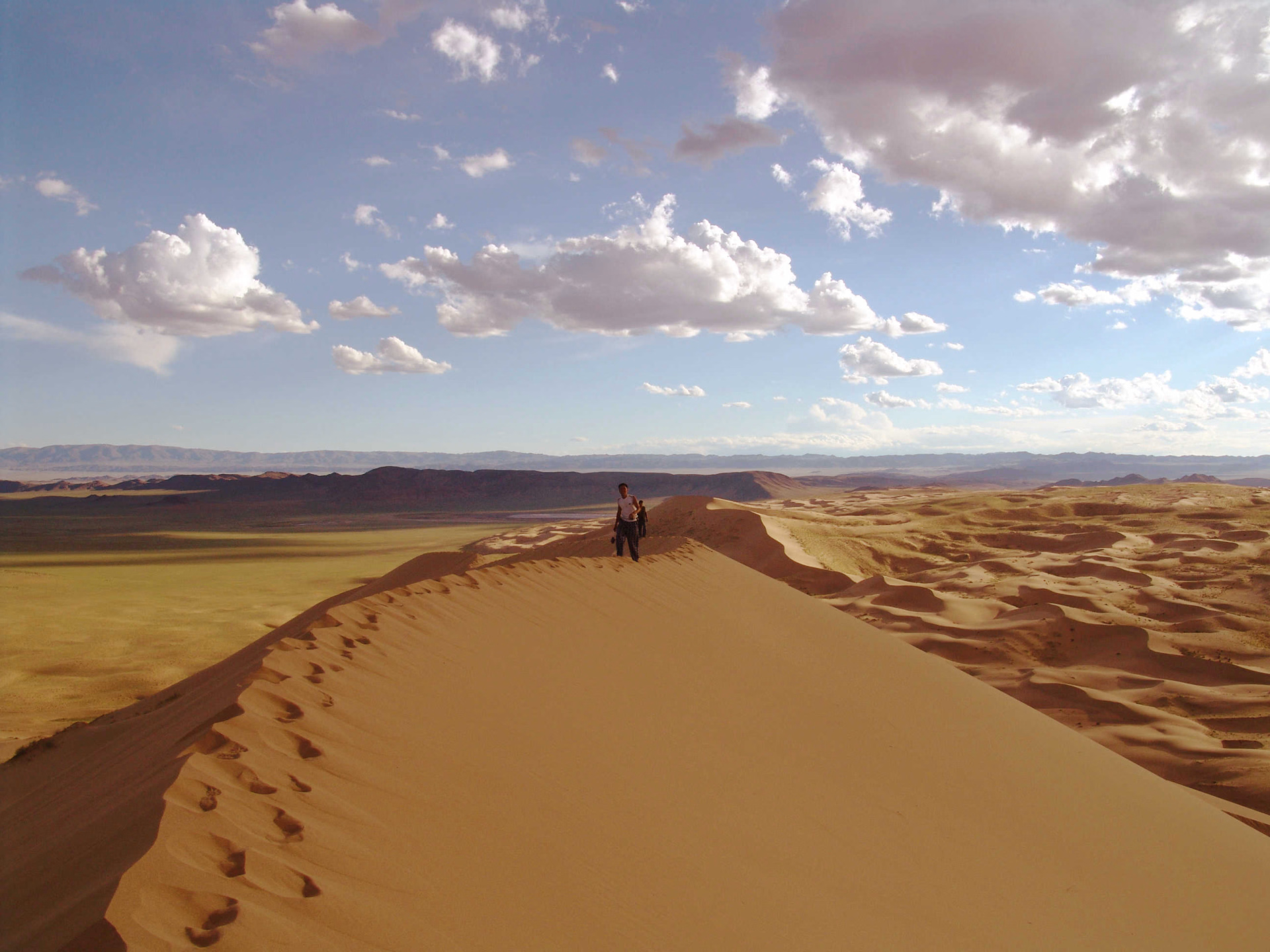
After breakfast, we hike to Khogno Khan Mountain, where we stroll among granite rock formations and visit the small Ovgon Monastery, where a few monks still serve. Nearby, we admire the Elsen Tasarkhai dunes, known locally as the "Little Gobi" because their sand dunes and landscape are reminiscent of the vast Gobi Desert further south. This entire region is remarkable, encompassing almost all of Mongolia's ecosystems: steppe, desert, mountains, and even Siberian forest. We explore the area, and if time permits and we're feeling adventurous, we can take a camel ride. Overnight stay with the same family.Day 14 -
Return to Ulaanbaatar and performance of throat singing
- Breakfast included
- Lunch included
- Dinner not included
Today we leave the Arkhangai steppes, gradually returning to "civilization" and Ulaanbaatar. Time is set aside for those who wish to shop at fair trade and cashmere boutiques, a local specialty. At 6:00 PM, we attend a traditional performance of Mongolian folk music (Tumen Ekh), dances, and throat singing before our final dinner (at your leisure) with your tour leaders.Day 15 -
Ulaanbaatar - Paris
- Activity Autre
- Positive elevation gain 500 m
- Negative elevation 200 m
- Breakfast included
- Lunch included
- Dinner included
Departure for the airport and return flight to France for arrival the same day.
Day 16
Note
Walking and travel times are approximate. They may vary depending on the group, weather conditions, and operational requirements. The guide reserves the right to modify the program if necessary.
Accommodation
- Days 1 to 9, 11 to 16
- Ulaanbaatar: 3* hotel (country standard) in a double room, private bathroom.
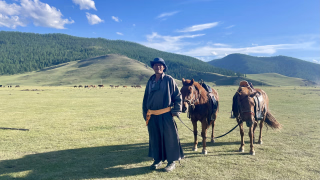
- Yurt at a local's house We prioritize staying in yurts with local families (guest yurts) : these are provided by local families, offering a friendly atmosphere balanced with more basic comfort. Each yurt sleeps 4 to 6 people, and tents are set up nearby if the group exceeds the yurt's capacity. Meals are very simple, reflecting the family's traditions and primarily consisting of mutton and starches.
- Bivouac: 3-person dome tents for 2 people. Inflatable mattress provided. You will need to bring your own sleeping bag.
- Family-run guesthouses (yurts): the size remains modest and the welcome very personal. These guesthouses are run by nomads who make it one of their summer activities in addition to herding. You gain in comfort with the presence of toilets and showers, for example. And you ultimately lose little in authenticity compared to staying in yurts with local families. The food remains home-style.
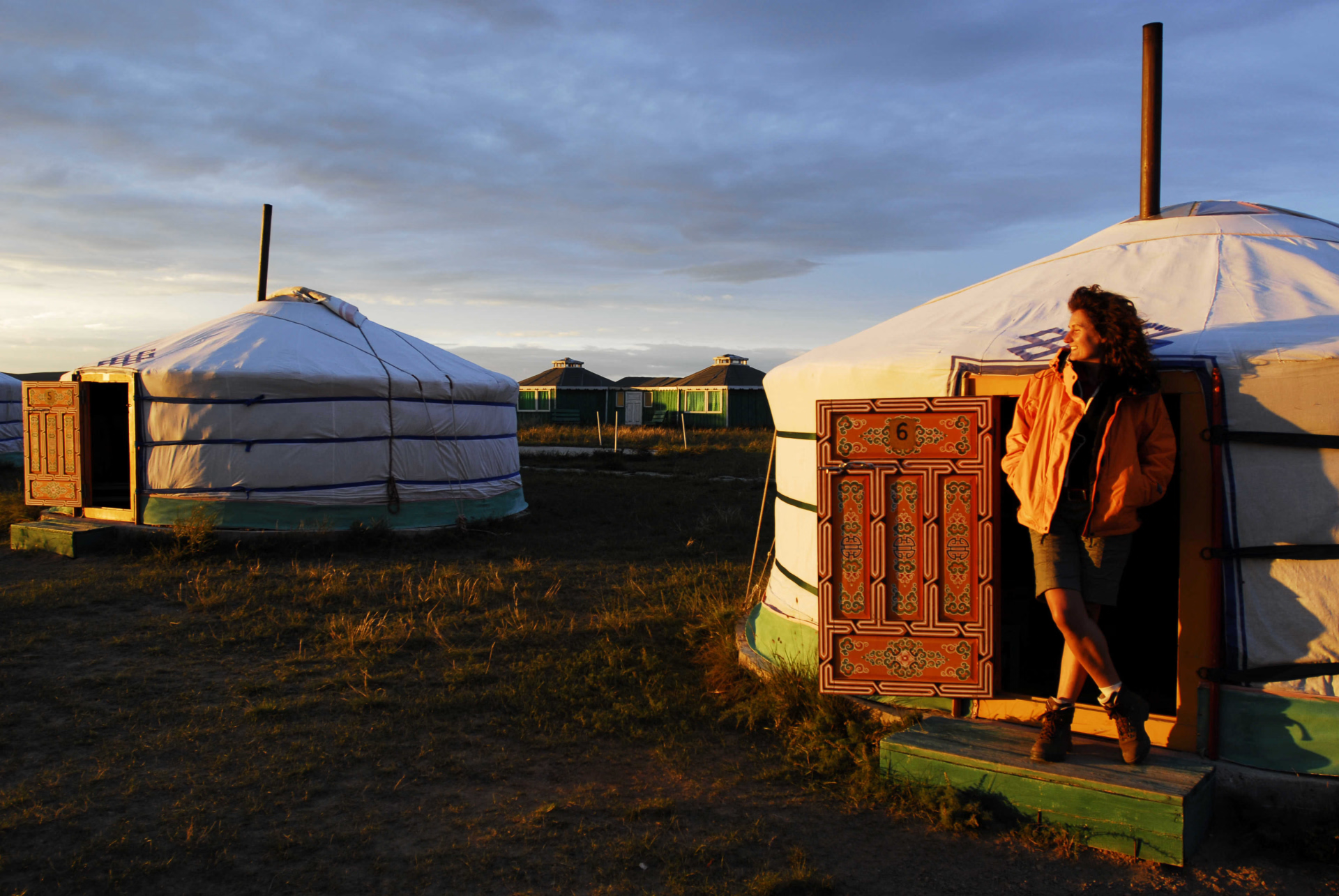
- Yurt camp : Subject to availability, you may also be able to stay in a yurt camp: accommodations specifically designed for Mongolian and foreign tourists. Each yurt sleeps 2 to 4 people. Solar showers (sometimes hot) and toilets are almost always available on site. Meals are served in a restaurant area and are prepared and complete.
Access
Departure
Oulan-Bator, Mongolie
Day 1
: 00h00
End of stay
Oulan-Bator, Mongolie
Day 16
- 00h00
Go to the starting point
The nearest airport isAéroport de Paris
Would you like to travel on other dates?
Create an alert and we'll notify you by email if new departures are added.
Price details
The price includes
- International flights and airport taxes
- Supervision by a French-speaking tour guide
- Land transport
- The excursions detailed in the program, as well as the museum visits, are included.
- Introductory horse and camel rides
- The accommodations as indicated in the itinerary
- Full board, except for meals listed as "free" in the daily itinerary
The price does not include
- Travel insurance
- Drinks and mineral water during the stay
- Meals listed as "free" in the daily schedule (allow approximately €10 per meal)
- Tips for local teams (see "Tips" section)
- Single accommodation is available in the yurt camps; please inquire directly on site.
Options
- Airport transfer to accommodation : CHF36.59 / person
- Airport transfer from accommodation : CHF36.59 / person
- Flex fare and insurance
Practical information
Specific formalities
Equipment
They traveled with us
Discover the authentic experiences of our travelers
5/5
(2 reviews)
Reviews displayed in reverse chronological order
S
Sarah
100% Verified Reviews: Only travelers who have booked with us can leave a review. All reviews are subject to human moderation. Reviews that do not comply with the moderation rules are rejected.
july 2026
100% Verified Reviews: Only travelers who have booked with us can leave a review. All reviews are subject to human moderation. Reviews that do not comply with the moderation rules are rejected.
Translated from French
Published on 21/07/2026
The trip was very well organized and comprehensive, with ideal time management alternating between walking, time spent with families, and cultural visits. The guide and drivers were very kind and attentive.
M
Mathilde
100% Verified Reviews: Only travelers who have booked with us can leave a review. All reviews are subject to human moderation. Reviews that do not comply with the moderation rules are rejected.
july 2025
100% Verified Reviews: Only travelers who have booked with us can leave a review. All reviews are subject to human moderation. Reviews that do not comply with the moderation rules are rejected.
Translated from French
An incredible travel experience. The format is excellent; you spend a lot of time with nomadic families, interacting with them. The landscapes are varied, from valleys to deserts, and you're a little more amazed each day. If you're looking for a true escape, a return to basics, and a focus on human connection, this trip is perfect for you. You'll come back wanting nothing more. A special mention for the local team, Odno and Gamba, who are fantastic and know how to adapt to any situation. However, in terms of physical fitness, you do need to be in good shape and able to walk on rocky terrain for several hours in the sun.

Decathlon Travel Partner
The Paulin team
4.4/5
(2842 reviews)
• 821 stays
For over 30 years, our local partner has been designing adventure walking trips around the world. Specializing in small-group treks, they cater to both casual hikers and seasoned trekkers seeking unspoiled natural environments and a return to the essentials. Their key strength? They own their own agencies in over 30 countries, guaranteeing complete trip creation from start to finish, without intermediaries. This direct, on-the-ground expertise ensures memorable active experiences and total freedom amidst breathtaking landscapes.
Are you satisfied with this page?
Subscriber benefit
save 5%
by joining
our community
Decathlon Travel Benefits
Best price guaranteed:
We offer twice the difference
Free cancellation more than 30 days in advance
Payment in 2 installments
Learn more