Mountaineering and climbing the Aiguille du Tour (3,540 m) in Chamonix
In summary
-
Sports
-
Duration3 days
-
LevelIntermediate
-
DestinationChamonix-Mont-Blanc / Mont Blanc Massif
-
AgeFrom 18 - 80 years
-
CO₂-Emissions19.16 kg CO2
-
Type of stayIn a group
-
Languages
 French
 English
In a few words
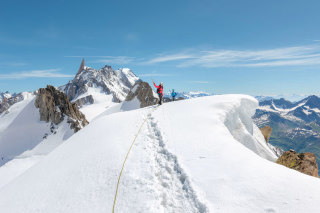
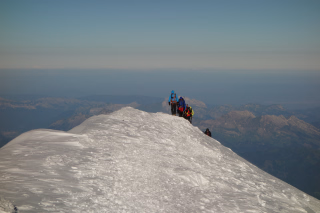
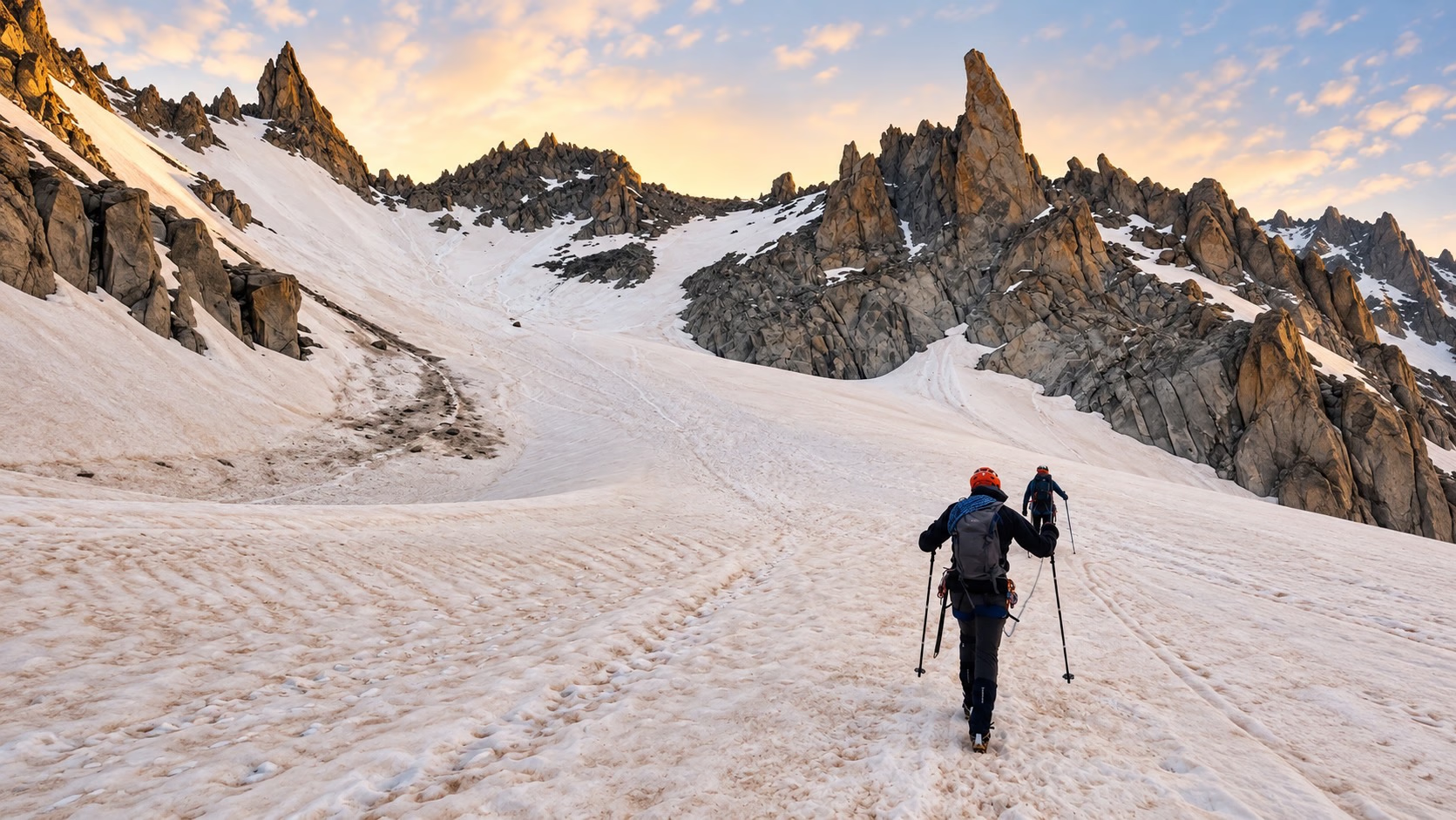
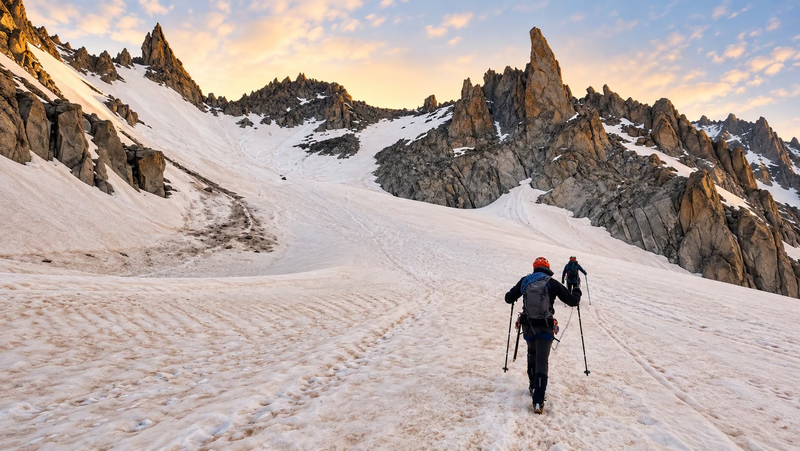
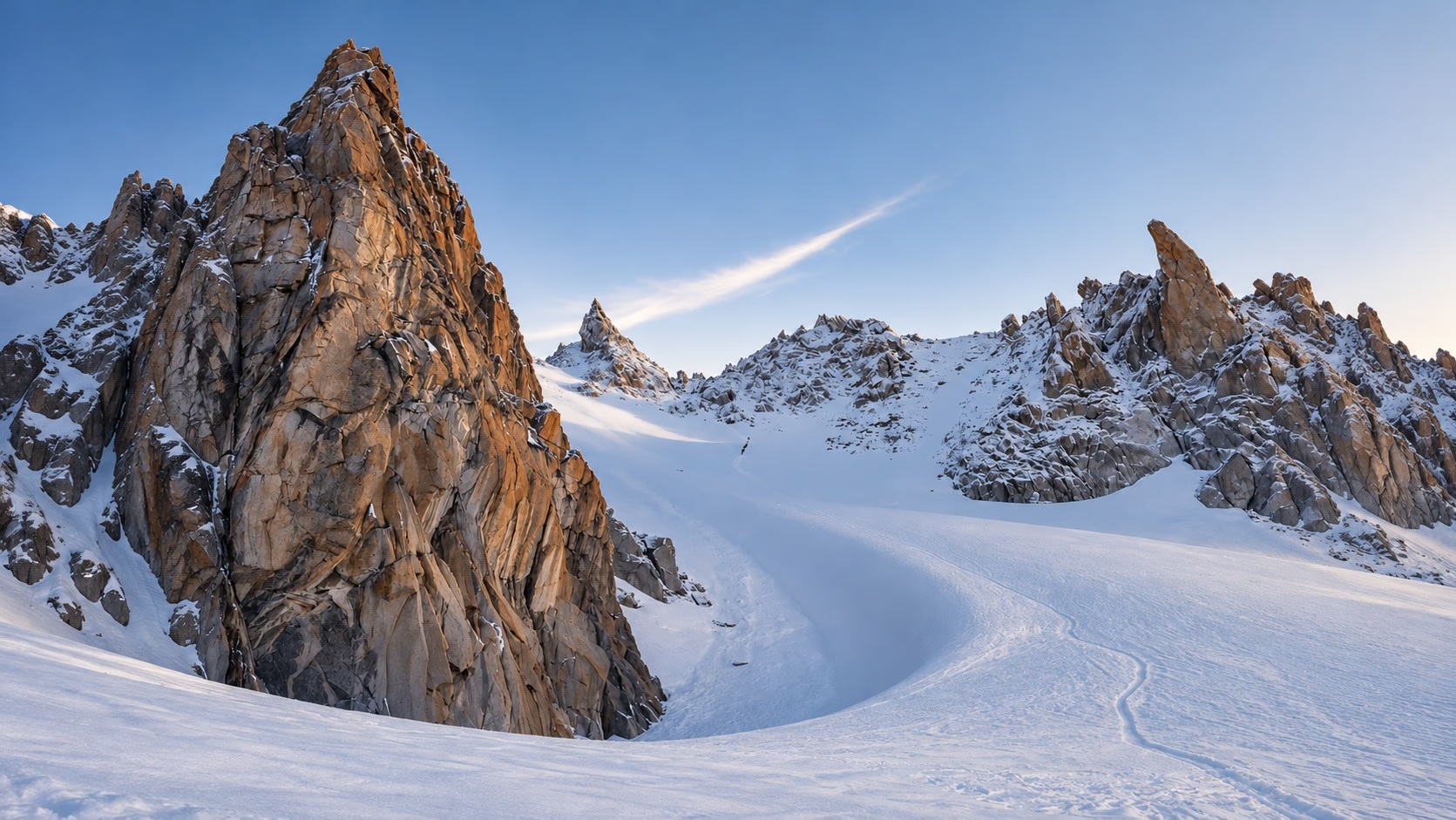
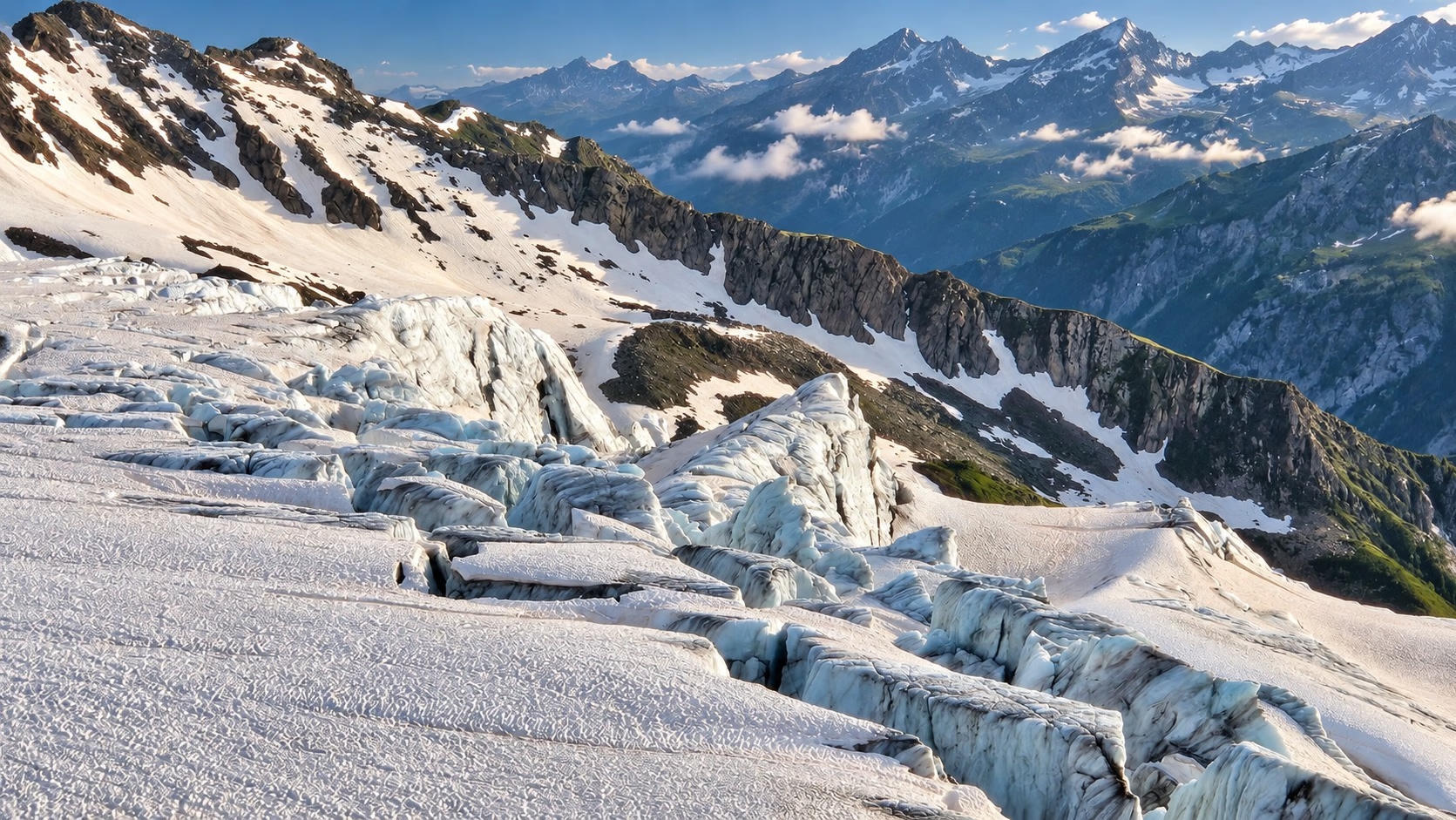
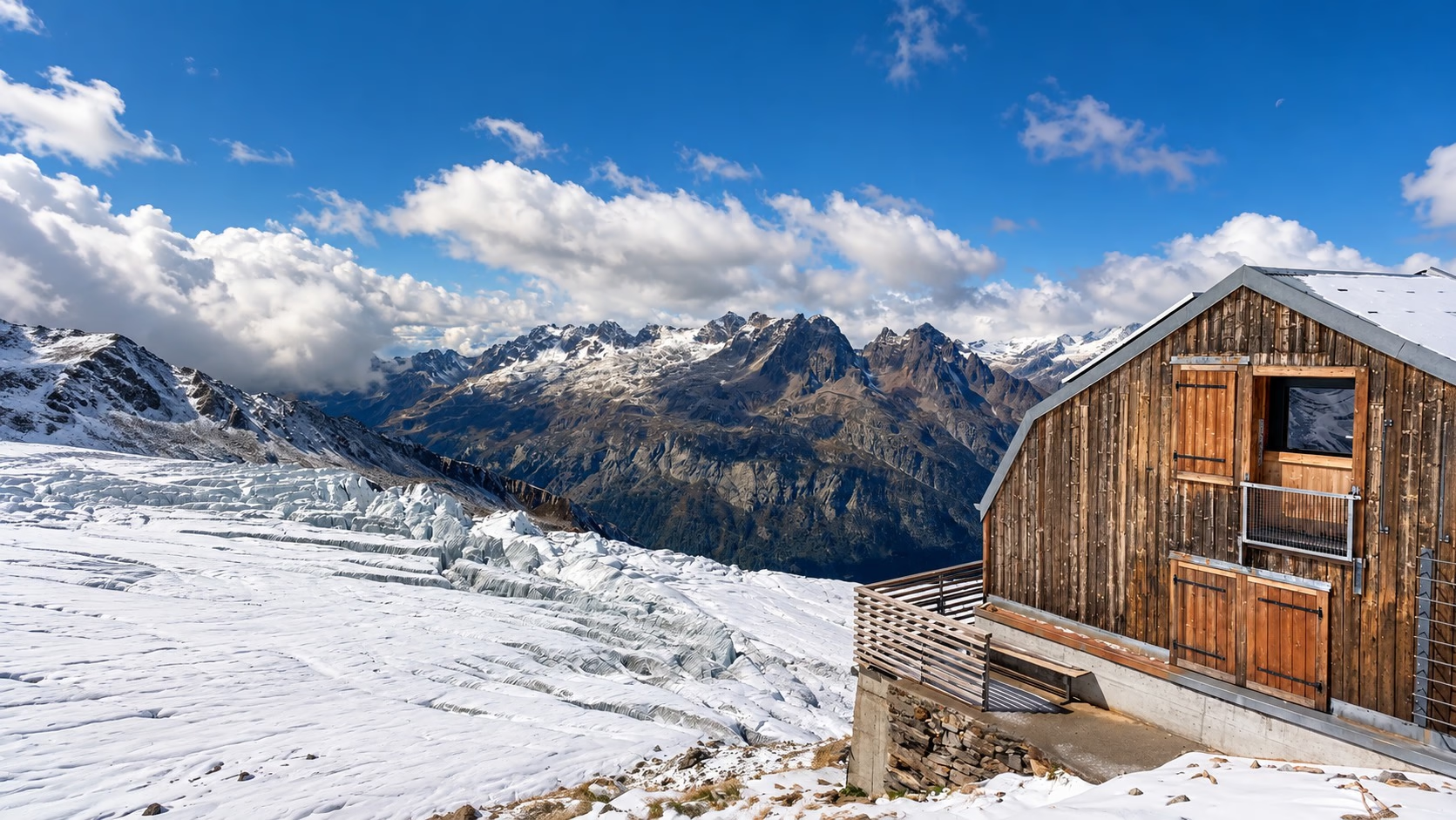
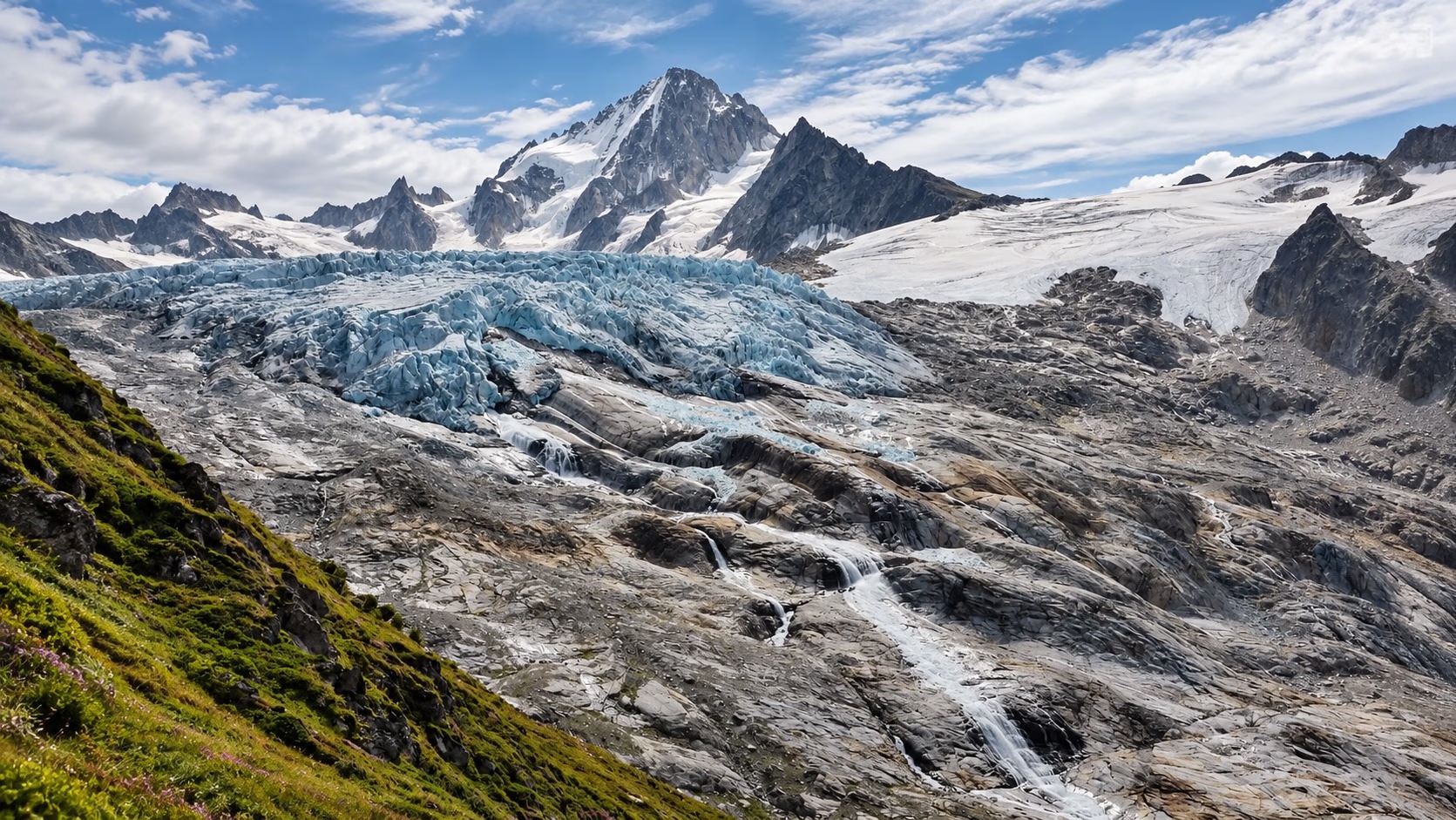
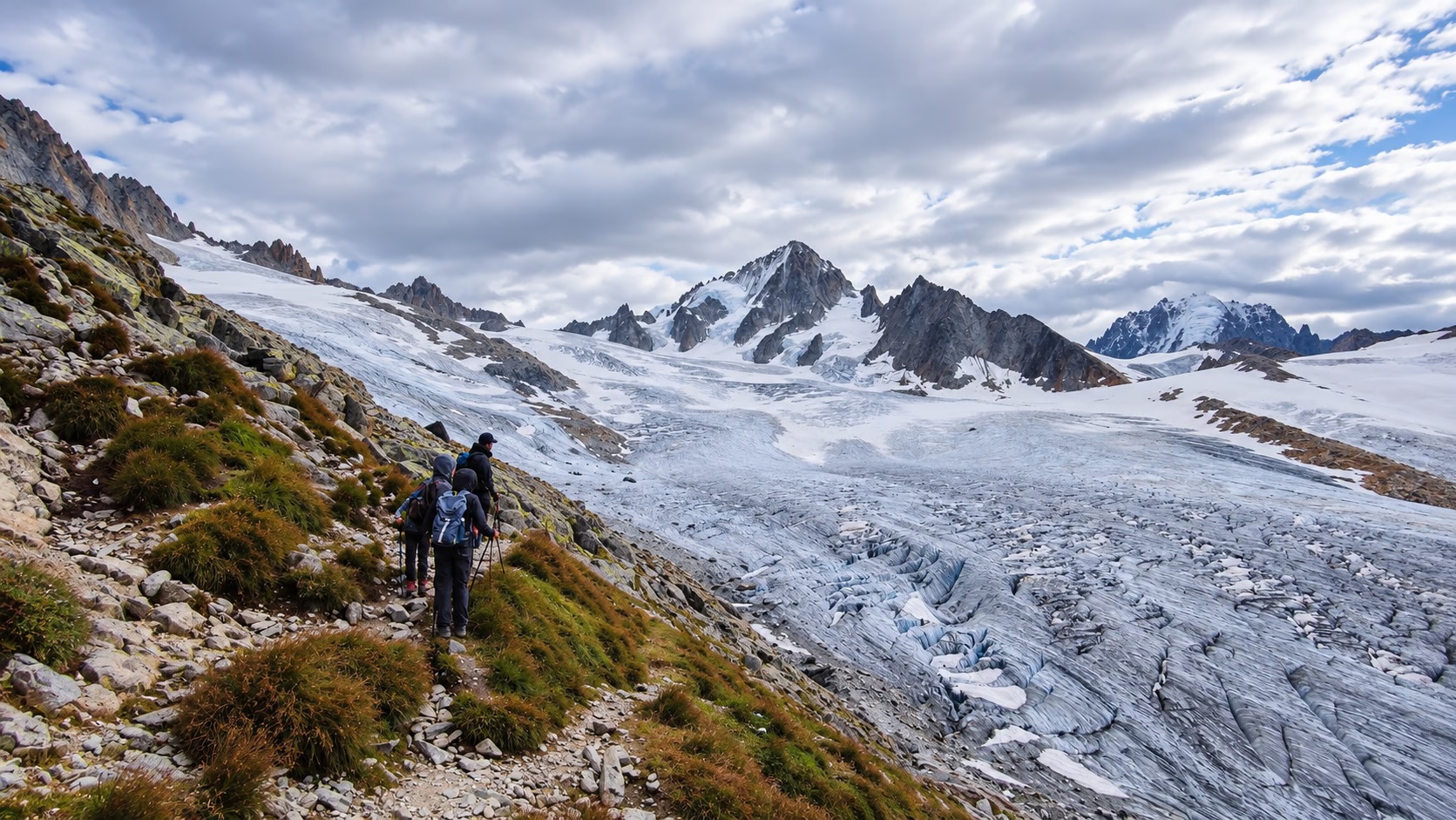
Experience your first mountaineering climb in the heart of the Mont Blanc massif ! This 3-day trip from Chamonix will guide you step by step to the summit of the Aiguille du Tour (3,540 m) . On the first day, you'll discover the basics of climbing at the Gaillands crag, just a stone's throw from the town center. The next day, ski lifts and a scenic trail will take you to the Albert 1er refuge (2,702 m) , facing the Tour glacier , where an ice climbing school will teach you how to walk with crampons , use an ice axe , and progress roped up . On the final day, you'll set off by headlamp: ascend the glacier to the Col Supérieur du Tour , cross over to the Swiss side onto the Trient glacier , and then climb a few easy rocky sections to the summit, enjoying breathtaking panoramic views of the Mont Blanc massif and the Swiss Alps. Led by a UIAGM high mountain guide in a small group of 4 people maximum , this trip is ideal for discovering mountaineering without prior experience.
The highlights
-
Your first alpine summit: the Aiguille du Tour (3,540 m), facing Mont Blanc
-
Climbing school and ice climbing school to learn the basics of mountaineering
-
One night at the Albert 1er refuge (2,702 m), facing the Tour glacier
Photos
Sport
Level
Mountaineering
The expert's opinion
- This trip is for a first experience in mountaineering: you are athletic and comfortable with mountain hiking.
- You do sports at least twice a week
- You can hike for 5 to 7 hours with 600 to 900 meters of elevation gain.
- You are comfortable with a bag weighing 5 to 8 kg
- You are comfortable on uneven terrain (rocks, snow)
- You've never done mountaineering (and that's OK)
- You can operate at altitude (up to 3,540 m)
In figures
Mountaineering
- Average duration/day: 7h
- Average daily elevation gain: 550 m
- Average daily descent: 750 m
- Maximum altitude: 3540 m
- Exposed Passages: Yes
Management
French
English
You will be accompanied by a UIAGM-certified high mountain guide, a specialist in the Mont Blanc massif, who will share his knowledge and passion for the mountains with you throughout the three days.
Program
-
Climbing school in Les Gaillands, Chamonix
- Activity Mountaineering
- Duration of the activity 5h
- Positive elevation gain 50 m
- Negative elevation 50 m
- Maximum altitude 1100 m
- Accommodation Cottage
- Breakfast not included
- Lunch not included
- Dinner included
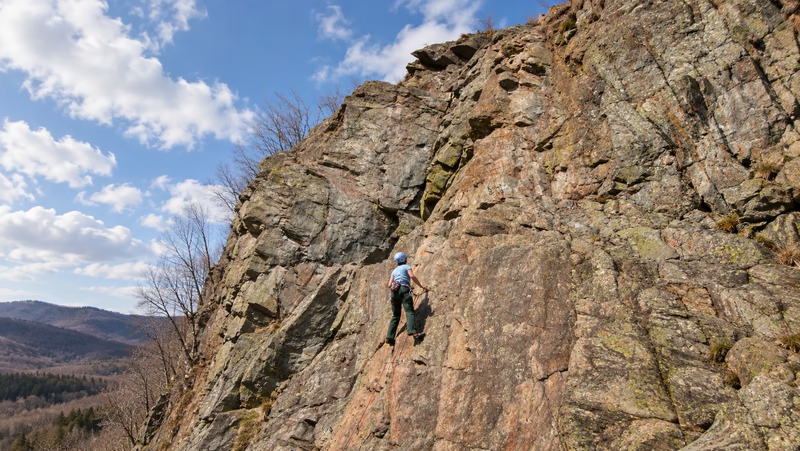
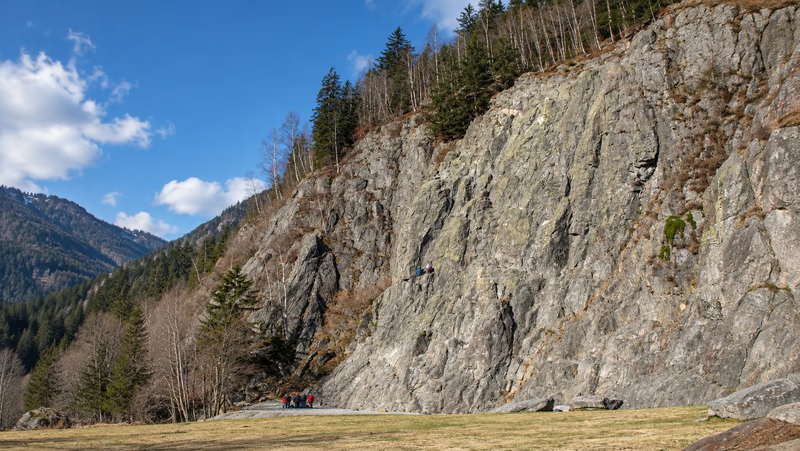
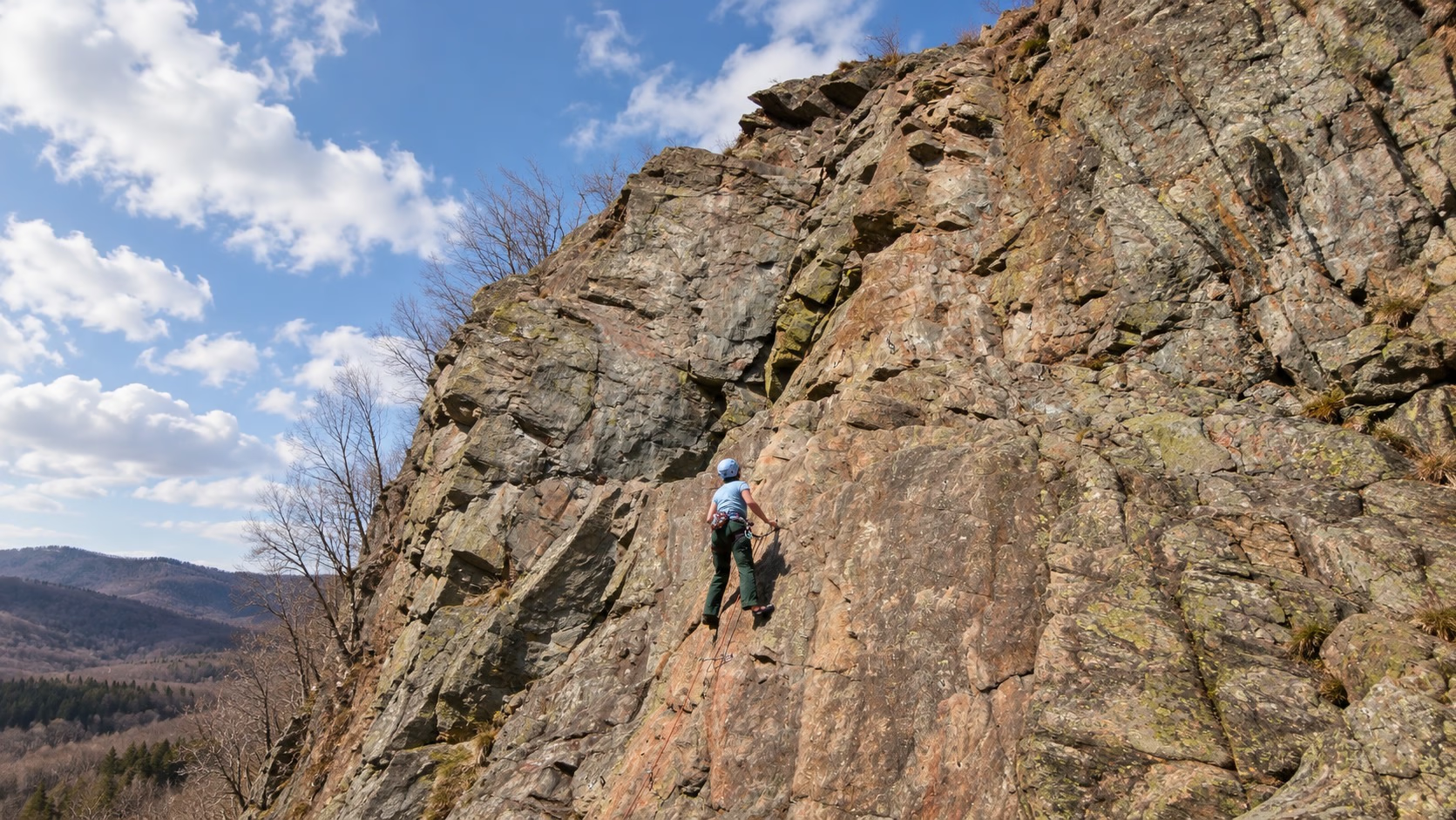
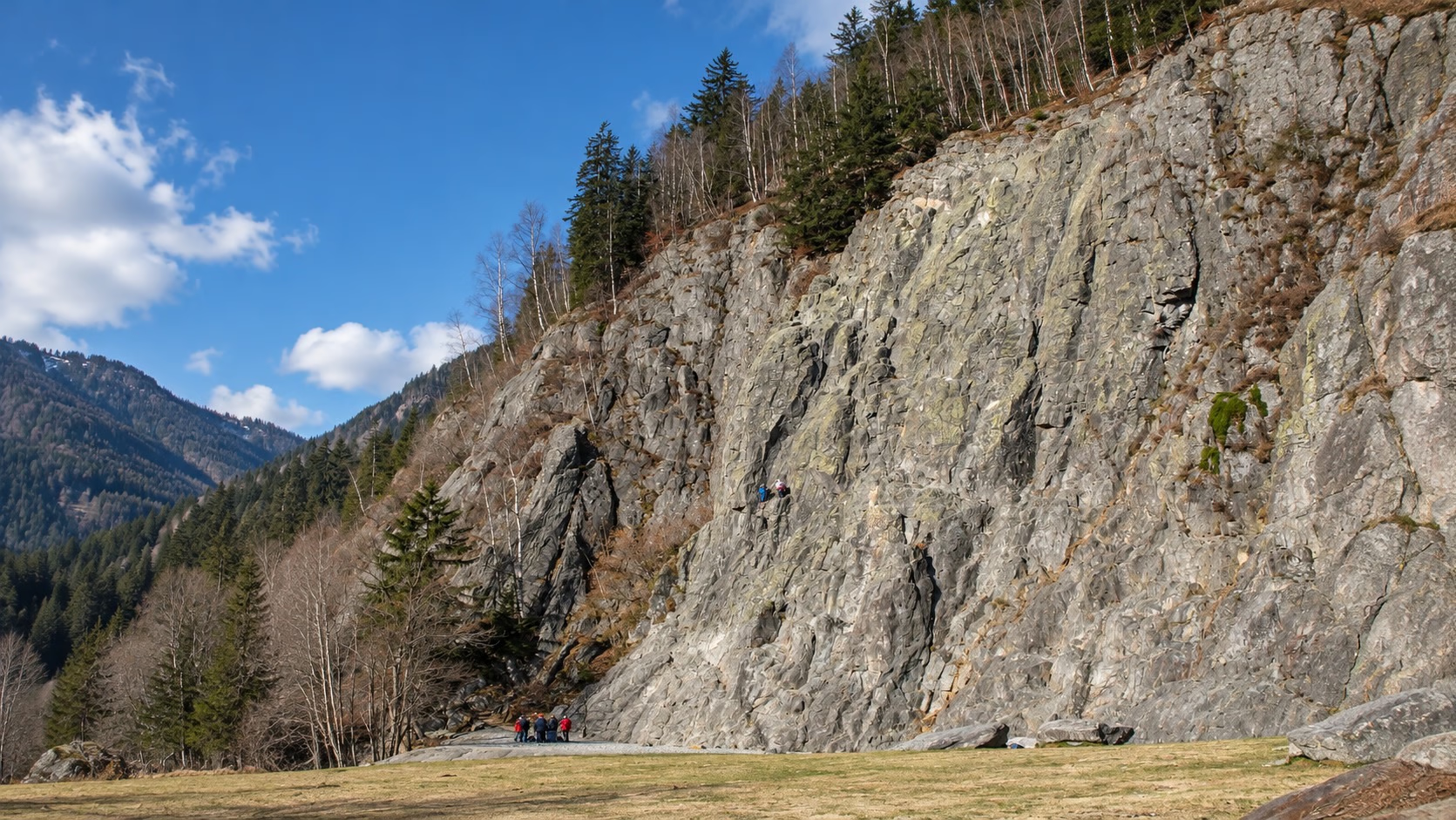
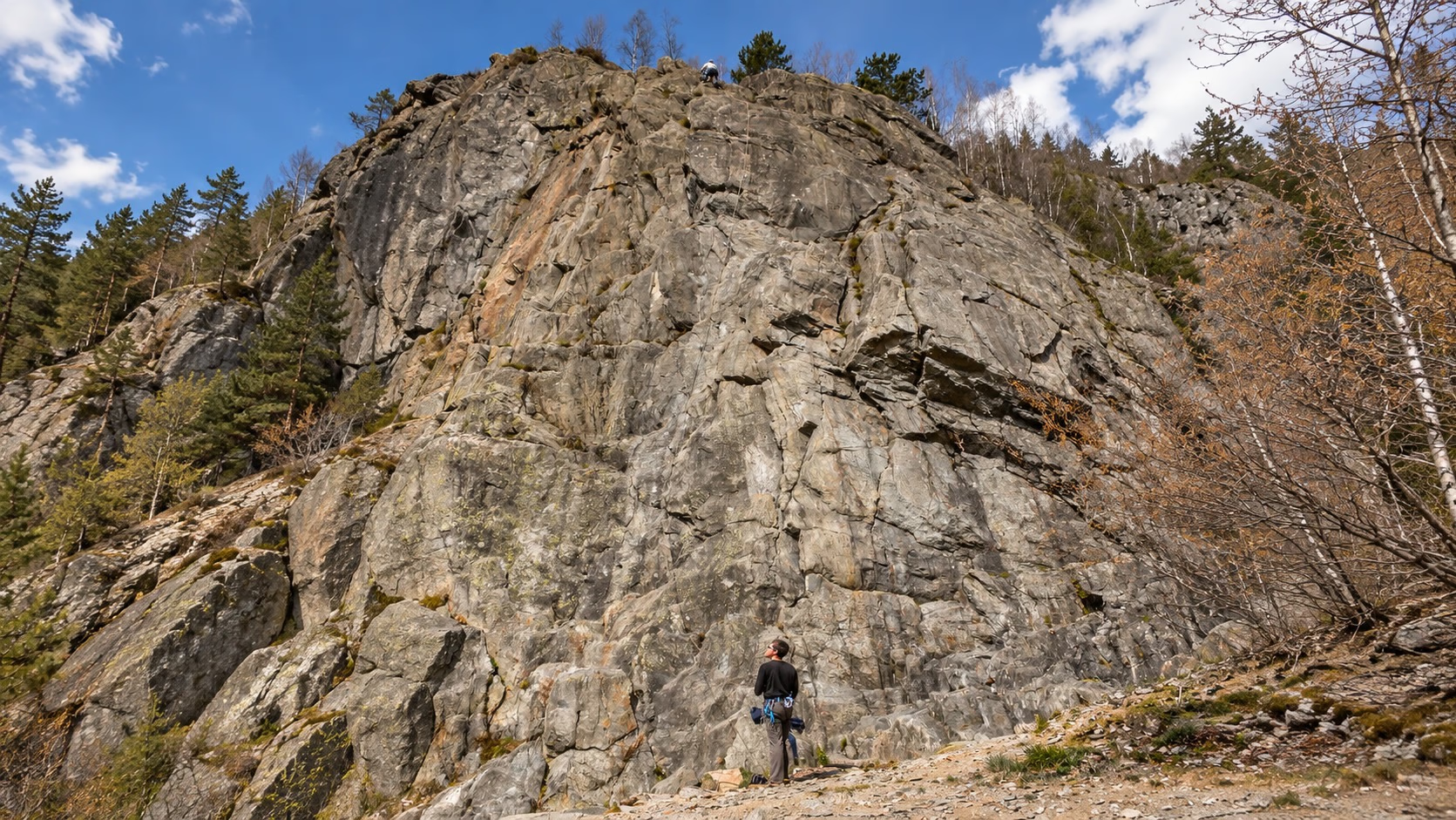
Meet at 10am in Chamonix, in front of our rental shop, to pick up your equipment and get acquainted with the guide and the group. We'll then head to the Gaillands climbing area, a short walk from the town centre, where the day will unfold like a progressive climbing school on routes suitable for beginners.
The guide demonstrates the basics: harness fitting, belaying, tying in, and we practice on easy routes to understand verticality and gain confidence. The site, bordered by forest and near a small lake, offers a series of short routes that allow us to repeat the movements and learn to read the rock.
We finish with a debriefing to review what we have learned, before heading to our accommodation in Chamonix, where we spend the first night in a dormitory.
Day 1 -
Ascent to the Albert 1er refuge and ice climbing school
- Activity Mountaineering
- Duration of the activity 6h
- Positive elevation gain 700 m
- Negative elevation 100 m
- Maximum altitude 2800 m
- Accommodation Refuge
- Breakfast included
- Lunch included
- Dinner included
In the morning, we drive to the village of Le Tour (about 30 minutes from Chamonix), where we leave the cars in the parking lot for the duration of our stay. We then take the ski lifts to near the Col de Balme (2,100 m), and then follow a path that traverses the moraine of the Glacier du Tour; walking on the moraine requires careful footing but remains manageable.
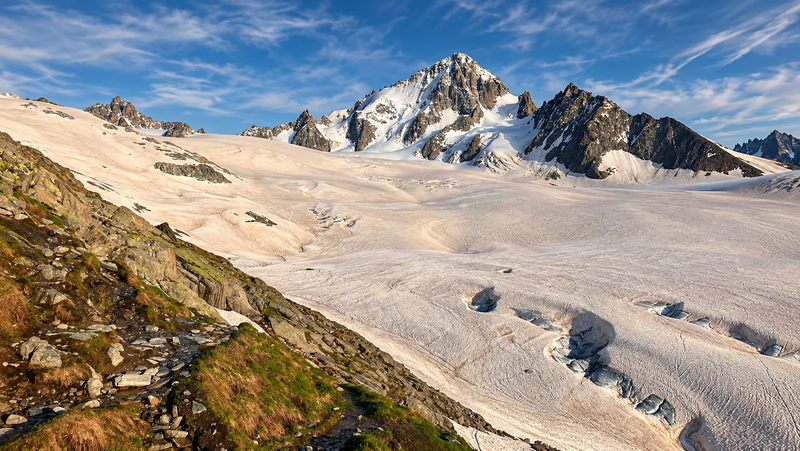
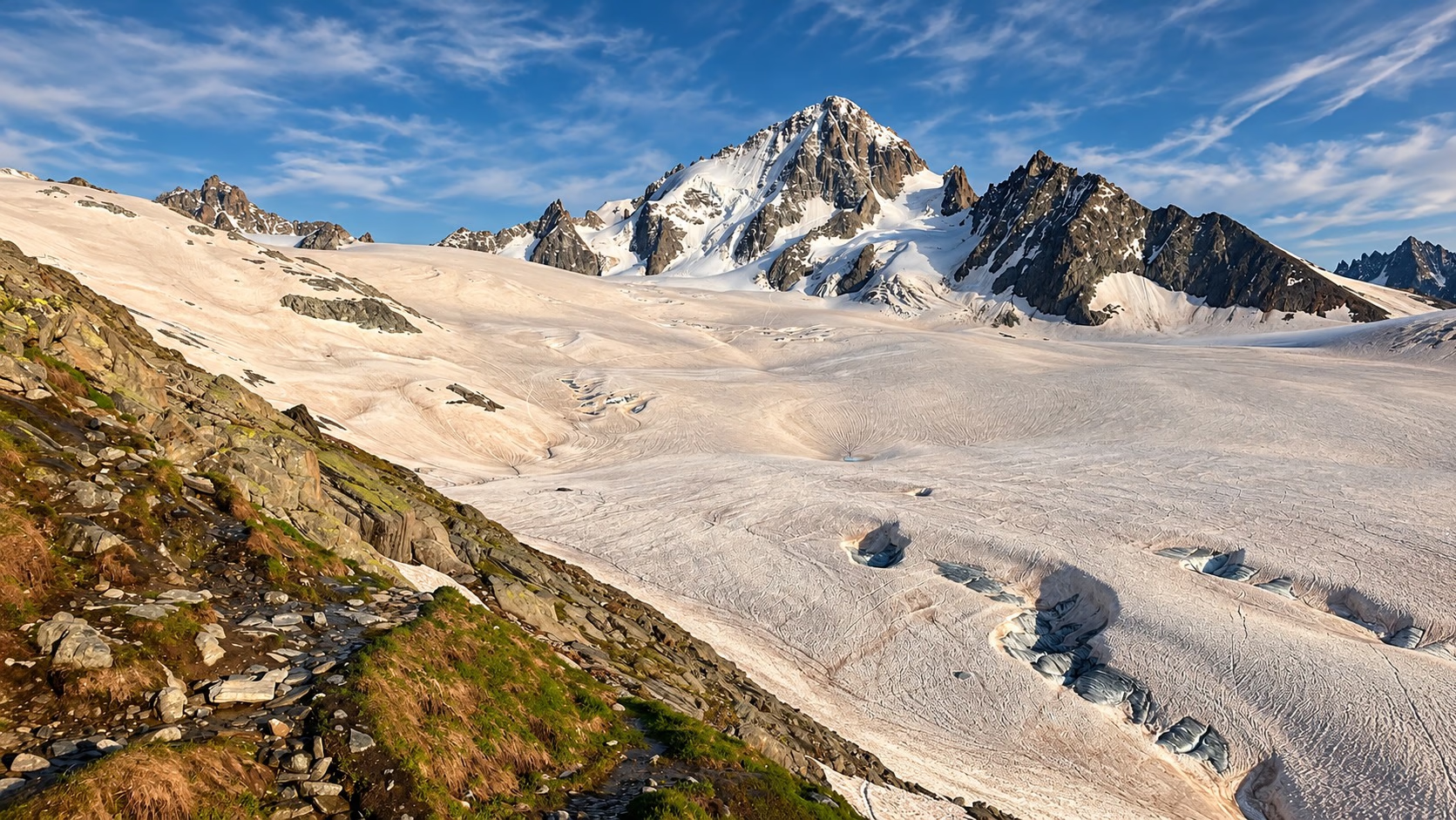
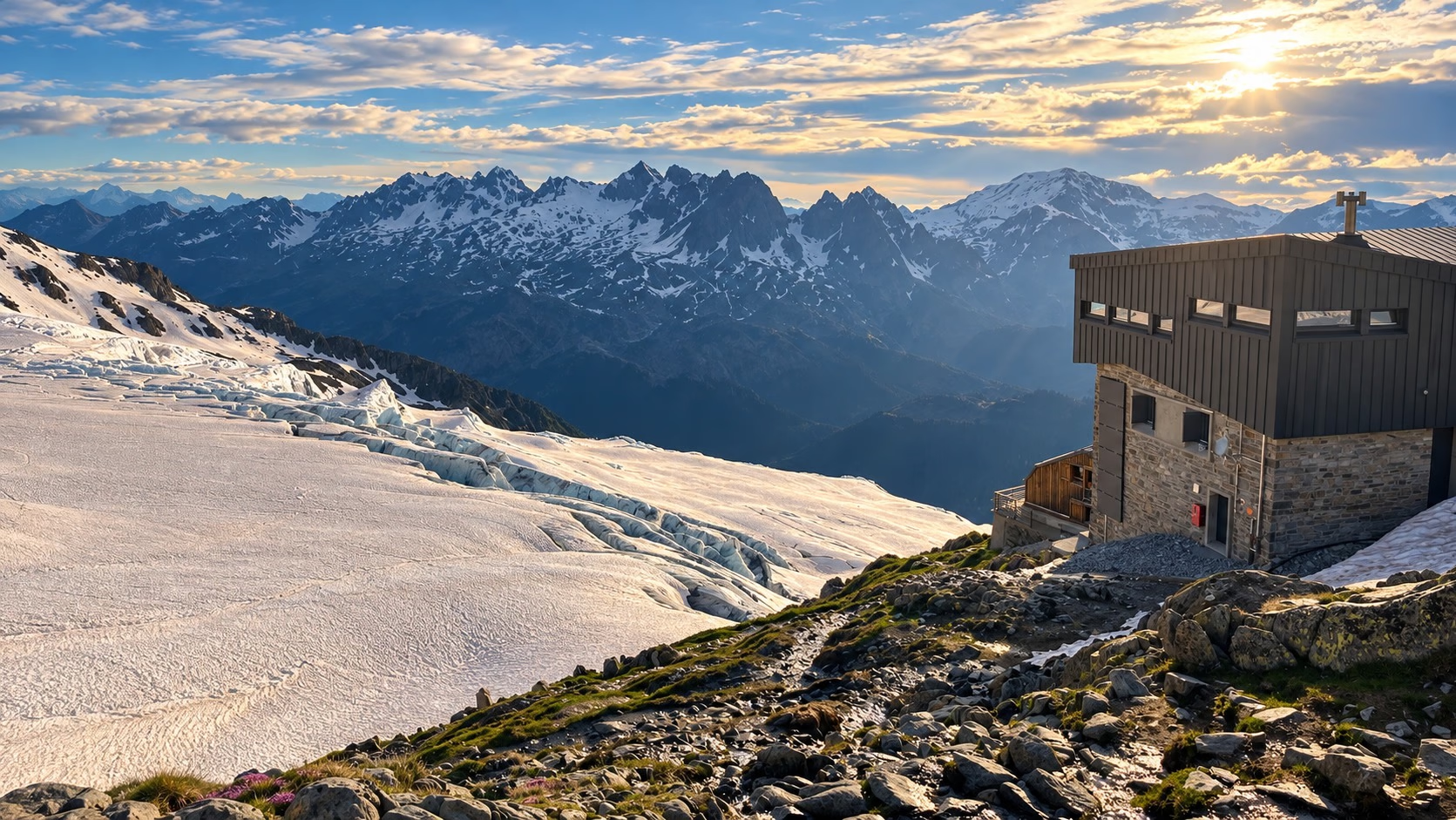
We then reach the Albert 1er refuge (2,702 m), where we settle in facing the glacier and check our equipment. The afternoon is devoted to ice climbing school on the Tour glacier: glacier walking, cramponing, simple belaying, and ice axe use.
The day alternates between approach walks, practical adjustments and exercises on snow, before a first evening and night at high altitude.
Day 2 -
Ascent of the Aiguille du Tour (3,540 m) and return to Chamonix
- Activity Mountaineering
- Duration of the activity 10h
- Positive elevation gain 900 m
- Negative elevation 2100 m
- Maximum altitude 3540 m
- Exposed passages Yes
- Breakfast included
- Lunch included
- Dinner not included
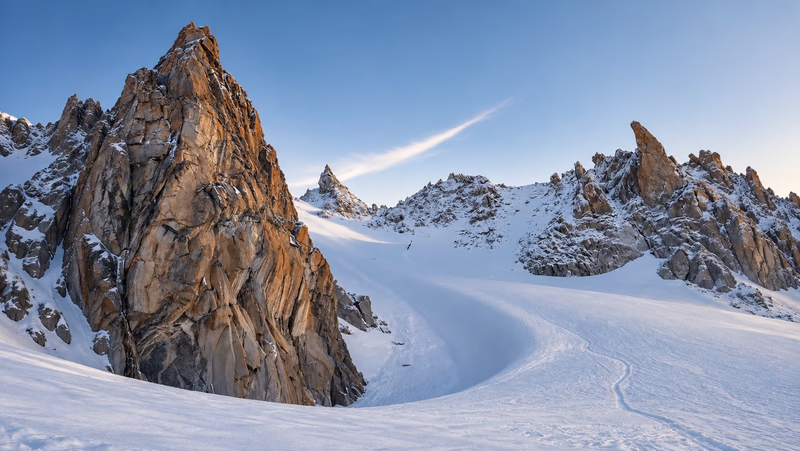
We set off with headlamps before sunrise, heading towards the Aiguille du Tour (3,540 m), the final objective of these three days of introduction to mountaineering.
Upon entering the Tour Glacier, we put on our crampons and proceed roped up, gradually ascending to the Col Supérieur du Tour. We then cross over to the Swiss side, onto the Trient Glacier, with the first light of day gradually revealing the surrounding peaks.
At the foot of the Aiguille du Tour, a few easy rocky sections require using your hands to reach the summit: a great opportunity to put into practice the techniques learned, between snow, ice and rock.
Up there, we enjoyed the panoramic views of the Mont Blanc massif and the Swiss mountains before descending via the same route. We reached the village of Le Tour in the mid-afternoon, then Chamonix, having completed our first high-mountain ascent.
Day 3
Note
The program for the stay is subject to change depending on weather conditions.
Accommodation
Access
We'll meet at 10am in Chamonix, in front of our rental shop, to pick up the equipment and meet the guide. Return to Chamonix on day 3 in the mid-afternoon.
Go to the starting point
Want to avoid traffic jams and travel in comfort? The train is your best bet. Here's the route to Chamonix:
- Departure station > Paris Gare de Lyon
- Paris Gare de Lyon > Bellegarde-sur-Valserine (2h42)
- Bellegarde-sur-Valserine > Chamonix-Mont-Blanc (2h35)
It is also possible to reach Chamonix by Flixbus. No car? For the journey between Chamonix and the village of Le Tour (days 2 and 3), we organize carpooling with the guide and the other participants.
Do you prefer the freedom of a road trip? You can drive to Chamonix and then to the meeting point. During your stay, you can also use your car to reach the village of Le Tour, where there is a parking lot where you can leave it until you return from the summit.
Consider carpooling: a WhatsApp group is created 10 days before departure to help you organize with other participants.
Price details
The price includes
- Supervision by a UIAGM high-mountain guide for 3 days
- Accommodation: 1 night in a gîte in Chamonix (dormitory) and 1 night at the Albert 1er refuge (2,702 m, dormitory)
- All meals, from dinner on day 1 to the picnic on day 3
- The ski lifts mentioned in the program
- Group mountaineering equipment (ropes, carabiners, etc.)
The price does not include
- Round-trip transportation to the meeting point
- Personal mountaineering equipment: ice axe, harness, crampons and helmet (rental available as an option)
- Mountaineering boots are not provided to ensure your comfort (we strongly recommend trying them on before departure).
- Day 1's picnic
- Drinks and personal consumption
- Anything not listed under "Price includes"
Options
- Mountaineering package rental : CHF91.48 / person
- Flex fare and insurance
Practical information
Specific formalities
Specifics
Before your departure, check with the embassy or consulate regarding the entry and stay requirements for your destination country. You can also find this information on the France Diplomatie website ( https://www.diplomatie.gouv.fr/fr/dossiers-pays/ ).
In the case of flights with stopovers operated by different airlines, also check the entry requirements of the countries you are transiting through.
It is your responsibility to ensure you are in compliance, particularly regarding the validity of your identity documents (for example, some countries require your passport to be valid for at least six months after your return) , visa requirements, necessary vaccinations, and health recommendations. And don't forget to consider any customs restrictions and other potential requirements of your destination or transit country.
ℹ️ Information may change up to the departure date, remember to regularly check official websites.
Equipment
Equipment provided on site
- Group mountaineering equipment: ropes, carabiners and safety equipment
Equipment to bring
- 40L backpack (for backpacking)
- Climbing harness (commendable)
- Mountaineering helmet (recommended)
- Crampons and straight ice axe (commendable)
- Climbing shoes and chalk
- Telescopic hiking poles
- Charged headlamp
- Lightweight water bottle, hydration pack or 2L water bottle
- Thermos (1 L)
- Sleeping bag liner (sleeping bag)
- Microfiber towel
- Toiletry bag
- Small personal pharmacy
- Compeed or blister plasters
- SPF 50 sunscreen and SPF lip balm
- Earplugs
- Phone, charger and external battery
- Waterproof pouch for documents and phone
- Energy snacks (bars, dried fruit…)
- A picnic for day 1
- Passport or identity card (for crossing into Switzerland)
- Bank card and cash
- Alpine Club card (if a member)
- Book / notebook and pen
Clothing to bring
- Crampon-compatible mountaineering boots
- Hiking pants
- Trousers for summer high mountaineering
- Waterproof jacket with Gore-tex type hood
- Fleece (bring several layers)
- Down jacket
- Technical and warm underwear (merino wool)
- Running tights or long underwear
- Technical socks
- Warm socks (merino)
- Cap
- Lightweight gloves
- Warm gloves
- Balaclava / Buff
- Hat or cap
- Sunglasses (category 4)
- Comfortable sneakers (for the approach and breaks)
- Comfortable clothes for the evening