Trekking in the oases of Adrar
In summary
-
Sports
-
Duration9 days
-
LevelConfirmed
-
DestinationAfrica / Mauritania
-
AgeFrom the age of 18
-
CO₂-Emissions2278.38 kg CO2
-
Type of stayIn a group
-
Languages
 French
In a few words
The highlights
-
A Saharan route linking the most famous oases of the Adrar region
-
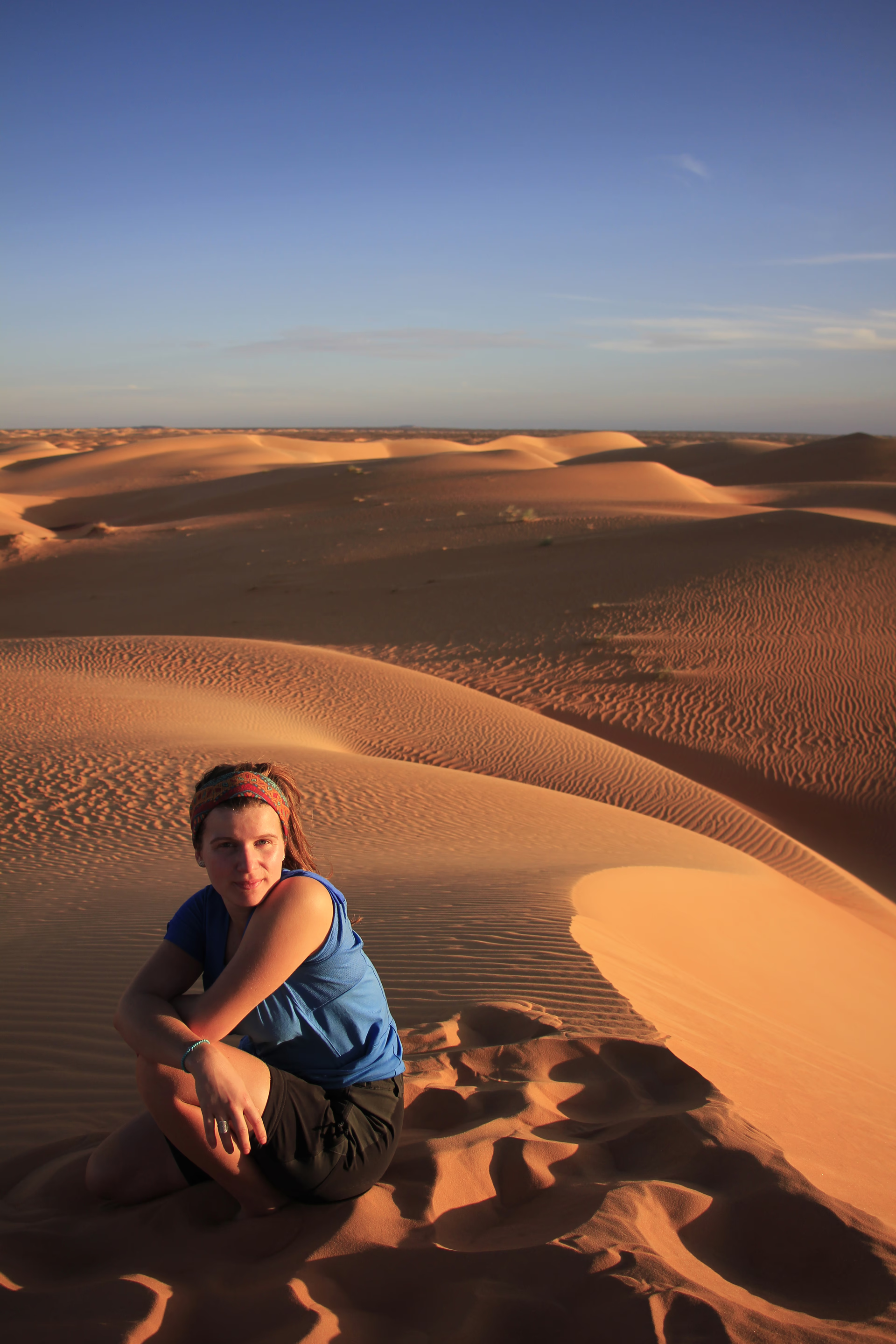
The giant dunes of Azoueiga
-
6 days of self-supported camel trekking through varied landscapes
Photos

Sport
Level
Hiking / Trekking
The expert's opinion
Approximately 5 to 6 hours of hiking per day for 6 consecutive days. Low elevation gain (between 300 and 400 meters per day). You will be hiking in an environment that alternates between dunes, plateaus, and oases. Good physical condition is required.
In figures
Hiking
- Average duration/day: 5h30
Management
French
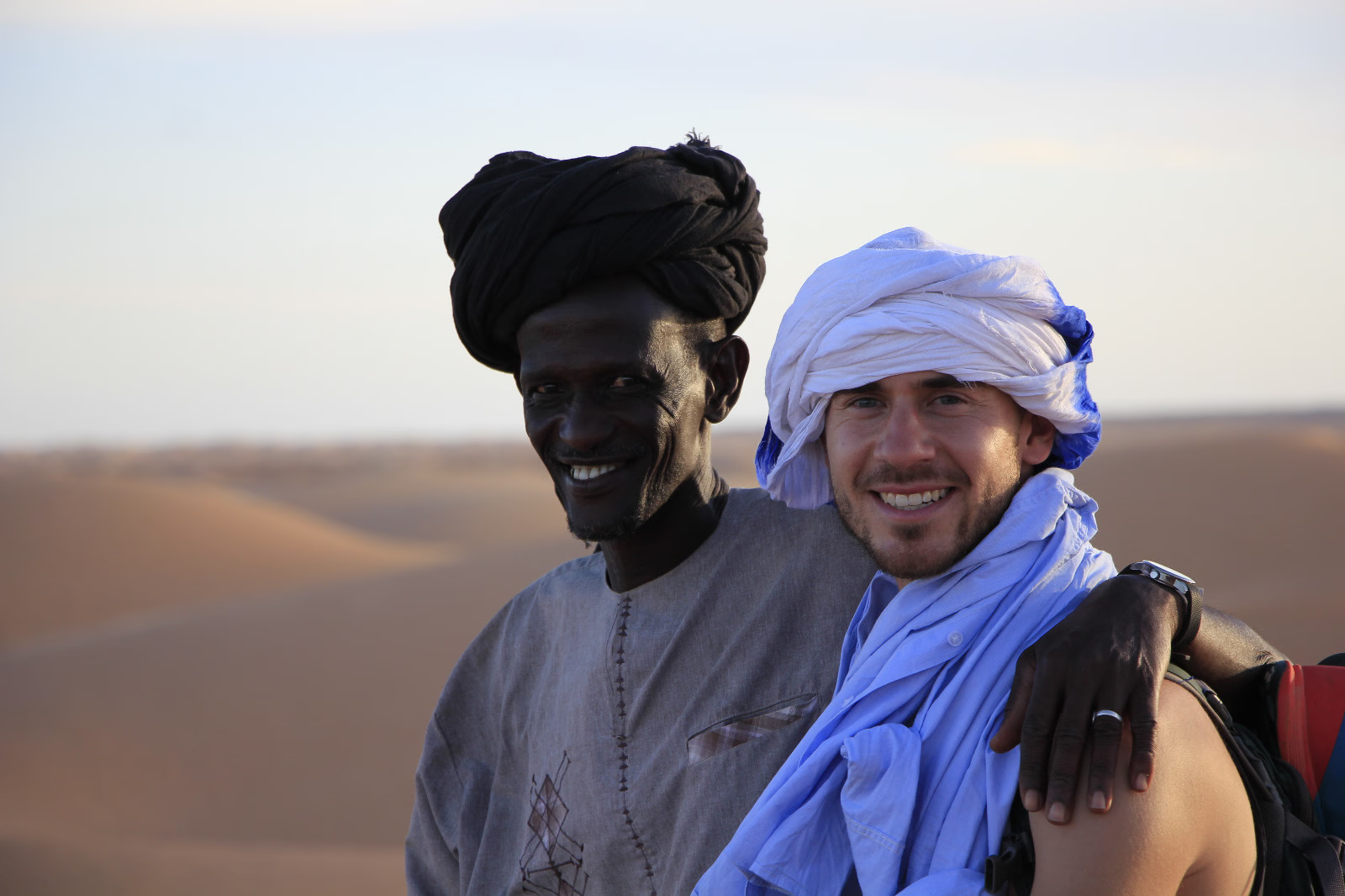
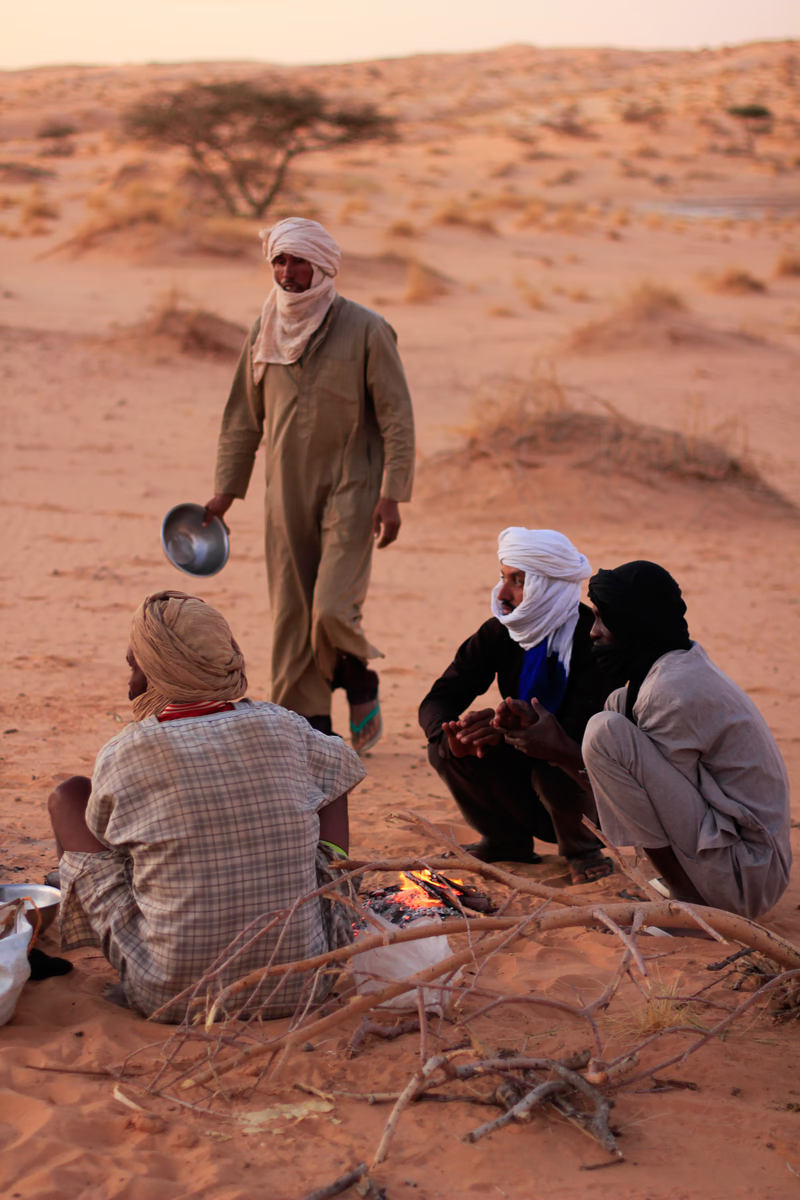
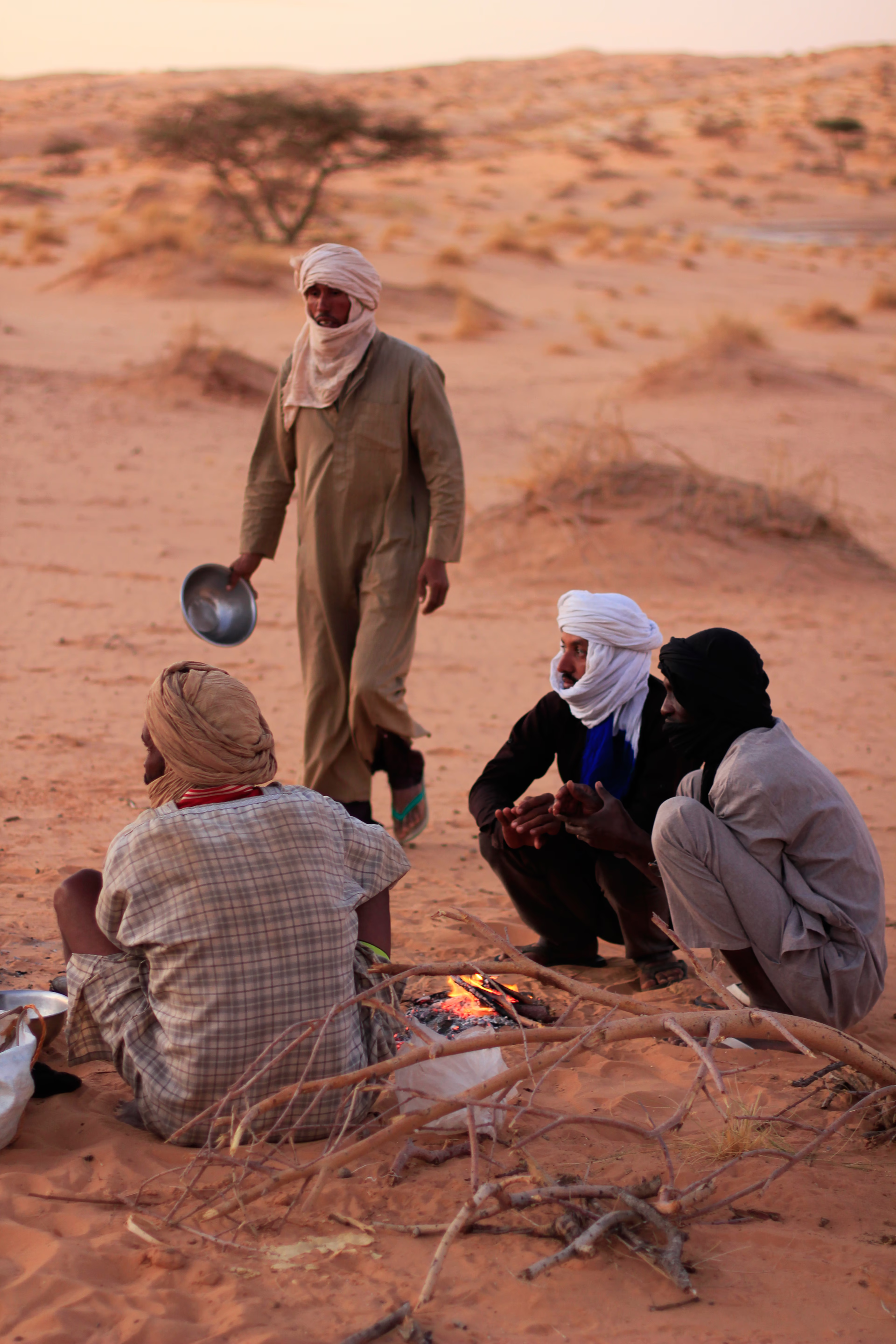
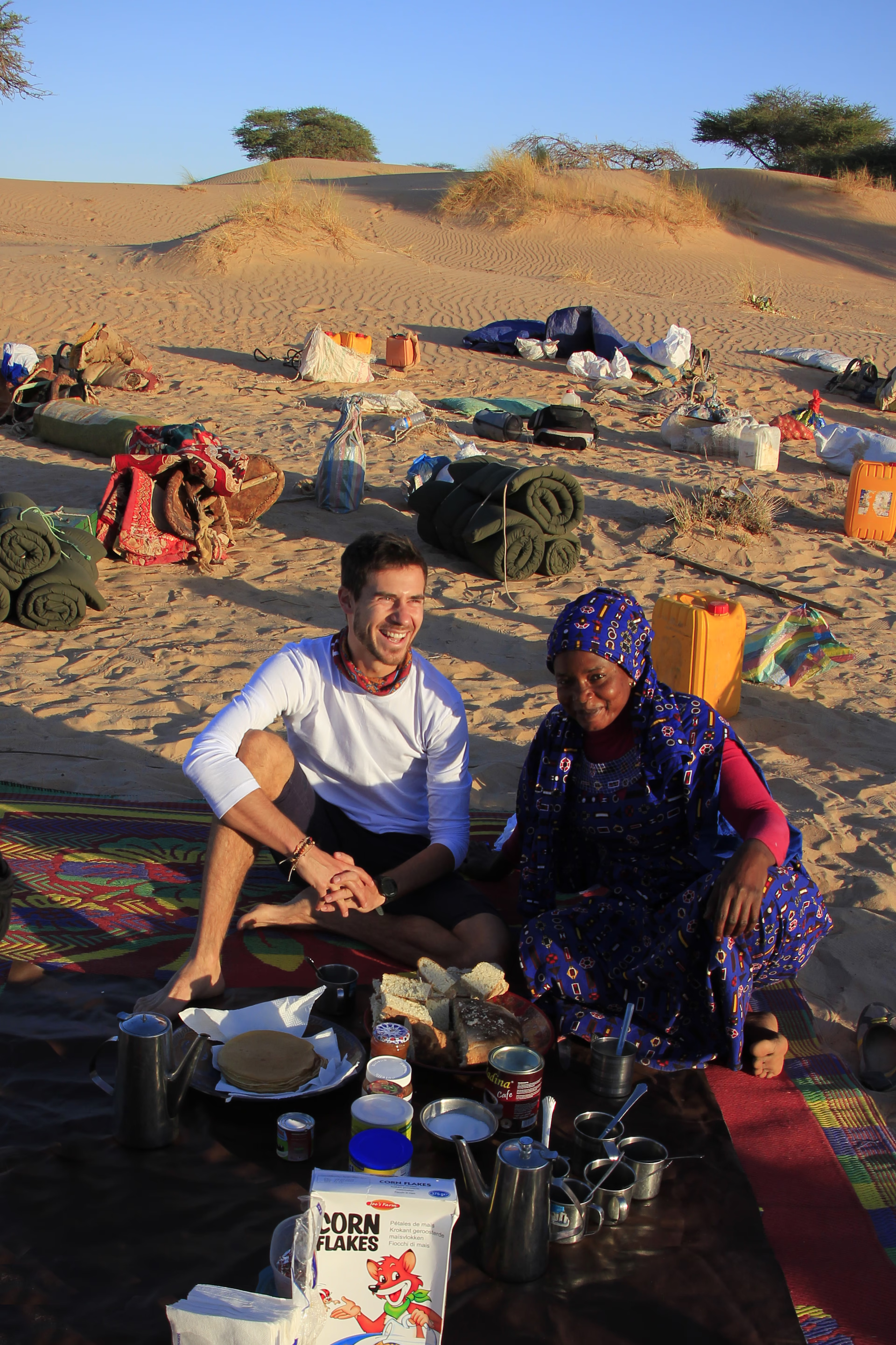
Upon arrival, you will be greeted by your French-speaking Mauritanian tour guide. In every case, they have been chosen for their extensive field experience, their specific knowledge of the geographical area and its associated culture, and their passion for sharing their country. They are assisted by a Mauritanian cook and a team of camel drivers and/or chauffeurs who share their nomadic lifestyle with you. Their always friendly presence is a guarantee of success for our trips. They know the terrain intimately and will teach you the art of living in the Sahara.
The entire team of our tour guides, Sidi, Abdoulaye, Moctar or Kalidou, the cooks Bébé, Fama, Ami and Ramata and our drivers, are dedicated to your holidays, and will make you spend an unforgettable stay in their country, redoubling their attention and listening so that everything goes perfectly.
Program
-
Flight to Nouakchott
- Transportation Plane - 05h30 - 3800km
- Activity Hiking
- Duration of the activity 3h
- Breakfast not included
- Lunch not included
- Dinner not included
Flight to Nouakchott. We are met at the airport by our guide and transferred to our hostel.Day 1 -
Transfer for Terjit - Ntezent - erg Nouakane
- Activity Hiking
- Duration of the activity 6h
- Accommodation Bivouac / Tent
- Breakfast included
- Lunch included
- Dinner included
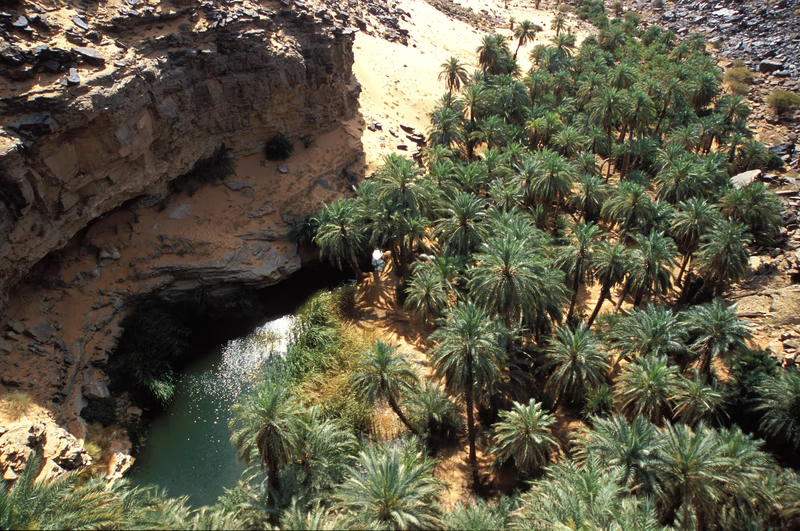
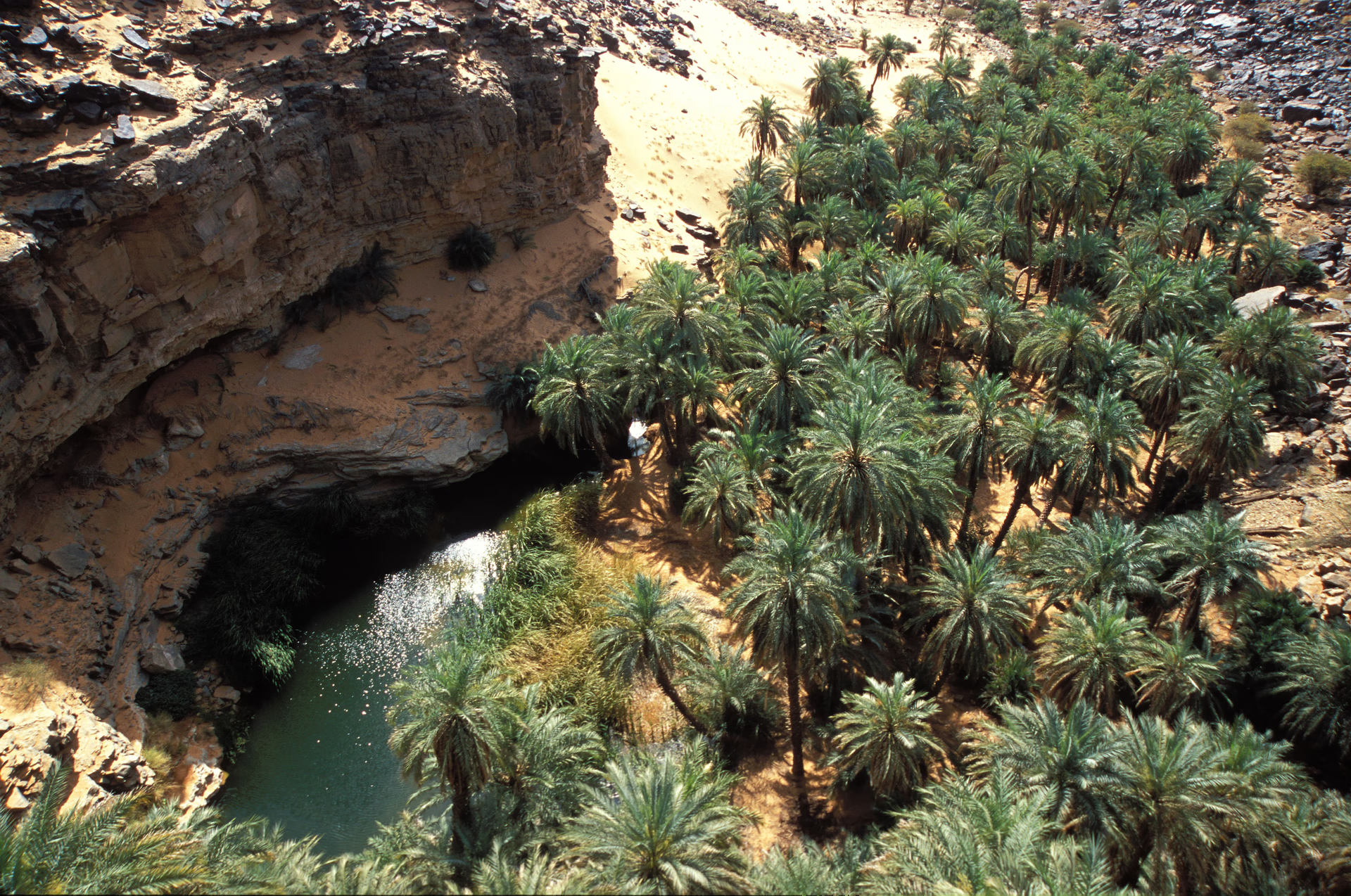
Early this morning, we set off for the Adrar region and are transferred to the Terjit oasis. Nestled in the shade of a crevice in a deep canyon, this oasis appears like a paradise in the heart of the desert, with fresh, drinkable spring water flowing continuously from the rock. We are welcomed by the customary warmth of the locals and their traditional mint tea. It is also possible to swim in the small, shallow, but pleasantly warm pool. The Terjit oasis is a verdant haven dominated by cliffs, offering a perfect harmony between the warmth of the people and the beauty of nature. We pass through the village of Tentemdej. We begin our trek across the dunes of Erg Nouakane, a series of dune ridges in multicolored shades of yellow, red, and orange. We continue our walk among the dunes to reach our campsite in a pretty wadi, flanked by two large dunes on either side. Camping in the middle of the great dunes of the Nouakane erg.Day 2 -
White Valley (Oued El Abiod) - Tifoujar Pass
- Activity Hiking
- Duration of the activity 6h
- Accommodation Bivouac / Tent
- Breakfast included
- Lunch included
- Dinner included
We reach the "El Abiod" wadi, meaning "white valley" in the local language. This wadi, a wide, dry riverbed, is surrounded by multicolored dunes. Here, the sand seems to reach the mountains and touch the sky. After our picnic lunch, we cross this valley to reach the Tifoujar pass. At the top, we reach a 360° panoramic viewpoint overlooking the vast expanse of dunes. One of the most beautiful panoramas of the trip! Overnight in a bivouac.Day 3 -
Gleïtat Oasis - Erg Amatlich
- Activity Hiking
- Duration of the activity 6h
- Accommodation Bivouac / Tent
- Breakfast included
- Lunch included
- Dinner included
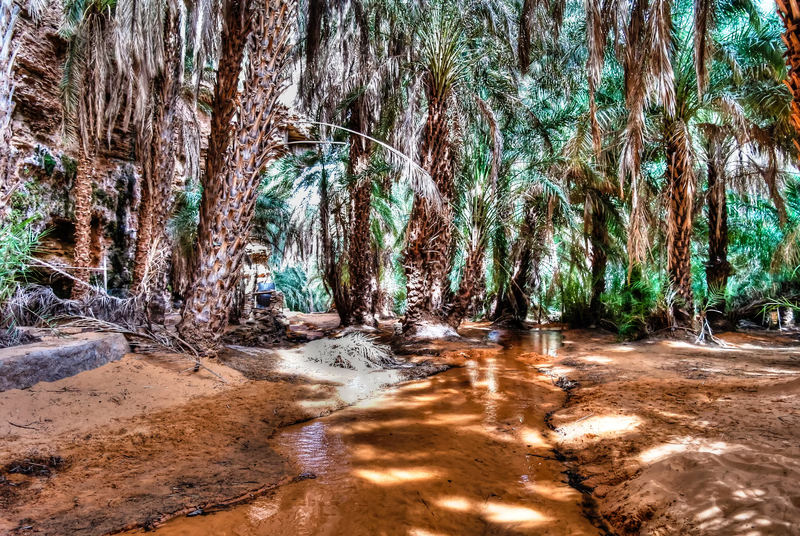
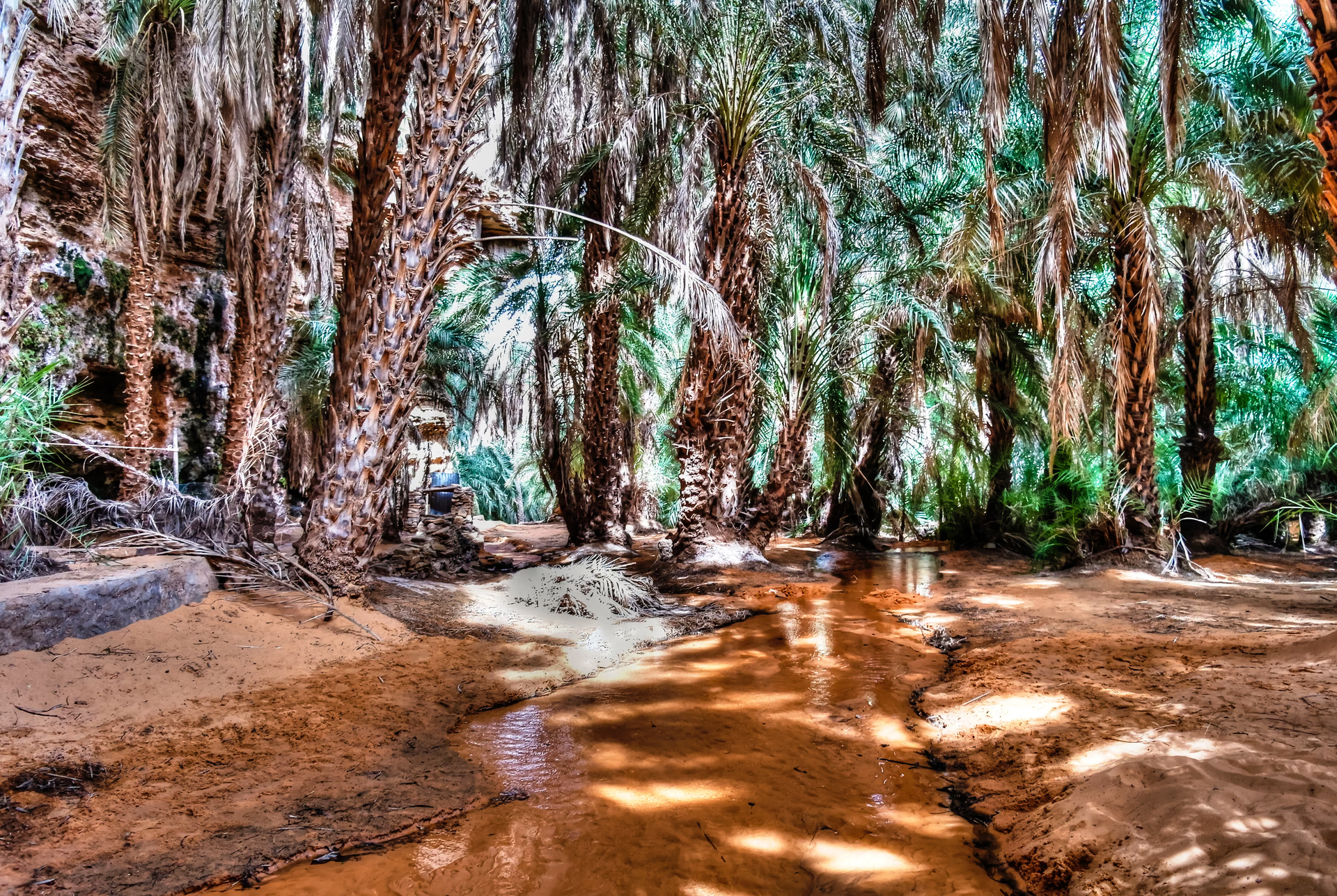
We leave the top of the Tifoujar Pass to reach the El Abiod wadi and descend the Tifoujar Pass along the crests of the orange dunes to reach the Gleitat oasis. We enjoy the refreshing shade of the palm trees and have our picnic lunch under them. We continue towards the Amatlich erg. We camp at the foot of the dunes.Day 4 -
Erg Amatlich
- Activity Hiking
- Duration of the activity 6h
- Accommodation Bivouac / Tent
- Breakfast included
- Lunch included
- Dinner included
We follow the dunes of Erg Amatlich. We cross a few oases and the village of El Medan. We camp at Tejala de Nema, which overlooks Erg Amatlich.Day 5 -
Erg Amatlich
- Activity Hiking
- Duration of the activity 7h
- Accommodation Bivouac / Tent
- Breakfast included
- Lunch included
- Dinner included
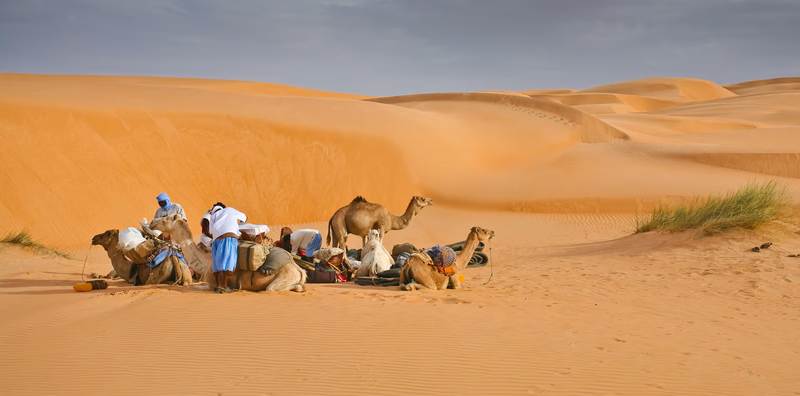
This is the most beautiful day of the trek. Accompanied by camels and at the pace of a nomadic caravan, we set off on a long trek across the dunes of Erg Amatlich, a veritable dune system stretching over 300 km, traversing the southern Adrar region all the way to the Atlantic coast. We alternate our walk between dunes and oases. We enjoy a picnic lunch under palm trees or in traditional houses used by the locals during the Guetna (date harvest). We continue on to the small hill of Tegale for our bivouac.Day 6 -
Azoueïga Oasis - Atar
- Transportation Minibus - 01h30 - 50km
- Activity Hiking
- Duration of the activity 3h
- Accommodation Hostel
- Breakfast included
- Lunch included
- Dinner included
We enjoyed another morning's walk, leaving the dunes behind and reaching the Adrar plateau. We finished our trek at the Azoueïga oasis, which rises like a mirage on the western side of the erg. We took a short stroll through the palm grove and discovered its spring. After lunch, we set off for Atar in a 4x4. We met up with our minibus, which took us back to Nouakchott. Dinner and the beginning of the night at the guesthouse.Day 7 -
Visit to Atar and transfer to Nouakchott
- Transportation Minibus - 06h - 200km
- Accommodation Hostel
- Breakfast included
- Lunch included
- Dinner included
Today, we visit Atar and its colorful market. Then, we bid farewell to Adrar and head for Nouakchott.Day 8 -
Return flight to France
- Transportation Plane - 05h30 - 3800km
- Breakfast included
- Lunch included
- Dinner included
Flight back to France, head full of memories...Day 9
Note
The route, distances, and walking times are approximate. They may be modified depending on trail conditions, weather, and the group's pace. In such cases, our experience on the ground will guide us in choosing the best option.
Depending on your departure date, two transport logistics options are possible:
1. Via Nouakchott (9-day tour)
From October 2026 until departure on 12/12/2026 inclusive, the trip takes place over 9 days to include travel time to the desert:
- Saturday: flight to Nouakchott, arrival in the evening or at night, overnight stay at the hostel.
- Sunday: early morning transfer to Atar (5 hours drive) to join the heart of the program.
- From Monday to Friday: normal itinerary schedule.
- Saturday: mid-afternoon, return transfer to Nouakchott, overnight at the hostel.
- Sunday: airport transfer and return flight to France.
2. Via Atar (8-day tour - Direct flights)
For departures between December 19, 2026 and February 27, 2027, you will benefit from a direct flight from Paris to Atar. This option provides immediate access to the Adrar region.
- Saturday: Direct flight to Atar, welcome and short transfer to your first camp or hostel.
- From Sunday to Friday: normal itinerary.
- Saturday: Transfer to Atar airport and direct return flight to France.
Depending on the period, this trip can be done in conjunction with the La Grande Traversée de l'Adrar (SMCTA) circuit: the two itineraries meet on days 8 to 15. Limited to 15 travelers.
Accommodation
Camping: On all our trips, you can sleep and/or eat in the traditional Moorish tent, the khaïma, which will protect you from the wind and the cold. This tent, which adapts to the size of the group, is the central meeting point for the camping trip: it is set up in the center of the camp upon your arrival. Small double Igloo tents are also available at no extra charge for those seeking privacy; please request one when registering (if you wish to have a tent alone, the supplement is €75). 5 cm thick foam mattresses are also provided.
Hostel/Guesthouse : In Atar and/or Chinguetti (and possibly Nouakchott), we have chosen to accommodate you in simple but clean local hostels offering showers and toilets in a welcoming atmosphere. Comfort is basic, but the welcome is friendly, and the experience is far more authentic than in a traditional hotel.
In Atar, our recommended hostel (this is for guidance only, and may exceptionally change depending on availability) consists of:
- Two communal huts equipped with mattresses, open to the outside to enjoy the night breeze, with a terrace and mosquito net.
- Two-person huts with mattresses on wooden frames and mosquito nets for a peaceful night in a traditional setting
Access
On-site visit:
Transfers to the starting points of treks and hikes are by 4x4 vehicle, and we arrive quickly at the starting point when departing from Atar. We use pack camels that carry all your luggage, water, food, and supplies.
Go to the starting point
Flight to Atar:
Our trips are scheduled to depart from Paris, on direct charter flights with a charter airline, allowing arrival in the heart of the Mauritanian desert on Saturdays or Sundays.
We do not yet know the rotations for the 26-27 season, so we may offer you a flight to Nouakchott, with transfers to Atar by road, depending on the departure date chosen.
Here are the flight times for informational purposes only:
Outbound: Roissy 7:30am - Atar 11:20am
Return: Atar 12:10 - Roissy 18:00
Please note: onboard services (water, meals) are not free; we advise you to bring your own food and drinks before your flight. Your hand luggage may not weigh more than 5 kg.
Price details
The price includes
- The round-trip flight Paris / Nouakchott
- Air taxes
- Local transfers and luggage transport
- Accommodation
- Full board except for drinks
- The local team of camel drivers and cook
- Mauritanian French-speaking tour guide
The price does not include
- Visa fees apply if you arrive in Nouakchott (approximately €55). Visas are free if you arrive in Atar.
- Drinks
- Tips for local teams
Options
- Flex fare and insurance
Practical information
Specific formalities
Specifics
Before your departure, check with the embassy or consulate regarding the entry and stay requirements for your destination country. You can also find this information on the France Diplomatie website ( https://www.diplomatie.gouv.fr/fr/dossiers-pays/ ).
In the case of flights with stopovers operated by different airlines, also check the entry requirements of the countries you are transiting through.
It is your responsibility to ensure you are in compliance, particularly regarding the validity of your identity documents (for example, some countries require your passport to be valid for at least six months after your return) , visa requirements, necessary vaccinations, and health recommendations. And don't forget to consider any customs restrictions and other potential requirements of your destination or transit country.
ℹ️ Information may change up to the departure date, remember to regularly check official websites.
Equipment
Equipment provided on site
We provide the equipment for group camping and both group and individual cooking.
Equipment to bring
- Moistened "Calinette" type towels for quick cleansing and good hygiene
- Earplugs or Hears, your choice
- A notepad and pen, a good book, a deck of cards...
- A small pillow, inflatable or not, for added comfort
- A laundry bag, so you can separate your dirty clothes from your clean ones.
- Sleeping bag: comfortable, adapted to your size, rather mummy-shaped (closer to the body and with a hood that closes) with a side zip closure for opening at your convenience.It is necessary to adapt your sleeping bag to the temperatures encountered, determined according to your travel dates and the region visited. We advise you to choose a sleeping bag that is comfortable at 10°C below the lowest average temperature encountered (for example, if you are traveling in the Adrar region in November (see temperature chart), you need a sleeping bag that is comfortable at: 15 - 10 = 5°C).A sleeping bag that's comfortable at 5°C will also be comfortable at 20°C; simply open it to allow air to circulate inside. Conversely, if you already have a sleeping bag that's comfortable at 10°C, for example, a fleece sleeping bag liner will make it about 5 degrees warmer.
- Cotton sleeping bag liner
- Water purification tablets
- Toiletry bag
- Small personal pharmacy
- Towel
- Sunscreen cream and stick (face and lips)
- Headlamp with spare batteries
- A 1.5-liter (minimum) water bottle, lightweight and insulated, or a 2-liter hydration bladder. The latter has the advantage of allowing direct drinking thanks to its drinking spout, thus avoiding having to take off your backpack to grab your bottle. This way you drink more regularly, and in small amounts, which is recommended for proper hydration. Tip: having two containers allows you to drink from one while the other is being processed.
- A multi-purpose pocket knife is preferable (note: this must be packed in your checked luggage on the plane).
- Toilet paper + lighter for destruction
- Replacement battery or power bank for your camera
Clothing to bring
Clothing, from head to toe:
- Footwear: Avoid high-top hiking boots, which are hot and unnecessary for walking in the sand or on the Mauritanian plateaus. Some people prefer to walk in sandals, or even barefoot, during the day: depending on the situation, this can be very pleasant, or not at all! Therefore, to avoid spoiling your holiday, we advise you to bring lightweight shoes (such as low hiking boots or sneakers) AND sandals, and to choose your footwear once you arrive.Saharan traveler's tip : put socks in your sandals, it's ideal for avoiding sand abrasion!
- Socks: light for daytime and warm (wool or looped) for cool evenings.
- Canvas trousers and/or Bermuda shorts (avoid shorts: see "Etiquette")
- Swimsuit (natural pool or hammam, you never know!)
- Cotton shirts or T-shirts
- Warm sweater or fleece: the latter has the advantage of being durable, warm, lightweight, and quick-drying, with the added benefit of being soft to the touch. The best-known fibers are Polartec, Carline, and Ulfrotté.
- A hat or cap with neck protection, and/or a shemagh: the first two offer the advantage of also protecting your face from the sun, which the shemagh (long voile scarf) does not: however, it is very useful for protecting yourself from the cold, the heat, the sand, the wind and even the flies during a nap! You can buy one at the airport upon arrival.
- Category 3 sunglasses.
For the coldest evenings in the heart of winter (December and January), you might also need:
- Windbreaker
- Cap
- Gloves
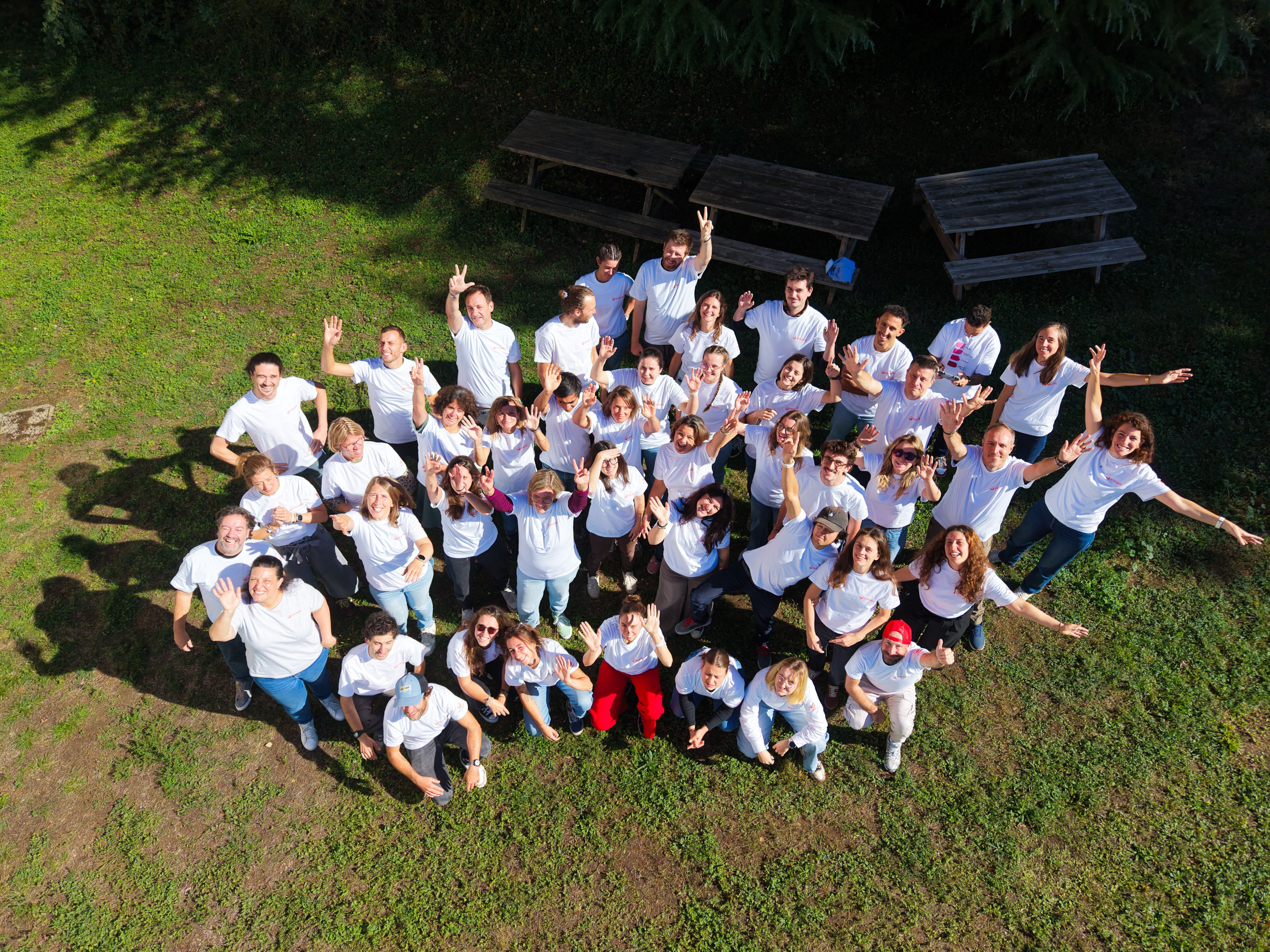
The Paulin team
Passionate about travel and connecting with people, our team will help you design meaningful adventures. From small group tours led by passionate local guides to tailor-made trips, experience unique journeys, immersing yourself in cultures and communities. From cultural discovery to challenging treks, explore the world's most beautiful destinations with us, far from the beaten path, at your own pace and according to your desires.