6-day, 5-night trek in the Moroccan desert departing from Marrakech
In summary
-
Sports
-
Duration6 days
-
LevelBeginner
-
DestinationAtlas Mountains / Marrakech
-
AgeFrom 4 - 80 years
-
CO₂-Emissions244.63 kg CO2
-
Type of stayIn a group
-
Languages
 Arabic
 French
 English
In a few words
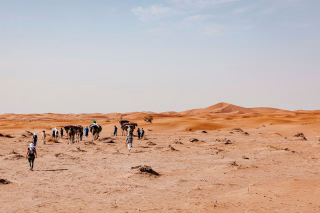
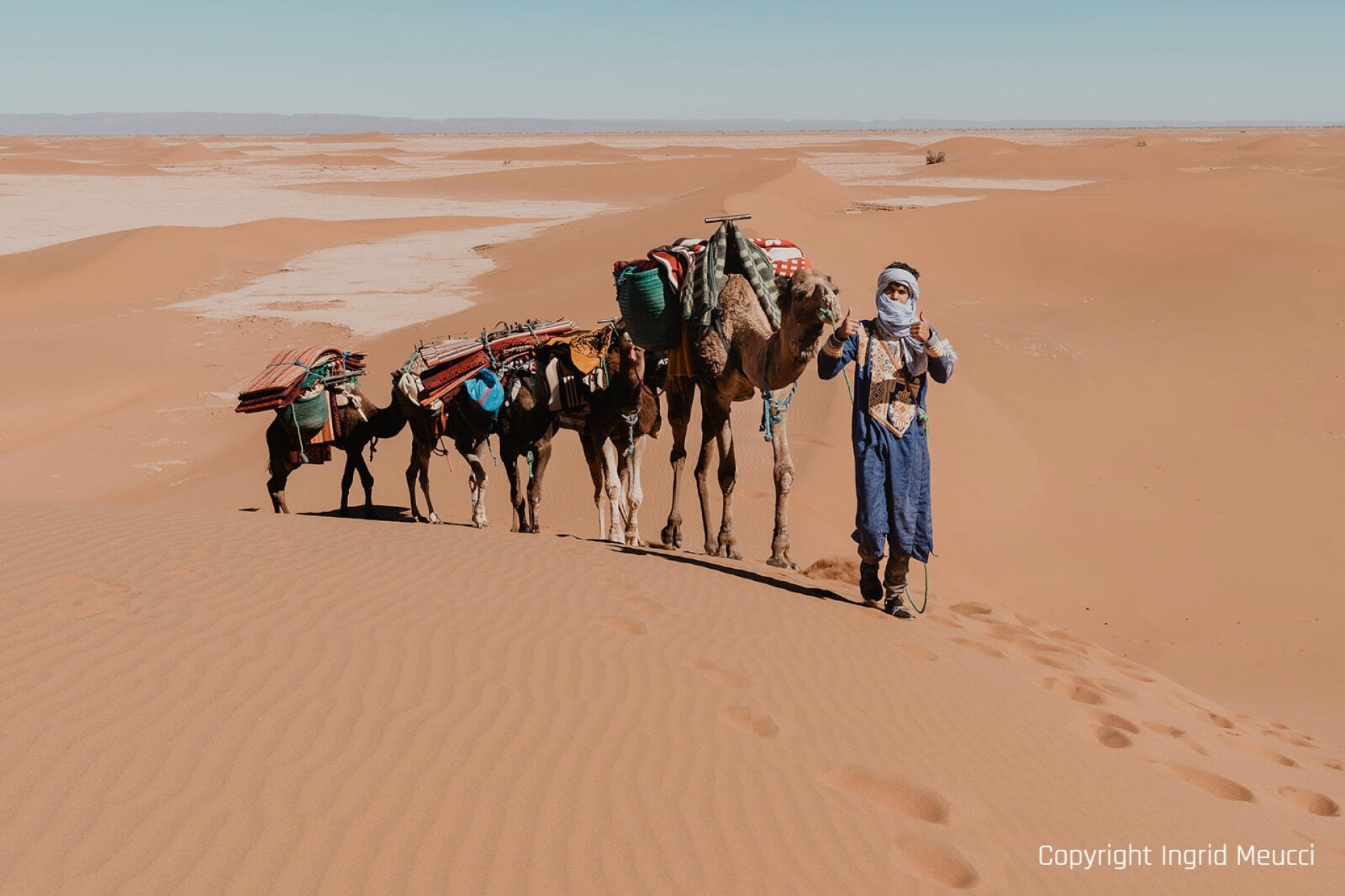
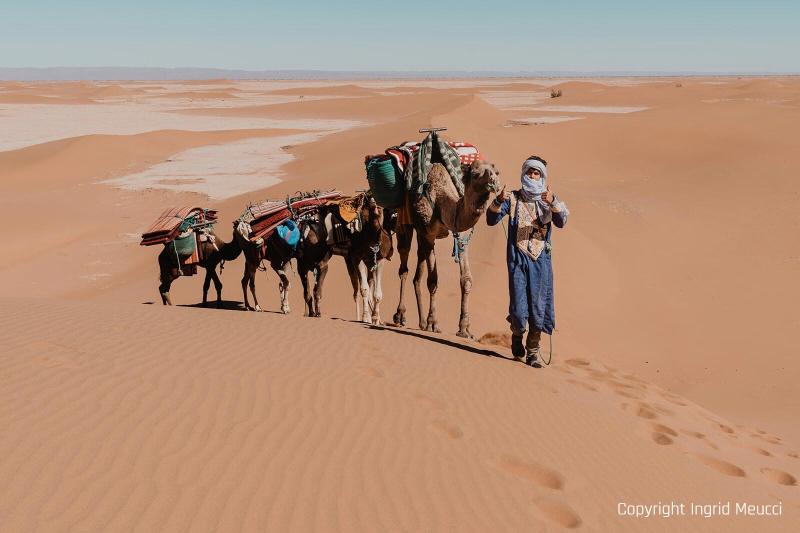
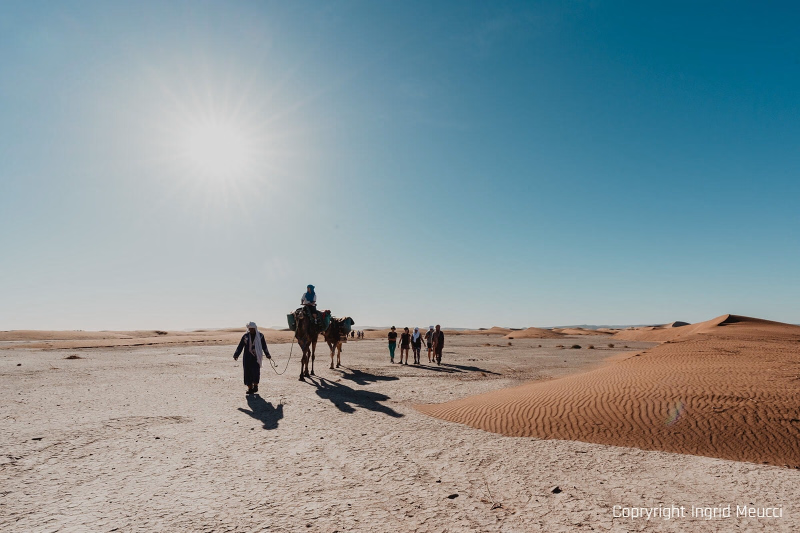
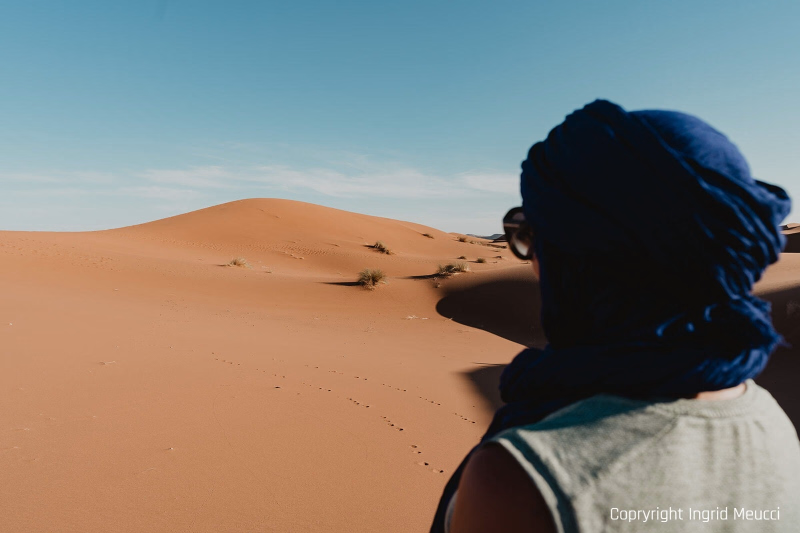
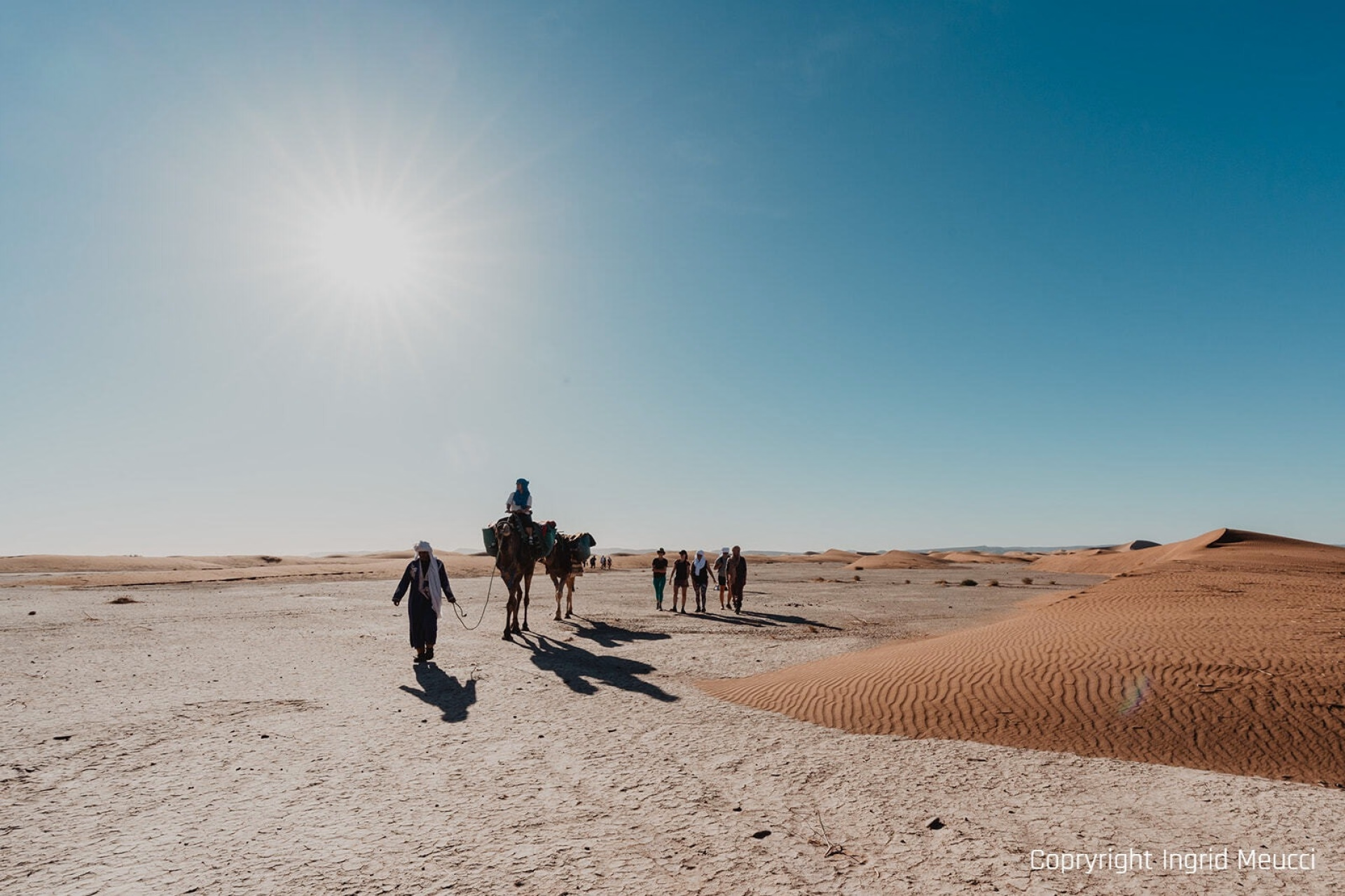
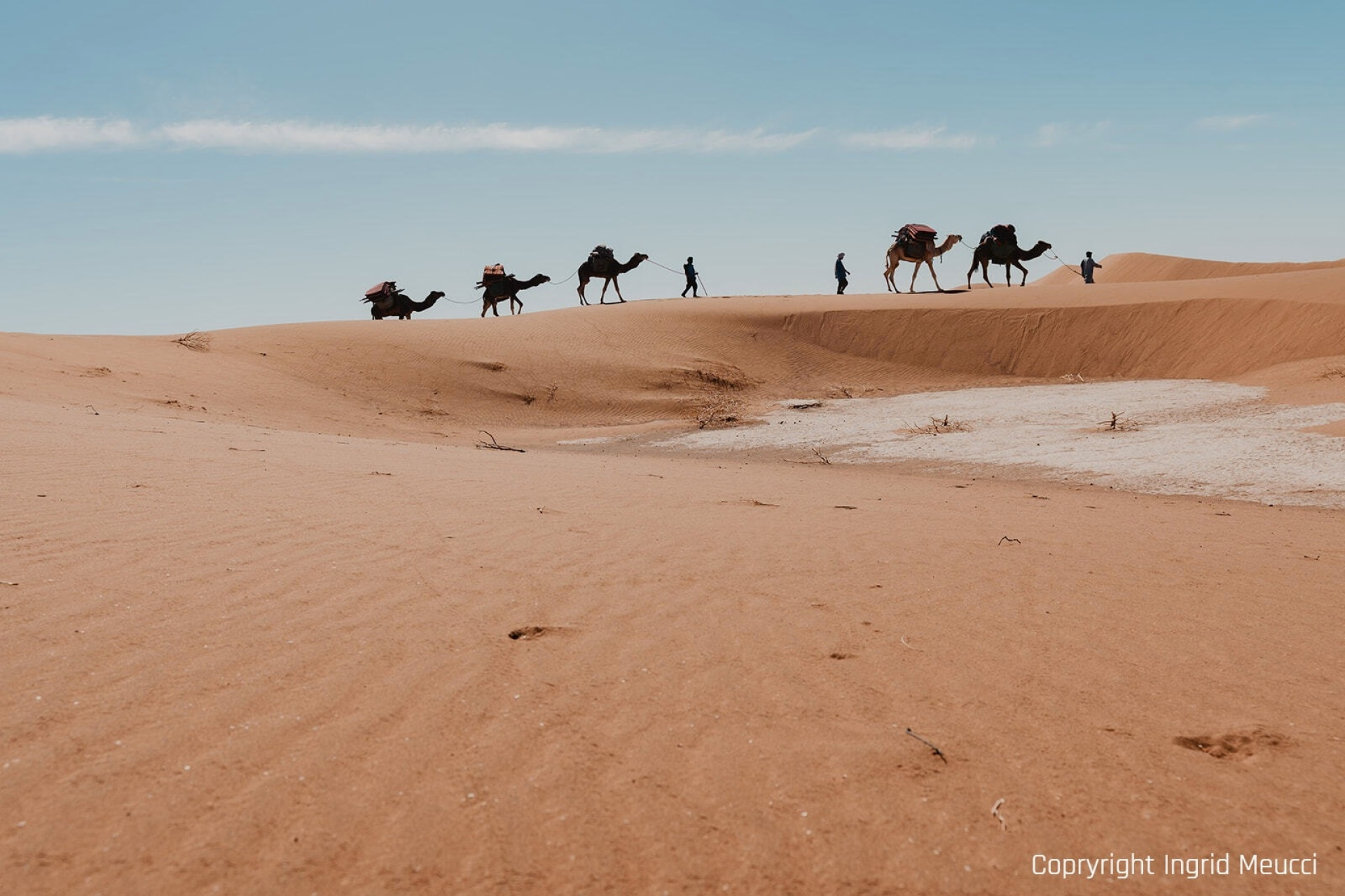
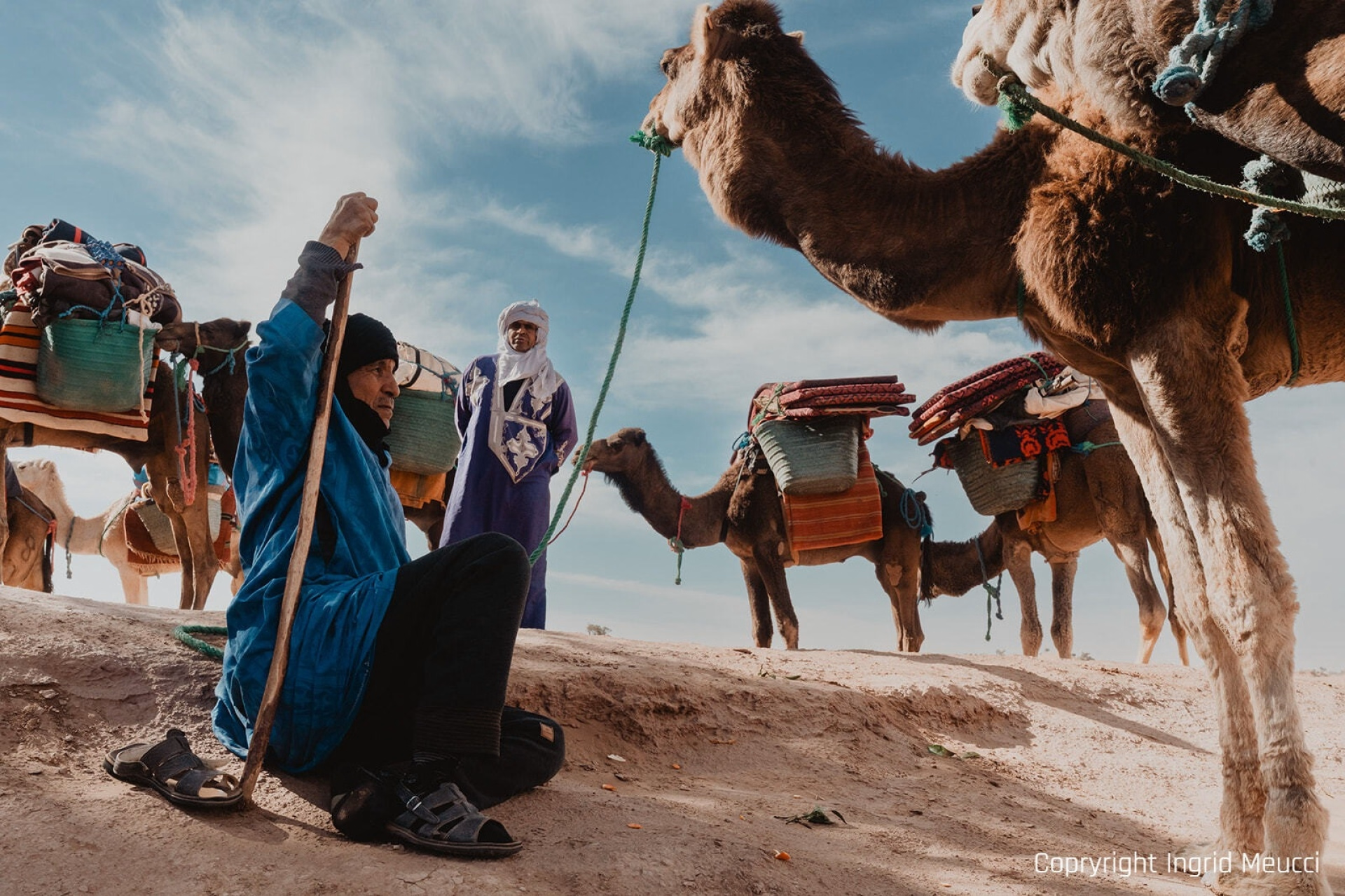
Traverse the vast Sahara on an exceptional multi-day trek , guided by a passionate local team . Accompanied by a camel caravan to carry equipment, this journey invites you to explore the diversity of desert landscapes: majestic dunes , undulating ergs, and endless horizons.
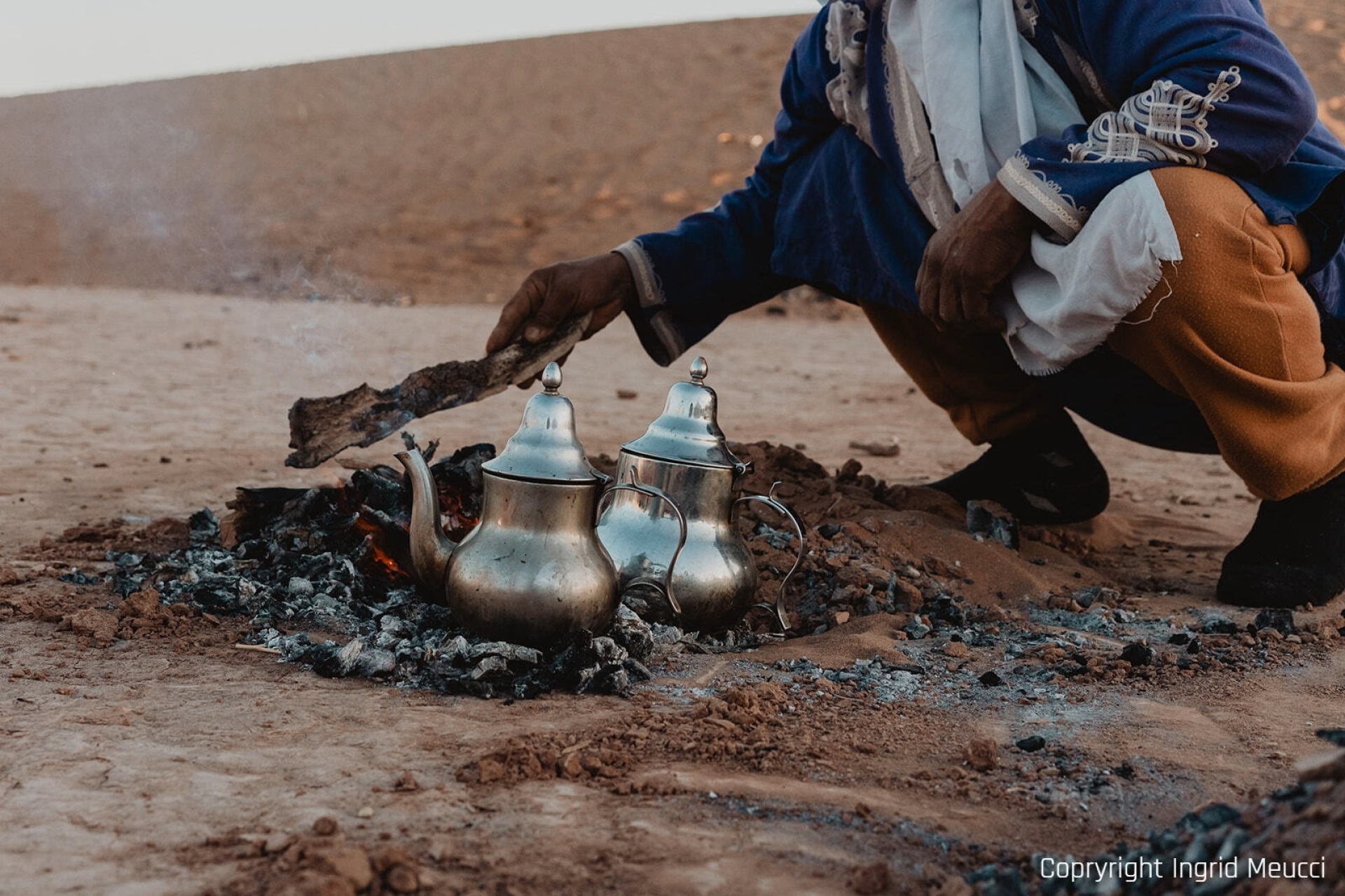
Each day is structured around an accessible hike , restorative breaks, and genuine interactions with your hosts. At the end of each day's trek, the adventure continues with a bivouac under the stars . Around the traditional campfire, savor a meal prepared on-site, along with Saharan tea , all while being serenaded by the magic of the sunset .
Much more than a simple trek, this immersive experience offers a true escape and rejuvenation . Take the time to experience the spirit of the desert , in perfect harmony with nature and the ancestral rhythm of the nomads. A unique opportunity for total disconnection in the heart of a magnificent and unspoiled environment.
The highlights
-
An accessible exploration of the desert on foot
-
An experience working closely with the local team
-
Sleeping in the desert
Photos
Sport
Level
Hiking / Trekking
The expert's opinion
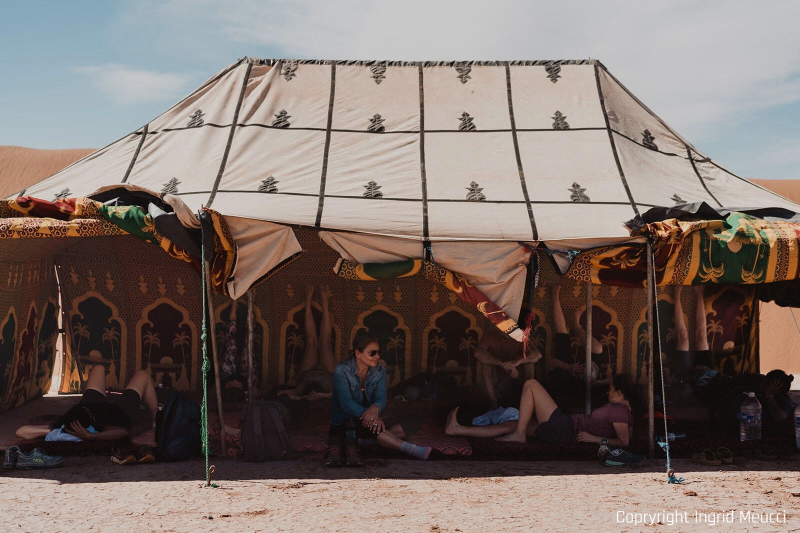
The walk takes place in the morning. Then the nomadic bivouac is set up for an afternoon in the heart of the dunes and an evening by the fire.
The sand texture is quite compact most of the time and there is virtually no change in elevation.
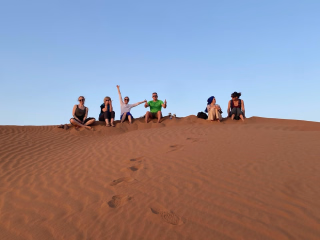
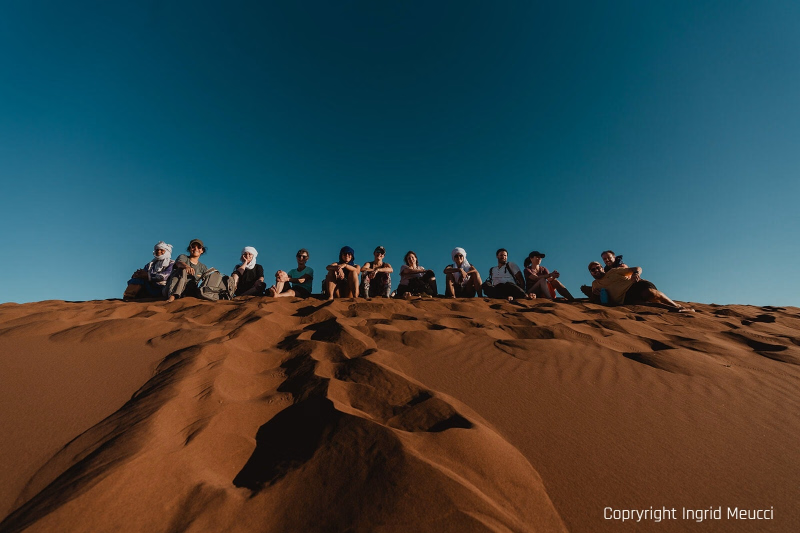
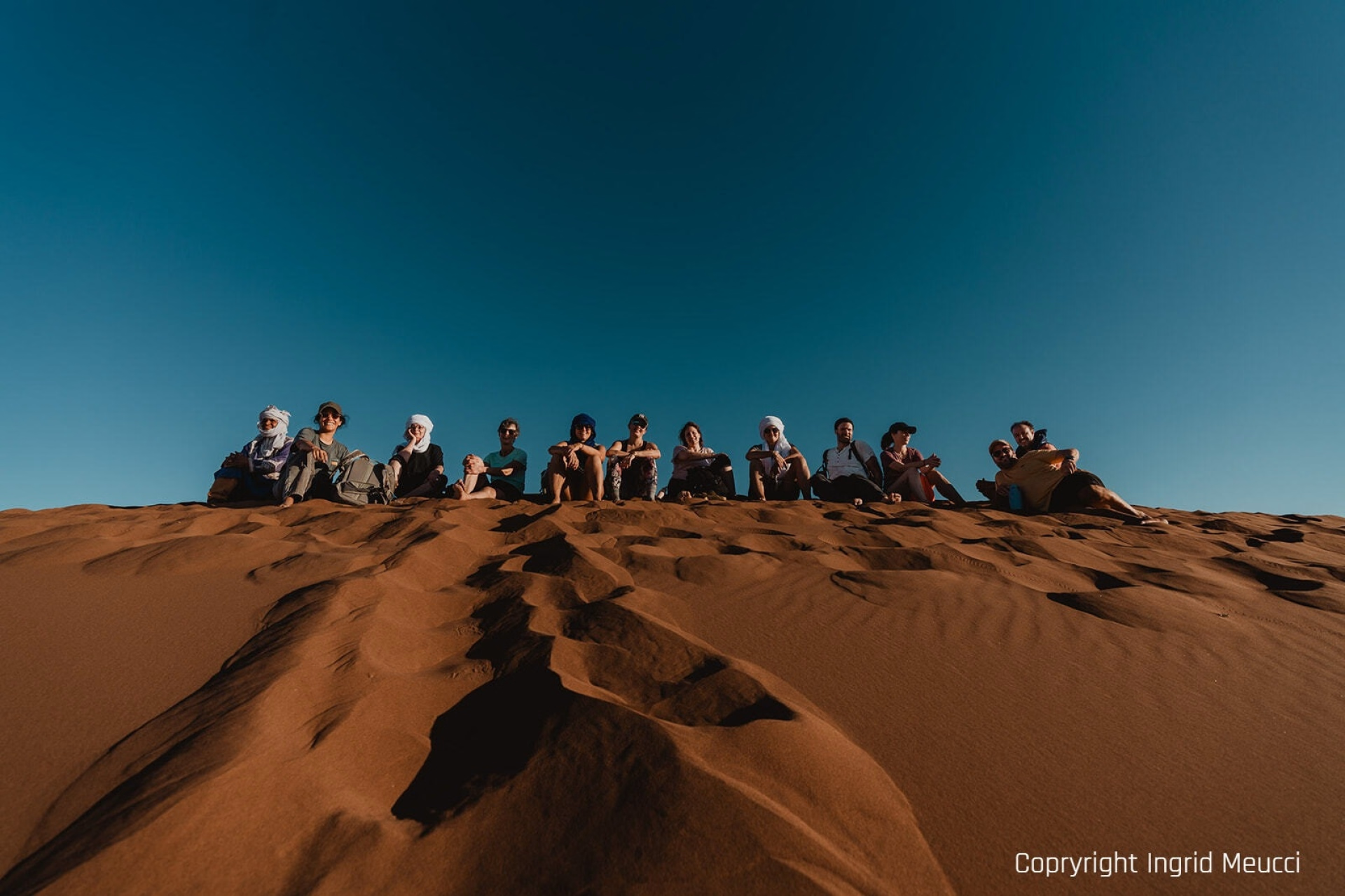
The level of fitness required for a desert trek is therefore very accessible. Only the ascent of the large dune presents a slight challenge, as you sink your feet into it and it reaches a height of approximately 150m. However, the view from the top is well worth the effort!
If you are unsure about your physical ability, you can choose the "riding camel" option, which can carry a person if they get tired.
In figures
Trekking
- Average duration/day: 3h30
- Average distance/day: 11 km
Management
Arabic
French
English
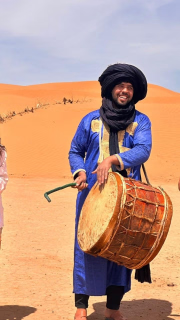
Mourad was born in the desert. His family later settled in M'Hamid el Ghizlane, at the gateway to the vast expanses of the Sahara.
For several years, he has accompanied travelers in this region which he knows intimately. His family history remains closely linked to caravans and life in the desert, a knowledge he enjoys sharing during his travels.
Through the trips he organizes, Mourad primarily wants to showcase a territory he has known since childhood, but also the people, customs and know-how that give it its character.
A way to discover the desert through the eyes of someone who is deeply attached to it.
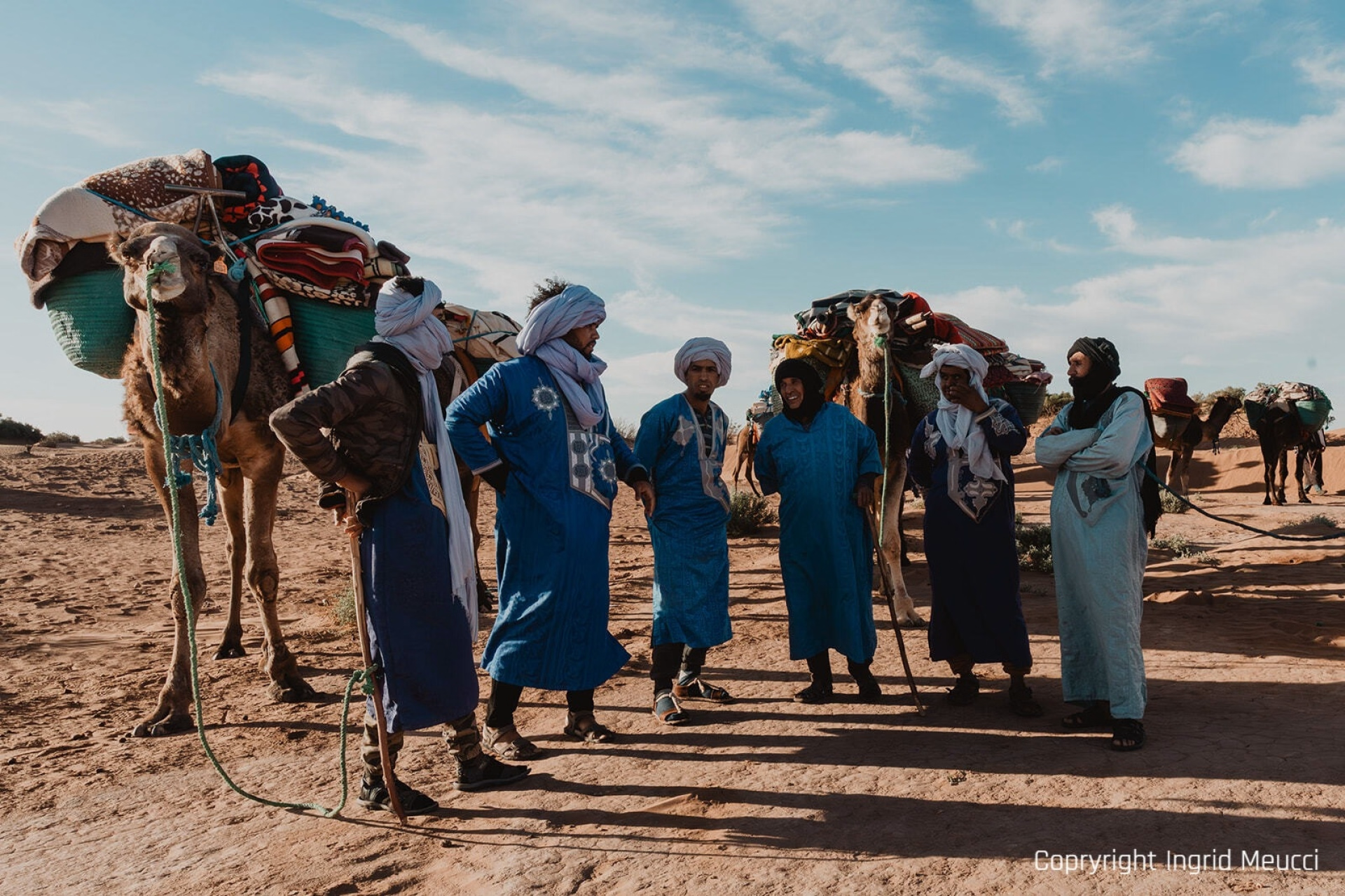
We work exclusively with local guides native to the Moroccan desert. They know the Sahara intimately and ensure safety, attentive listening, and support throughout the journey.
The advantage of traveling with locals is that it makes the trip authentic: as desert dwellers, they naturally share their history and nomadic way of life. This allows for a privileged approach to a deeply rooted Saharan culture.
The guides all speak Darija, the Moroccan dialect of Arabic. However, there is always at least one French-speaking nomadic guide with whom you can communicate in French.
Program
-
Transport to the desert. Festive and comfortable evening at the starting camp in the dunes.
- Transportation Car - 07h30 - 418km
- Accommodation Glamping
- Breakfast not included
- Lunch not included
- Dinner included
Departure at 8am from Marrakech. Lunch on the way is included, drinks not included.
You'll travel through beautiful landscapes on the road as you descend the Draa Valley, with several stops to fully appreciate them. The route promises to lead you through unspoiled desert areas; it will take you to the very edge of the desert.
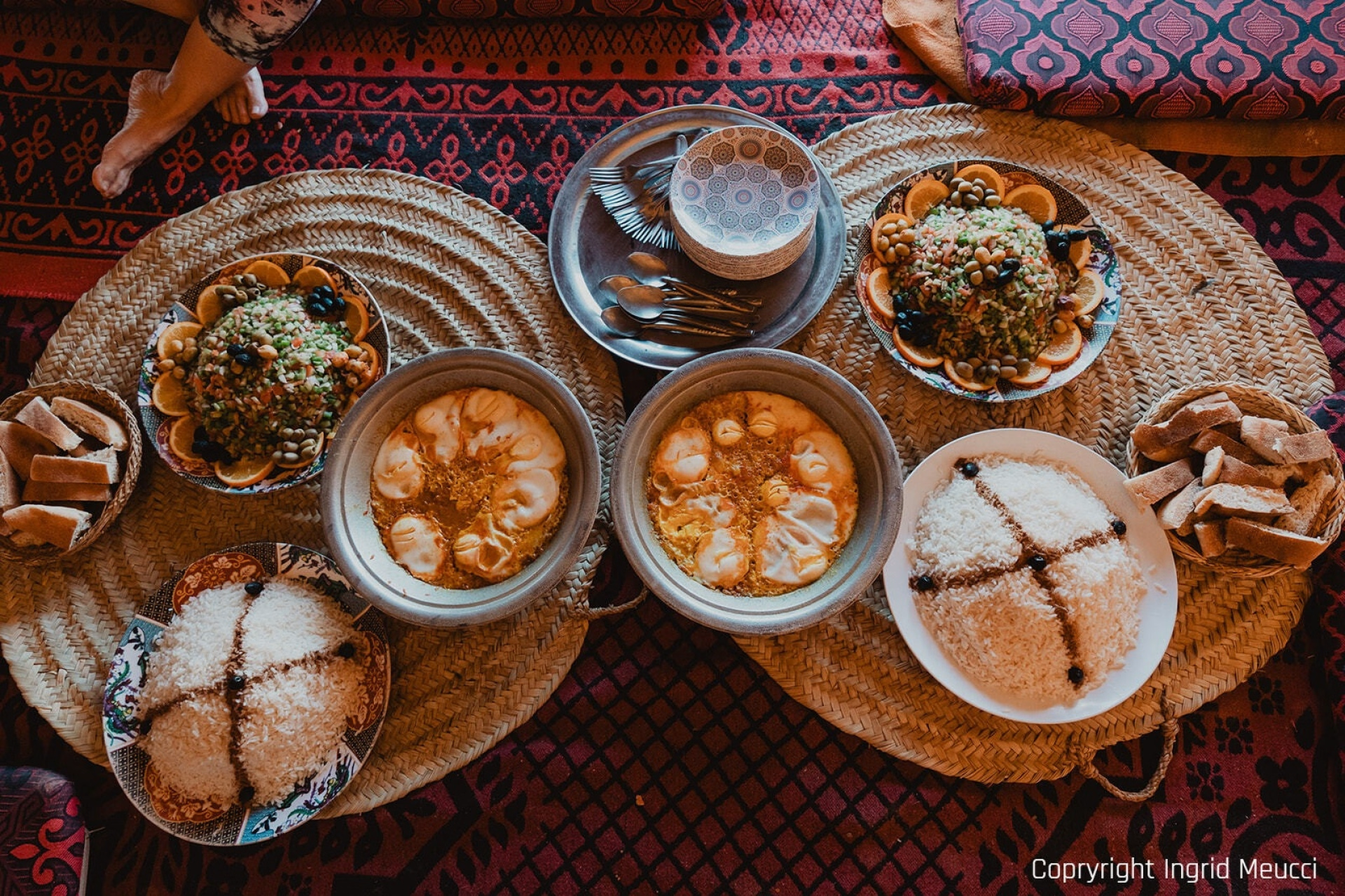
In the late afternoon, you arrive in M'Hamid el Ghizlane, the last village before the desert. The nomads meet you there and take you in a 4x4 to discover their camp in the Moroccan desert. Saharan hospitality will always include a cup of tea as a welcome. A delicious meal, with the spiced (but not spicy!) flavors of the Maghreb, and a restful, comfortable night in real beds will gently ease you into the wild Sahara of Morocco.
Day 1 -
Introduction to the desert, walking in the Sahara dunes and mobile camping.
- Activity Trekking
- Duration of the activity 4h
- Distance 12 km
- Accommodation Bivouac / Tent
- Breakfast included
- Lunch included
- Dinner included
The trek begins on foot from the fixed camp. Accompanied by the camel caravan and the Bedouin team, you head towards Sidi Naji, a place steeped in history which owes its name to a marabout who lived in the region.
As you walk, the landscapes of dunes and tamarisk trees herald the vast open spaces of the Sahara. You discover the first steps of nomadic life: setting up camp, gathering firewood and preparing for the night, before admiring a magnificent sunset over the desert.
In the evening, the group gathers around a campfire for a moment of sharing and conviviality. The first night is spent in a nomadic tent or under the stars, in the heart of the desert.
Day 2 -
Trek to discover the great Erg Zahar sand dune and sleep in the desert
- Activity Trekking
- Duration of the activity 4h
- Distance 12 km
- Accommodation Bivouac / Tent
- Breakfast included
- Lunch included
- Dinner included
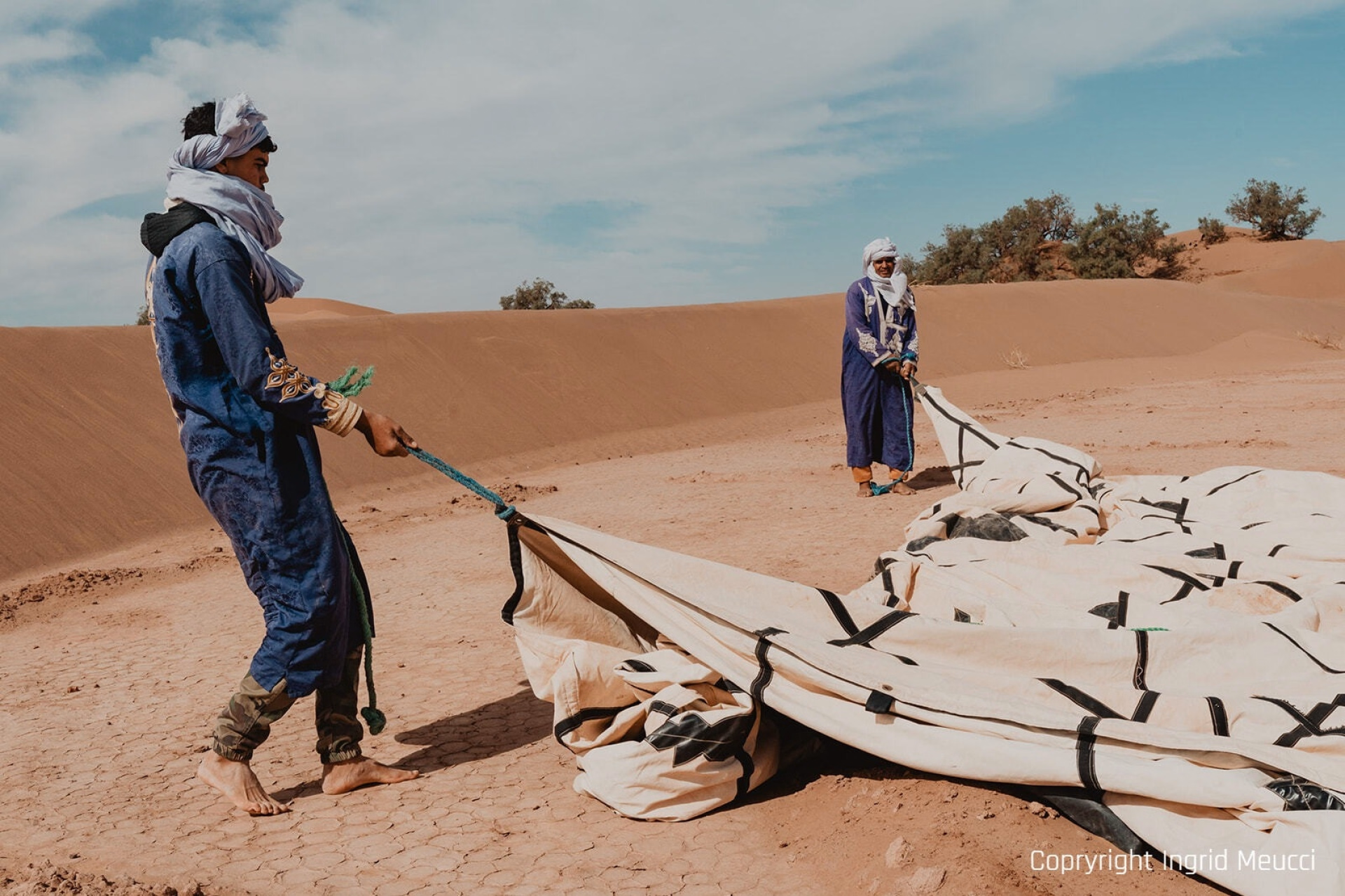
At daybreak, the camp is dismantled before setting off again, keeping pace with the camel caravan. The march takes place in the cool of the morning, heading towards Erg Zahar, one of the most beautiful dunes in the Moroccan Sahara.
As the journey progresses, the landscape gradually changes. The tamarisk trees slowly disappear, giving way to a mineral world dominated by sand. Erg Zahar then comes into view on the horizon. Its summit offers an exceptional panorama of the desert, stretching as far as the Algerian mountains on a clear day.
At the end of the day, you'll enjoy a sunset over the dunes before heading to a sheltered bivouac. The evening will continue around the campfire in a friendly atmosphere, perfect for chatting with the nomadic team.
Day 3 -
Wake up in the heart of the great dunes and return via the Aït Ounir erg
- Activity Trekking
- Duration of the activity 4h
- Distance 12 km
- Accommodation Bivouac / Tent
- Breakfast included
- Lunch included
- Dinner included
The first rays of dawn offer an unforgettable spectacle at the summit of Erg Zahar. To fully enjoy this unique atmosphere, we recommend spending the night under the stars, near your tent, and getting up before sunrise.
The caravan then resumes its journey across the desert, following the tracks of the Drâa. Guided by the experience of the nomads, passed down from generation to generation, it progresses naturally through the dunes and the vast Saharan spaces.
For each night in the bivouac, you choose to sleep in the nomad tent or under the stars, under the immensity of the desert sky.
Day 4 -
Walk back to the dunes of the Dwib erg.
- Activity Trekking
- Duration of the activity 4h
- Distance 12 km
- Accommodation Bivouac / Tent
- Breakfast included
- Lunch included
- Dinner included
The trek continues to Erg Dwib, the "wolf dune". After several days in the desert, this last evening around the fire naturally takes on the air of a farewell, with the guides and nomads who accompanied the caravan.
These few days of wandering allow you to discover the desert in a different way: by taking the time to observe its rhythm, the gestures of daily life and the way in which people live and move around.
An experience that is best enjoyed on site, and some memories of which will remain long after returning home.
Day 5 -
Breakfast in the Sahara and return transport.
- Transportation Car - 07h30 - 418km
- Activity Trekking
- Duration of the activity 1h
- Distance 4 km
- Breakfast included
- Lunch included
- Dinner not included
After a final night in the desert, a short walk of about an hour leads back to the permanent camp, the starting point of your trek. This is a last chance to enjoy the company of the nomadic guides and the camel caravan.
The return journey then crosses the Drâa valley to Ouarzazate, before reaching Marrakech in the evening, around 8:30 pm.
Day 6
Note
This program may be modified at the guide's discretion if conditions, weather, or the physical condition of the participants require it.
Accommodation
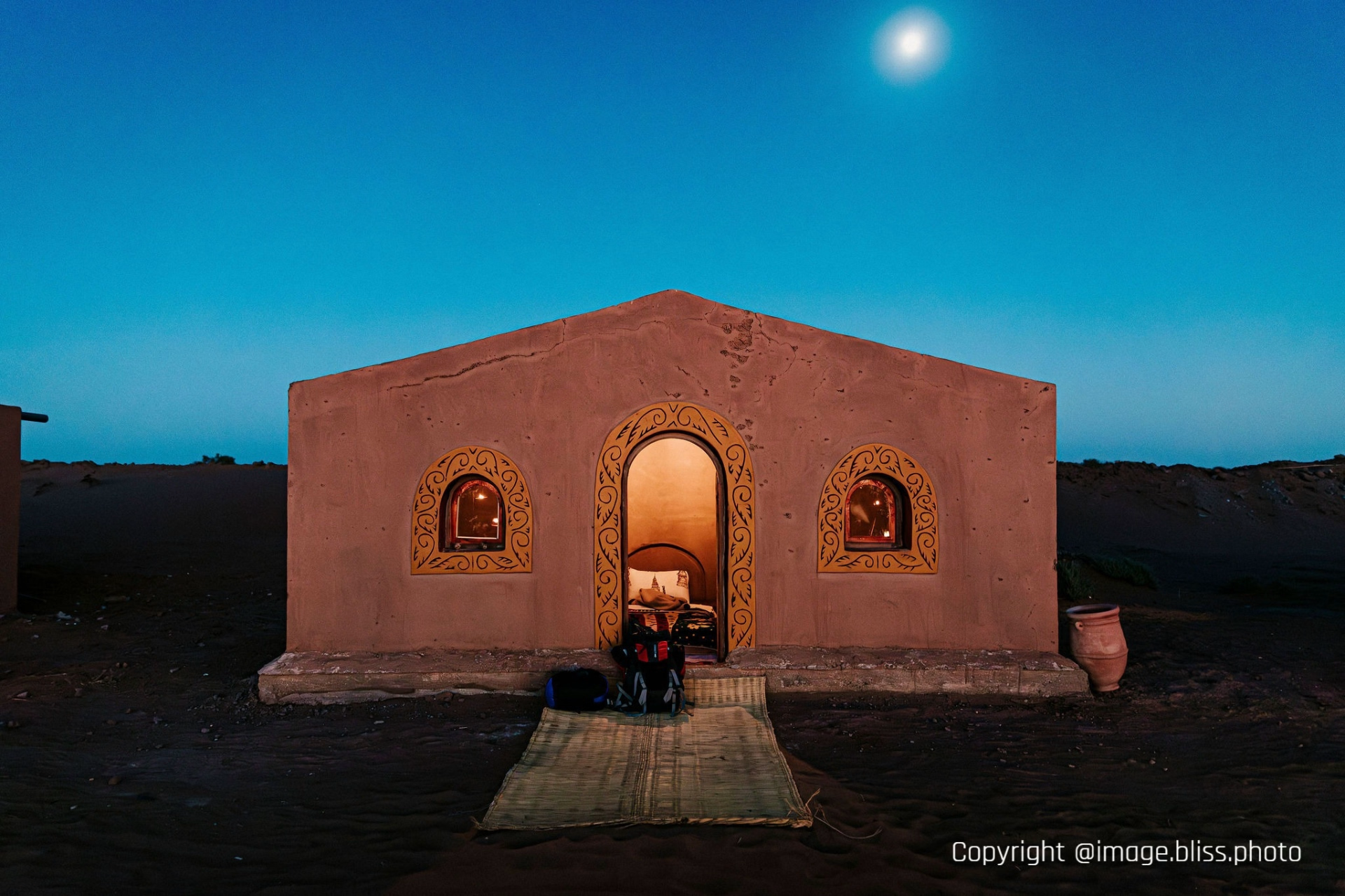
The permanent camp is set up in the heart of nature, amidst the dunes of the Moroccan Sahara, far from any inhabited area. From the village, you reach the camp in about fifteen minutes by 4x4, accompanied by a nomadic guide.
This deliberately isolated location allows you to experience a true night in the Moroccan desert, in a preserved, silent environment far from any tourist bustle.
The entire camp is organized around a central hearth, the true heart of nomadic life, where meals, evening gatherings and moments of sharing take place.
- There is a shared space for toilets and showers.
- There is hot water, which comes from a dug well. Water is a precious resource and must, of course, be used sparingly in the desert.
- There is a restaurant area where dinner is offered on the first evening.
The accommodations are small, traditional earthen buildings, inspired by local architecture.
Accommodation is in shared rooms for 3 to 5 people. The bedding is comfortable and sheets/blankets and towels are provided.
Thanks to solar panels, there is electricity at the permanent camp.
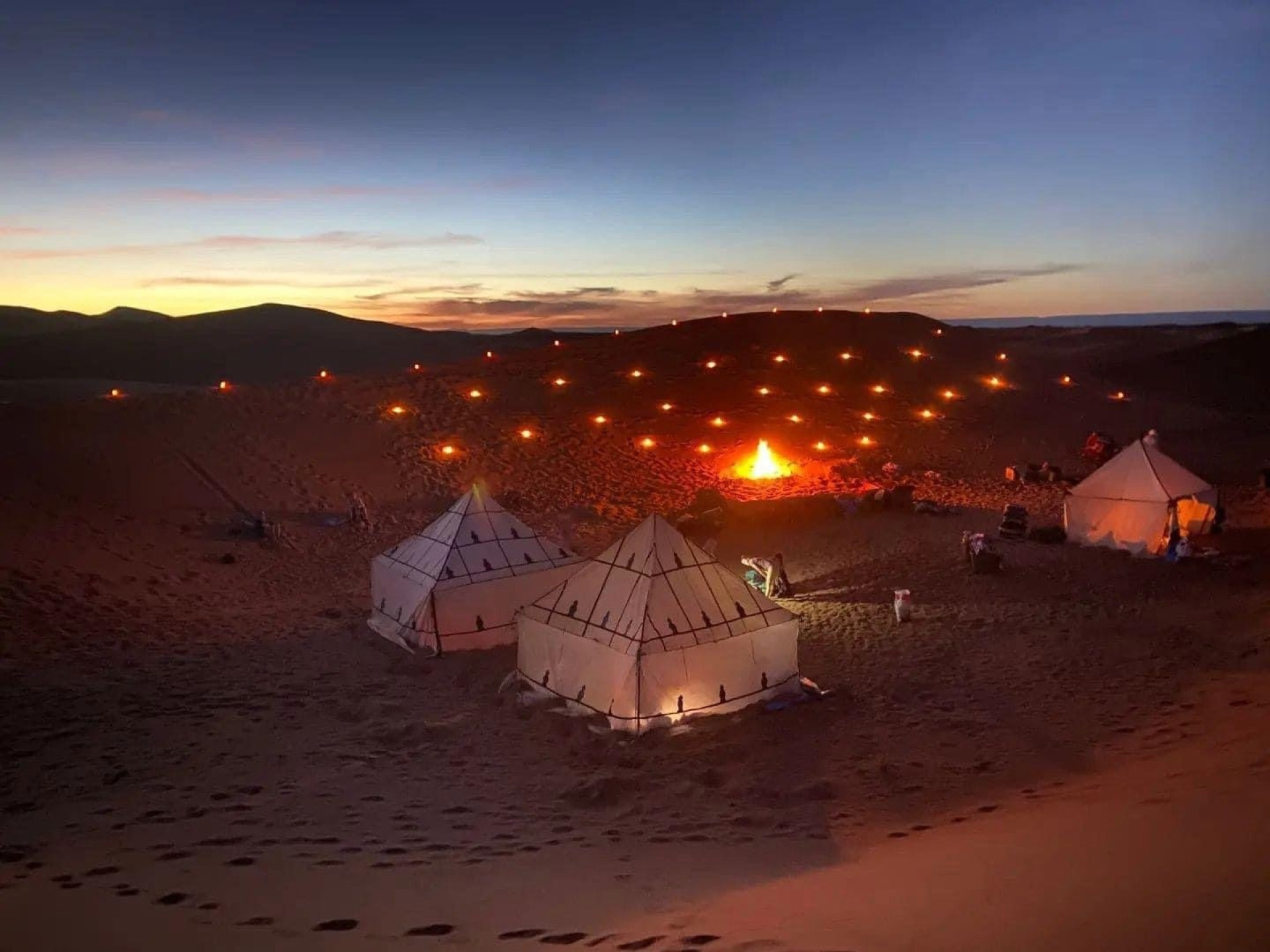
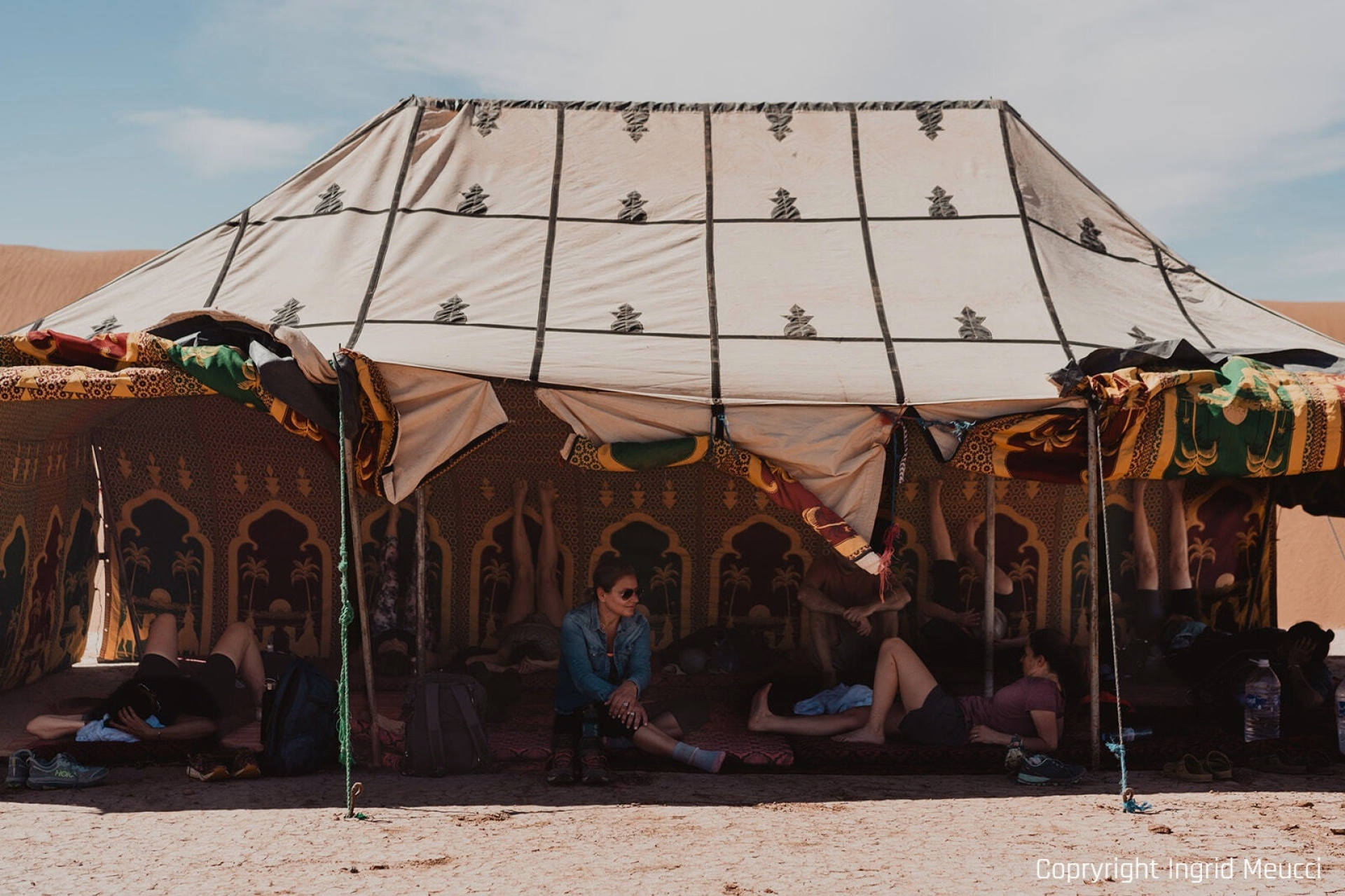
One or more tents are brought along for sleeping and resting time for participants during the bivouac portion.
Tents for the nomadic team and the kitchen setup are also brought along; the guides do not sleep with the participants.
For the night, sleeping mattresses are provided and warm blankets are brought along that you can borrow to put over your sleeping bag.
A few small Quechua tents can also be anticipated for people who have difficulty with the community or to be able to respect a separation of genders during the nights.
Note that one of the recommended experiences during the trek is to take your sleeping bag, borrow a blanket and a sleeping mat to put it on a nearby dune and sleep under the stars.
Access
Marrakech is approximately a 7.5-hour drive from the starting village of the treks, M'Hamid el Ghizlane. Our private transport will meet you at 8:00 AM on the morning of departure in Jemaa el Fna square in Marrakech. The drive is scenic, and breaks are planned, including a lunch break included in the price (drinks not included). Arrival in the village is in the late afternoon.
For the return journey, the estimated arrival time at Jemaa el Fna square in Marrakech is around 20/2030.
Go to the starting point
In the village, it is possible to leave your car in a secure parking lot for €2/day.
Price details
The price includes
- Return transport from Marrakech. Meals included on the route (excluding drinks).
- One night at a fixed camp in the desert with dinner and breakfast included.
- Full board throughout the duration of the trek in a nomadic camp. Breakfast, lunch and dinner.
- Mineral water during meals on the trek
- The trek is supervised by a team of nomadic guides throughout its duration.
- A camel caravan and camping equipment for the duration of the trek. Carry the bags and all the camp logistics.
The price does not include
- International flights
- Drinks and personal expenses on transport.
- Tips and personal expenses. It is customary to tip the accompanying nomadic team, at each person's discretion. (Generally, everyone gives around €40. There is no obligation, but it's a real boost for the nomads).
- Option “Sleeping bag rental” at €25.
- “Riding camel” option at €100.
Options
- Flex fare and insurance
Practical information
Specific formalities
Specifics
Before your departure, check with the embassy or consulate regarding the entry and stay requirements for your destination country. You can also find this information on the France Diplomatie website ( https://www.diplomatie.gouv.fr/fr/dossiers-pays/ ).
ℹ️ Information may change up to the departure date, remember to regularly check official websites.
Visa to Morocco
No visa is required, but it is imperative to have a valid passport with an expiry date at least 3 months beyond your departure date.
Health and government recommendations
Although not mandatory, travel insurance is strongly recommended.
The water in Morocco is not safe to drink, never drink tap water and buy bottled water.
Local currency
The official currency of Morocco is the Moroccan dirham (MAD).
1 euro is roughly equivalent to 10–11 dirhams, depending on the current exchange rate.
Here are some tips for managing your budget while you're there:
- ATMs are available in all major cities. Check with your bank about foreign withdrawal fees before you leave.
- For purchases in the souks or for tips, the euro is often an accepted currency. Always carry some cash, in euros or dirhams.
- Finally, keep some 20 and 50 dirham notes for small expenses: small taxis or a bottle of mineral water.
Staying connected in Morocco: Internet, SIM card
Morocco has a good mobile network, but beware of roaming charges which are often very high.
- Turn off data roaming as soon as you arrive.
- Buy a local SIM card.
- For greater simplicity, opt for an international eSIM
Equipment
Equipment provided on site
- Camping equipment (tents/ground mats/foam mattresses)
- Kitchen equipment (utensils/cutlery/glasses).
- A cook and baker are present among the nomadic team on site.
- Pack camels to carry equipment and camel driver.
Equipment to bring
Regarding hygiene:
- Toilet paper and lighter (Toilets in the wild during the trek, the paper can be burned after use or taken back in a garbage bag).
- A few small 10 or 5L garbage bags.
- Tissues.
- Small bottle of liquid soap.
- Bottle of hand sanitizer gel.
- Baby wipes for a quick bath.
- Dry shampoo and comb.
- Earplugs.
- No-rinse micellar water.
- Microfibre towel for space saving (Showers available at the fixed campsite on the first and last day).
First aid kit section:
- Doliprane.
- Antidiarrheals & Powdered Rehydration Solutions.
- Medications for constipation.
- Physiological saline solution.
- Lip balm.
- Biafine sunscreen, SPF 50+.
- Tweezers, nail clippers, antiseptic.
- Plasters for blisters.
During the cooler months (late November/December/January/February):
- Leggings and thermal underwear
- A pair of gloves, a neck warmer and a hat.
- One or two pairs of thick socks for cool nights
During the warmer months (late November/December/January/February):
- A fan, a misting spray.
Clothing to bring
During the trek:
- Sandals, shoes or walking sneakers.
- Flip-flops, Crocs, or sandals to wear when not walking at the nomadic bivouac. They can also be used as an alternative to hiking boots in case of blisters.
- Lightweight, flowing, and comfortable clothing. You can bring shorts and t-shirts, but we recommend long sleeves to protect yourself from the sun and breathable fabrics to avoid perspiration.
- A clean and warm outfit so you can change in the evening and stay warm during cool nights. (Puffer jacket, warm sweater + windbreaker).
- Sunglasses.
- Ski goggles in case of sandstorms. The shemagh also provides protection.
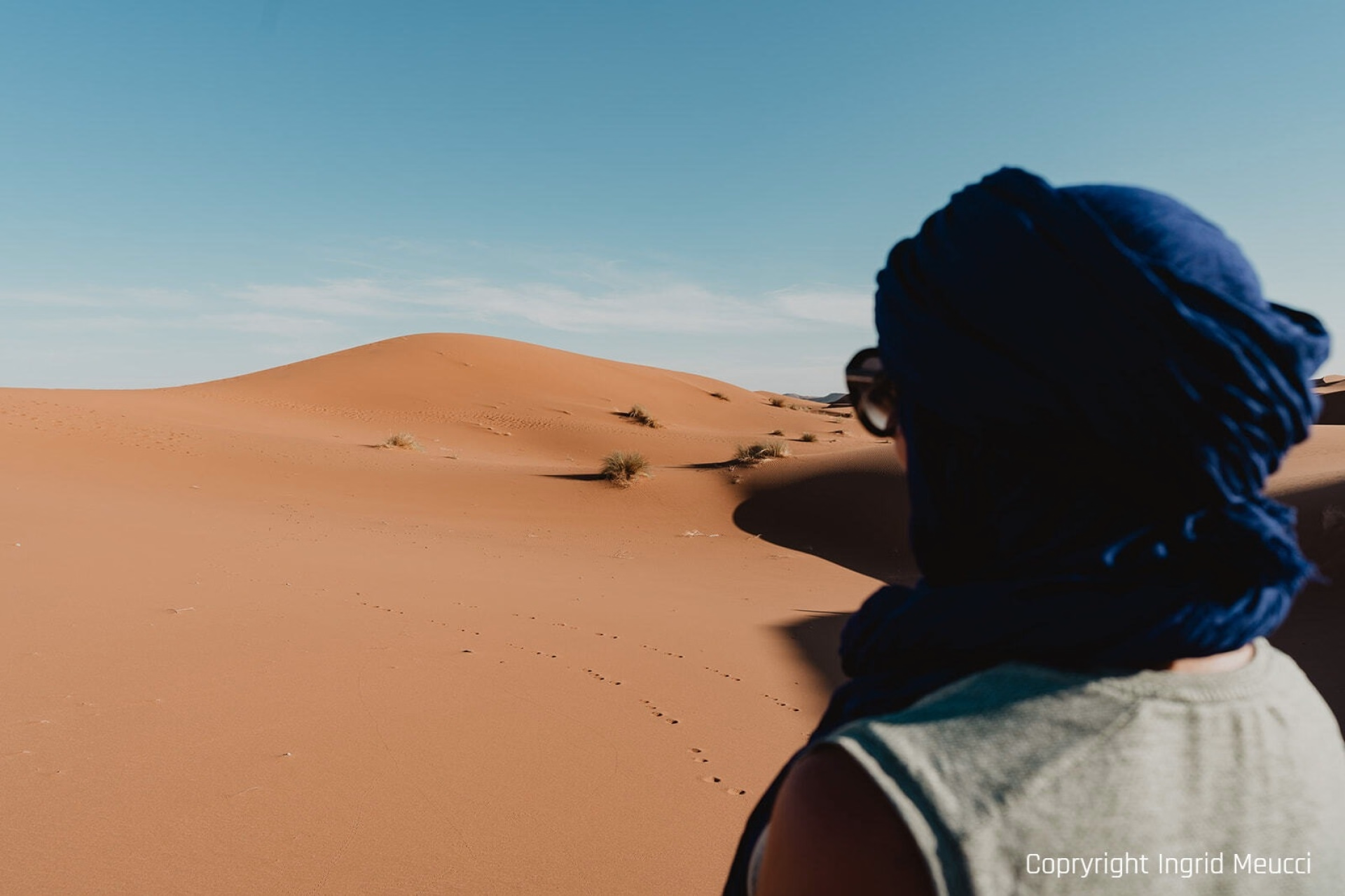
- A cap or hat is recommended to avoid sunstroke. Ideally, you should buy a shemagh locally. They are available for purchase at base camp before the trek begins.
- A comforting snack for when you're feeling sluggish. (mixed dried fruit, chocolate bars…)
During the colder months (December/January/Early February)
- Leggings and thermal underwear
- A pair of gloves, a neck warmer and a hat.
- One or two pairs of thick socks for cool nights
During the warmer months (September/October/Early November/Late February/March/April/May)
- A fan, a misting spray.
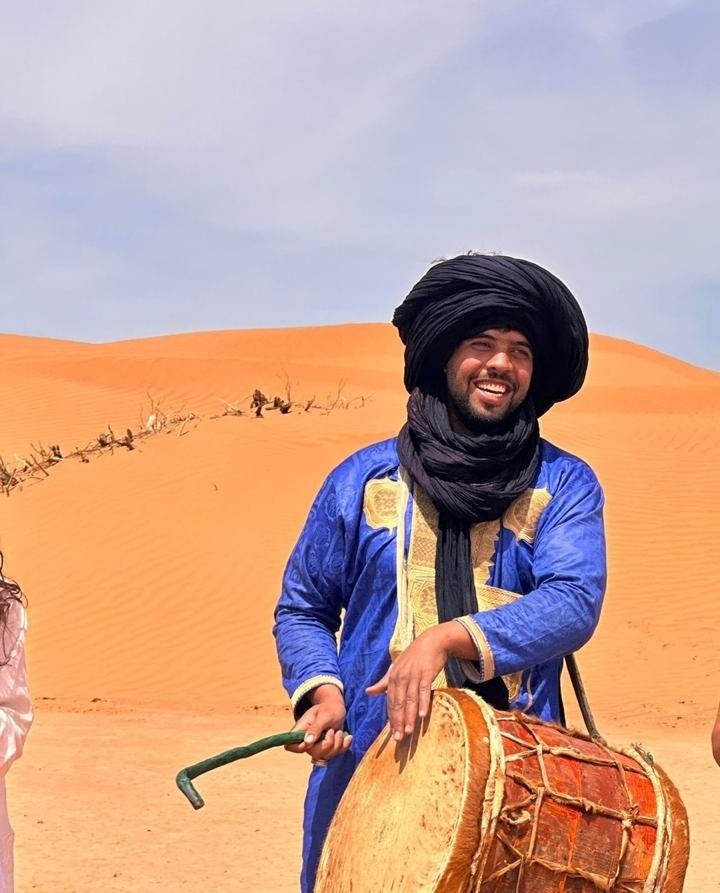
The Mourad team
Our local expert, based in southeastern Morocco, specializes in Saharan treks for everyone (families, friends, solo travelers). He offers authentic journeys, far from mass tourism, led by native guides and their camels. His trips emphasize immersion in nomadic culture, respect for the environment, animal welfare, and high-quality local organization, thus guaranteeing a human, responsible, and safe experience.