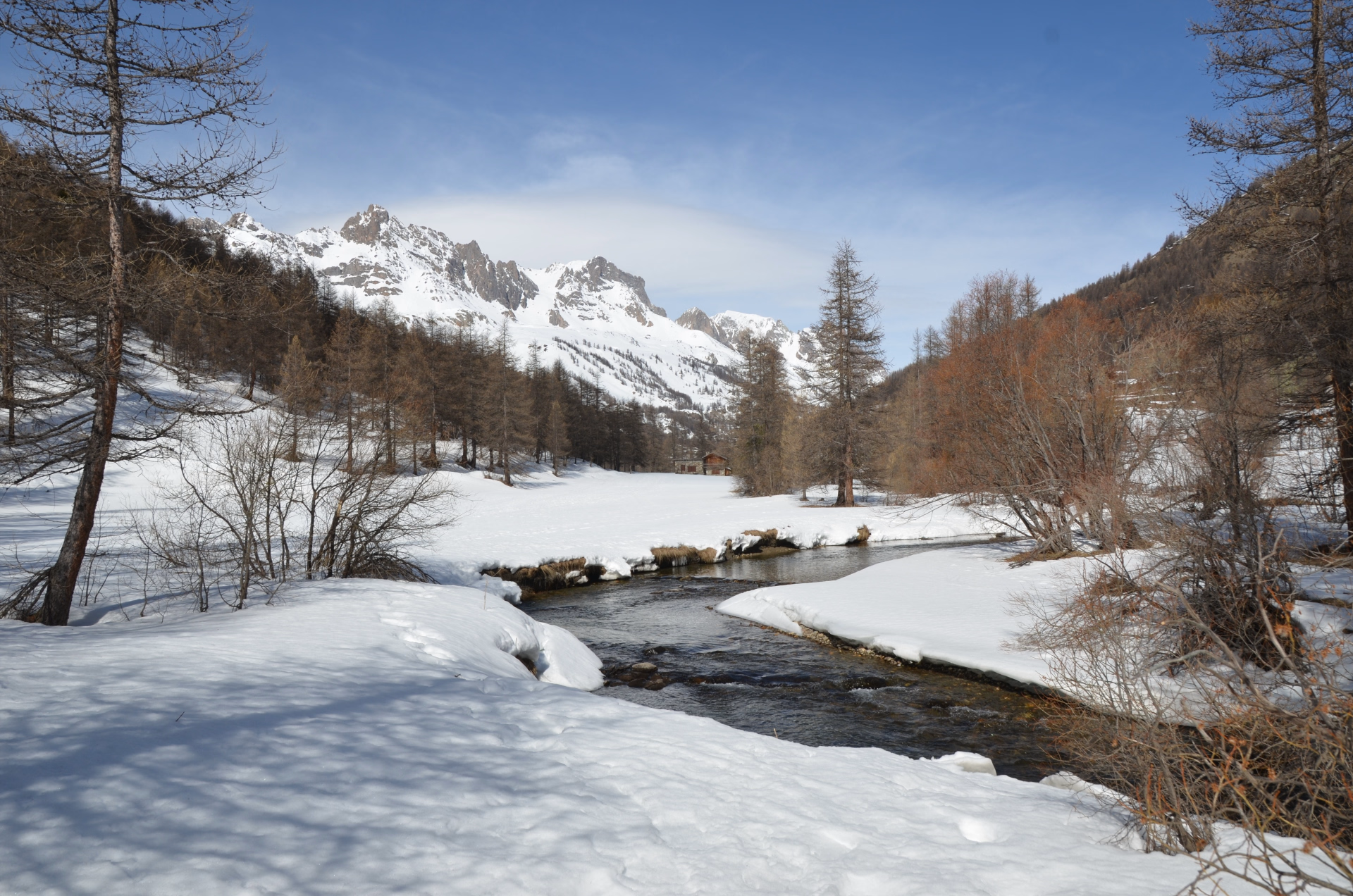
The grand tour of Mount Thabor on snowshoes: an immersion in the high mountains
In summary
-
Sports
-
Duration6 days
-
LevelAdvance
-
DestinationHautes-Alpes / French Alps
-
AgeFrom the age of 18
-
CO₂-Emissions32.55 kg CO2
-
Type of stayIn a group
-
Languages
 French
In a few words
New program 2027
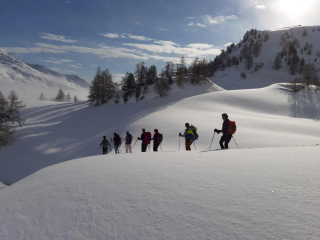
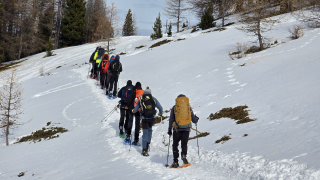
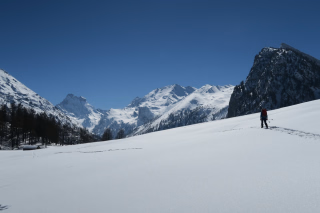
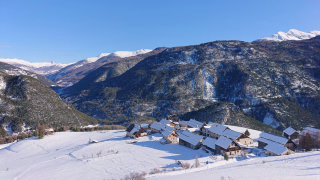
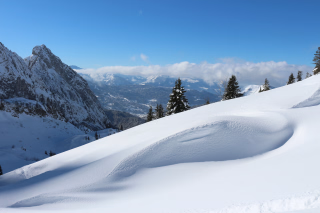
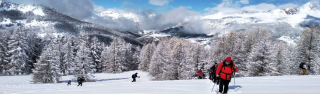
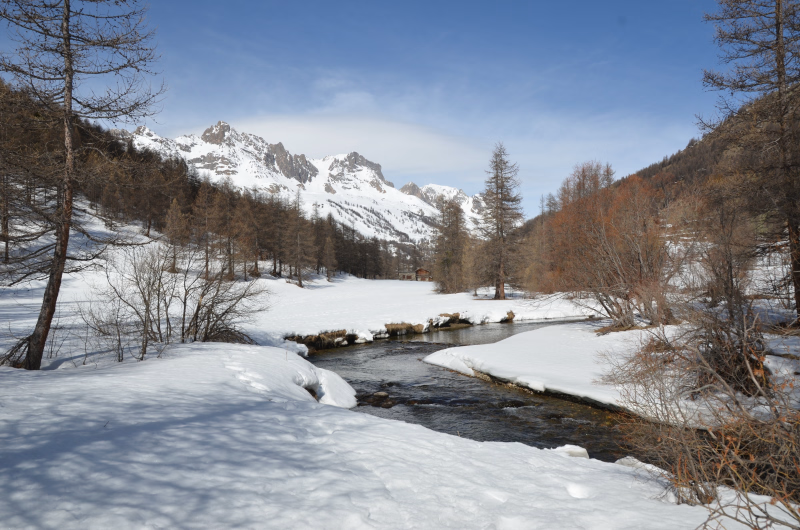
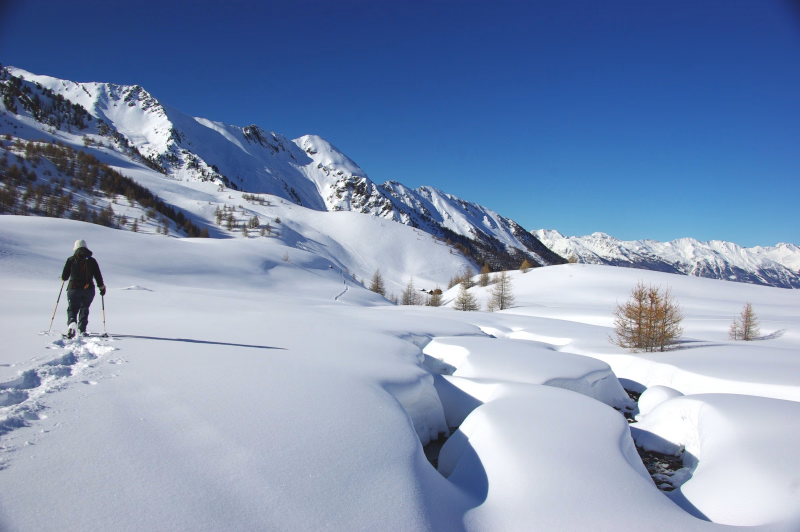
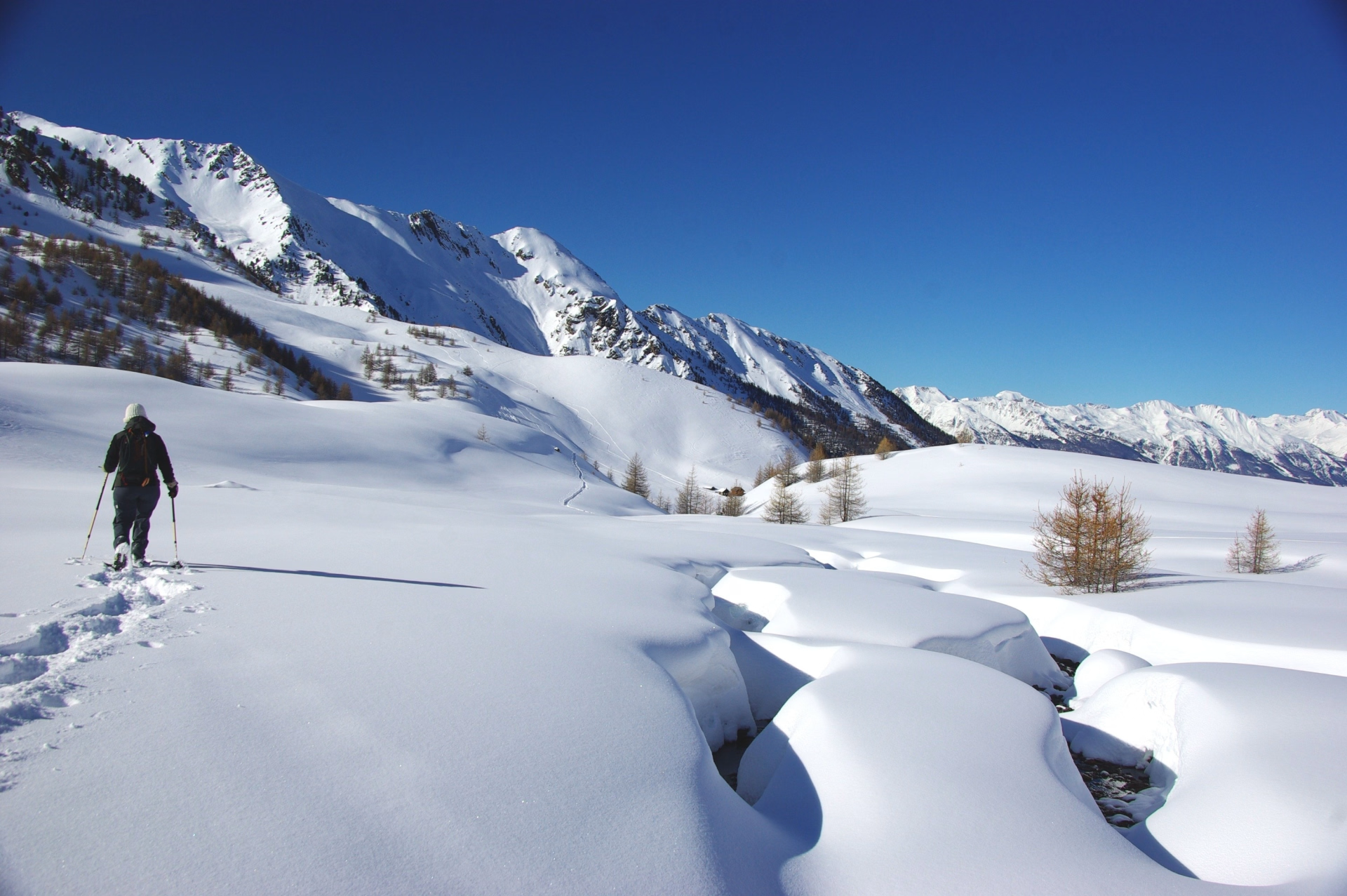
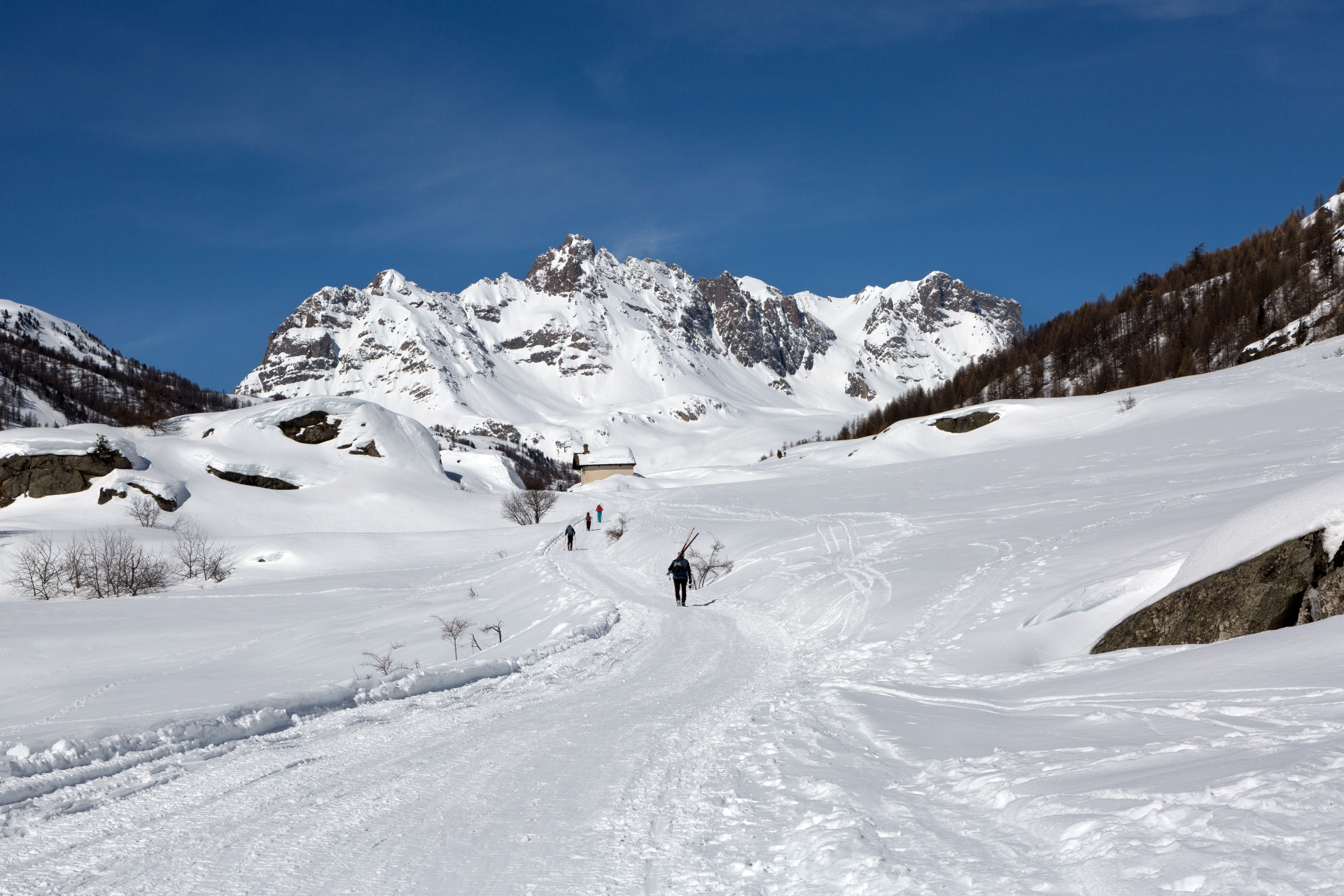
Embark on an authentic winter adventure in the heart of the wild Alps, exploring the high-altitude valleys of the Mont Thabor massif. This iconic circuit, established over 25 years ago, immerses you in an exceptional route through snow-covered passes, hidden valleys (Maurienne, Clarée, Vallée Étroite), and spectacular panoramas. Designed for snowshoeing enthusiasts, this multi-day trek takes you to discover less-traveled landscapes, offering total immersion in nature. Each evening, rediscover the warmth of mountain huts, the genuine welcome of the wardens, and the convivial atmosphere of alpine evenings. For five days, in complete autonomy, you will carry your own equipment for a true high-mountain experience far from marked trails. This trip is for those seeking a change of scenery, shared effort, and meaningful encounters in an environment that is both challenging and enchanting.
The highlights
-
A stay in a mountain refuge, for a true escape in the heart of the mountains
-
An immersion into the world of high mountains, in the heart of vast, unspoiled landscapes.
-
A small group limited to 8 participants, for a friendly atmosphere and personalized support.
Photos




Sport
Level
Snowshoeing
The expert's opinion
The trip corresponds to a level 4 SPORTY level. The walking pace remains slow and regular, with priority given to discovery rather than sporting performance.
Average elevation gain: 780 m Maximum elevation gain: 1000 m
Average length: 11 km Maximum length: 15 km
Average time: 5 hours 15 minutes Maximum: 6 hours 30 minutes
In figures
Snowshoes
- Average duration/day: 4h
- Average distance/day: 11 km
- Average daily elevation gain: 646 m
- Average daily descent: 684 m
Management
French
The mountain guide is state-certified, specializes in snowshoeing, and has an excellent knowledge of the mountain ranges.
As a mountain professional, he is committed to:
- Ensuring the smooth running of your hike in complete safety, by choosing the most appropriate route, regulating the pace, managing logistics and the health of the group, and adapting to weather conditions and snow conditions.
- Maintain group dynamics and cohesion.
- Facilitating your approach to the mountain environment and passionately sharing your knowledge of nature.
- To be available and attentive to everyone.
Program
-
Welcome and setup
- Accommodation Refuge
- Breakfast not included
- Lunch not included
- Dinner included
The meeting is scheduled for 6 p.m. at the Saint-Michel-de-Maurienne - Valloire train station.
You have a meeting with the guide for a short transfer to your accommodation.
Installation, final adjustments, equipment distribution, explanations.
Dinner and accommodation.
Day 1 -
From Valloire to the Drayeres refuges
- Activity Snowshoes
- Duration of the activity 4h45
- Distance 12 km
- Positive elevation gain 780 m
- Negative elevation 570 m
- Accommodation Refuge
- Breakfast included
- Lunch included
- Dinner included
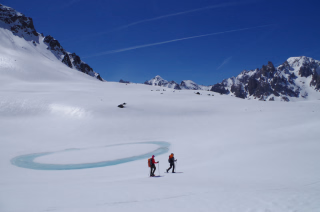
We set off from Valloire for a beautiful stage. We ascend the Valloirette valley to the foot of the Grand Galibier, where the real climb begins. We successively cross the Col des Cerces (2574 m), then the Seuil des Rochilles (2459 m) and its lakes, which mark the entrance to the Clarée valley, dominated by the great cliffs of the Cerces massif.
An incursion to the Brèche du Pain de Sucre is possible (if the timing allows) before reaching the Refuge des Drayères (2167 m), where we will spend the night.
Walking time: 4 hours 45 minutes
Distance: 12 km
Elevation gain: +780m -570m
Day 2 -
Col des Muandes - Tré alpini
- Activity Snowshoes
- Duration of the activity 5h15
- Distance 13 km
- Positive elevation gain 660 m
- Negative elevation 1060 m
- Accommodation Refuge
- Breakfast included
- Lunch included
- Dinner included
We ascend a long, wide valley that gradually leads us to the Col des Muandes (2828 m). We are rewarded with a beautiful view of the Thabor peaks and, further on, the Écrins mountains. We then descend into the Vallée Étroite, an unusual French valley whose only road access is via Italy.
The lower Vallée Étroite welcomes us with beautiful larch forests that immerse us in the atmosphere of the southern Alps (without the cicadas!!!).
The day ends at the Tre Alpini Refuge (1765 m), where we will spend the night.
Walking time: 5 hours 15 minutes
Distance: 13 km
Elevation gain: +660m -1060m
Day 3 -
Col de la Vallée Etroite - Le refuge du Thabor
- Activity Snowshoes
- Duration of the activity 3h
- Distance 8 km
- Positive elevation gain 750 m
- Accommodation Refuge
- Breakfast included
- Lunch included
- Dinner included
After skirting the foot of the Three Kings Mountains, named of course Gaspar, Melchior, and Balthazar, the Tabernette valley leads us to the Col de la Vallée Étroite (2434 m). This pass is the main crossing between the Briançonnais and Maurienne regions, between Italy and France.
We then head to the Thabor refuge (2500 m) for the night. A few slight variations in the route are possible depending on conditions and timing.
Walking time: 3 hours
Distance: 8 km
Elevation gain: +750 m
Day 4 -
The passage over the Pic du Thabor and the High Valleys
- Activity Snowshoes
- Duration of the activity 4h
- Distance 11 km
- Positive elevation gain 590 m
- Negative elevation 950 m
- Accommodation Refuge
- Breakfast included
- Lunch included
- Dinner included
Going up the Combe de la Grande Montagne, we reach the Col du Cheval Blanc (2791 m), which opens onto the isolated valley of Bissorte.
We cross it to reach the pass of Pic du Thabor (2952 m) where an extraordinary view of the Écrins massif unfolds. Those who wish can make the ascent of Pointe de Terre Rouge (3080 m) and return.
The long valley of the Neuvache then leads us to the brand new Terre Rouge refuge (2182 m).
Walking time: 4 hours
Distance: 11 km
Elevation gain: +590m -950m
Day 5 -
One last panoramic view before heading back down
- Activity Snowshoes
- Duration of the activity 4h
- Distance 9 km
- Positive elevation gain 450 m
- Negative elevation 840 m
- Breakfast included
- Lunch included
- Dinner not included
For this last day, several options are available to participants, with possible ascents towards the Petit Fourchon (2568 m), before descending to conclude our stay towards Valmeinier.
We will collect the vehicles in Valloire, with an expected arrival at Saint-Michel-de-Maurienne station around 5:30 pm.
Walking time: 4 hours
Distance: 9 km
Elevation gain: +450m -840m
Day 6
Note
The indicated itinerary may sometimes be slightly modified, either for organizational reasons (overbooked accommodations, splitting groups, trail conditions, avalanche risks, etc.) or at the guide's discretion (weather, group level, etc.). These adjustments are always made in your best interest, to guarantee your safety and comfort.
Snow cover:
Our trips are primarily hiking excursions, and even if snow becomes scarce, especially towards the end of the season, we guarantee the departure of the trips. The winter atmosphere and light are always present, although sometimes it's necessary to carry snowshoes a little to reach the snow. Since the launch of this hike, this has remained very rare.
Accommodation
The mountain huts are heated and staffed, with small dormitories for added comfort. Beds are equipped with duvets, and slippers are usually provided.
Day 1 - Village hotel in Saint-Michel-de-Maurienne.
Day 2 - Drayères Refuge: dormitories for 8, running water and sometimes showers available. Recently renovated, the refuge may, very rarely, be unguarded, but experience shows that this does not detract from the friendly atmosphere of the night.
Day 3 - Tre Alpini Refuge: Comfortable dormitories for 4 to 6 people, running water, and showers available. Although the Vallée Étroite is French, road access is only possible from Italy. Ricardo will help you appreciate the warm atmosphere and typical pasta of Italian mountain huts.
Day 4 - Thabor Refuge: Dormitories for 15 people, without running water, but with recently installed dry toilets inside. The meal arrangements and typical sleeping arrangements (bunk beds) offer a true mountain refuge experience.
Day 5 - Terre Rouge Refuge: one night in dormitories for 4 to 10 people, with running water and sometimes showers available. This recently opened refuge (2017) allows for an additional stage on the Tour du Thabor, avoiding the long descent to Valmeinier.
Access
Welcome: Meet on Day 1 at 6 p.m. in front of the Saint-Michel-de-Maurienne - Valloire train station.
Please let us know your preferred method of access when registering, so that we can best organize the shuttles to the starting point of the hike.
Arrival by train: Saint-Michel Valloire station .
Arrival by car:
Saint-Michel-de-Maurienne - Valloire train station.
You are entering a mountainous area: winter equipment is mandatory (snow tires or chains). Remember to practice fitting them before you leave.
Access via the Maurienne A43 motorway, Saint-Michel-de-Maurienne exit.
Parking:
You can leave your vehicle in the car park at the start or finish of the hike.
Reception information: In case of delay: on the same day, if you are likely to arrive late, please leave a message directly to the agency at 04 51 20 50 50 or on the emergency phone at 06 76 36 34 58.
Dispersion: Day 6, around 5:30 p.m., at the Saint-Michel-de-Maurienne - Valloire train station.
Go to the starting point
Saint-Michel Valloire train station .
Meet on Day 1 at 6pm in front of the Saint-Michel-de-Maurienne - Valloire train station.
Please let us know your preferred method of access when registering, so that we can best organize the shuttles to the starting point of the hike.
Saint-Michel-de-Maurienne - Valloire train station.
You are entering a mountainous area: winter equipment is mandatory (snow tires or chains). Remember to practice fitting them before you leave.
Access via the Maurienne A43 motorway, Saint-Michel-de-Maurienne exit.
You can leave your vehicle in the car park at the start or finish of the hike.
Price details
The price includes
- Organization and supervision costs.
- Full board food and accommodation.
- Accommodation for the first day in Valloire.
- The loan of snowshoes and poles, as well as safety equipment.
- Taxes and tourist taxes.
The price does not include
- Drinks and personal expenses.
- Any shower tokens.
- Personal equipment.
- Transfers to and from the reception location.
- Insurance
- Everything that is not listed under "The price includes".
Options
- Flex fare and insurance
Practical information
Specific formalities
Specifics
During the hike, you must have the following documents in your possession:
- Valid identity card or passport.
- Your travel insurance leaflet received upon registration (if you purchased the insurance we offer) or your personal insurance (contract number + telephone number).
- Health insurance card.
- Membership card of the FFME or the CAF (if you are a member).
Equipment
Equipment provided on site
We offer robust and lightweight snowshoes, equipped with plate bindings and anti-slip tips, suitable for all mountain or trekking shoes, as well as poles and specific hiking safety equipment.
- TSL Snowshoes
- Sticks
- Safety equipment: avalanche transceiver, probe and shovel
This equipment is provided free of charge. If you already have your own equipment, you may use it provided it is in perfect working order. In this case, please inform us when registering, specifying the equipment you have, so that we can better assess the group's needs.
Equipment to bring
Equipment :
- 1 40-litre backpack with a flexible frame, equipped with a waist belt and allowing the snowshoes to be attached.
- A large plastic bag to protect the inside of the backpack.
- 1 pair of excellent quality sunglasses with side protection.
- 1 thermos or a preferably insulated water bottle (1.5 liters minimum).
- 1 Opinel-type pocket knife.
- Small pouch (preferably waterproof) to put your money, identity card, health insurance card and assistance contract in.
- Sunscreen + lip balm.
- Airtight plastic container (minimum capacity 0.5 l) + cup + cutlery.
- Camera, binoculars (optional).
- A square of foam mat to sit on in the snow during lunchtime meals.
For the evening at the accommodation:
- A sleeping bag liner. Duvets are unnecessary.
- Toiletries (opt for the essentials, small sizes, samples and travel kits).
- 1 quick-drying bath towel.
- 1 headlamp or flashlight.
Personal pharmacy:
- Your usual medications.
- Elastic adhesive strip, Elastoplast type, 8 cm wide.
- Sets of adhesive bandages + disinfectant compresses.
- Double skin (like Compeed or SOS blisters).
- 1 pair of tweezers.
Clothing to bring
For the upper body, the 3-layer principle allows you to manage almost all situations:
- A long-sleeved undershirt made of breathable material (hollow fiber).
- A warm fleece fur jacket.
- A windproof, waterproof and breathable Gore-Tex type jacket.
When hiking in calm, sunny weather, a base layer may be sufficient. In rain, snow, or wind, simply add a waterproof jacket. In very cold weather or during breaks, a fleece jacket is an essential addition.
Choose quick-drying clothes, so avoid cotton. Opt for wool (merino wool underwear is comfortable and doesn't develop unpleasant odors), silk, and synthetic fibers that will keep you dry and warm for as long as possible.
Remember to dress warmly before you get cold, but especially to remove layers before you get too hot. Sweat is a hiker's enemy, as it dampens clothing that quickly becomes icy during breaks. Therefore, it's very rare to undertake a climb wearing a fleece jacket.
Avoid anoraks and ski suits, which are too warm and bulky.
The ideal list: (to be adapted according to the hike and the season)
- 1 sun hat or cap.
- 1 scarf or neck warmer.
- 1 beanie.
- 1 pair of mittens with possibly silk gloves and an extra pair of gloves.
- Short-sleeved T-shirts made of breathable material are preferred.
- 1 long-sleeved undershirt in breathable material or a shirt.
- 1 fleece fur jacket.
- 1 windproof, waterproof and breathable Gore-Tex type jacket with hood.
- 1 rain cape or a bivvy bag if you own the jacket above.
- 1 pair of loose-fitting trekking trousers.
- 1 pair of waterproof and breathable overtrousers, Gore-Tex type.
- One pair of high-top hiking boots with good ankle support and waterproof soles (like Vibram). Remember to test new shoes and those that haven't been worn for a long time beforehand. Boots and après-ski boots are absolutely forbidden.
- 1 pair of gaiters.
- 1 ski mask against fog