Snowshoeing and self-reliance training trip in the Pyrenees
In summary
-
Sports
-
Duration2 days
-
LevelIntermediate
-
DestinationPyrenees / Occitanie
-
AgeFrom the age of 18
-
CO₂-Emissions12.53 kg CO2
-
Type of stayIn a group
-
Languages
 French
In a few words
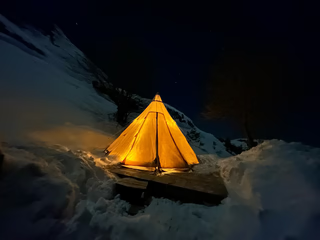
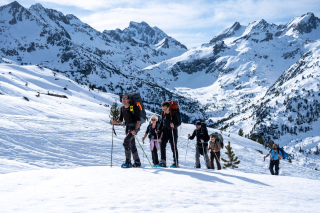
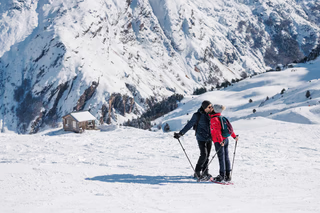
Winter in the mountains presents specific challenges . Outdoor sports enthusiasts who venture off marked trails must contend with dangers such as avalanches, slippery areas, and extreme weather conditions. This training course offers a comprehensive approach to anticipating and managing these risks. You will learn essential avalanche victim search techniques using avalanche transceivers (DVA). You will be trained to identify risk zones , organize rescue efforts, and respond effectively in the event of an accident. The program also covers methods for traversing challenging terrain during winter. You will master rope techniques , belaying with deadmen, and progression methods adapted to slippery conditions.
The highlights
-
Supervision by experienced high-mountain guides
-
Discovering survival and safety techniques
-
Learning winter mountaineering techniques
Photos


Sport
Level
Snowshoeing
The expert's opinion
The day trips do not exceed 10 kilometers and 600m of elevation gain.
This course is open to people who have already practiced snowshoeing at least once.
We are focused on the transmission of knowledge with a lot of educational exchanges.
The training takes place in a friendly atmosphere.
Management :
You will be accompanied by a mountain guide specializing in mountain safety.
In figures
Snowshoes
- Average duration/day: 3h
- Average distance/day: 10 km
- Average daily elevation gain: 500 m
- Average daily descent: 500 m
Management
French
Program
-
Avalanche victim search
- Activity Snowshoes
- Duration of the activity 3h
- Distance 10 km
- Positive elevation gain 500 m
- Negative elevation 500 m
- Accommodation Cottage
- Breakfast not included
- Lunch not included
- Dinner included
Essential skills for off-piste winter activities:
The morning :
- Welcome and presentation of the training
- Snowshoeing trip of 1.5 to 2 hours to reach an ideal location
- Training on snow science and risk prevention in winter
- Team organization and implementation of emergency response
The afternoon:
- Presentation of the different models of avalanche transceivers (analog, digital and mixed)
- Avalanche victim search exercises
- First aid procedures to keep the victim alive
Day 1 -
Snow safety techniques
- Activity Snowshoes
- Duration of the activity 3h
- Distance 10 km
- Positive elevation gain 500 m
- Negative elevation 500 m
- Breakfast included
- Lunch included
- Dinner not included
Learn how to react to unexpected events in a snowy mountain environment:
The morning :
- Snowshoeing trip of 1.5 to 2 hours to reach an ideal location
- A reminder about snow science and avalanche situations
- Safe progression techniques in snowy environments
The afternoon:
- Adapting a route to ensure the safe passage of a group
- Techniques for using ropes in snowy environments
- Anchoring and deadweight in the snow
- Crossing methods adapted to slippery and unstable terrain
Day 2
Accommodation
The Aïga Valley is an incredible place at the crossroads of all possibilities!
Much more than just accommodation, this place is unique, surrounded by nature and tranquility: you are in the heart of a Natura 2000 protected area, a haven for flora and fauna. It's the perfect place to recharge! Its remarkable location: 1 hour from Toulouse and Andorra, 20 minutes from Ax-les-Thermes, 10 minutes from the town of Tarascon-sur-Ariège, and 3 minutes from the spa town of Ussat-les-Bains, you are above all at the crossroads of three valleys.
Price details
The price includes
- Supervision by a mountain guide
- Full board, from the evening of Day 1 to lunchtime on Day 2
- Equipment rental and snowshoes
- Shared dormitory accommodation
The price does not include
- Lunch on Day 1
- Drinks
- Personal expenses
- Transportation to the meeting point
- Transfers during the stay
Options
- Flex fare and insurance
Practical information
Specific formalities
Specifics
Before your departure, check with the embassy or consulate regarding the entry and stay requirements for your destination country. You can also find this information on the France Diplomatie website ( https://www.diplomatie.gouv.fr/fr/dossiers-pays/ ).
In the case of flights with stopovers operated by different airlines, also check the entry requirements of the countries you are transiting through.
It is your responsibility to ensure you are in compliance, particularly regarding the validity of your identity documents (for example, some countries require your passport to be valid for at least six months after your return) , visa requirements, necessary vaccinations, and health recommendations. And don't forget to consider any customs restrictions and other potential requirements of your destination or transit country.
ℹ️ Information may change up to the departure date, remember to regularly check official websites.
Equipment
Equipment provided on site
- Snowshoes
- Sticks
- Ropes
- DVA kit ( on request )
Equipment to bring
- A pair of sunglasses
- Sunscreen
- A second pair of gloves
- A headlamp with batteries
- Knife, cup and cutlery
- A 1L water bottle
- Cereal bar
- A rain cover for your backpack
- Mobile phone
- Snowshoes ( available for loan )
- Snow spike for shoe
- A pair of telescopic poles ( available for loan )
- Shovel, avalanche transceiver ( available for loan )
- 30m D8 rope ( possibility of loan )
- Your camera
- Binoculars
- A spare pair of socks and underwear
- A down comforter
- Toiletries (small towel, toothbrush, toothpaste, soap)
Clothing to bring
- A pair of waterproof walking shoes
- Waterproof walking trousers ( avoid ski suits )
- A fleece sweater
- A beanie
- A pair of waterproof gloves
- Swimsuit
- Towel