Queyras Massif
/ Hautes-Alpes
New Year's in an isolated hamlet in the Queyras
5/5
(5 reviews)
Réf : MUWPDC
In summary
-
Sports
-
Duration3 days
-
LevelIntermediate
-
DestinationQueyras Massif / Hautes-Alpes
-
AgeFrom the age of 18
-
CO₂-Emissions33.6 kg CO2
-
Type of stayIn a group
In a few words
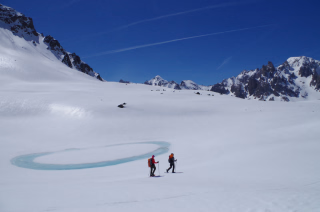
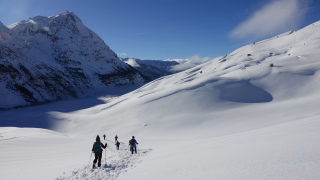
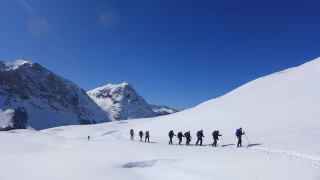
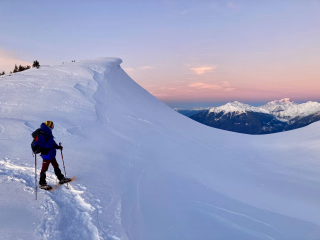
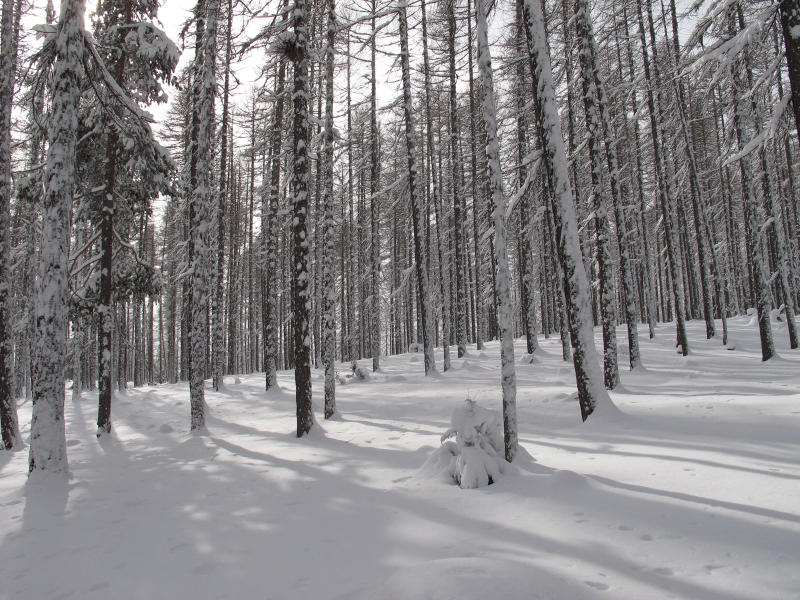
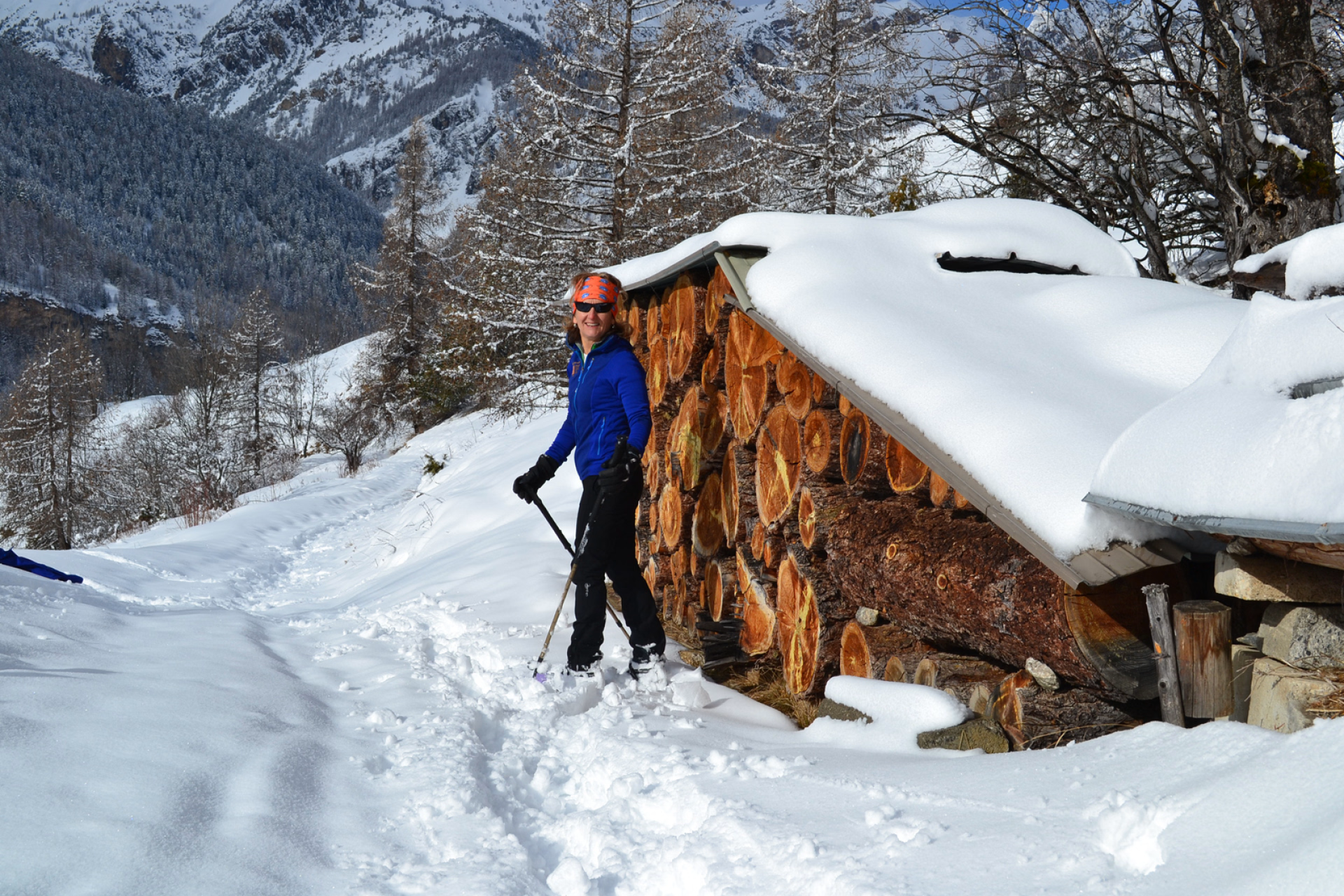
Embark on an unforgettable winter adventure in the heart of the Queyras, a pristine region where nature reveals its full splendor. This three-day trip invites you to discover the Aigues Valley , the Fontantie alpine pastures , and the charming hilltop villages of Château Queyras , all in a friendly and welcoming atmosphere. Through snow-covered forests , panoramic plateaus , and perched hamlets , each day will be a new opportunity to marvel at breathtaking landscapes.
With an experienced guide, you'll learn to handle your equipment safely while being led through places of absolute tranquility. The silence of the snow , the crunch of branches under your feet, and the beauty of the surrounding mountains will offer you unforgettable moments. Pure serenity. Whether you are a hiking enthusiast or simply looking to disconnect, this stay is suitable for everyone , with accessible routes rich in discoveries.
For your comfort, we've selected two accommodations that will charm you with their character and warm welcome . Young, dynamic, and generous owners, your hosts go the extra mile to ensure you have an unforgettable stay.
The highlights
-
An immersive discovery of the Queyras: wild and unspoiled landscapes
-
A small group limited to 10 people
-
A wild and natural setting
Subscriber benefit
save 5%
by joining
our community
Decathlon Travel Benefits
Best price guaranteed:
We offer twice the difference
Free cancellation more than 30 days in advance
Payment in 2 installments
Learn more
Photos
Sport
Level
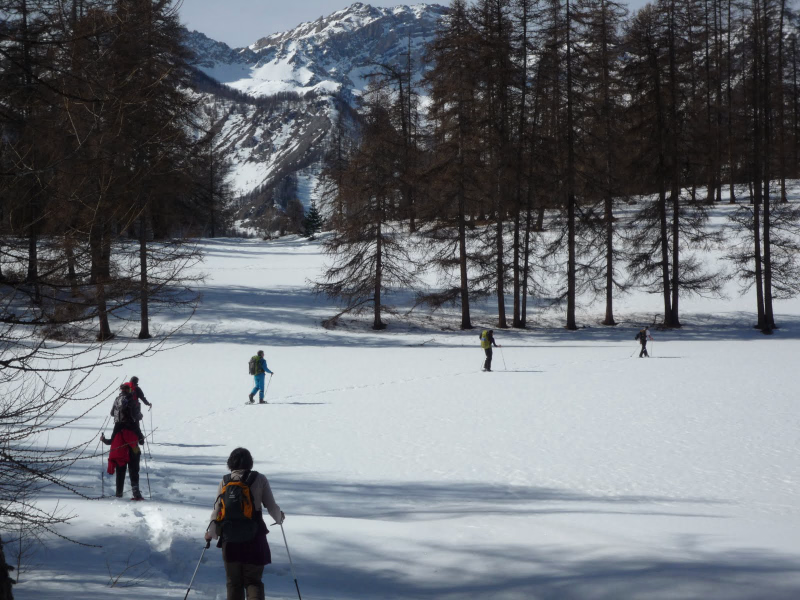
Snowshoeing
For those who wish to hike for 4 to 5 hours a day, covering an elevation gain of approximately 300 to 500 meters on trails. You hike occasionally and are in good physical condition.
The expert's opinion
The hikes offered take place on mountain trails with elevation gains of 600 to 800 meters, both uphill and/or downhill, without any particular technical difficulties. Expect approximately 5 to 6 hours of walking per day.
You will be hiking on mountain trails with a daily elevation gain and/or loss of 300 to 600 meters, for approximately 3 to 5 hours of walking. You will be carrying a light pack containing your essentials for the day (picnic, warm clothing, water bottle, etc.) plus your winter safety gear.
In figures
Snowshoes
- Average duration/day: 5h
- Average daily elevation gain: 417 m
- Average daily descent: 557 m
Management
During this stay, a supervisor will be present to guide and assist you.
Band :
1 supervisor for 4 to 10 people
Supervisor
Supervisor
Welcome to the warm world of our team, a group of passionate men and women dedicated to their profession, all driven by great excitement at the prospect of assisting you!
Your journey will be in the expert hands of qualified guides, specialists of the Queyras region, ready to share their unconditional love for nature and the mountains. Each of them brings their own unique touch, revealing the wonders hidden in every corner of nature.
Above all, your guide will inspire confidence thanks to their perfect knowledge of the environment, their expert understanding of the winter terrain, and their attention to every detail. Don't hesitate to ask for their expertise for advice on your equipment or to address any minor issues you may encounter along the way. At the end of each day, enjoy the friendly "debriefing" over a refreshing or comforting drink. Conversations and humorous anecdotes contribute to a welcoming atmosphere, making your holiday a pure moment of pleasure and relaxation!
Program
-
Welcome and snowshoeing in the Vallée des Aigues
- Activity Snowshoes
- Duration of the activity 5h
- Positive elevation gain 500 m
- Negative elevation 500 m
- Accommodation Cottage
- Breakfast not included
- Lunch included
- Dinner included
See you on Wednesday at 9:30 am in Ville-Vieille.
Arrival possible the evening before (see the "Welcome" section of the practical information sheet below). Welcome, distribution of equipment, then departure directly on foot with your guide.
The Vallée des Aigues: between Molines and St Véran.
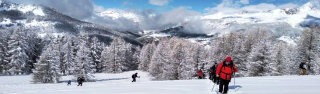
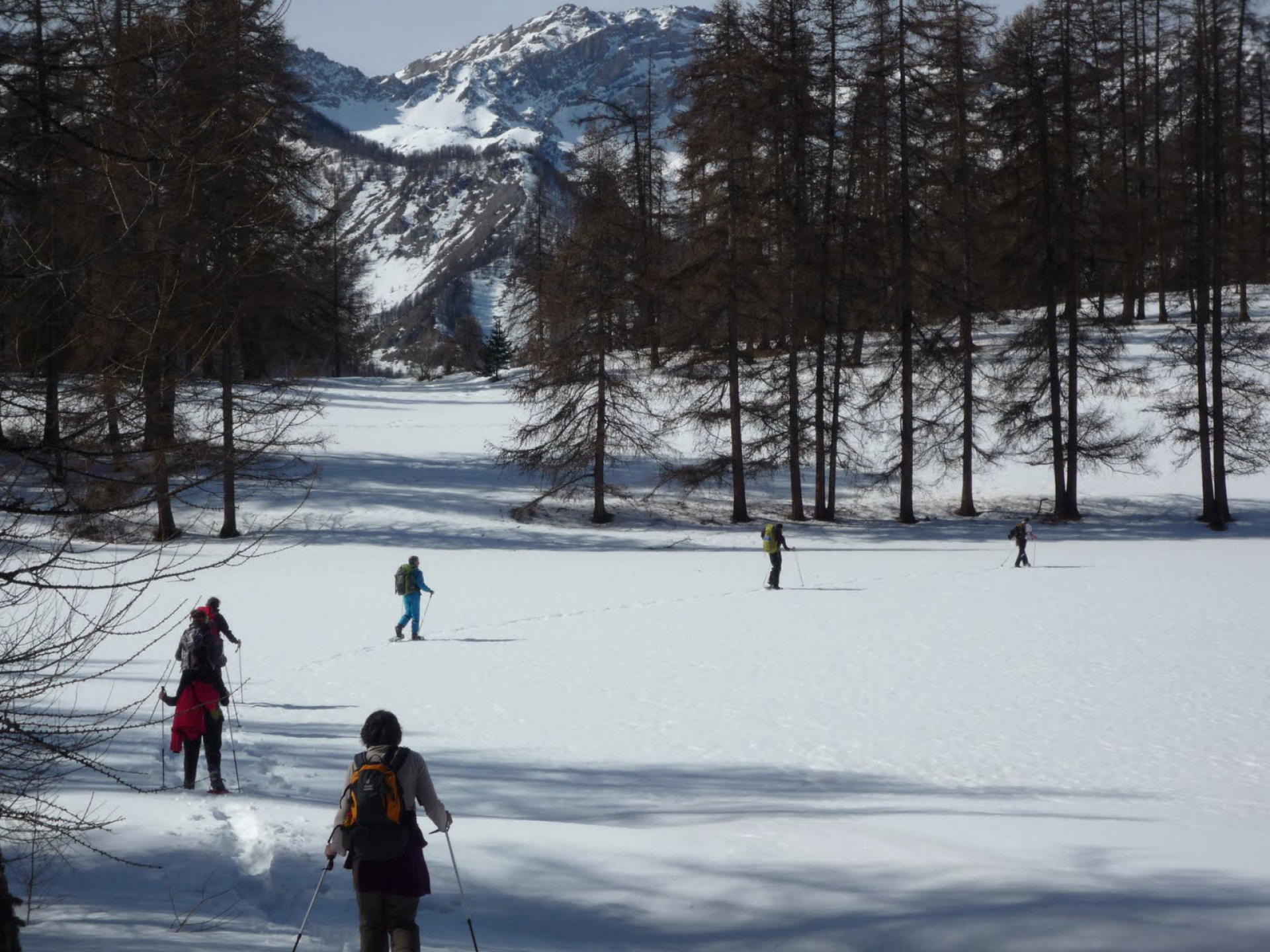
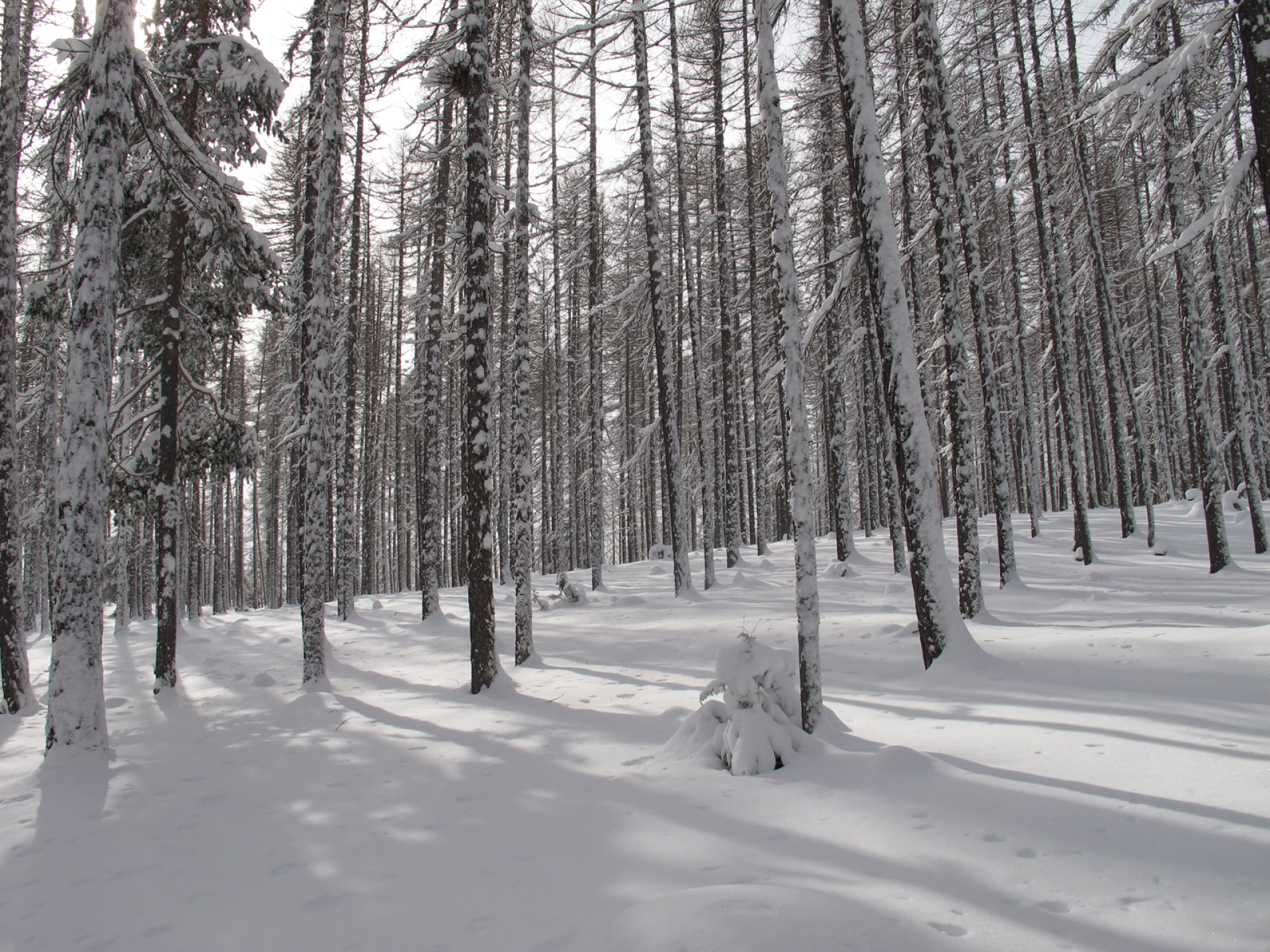
Depending on the snow conditions, we will begin our day either directly from the village or after a short approach in the Aigues Valley, overlooking Saint-Véran. This first day will be dedicated to familiarizing yourself with the equipment and reviewing the fundamentals of winter safety. Between light and shadow, you will be fully immersed in the snowy atmosphere of the Queyras. As you move among the larches and Swiss pines, keep a sharp eye out for signs of wildlife. With a bit of luck, you might even spot the rare and elusive spotted nutcracker.
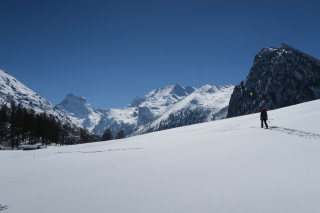
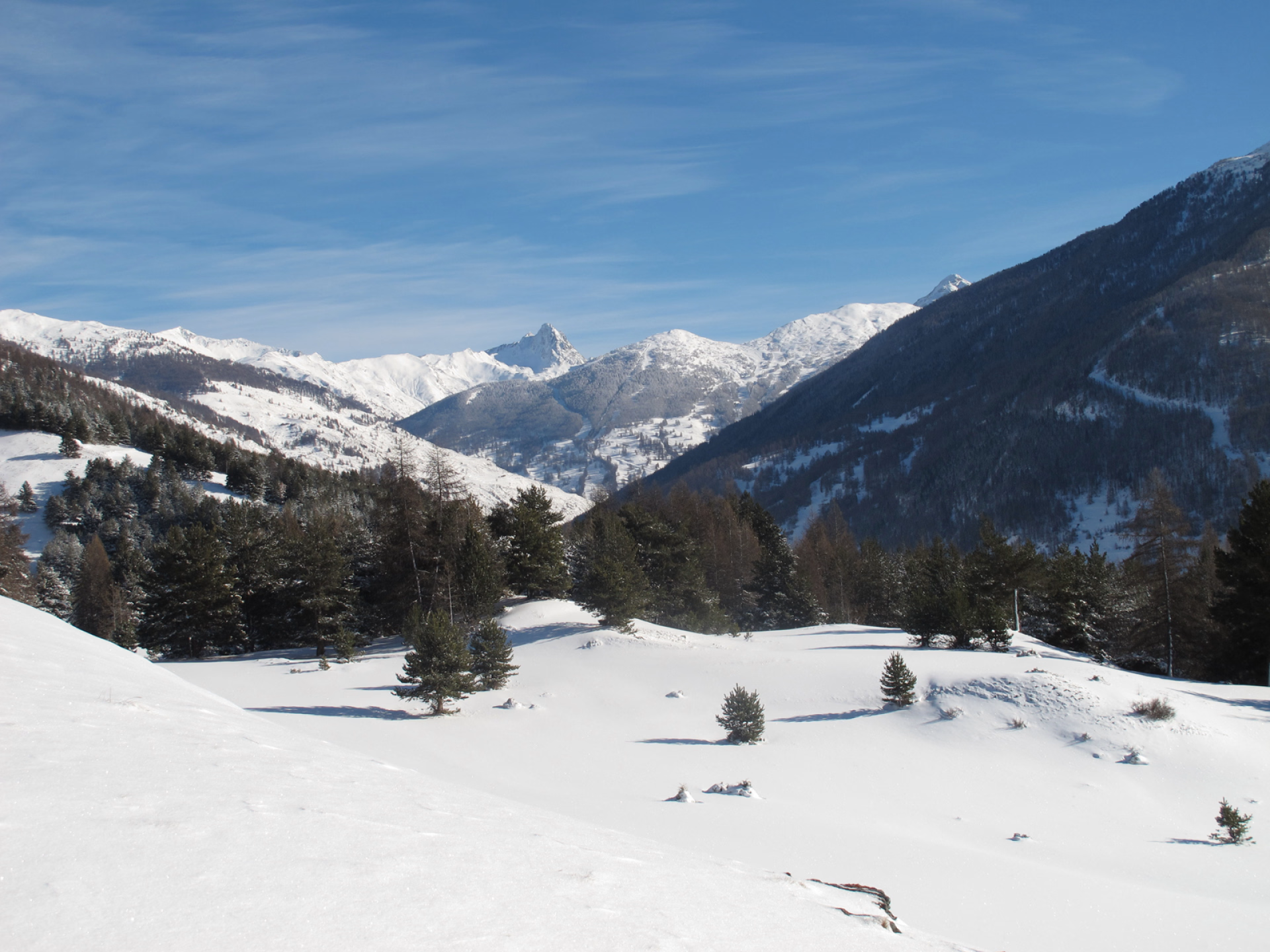
As we reach altitudes above 2000 meters, the forest will give way to breathtaking panoramas, revealing the full majesty of the alpine landscapes.
Back in the valley, Maïck and Franck will warmly welcome us by the fireside, where a deliciously prepared meal will be waiting for us.
Day 1 -
A wild gem: the Fontantie alpine pasture
- Activity Snowshoes
- Duration of the activity 5h30
- Positive elevation gain 480 m
- Negative elevation 720 m
- Accommodation Cottage
- Breakfast included
- Lunch included
- Dinner included
A wild gem: the Fontantie alpine pasture.
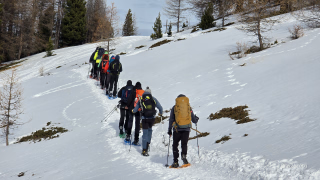
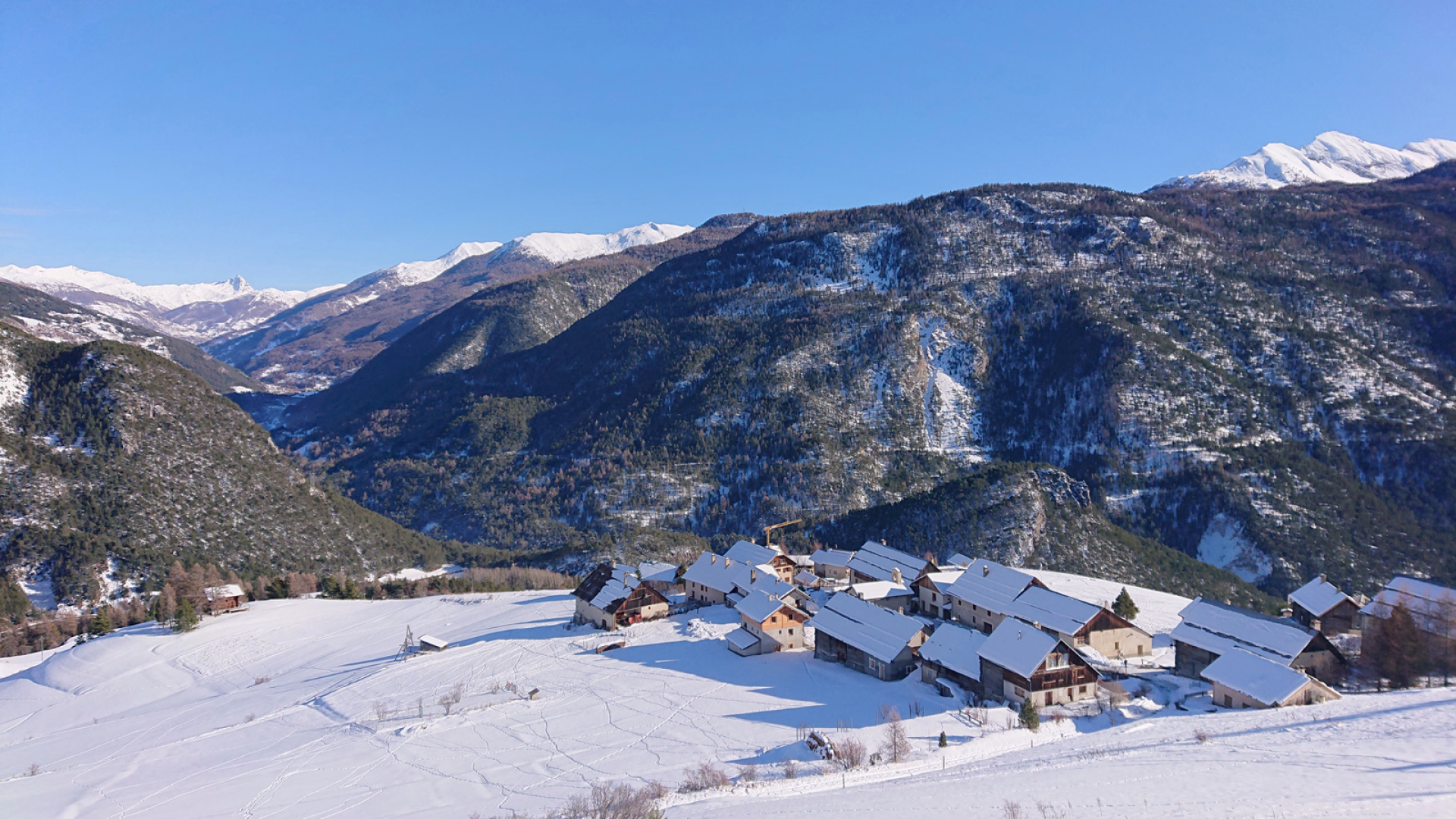
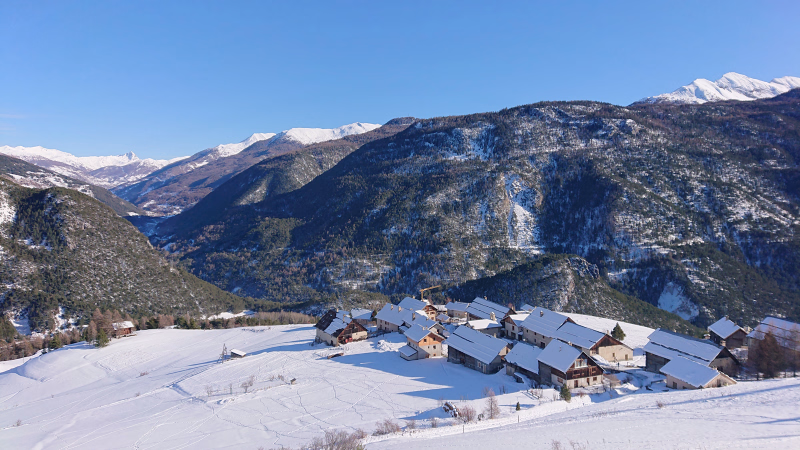
This day takes you to the heart of the Queyras region, through a magnificent larch forest. The ascent through the woods leads you to the Fontantie alpine pastures, a panoramic plateau offering 360-degree views of the surrounding mountains. The wooden chalets, blanketed in pristine snow, add a touch of charm to this picture-postcard landscape. The wild descent towards Montbardon allows you to prolong the wonder with breathtaking views of the valley.
Jérémie awaits you for a New Year's Eve celebration in the heart of the small hamlet of Montbardon, with panoramic views of the valley.
Day 2 -
The foothills of Château Queyras
- Activity Snowshoes
- Duration of the activity 4h
- Positive elevation gain 270 m
- Negative elevation 450 m
- Breakfast included
- Lunch included
- Dinner not included
For this final day of escaping into nature, we'll set off to explore one of the valley's slopes, depending on the snow conditions. Whether following a route where your guide's instinct and experience will be essential to finding your way, or exploring the valley's perched hamlets, you'll experience moments of absolute calm. In this winter tranquility, only the soft crunch of your snowshoes on the snow will disturb the silence, making these moments all the more precious.
Departure in the early afternoon for a return to the station around 3:00 PM.
Day 3
Note
Please consider this program a flexible itinerary! Due to variables such as weather, snow conditions, or other factors beyond our control, we may occasionally make adjustments. However, rest assured, our guide is an expert on the mountain range, knowing its every secret, and will strive to guarantee you an exceptional experience.
Accommodation
🏠 Holiday rental - Days 1 to 2
In a gîte, in a dormitory (shared room for 4 to 8 people)
Night 1: Molines en Queyras
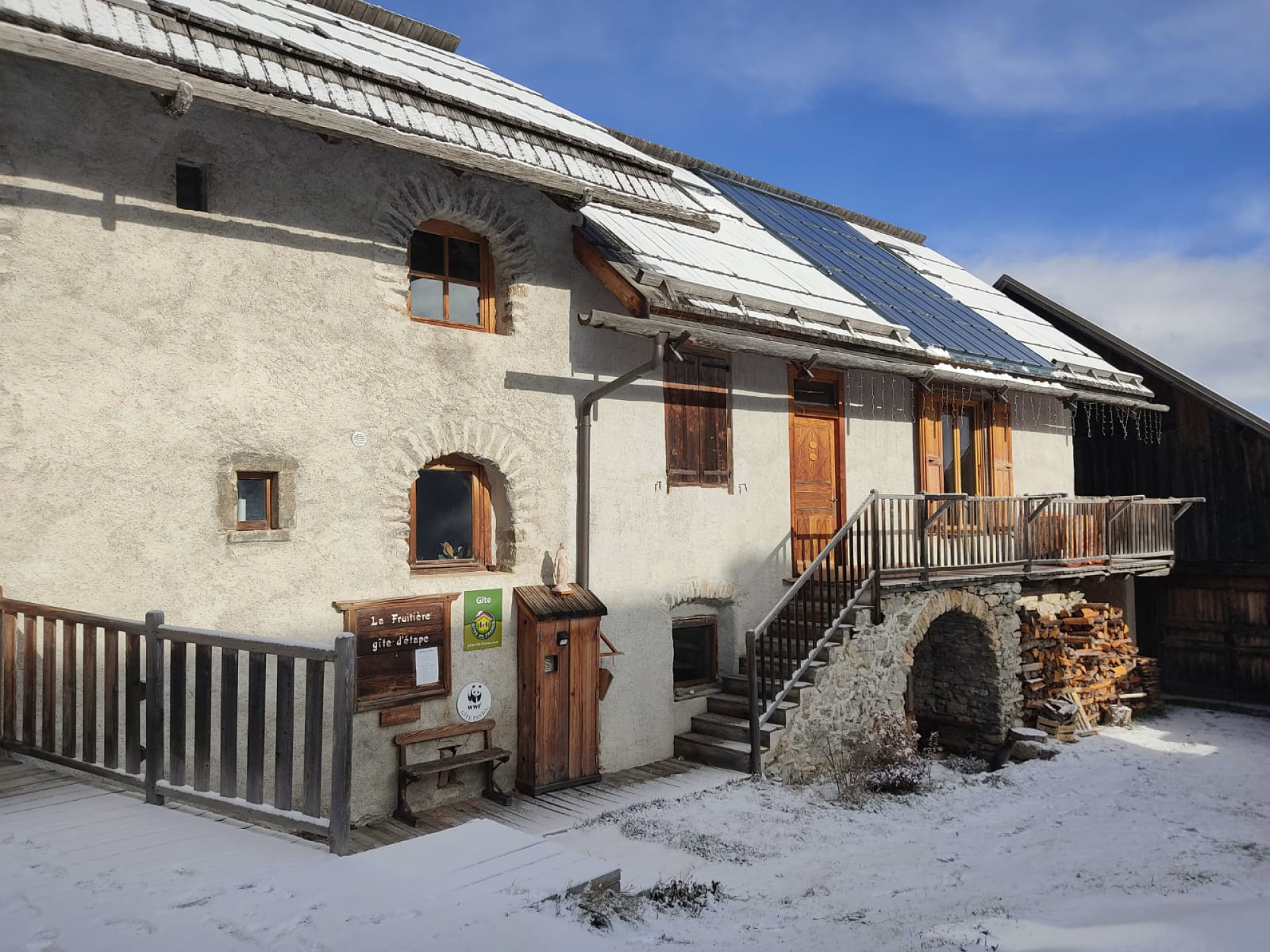
Maïck and Fabrice welcome you to the heart of the hamlet of La Rua.
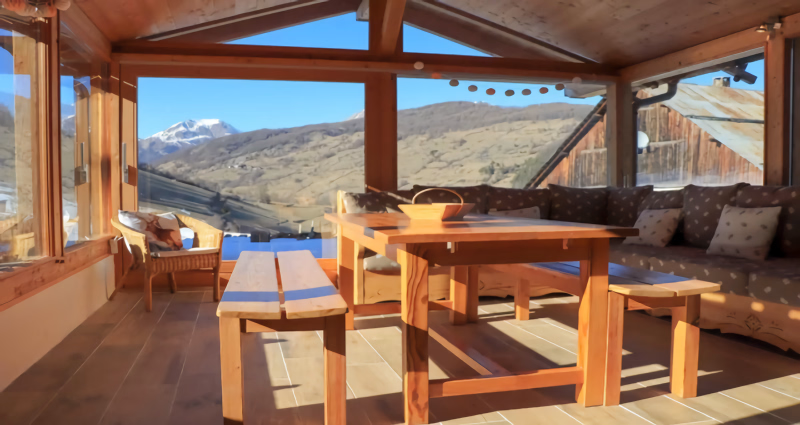
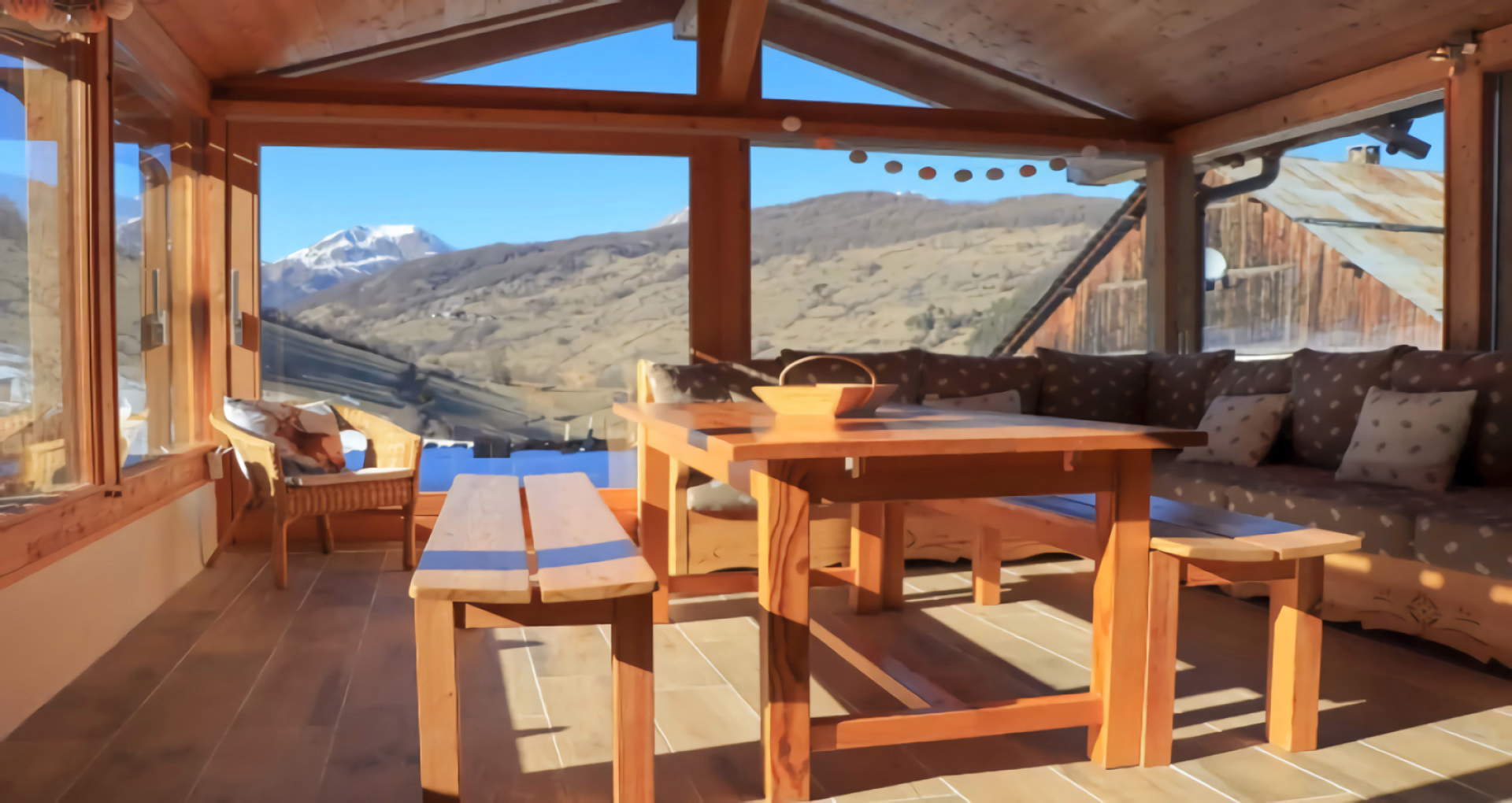
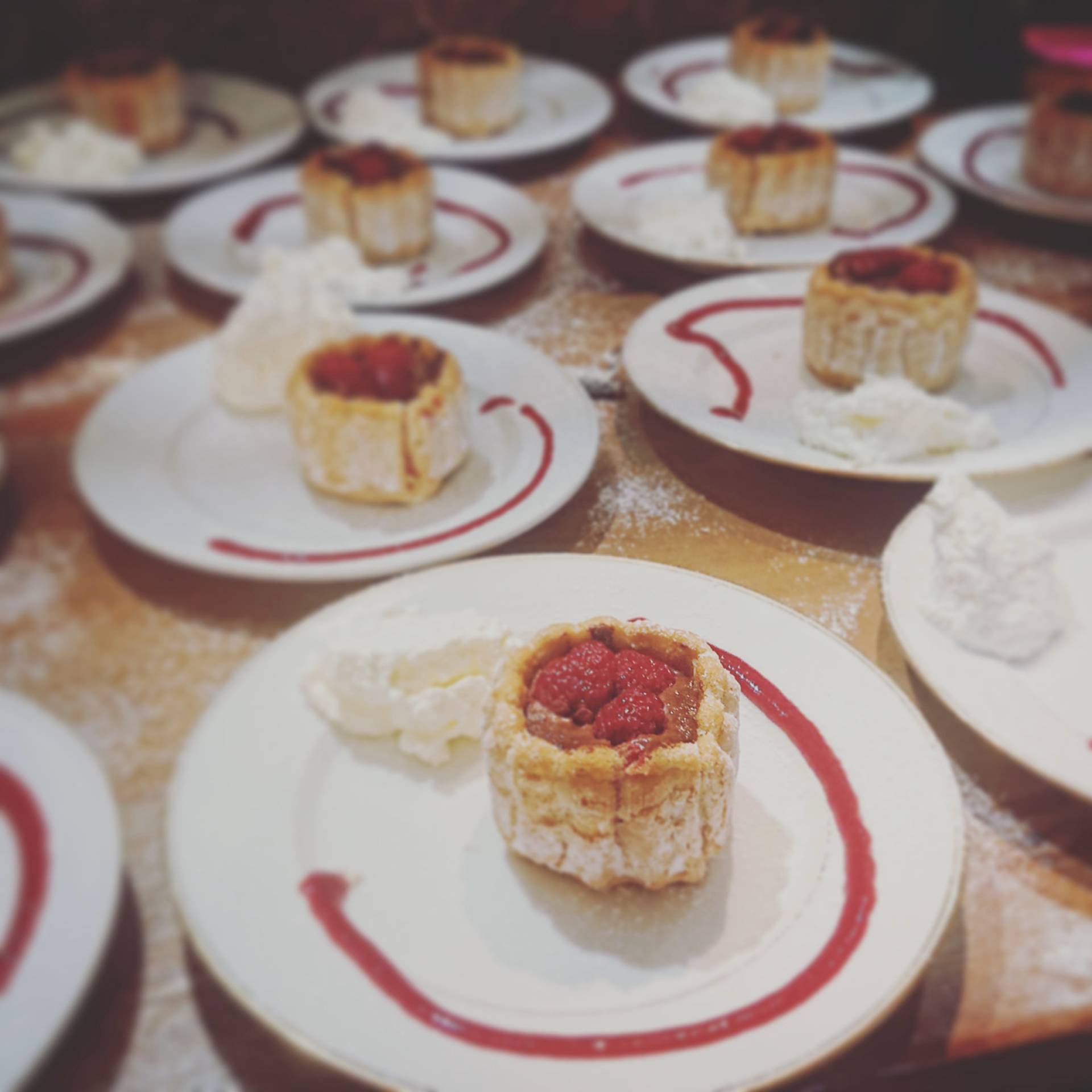
You will find all the necessary comforts: rooms equipped with private bathrooms, a warm relaxation area near the fireplace, and gourmet dinners carefully prepared by Fabrice.
Night 2: Montbardon
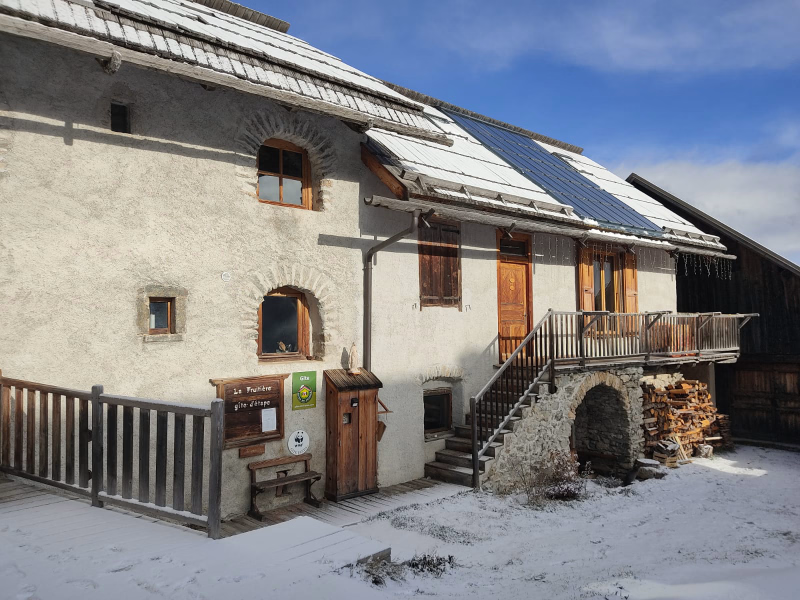
This is a guesthouse somewhat off the beaten track offered by most agencies. In this small mountain hamlet overlooking the Gorges du Guil, Jérémie welcomes you to a traditional building with a strong character defined by stone and wood.
The added bonus: a sauna is available, with a small fee if you are at least 3 hikers wanting to relax…
For this New Year's Eve , Jérémie is dressing up in his finest, and offers you a very simple evening focused on conviviality and sharing.
Access
Departure
Ville Vieille, Château-Ville-Vieille, France
Day 1
: 09h30
End of stay
Ville Vieille, Château-Ville-Vieille, France
Day 3
- 15h00
Welcome
See you on Wednesday at 9:30 am in Ville-Vieille.
Welcome and introduction to the trip by your guide. Distribution of equipment
Dispersion
Separation on January 1st after the hike, around 3pm.
For participants using the train, transfer with the local bus (included in your stay, depending on train schedules ask us for shuttle schedules) to Montdauphin-Guillestre station (5:00 pm).
If you are staying in the Old Town in the evening
Please let us know when you register if you would like an extra night. We will accommodate you at our partner's or in nearby accommodation, depending on availability.
Go to the starting point
Take the train toGare de Montdauphin-Guillestre
Arriving by train at Montdauphin-Guillestre station, on the line to Briançon, you have several options: a direct night train between Paris (Gare d'Austerlitz) and Montdauphin-Guillestre, or daytime trains on the Paris-Valence or Paris-Grenoble lines. If you are coming from the south, take the Marseille-Briançon line.
From the train station to the meeting point
Option included in the price, upon reservation
Your guide or an agency representative will meet you at the station at 8:30 am for the transfer to the meeting point.
Please note that to organize this transport and ensure you have your place, you must book your transfer with us no later than one week before the date of your stay.
As places are limited, any changes must be reported no later than 72 hours before your arrival (i.e., Thursday evening at the latest).
Travel to the place of stay
with parking
available
From the north, take the Lautaret pass via Briançon (RN 94) or Grenoble (RN 94/D902). Alternatively, from Grenoble, take the A51 motorway towards Gap, then the RN94 towards Guillestre (D902).
From the south, go via Valence or Sisteron, continue towards Gap, then Embrun, and finally Guillestre. Once in Guillestre, follow the signs for "Queyras" via the D902 and the D947.
Snow equipment (snow tires or chains in the trunk) is now mandatory from November 1st to March 30th. For information on accessing the Hautes-Alpes department, please visit: https://inforoute.hautes-alpes.fr
For example, it is impossible to reach Queyras from Briançon via the Col d'Izoard between November and May.
If you are driving a diesel vehicle, we advise you to fill up as you approach the Queyras region, where you will find "winter-grade" fuel. Diesel from service stations far from the mountains is rarely suitable for the cold night temperatures at altitude!
Would you like to travel on other dates?
Create an alert and we'll notify you by email if new departures are added.
Price details
The price includes
- Full board with two nights in a gîte
- The "New Year's Eve" supplement
- Supervision by a state-certified mountain professional
- The provision of safety equipment, snowshoes and poles
- Round-trip transfers from the train station to the start of the hike
- Luggage transport
The price does not include
- Drinks and wine during meals
- Personal expenses
- Insurance
Options
- Additional night with half-board after the stay - Dormitory in a gîte : CHF49.40 / unit
- Additional night with half-board after your stay - Double or twin room in a gîte : CHF117.80 / unit
- Additional night with half-board before the stay - Dormitory in a gîte : CHF49.40 / unit
- Additional night with half-board before the stay - Double or twin room in a gîte : CHF117.80 / unit
- Flex fare and insurance
Practical information
Specific formalities
Equipment
They traveled with us
Discover the authentic experiences of our travelers
5/5
(5 reviews)
Reviews displayed in reverse chronological order
Decathlon Travel Partner
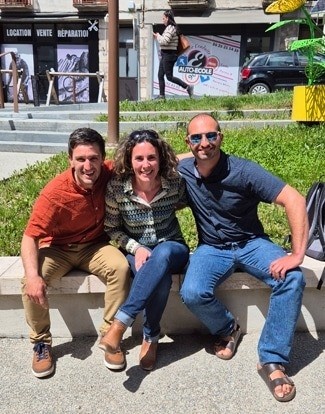
The Marion, Boris et Christophe team
4.8/5
(530 reviews)
• 86 stays
A specialist in the Southern Alps for over 20 years, our local partner operates in exceptional regions such as the Queyras, the Écrins, the Mercantour, and the Ubaye, not forgetting its heartland: the Calanques. This small, friendly agency relies on a team of passionate experts to design tailor-made trips, perfectly suited to your desired length and comfort level. Known for its strong local presence, it guarantees year-round departures for its guided tours, placing conviviality and human values at the heart of every shared adventure.
Are you satisfied with this page?
Subscriber benefit
save 5%
by joining
our community
Decathlon Travel Benefits
Best price guaranteed:
We offer twice the difference
Free cancellation more than 30 days in advance
Payment in 2 installments
Learn more