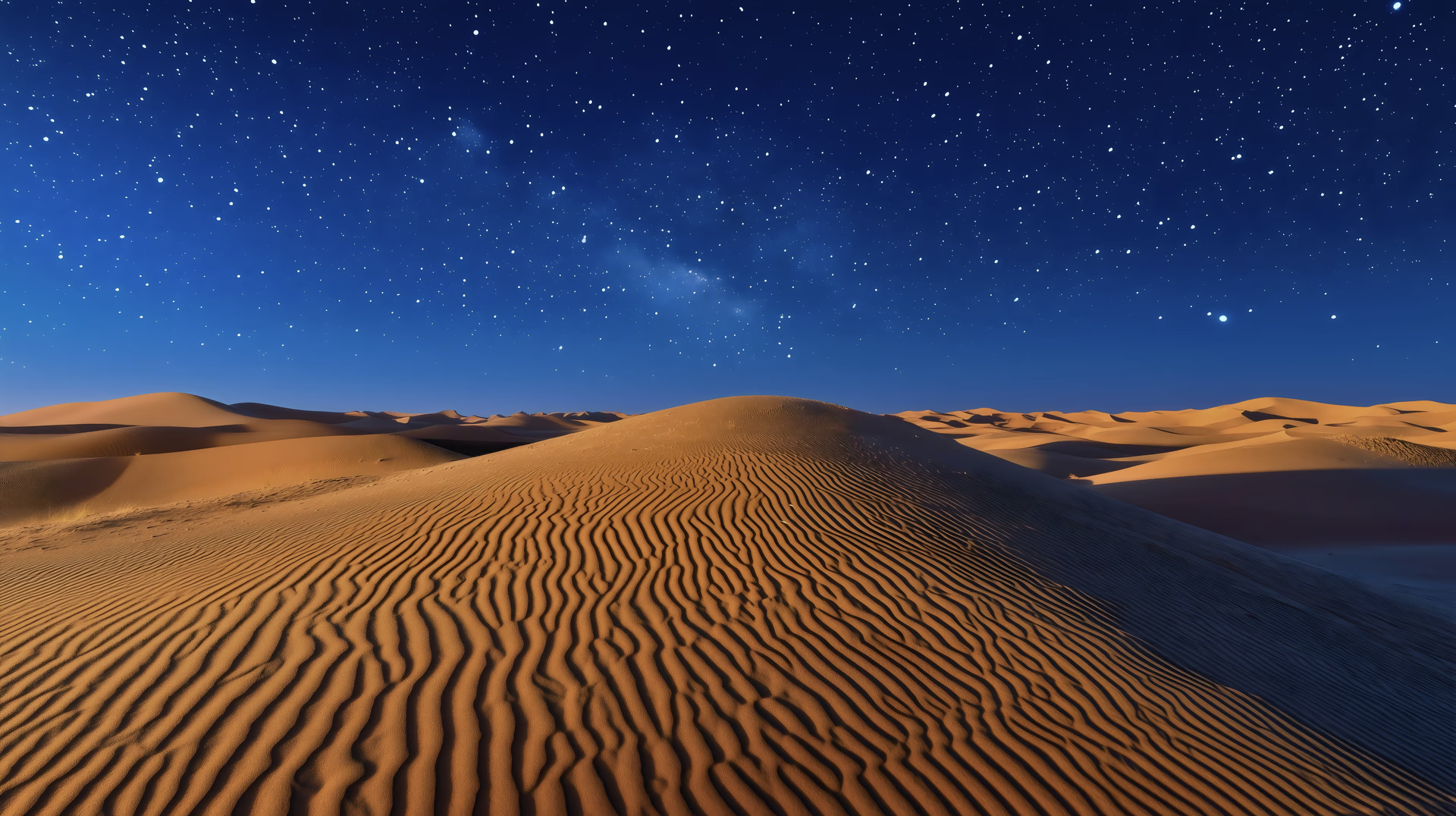
Under the desert stars: my family's introduction to astronomy
In summary
-
Sports
-
Duration8 days
-
LevelIntermediate
-
DestinationAfrica / Mauritania
-
AgeFrom the age of 18
-
CO₂-Emissions51.48 kg CO2
-
Type of stayIn a group
-
Languages
 French
In a few words
The highlights
-
A one-day trip accompanied by El Becaye, iconic guide and certified astronomer
-
Learn to navigate the Sahara using the stars and our guide's equipment.
-
Leave with an official diploma as a budding astronomer thanks to the Little Bear training!
Photos
Sport
Level
Hiking / Trekking
The expert's opinion
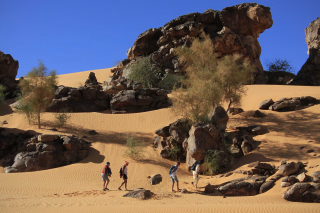
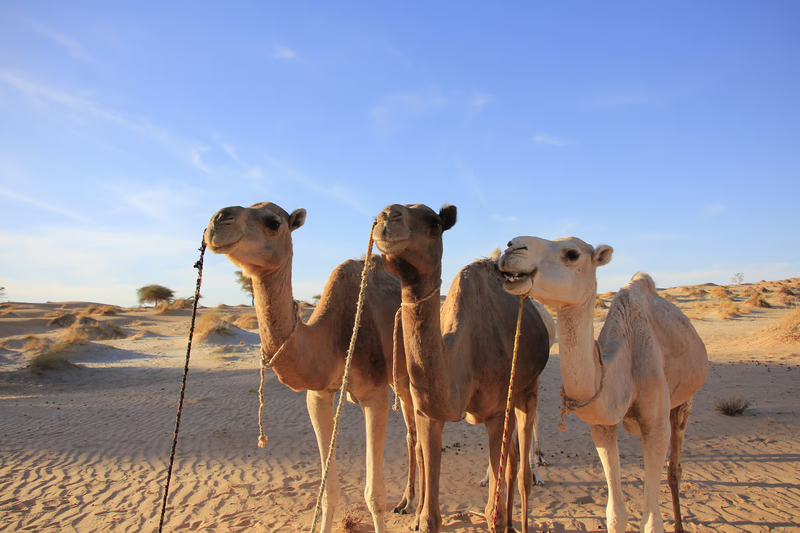
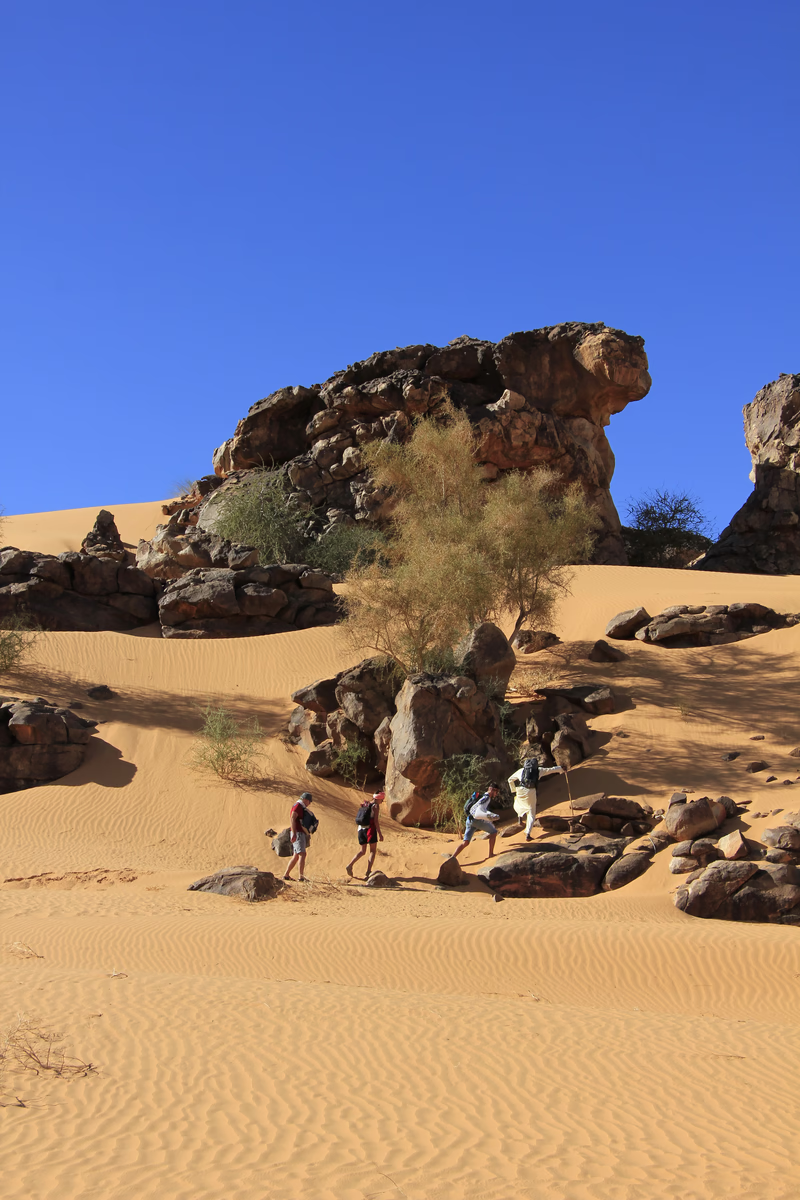
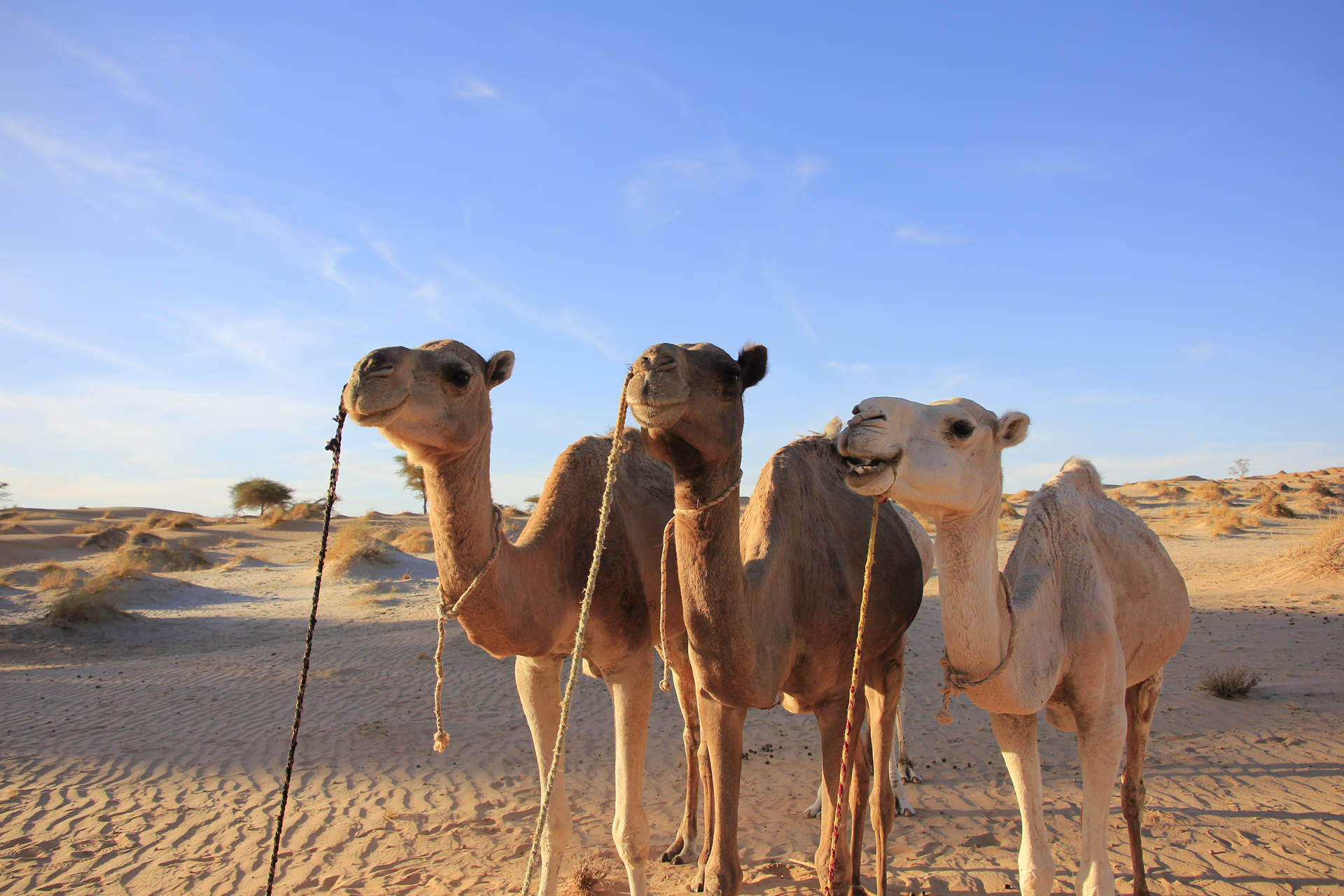
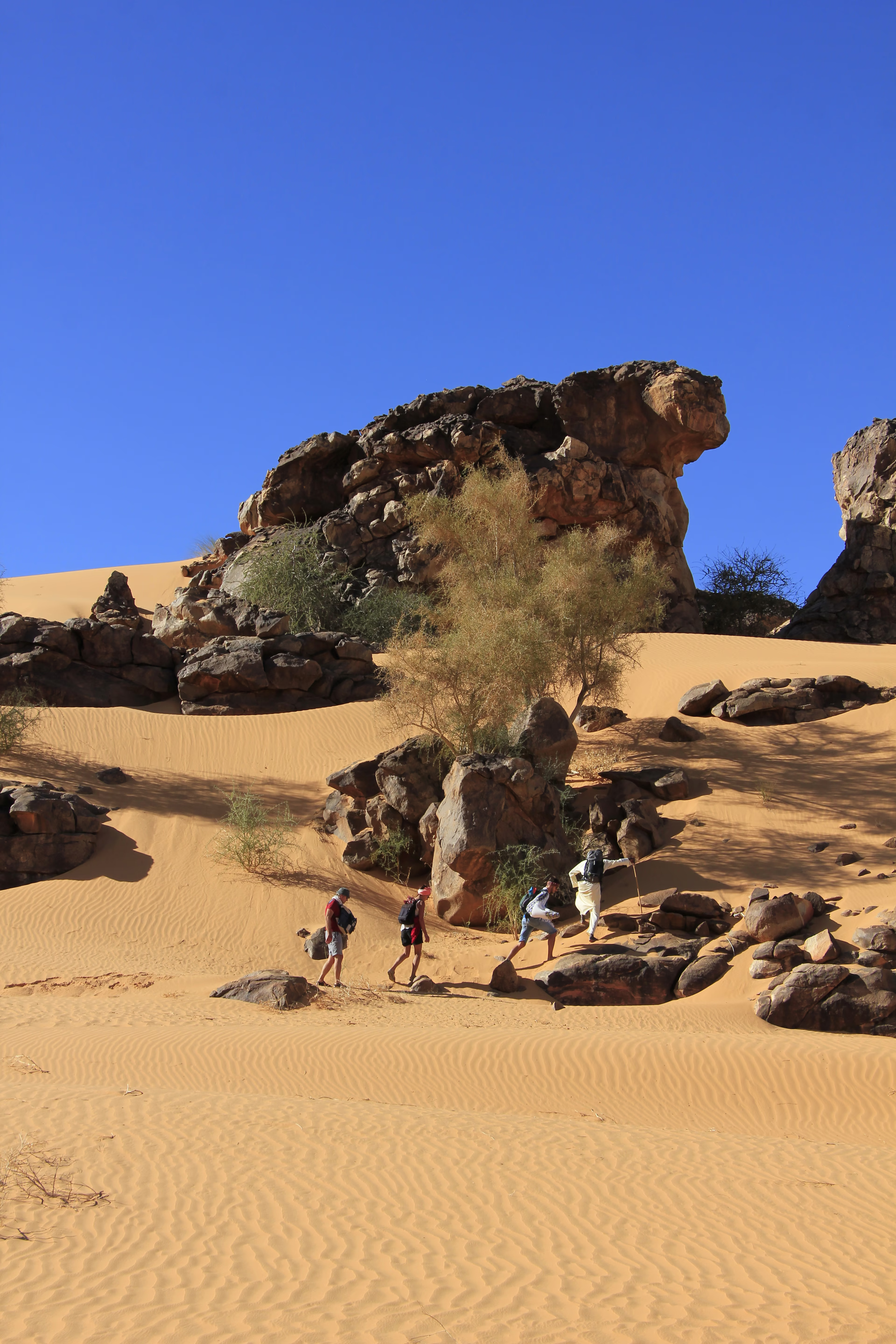
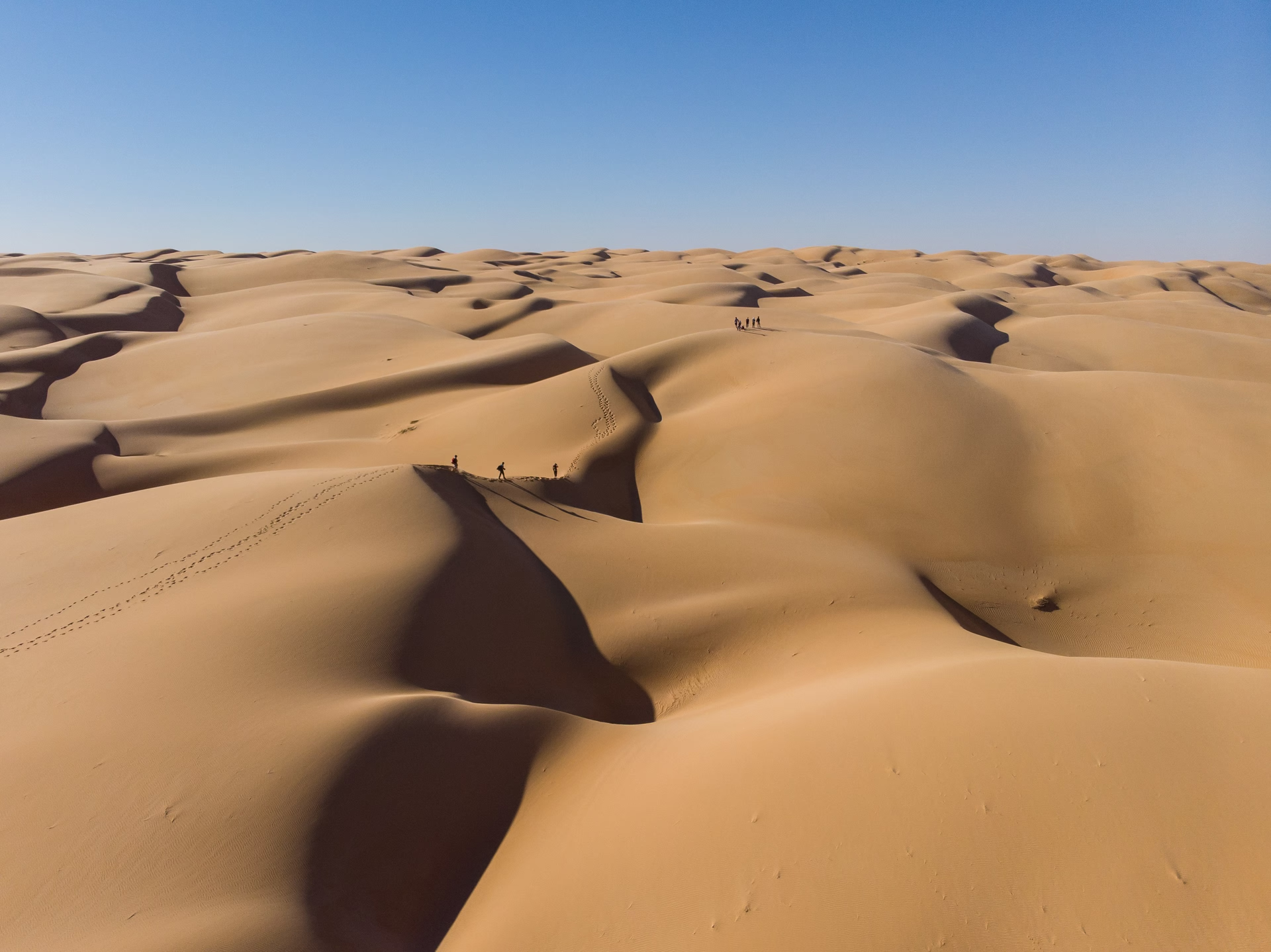
Approximately 3 hours of hiking per day for 4 consecutive days. Low elevation gain (between 300 and 400 meters per day). You'll be hiking in a predominantly dune environment. This route is suitable for families. Our camels are there to give tired little legs a rest!
The Little Bear training program for children and teenagers, offered by the French Astronomy Association and taught by an instructor certified by this organization, is a fun introductory program that allows children to discover stargazing and leave with a logbook, a learning booklet, and an official certificate. During this training, your child will learn to: identify the main constellations in the sky, use a star chart for orientation, observe the Moon, planets, and stars with binoculars or a small telescope, understand the basics of celestial movements (rising, setting, and the movement of celestial bodies), and record their experience in their logbook.
In figures
Hiking
- Average duration/day: 3h
Management
French
Upon arrival, you will be greeted by your French-speaking Mauritanian tour guide. In every case, they have been chosen for their extensive field experience, their specific knowledge of the geographical area and its associated culture, and their passion for sharing their country. They are assisted by a Mauritanian cook and a team of camel drivers and/or chauffeurs who share their nomadic lifestyle with you. Their always friendly presence is a guarantee of success for our trips. They know the terrain intimately and will teach you the art of living in the Sahara.
Our entire team of tour guides, cooks Bébé, Fama, Ami and Ramata, and our drivers are dedicated to your holiday and will ensure you have an unforgettable stay in their country, paying extra attention and listening carefully to make sure everything goes perfectly.
El Becaye, the local representative, will accompany us on the tour. Trained in astronomy by the French Astronomy Association, he will be delighted to share his passion with us.
The price of this tour includes the Little Bear training course for children and teenagers. This course, set up by the French Astronomy Association and taught by an instructor certified by this organization, is a fun introductory program that allows children to discover sky observation and leave with a logbook, a learning booklet and an official certificate.
Program
-
Flight to Atar and transfer to Ouadane
- Accommodation Hostel
- Breakfast not included
- Lunch not included
- Dinner included
Flight to Atar. Upon arrival, we are met by our guide and then transferred by 4x4 to the town of Ouadane, one of the four Mauritanian cities listed as a UNESCO World Heritage Site. Check-in and overnight stay at a guesthouse.Day 1 -
Ouadane - Rgheouia
- Activity Hiking
- Duration of the activity 2h
- Accommodation Bivouac / Tent
- Breakfast included
- Lunch included
- Dinner included
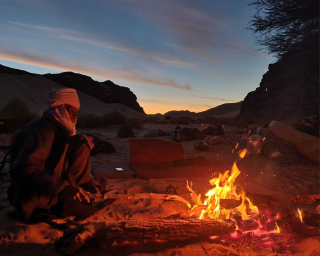
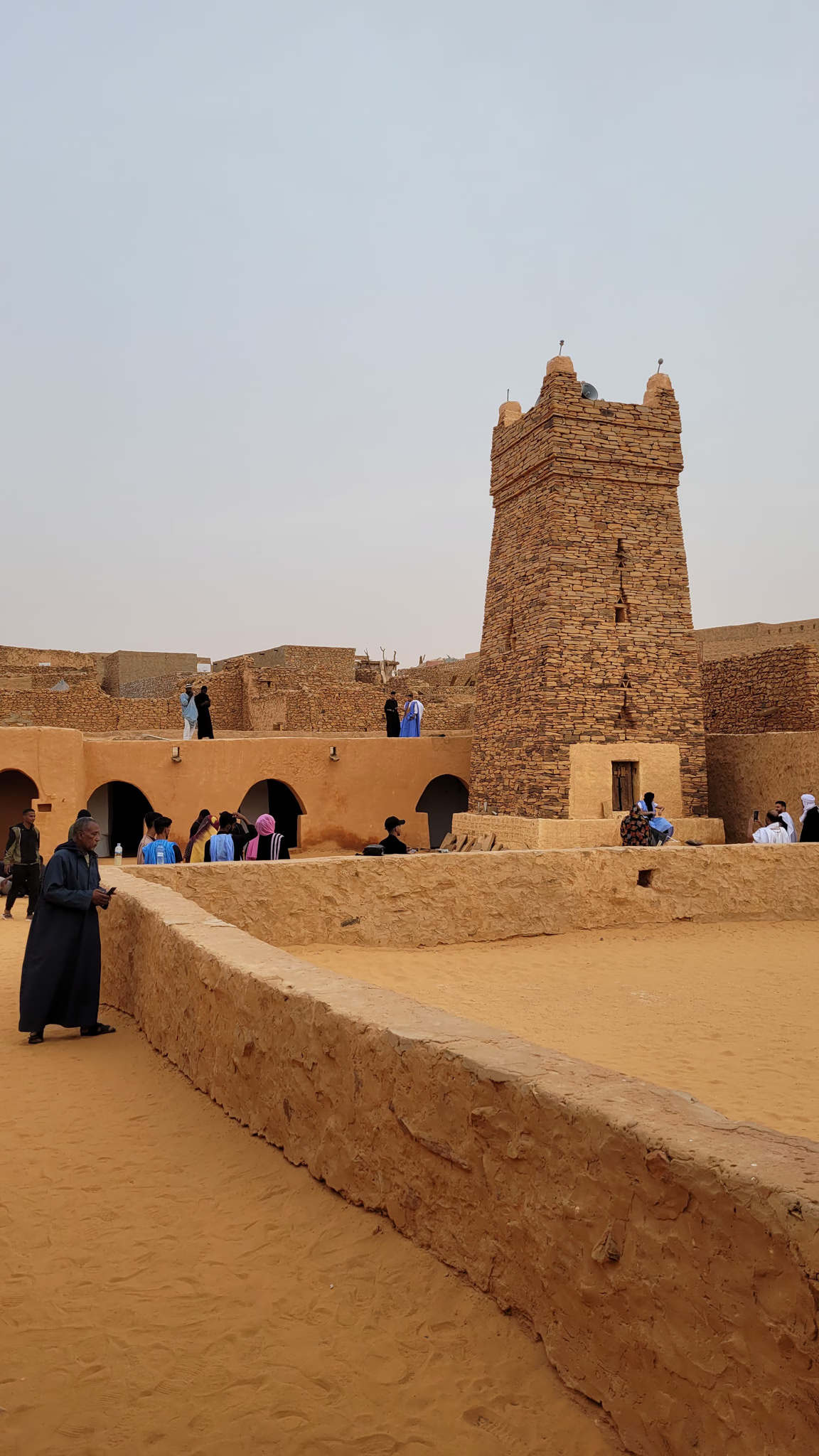
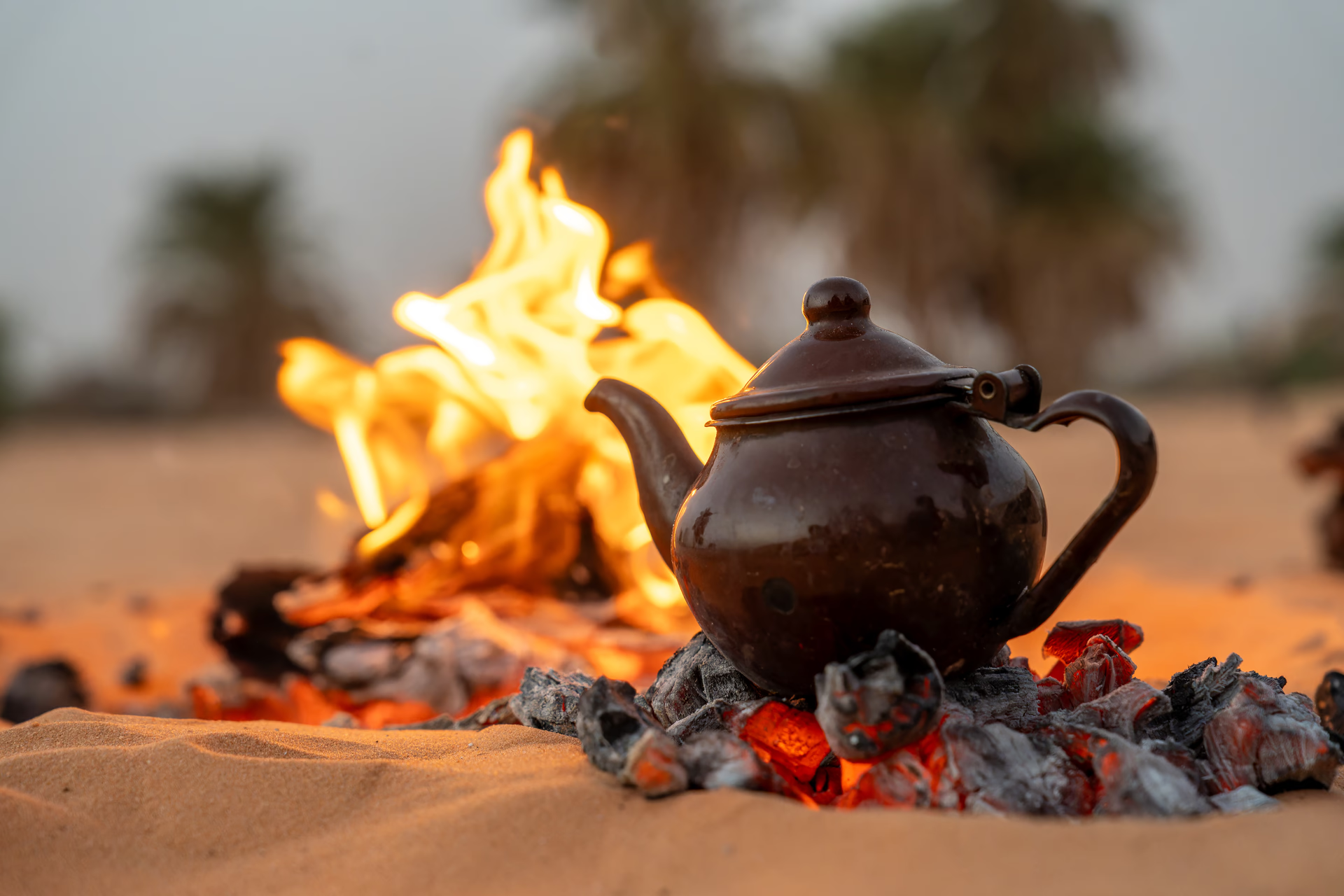
This morning, we discover Ouadane, an important spiritual and cultural center from the caravan era. It is surrounded by a lush palm grove, where we refresh ourselves. After lunch, we meet our team: camel drivers and cooks, who will be our invaluable companions for this unforgettable week. We set up our first bivouac in the heart of the dunes, taking the opportunity to explore the surroundings and enjoy a few slides down the sandy slopes. As night falls, around the campfire, our guide, El Becaye, tells us the legends of his region. We drift off to sleep, lulled by the soft light of countless stars.Day 2 -
Camel trekking and stargazing
- Activity Hiking
- Duration of the activity 3h
- Accommodation Bivouac / Tent
- Breakfast included
- Lunch included
- Dinner included
It's time to begin our daily hike. We climb the dunes like little nomads and eagerly hurtle down the steep slopes! In the evening, we attend our first astronomy lesson. Our guide teaches us how to decipher a star chart, to recognize the constellations that for so long served as the only guide for desert dwellers at night. That night, we fall asleep with stars in our heads and sand in our pockets...Day 3 -
Oued Tachoualet - Stargazing
- Activity Hiking
- Duration of the activity 3h
- Accommodation Bivouac / Tent
- Breakfast included
- Lunch included
- Dinner included
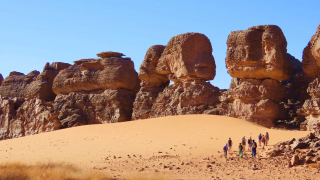
We continue our journey across the Mauritanian desert, all the way to the majestic red dunes of Oued Tachoualet. The camels are there to give our tired little legs a rest... Tonight, the telescope is out! We're learning how to use it like real little astronomers. Our logbook allows us to record each of our discoveries and track our progress. We chose to organize this trip around the time of the new moon, in order to take advantage of ideal conditions for stargazing under a clear sky.Day 4 -
El Marveg - Lemghaleg - Stargazing
- Activity Hiking
- Duration of the activity 3h per day
- Accommodation Bivouac / Tent
- Breakfast included
- Lunch included
- Dinner included
Today, we pass by the El Marveg well before reaching the magnificent dunes of Lemghaleg. The Saharan landscapes stretch as far as the eye can see. We enjoy two more evenings of stargazing. We are now able to recognize the constellations, use a telescope, and operate specialized binoculars. At the end of our last evening, our guide awards us our "Little Bear" certificate! It recognizes our astronomical learning from the week. We are now true budding little astronomers!Days 5 to 6 -
Chinguetti - Atar
- Activity Hiking
- Duration of the activity 3h
- Accommodation Hostel
- Breakfast included
- Lunch included
- Dinner included
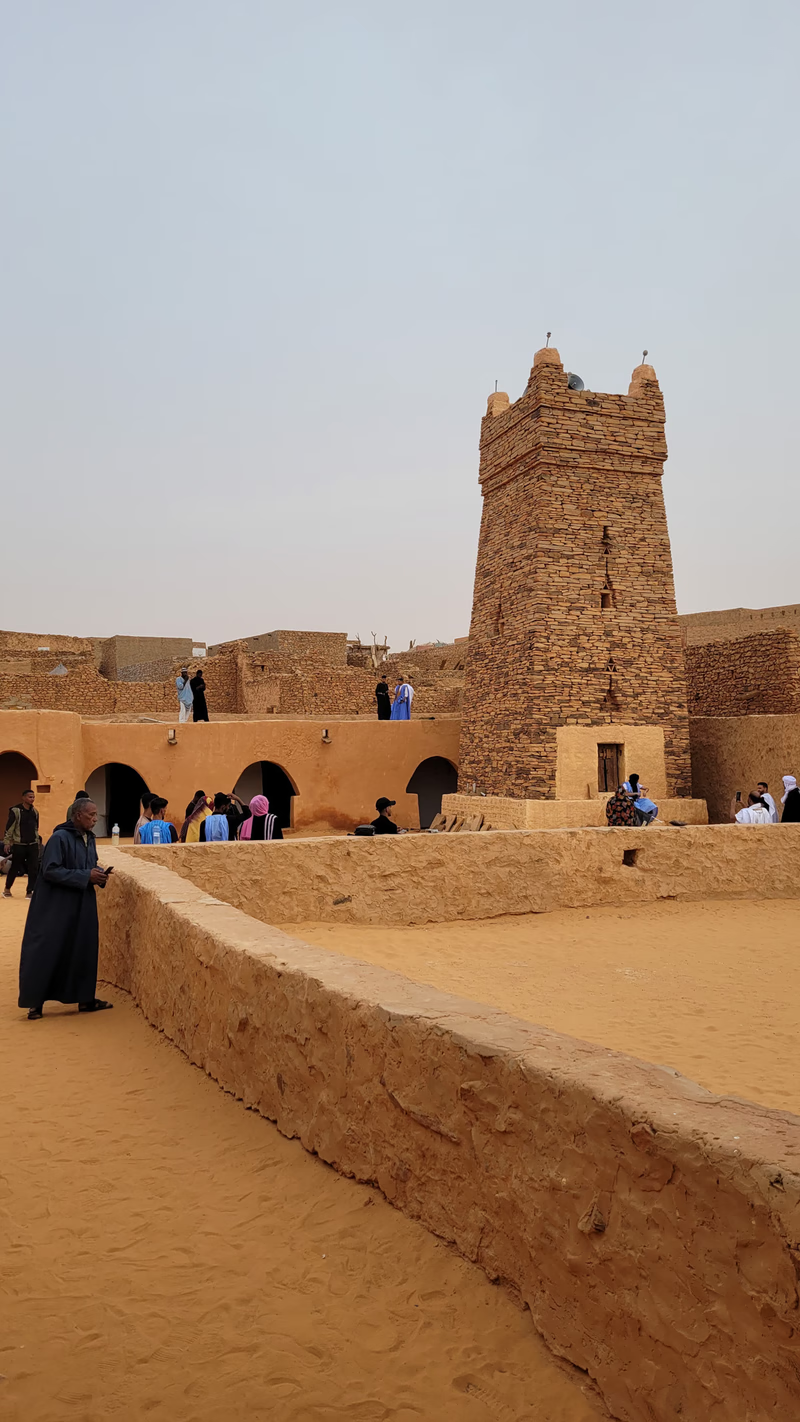
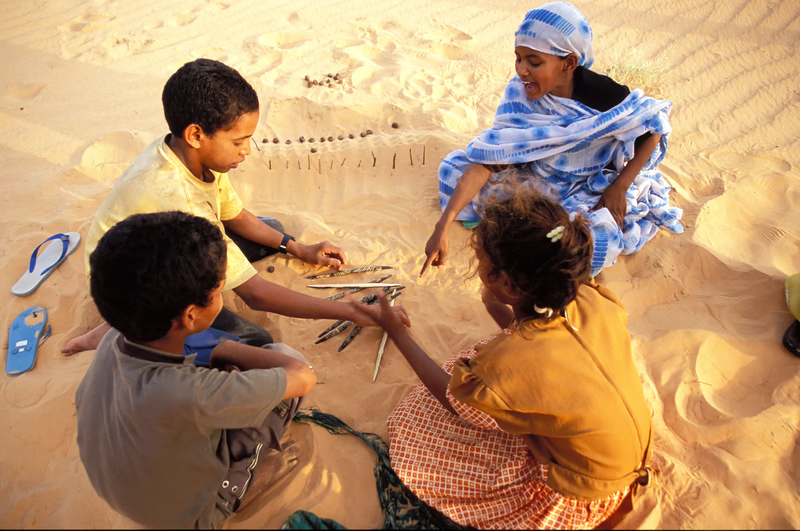
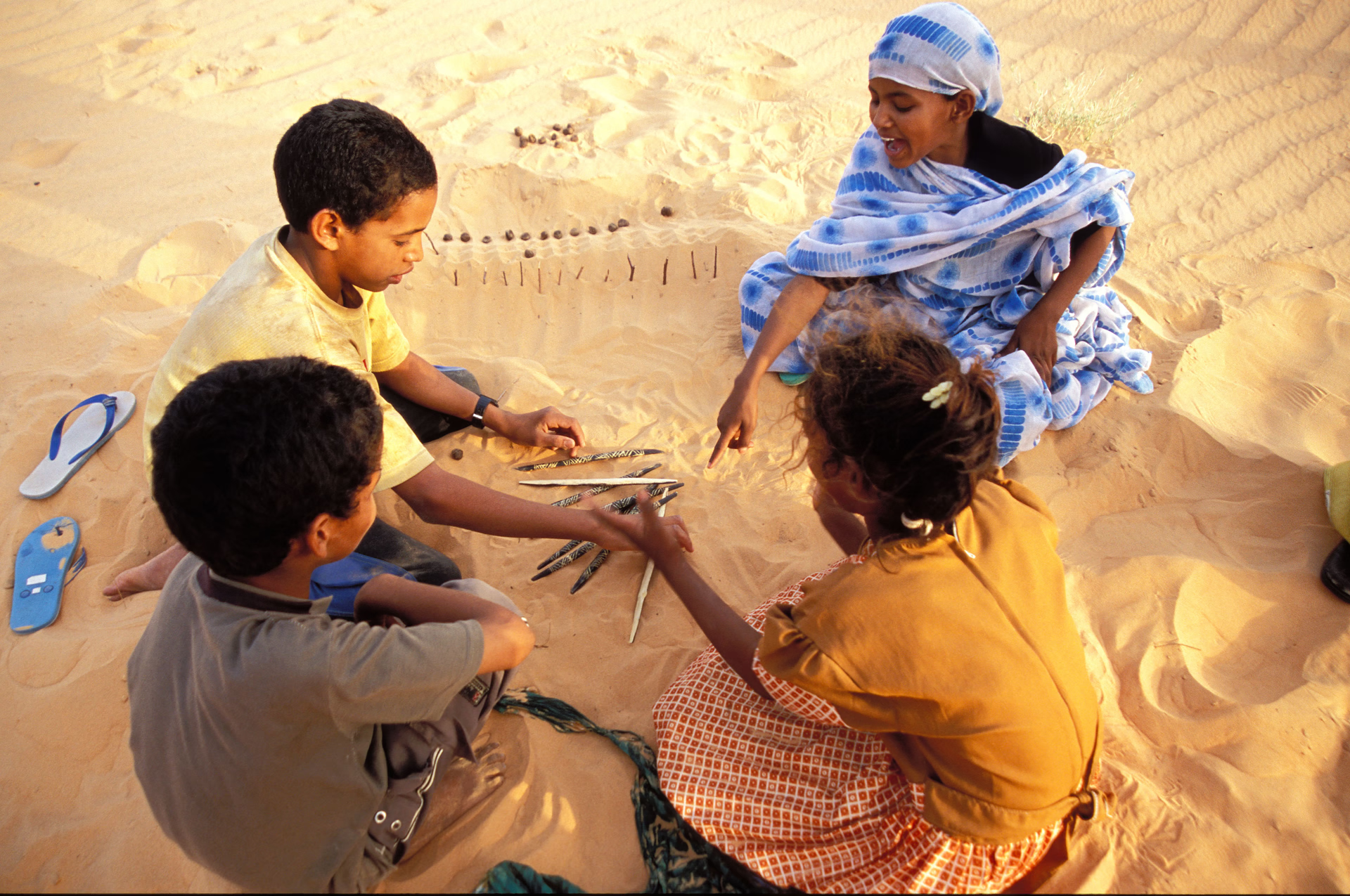
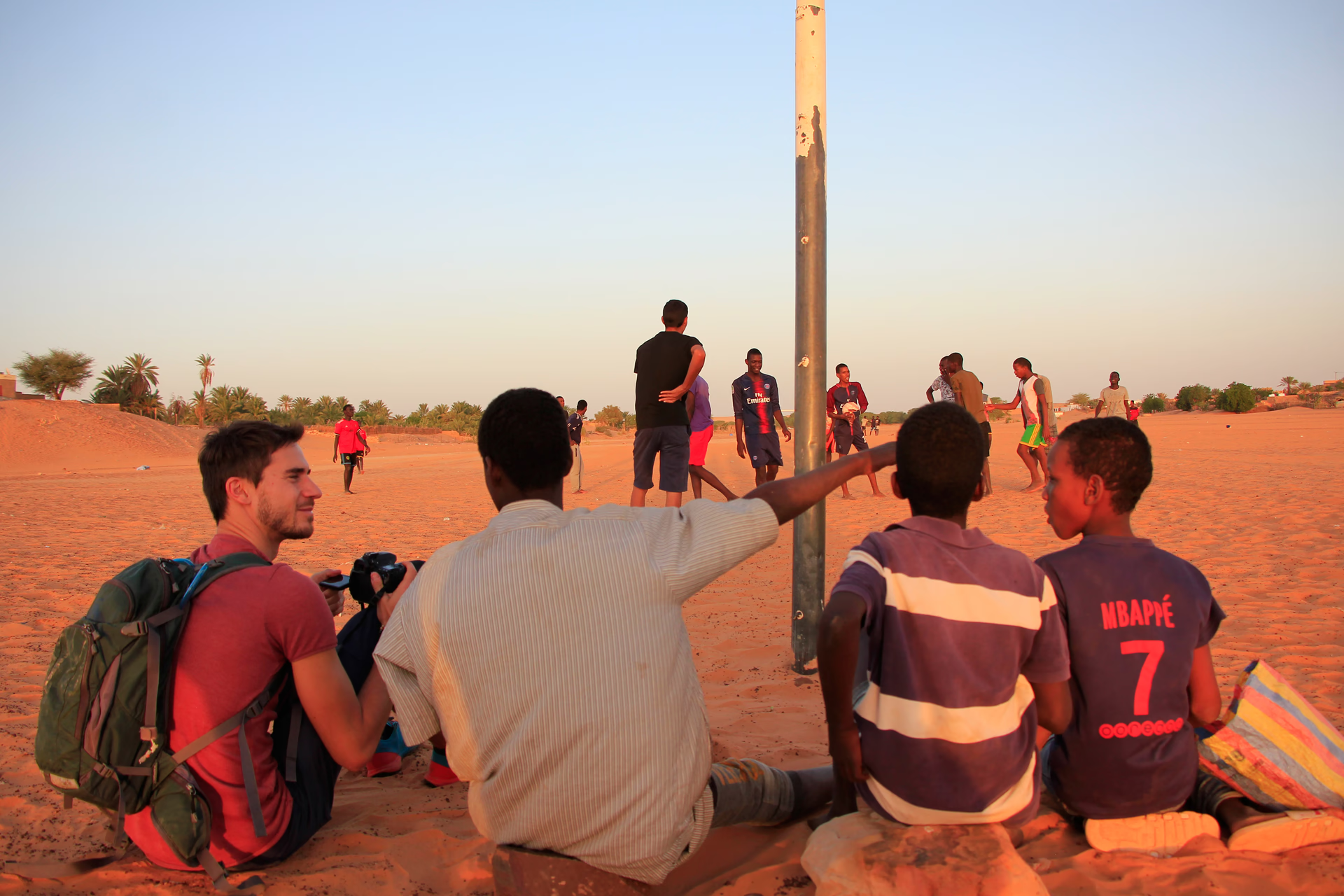
We conclude our Saharan trek with an early morning walk to Chinguetti, the seventh holiest city in Islam, considered the Sorbonne of the Sahara during the era of the trans-Saharan caravans. There, we might even have the chance to play football with the village children. After lunch, with heavy hearts but full of memories, we bid farewell to our Saharan team. We take advantage of our time in Atar to visit the colorful market in the city center. Overnight stay in a guesthouse.Day 7 -
Return flight
- Breakfast included
- Lunch not included
- Dinner not included
Back in France, where we can't wait to put our learnings from the week into practice!Day 8
Note
From October 2026 until departure on 12/12/2026 inclusive , this trip will operate with arrival and return from Nouakchott, over 9 days, as follows:
- Saturday: flight to Nouakchott, arrival in the evening or at night, overnight stay at the hostel.
- Sunday: early morning transfer to Atar (5 hours drive) to resume the program.
- normal itinerary progression.
- Saturday mid-afternoon, return transfer to Nouakchott, overnight at the hostel.
- Sunday: Airport transfer and return flight to France.
The route, distances, and walking times are approximate. They may be modified depending on trail conditions, weather, and the group's pace. In such cases, our experience in the field will guide us in choosing the best solution for your safety and that of the group.
Accommodation
Hostel/Guesthouse : In Atar and Ouadane, we have chosen to accommodate you in simple but clean local hostels offering showers and toilets in a welcoming atmosphere. The comfort is basic, but the welcome is friendly, and the experience is much more authentic than in a traditional hotel.
In Atar, our preferred hostel (this is for informational purposes only, as it may exceptionally change depending on availability) consists of:
- Two communal huts equipped with mattresses, open to the outside to enjoy the night breeze, with a terrace and mosquito net.
- Two-person huts with mattresses on wooden frames and mosquito nets for a peaceful night in a traditional setting
In Ouadane, you will stay in one of three hostels located outside the town center, away from the noise and light pollution. Depending on availability, you will be accommodated in double rooms or shared rooms.
Camping : On all our trips, you can sleep and/or eat in the traditional Moorish tent, the khaïma, which will protect you from the wind and the cold. This tent, which adapts to the size of the group, is the central meeting point for the camping trip: it is set up in the center of the camp upon your arrival. Small double igloo tents are also available at no extra charge for those seeking privacy; please request one when registering (if you wish to have a tent alone, the supplement is €50). 5 cm thick foam mattresses are also provided.
Access
Transfers to the starting points of treks and hikes are by 4x4 vehicle, and we arrive quickly at the starting point when departing from Atar. We use pack camels that carry all your luggage, water, food, and supplies.
Go to the starting point
Flight to Atar:
Our trips are scheduled to depart from Paris, on direct charter flights with a charter airline, allowing arrival in the heart of the Mauritanian desert on Saturdays.
Here are the approximate times:
Outbound flight
Roissy 7:30am - Atar 11:20am
Return flight
Atar 12:10 - Roissy 18:00
Note: onboard services are chargeable (water, meals), we advise you to bring something to eat before your flight.
Price details
The price includes
- The round-trip flight Paris / Atar
- Local transfers and luggage transport
- Accommodation
- Full board except for drinks
- The local team of drivers, camel drivers and cook
- A Mauritanian French-speaking tour guide
- The Little Bear training program for children and teenagers
The price does not include
- Child discount (ages 7-11): -€120
- Teen discount (ages 12-15): -€75
- Drinks
- Tips for local teams
- Anything not listed under "Price includes"
Options
- Flex fare and insurance
Practical information
Specific formalities
Specifics
Before your departure, check with the embassy or consulate regarding the entry and stay requirements for your destination country. You can also find this information on the France Diplomatie website ( https://www.diplomatie.gouv.fr/fr/dossiers-pays/ ).
In the case of flights with stopovers operated by different airlines, also check the entry requirements of the countries you are transiting through.
It is your responsibility to ensure you are in compliance, particularly regarding the validity of your identity documents (for example, some countries require your passport to be valid for at least six months after your return) , visa requirements, necessary vaccinations, and health recommendations. And don't forget to consider any customs restrictions and other potential requirements of your destination or transit country.
ℹ️ Information may change up to the departure date, remember to regularly check official websites.
Equipment
Equipment provided on site
Equipment to bring
- Earplugs or Hears, your choice
- A notepad and pen, a good book, a deck of cards...
- A small pillow, inflatable or not, for added comfort
- A laundry bag, so you can separate your dirty clothes from your clean ones.
- Sleeping bag: comfortable, adapted to your size, rather mummy-shaped (closer to the body and with a hood that closes) with a side zip closure for opening at your convenience.
It is necessary to adapt your sleeping bag to the temperatures encountered, determined according to your travel dates and the region visited. We advise you to choose a sleeping bag that is comfortable at 10°C below the lowest average temperature encountered (for example, if you are traveling in the Adrar region in November (see temperature chart), you need a sleeping bag that is comfortable at: 15 - 10 = 5°C).
A sleeping bag that's comfortable at 5°C will also be comfortable at 20°C; simply open it to allow air to circulate inside. Conversely, if you already have a sleeping bag that's comfortable at 10°C, for example, a fleece sleeping bag liner will make it about 5 degrees warmer.
- Cotton sleeping bag liner
- Water purification tablets
- Toiletry bag
- Small personal pharmacy
- Towel
- Sunscreen cream and stick (face and lips)
- Headlamp with spare batteries
- A 1.5-liter (minimum) water bottle, lightweight and insulated, or a 2-liter hydration bladder. The latter has the advantage of allowing direct drinking thanks to its drinking spout, thus avoiding having to take off your backpack to grab your bottle. This way you drink more regularly, and in small amounts, which is recommended for proper hydration. Tip: having two containers allows you to drink from one while the other is being processed.
- A multi-purpose pocket knife is preferable (note: this must be packed in your checked luggage on the plane).
- Toilet paper + lighter for destruction
- Replacement battery or power bank for your camera
Clothing to bring
Clothing, from head to toe:
- Footwear: Avoid high-top hiking boots, which are hot and unnecessary for walking in the sand or on the Mauritanian plateaus. Some people prefer to walk in sandals, or even barefoot, during the day: depending on the situation, this can be very pleasant, or not at all! Therefore, to avoid ruining your holiday, we advise you to bring lightweight shoes (like low hiking boots or sneakers) AND sandals, and choose your footwear once you arrive. Saharan traveler's tip : wear socks inside your sandals; it's ideal for preventing sand abrasion!
- Socks: light for daytime and warm (wool or looped) for cool evenings.
- Canvas trousers and/or Bermuda shorts (avoid shorts: see "Etiquette")
- Swimsuit (natural pool or hammam, you never know!)
- Cotton shirts or T-shirts
- Warm sweater or fleece: the latter has the advantage of being durable, warm, lightweight, and quick-drying, with the added benefit of being soft to the touch. The best-known fibers are Polartec, Carline, and Ulfrotté.
- A hat or cap with neck protection, and/or a shemagh: the first two offer the advantage of also protecting your face from the sun, which the shemagh (long voile scarf) does not: however, it is very useful for protecting yourself from the cold, the heat, the sand, the wind and even the flies during a nap! You can buy one at the airport upon arrival.
- Category 3 sunglasses.
For the coldest evenings in the heart of winter (December and January), you might also need:
- Windbreaker
- Cap
- Gloves
The Paulin team
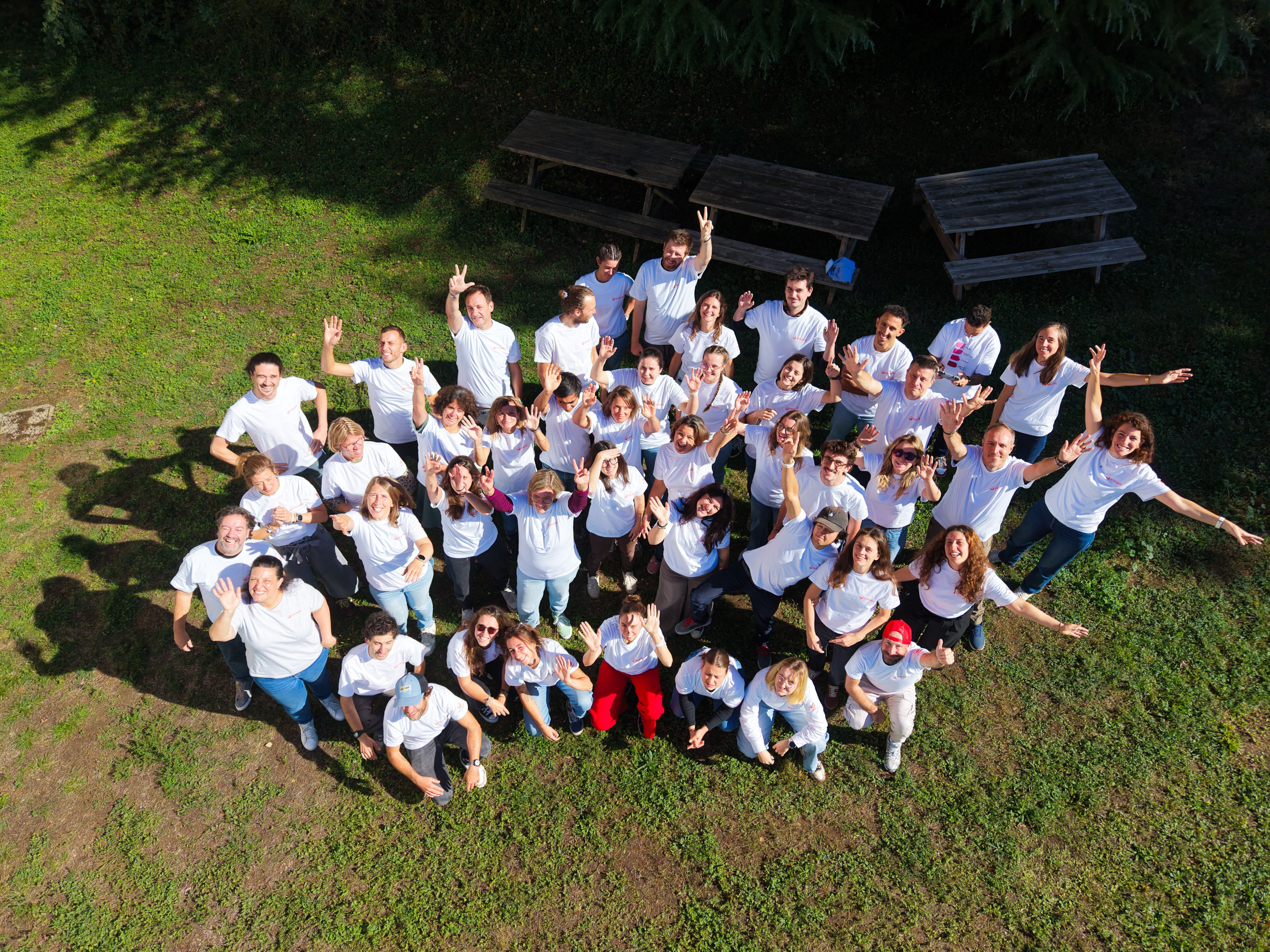
Passionate about travel and connecting with people, our team will help you design meaningful adventures. From small group tours led by passionate local guides to tailor-made trips, experience unique journeys, immersing yourself in cultures and communities. From cultural discovery to challenging treks, explore the world's most beautiful destinations with us, far from the beaten path, at your own pace and according to your desires.