Namib Desert, Wildlife and Ocean
In summary
-
Sports
-
Duration15 days
-
LevelIntermediate
-
DestinationAfrica / Namibia
-
AgeFrom the age of 18
-
CO₂-Emissions7602.56 kg CO2
-
Type of stayIn a group
-
Languages
 French
In a few words
The highlights
-
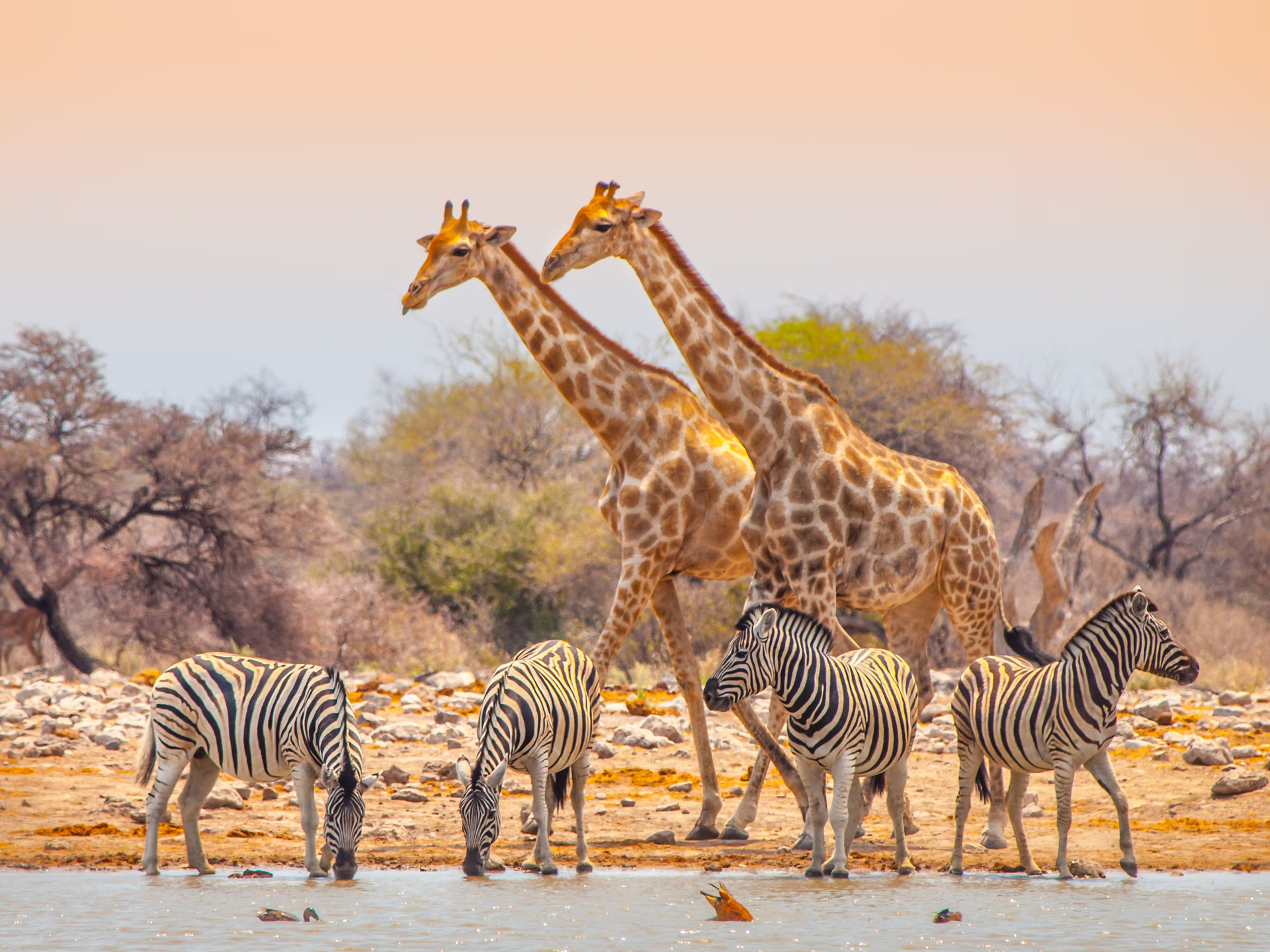
Unforgettable safaris in Etosha: encountering giraffes, kudus and black rhinos.
-
Immersion among the Himba: discovering a people with fascinating traditions.
-
Hiking on the Crazy Dune: climbing one of the highest dunes in the world.
Photos
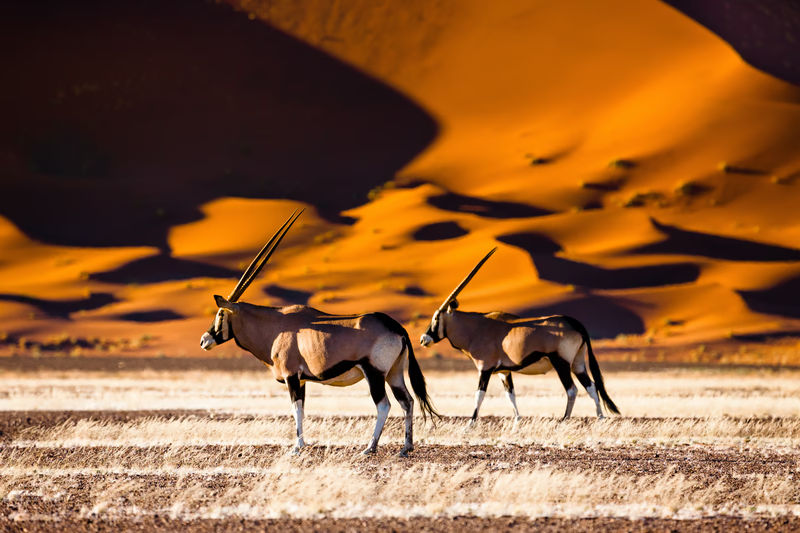
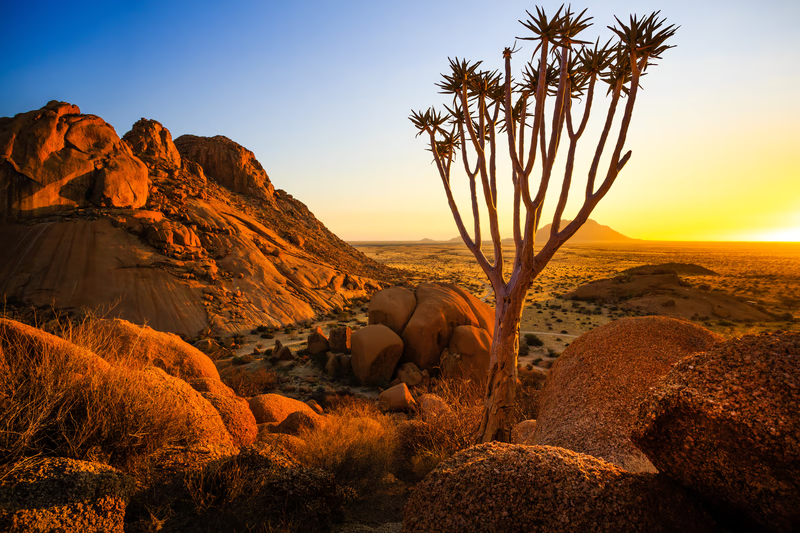
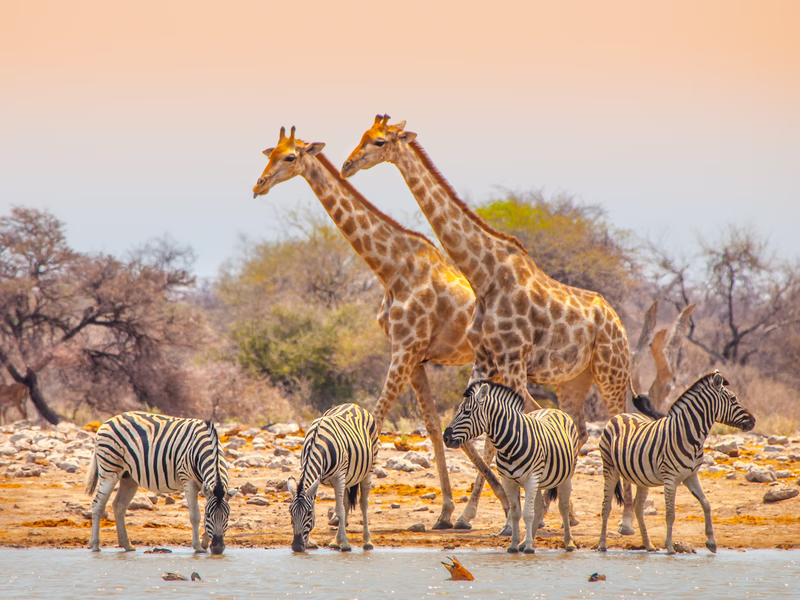
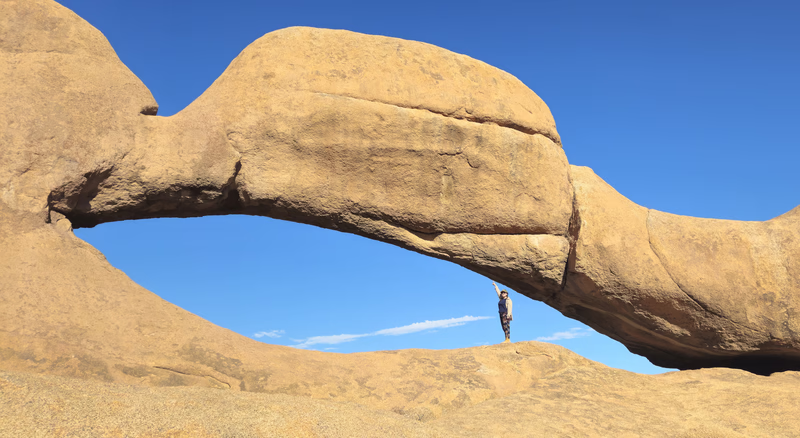
Sport
Level
Hiking / Trekking
The expert's opinion
The terrain is flat for 80% of the hike, with minimal elevation gain. The level is fairly easy (less than 5 hours of walking per day with little elevation change), although climbing the large dunes can be more challenging.
In the Naukluft, we offer the Olive Trail hike, a beautiful but challenging trek. A short section of the trail is steep and requires holding onto chains fixed to the rock faces for safe passage (photos available upon request). Good hiking boots are essential, as the terrain is largely rugged with large rocks.
In figures
Hiking
- Average duration/day: 2h30
Management
French
French-speaking guide assisted by an English-speaking Namibian driver guide.
In every case, your guide has been chosen for their field experience, their specific knowledge of a geographical area and its associated culture, and for their passion for sharing their country. They have an excellent knowledge of African wildlife and will teach you the art of living in Namibia.
Some site visits are accompanied by a local guide, whom it is always appreciated to reward. For example, in the Himba village, at the Twyfelfontain rock art site, or on the Brandberg hike (expect to pay an average of 50 NAD per guide, or about €2.50).
Program
-
Night flight to southern Africa
- Transportation Plane - 14h - 8000km
- Breakfast included
- Lunch not included
- Dinner not included
Departure from Paris in the evening.Day 1 -
Windhoek - Otjiwarongo
- Transportation Car - 05h - 320km
- Accommodation Lodge
- Breakfast included
- Lunch not included
- Dinner included
Late morning arrival in Windhoek, the capital of Namibia. We are met by our guide and drive due north towards Etosha. We settle into a lodge in the Otjiwarongo region.Day 2 -
Safari in Etosha National Park
- Transportation Car - 04h - 300km
- Accommodation Camping
- Breakfast included
- Lunch included
- Dinner included
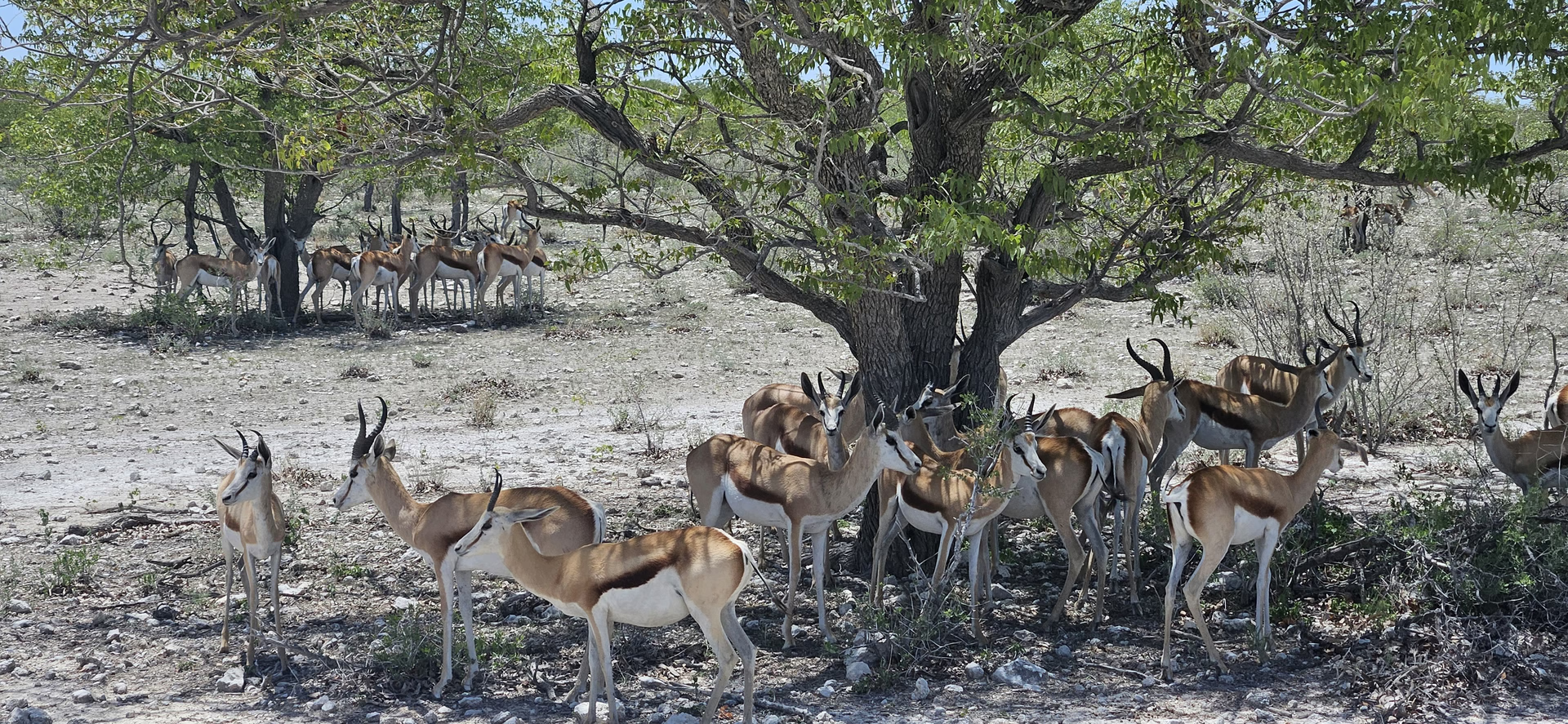
A half-day drive takes us to Etosha, one of Africa's largest wildlife parks, rich in fauna and natural waterholes. This lake, which dried up millions of years ago, attracts thousands of flamingos and other animals that come to drink. We dedicate our afternoon to our first safari in search of the many giraffes, greater kudu, zebras, springboks, and impalas. During peak season, and depending on participants' sometimes late registrations, we may not be able to reserve places in some Etosha camps. Therefore, we may go to Okaukuejo, Halali, or Namutoni, or even outside the park. This evening, we enjoy a unique moment of conviviality: an aperitif shared together, an opportunity to connect before sitting down to a memorable dinner. Note: Looking for more comfort? Opt for an upgrade to a lodge (optional).Day 3 -
Safari in Etosha National Park
- Accommodation Camping
- Breakfast included
- Lunch included
- Dinner included
We observe numerous animals and do everything we can to spot predators. We stop for lunch at Halali Camp where we enjoy the pleasant swimming pool. This camp is renowned for its waterhole where the rare black rhinos of Etosha National Park come to drink. A truly magnificent sight! Note: Looking for more comfort? Upgrade to a lodge (optional).Day 4 -
Etosha West Gate - Opuwo
- Transportation Car - 03h - 400km
- Accommodation Camping
- Breakfast included
- Lunch included
- Dinner included
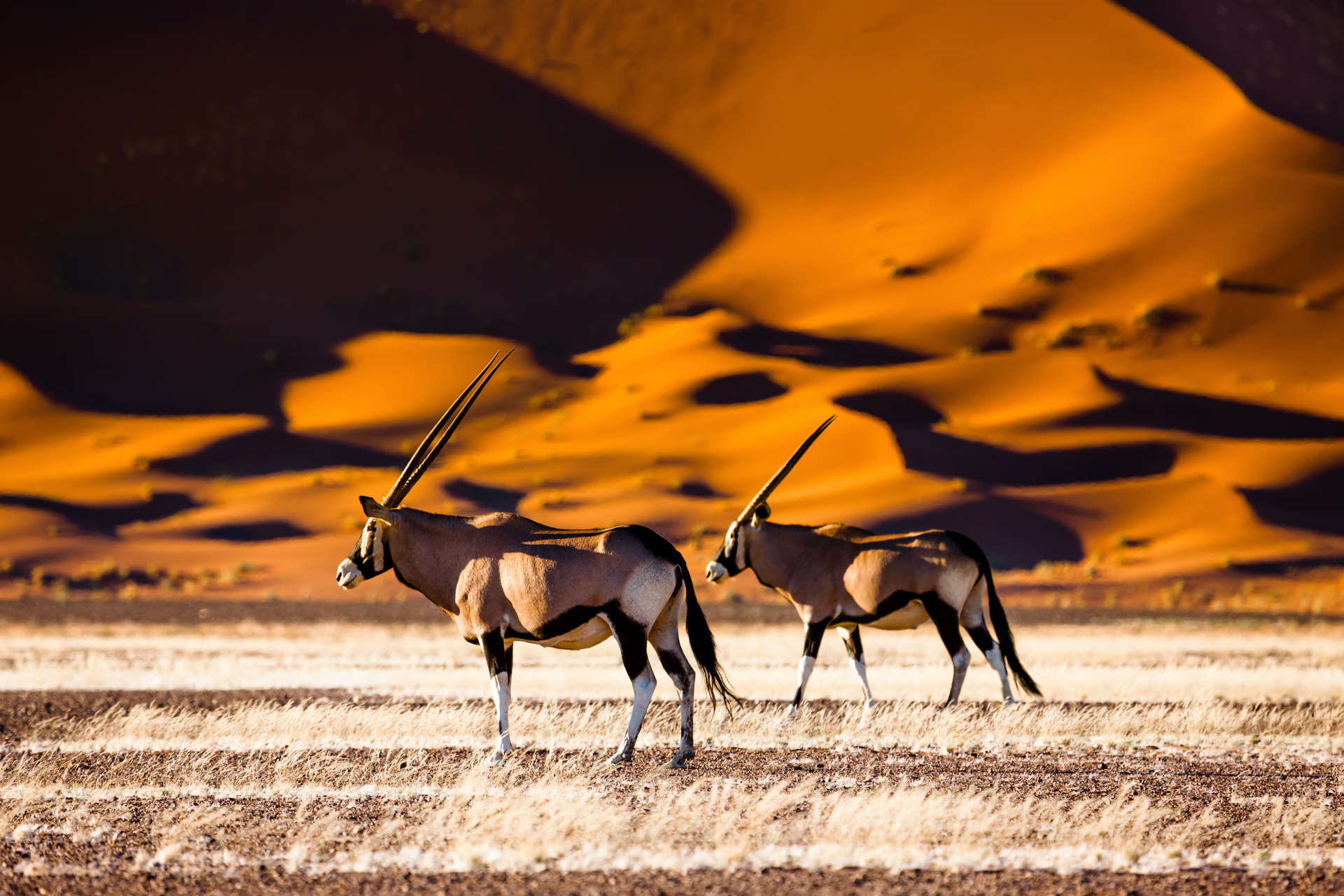
We leave Etosha National Park through the western gate (Otjovasondu). We encounter many animals in this less frequented area: oryx, elephants, and ostriches. We arrive in the Kaokoland region, where the landscape is very different, mountainous and wild. We spend the night camping in Opuwo, the main town of Kaokoland and the heartland of the Himba people. Note: Looking for more comfort? Upgrade to a lodge (optional).Day 5 -
Opuwo (Himba country) - Sesfontein - Hoanib River and Gorges
- Transportation Minibus - 04h - 200km
- Activity Hiking
- Duration of the activity 1h
- Accommodation Camping
- Breakfast included
- Lunch included
- Dinner included
A discreet visit to a Himba village. This tribe, with its ancestral way of life, is fascinating. The women coat their bodies and hair with a mixture of ochre earth and fat, giving them a striking reddish hue. We'll then pass through Sesfontein and stop along the Hoanib River, where we'll set up camp in the heart of a stunning gorge. Note: Looking for more comfort? Upgrade to a lodge (optional).Day 6 -
Damaraland Tabular Plateau - Twyfelfontein Rock Paintings
- Transportation Car - 04h - 200km
- Activity Hiking
- Duration of the activity 1h
- Accommodation Camping
- Breakfast included
- Lunch included
- Dinner included
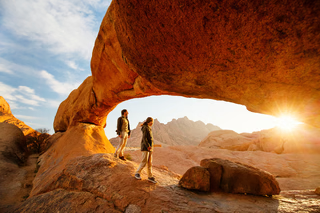
Head south towards the Damaraland region, where ochre-colored, flat-topped mountains are tinged with extraordinary hues. Visit the Twyfelfontein site. Hike through a rocky landscape to discover a site with thousands of figures carved into the rock (petroglyphs), the oldest of which date back 6,000 years. Some are remarkably well-preserved. Note: Looking for more comfort? Upgrade to a lodge (optional).Day 7 -
Brandberg Massif - Elephants of the Ugab River
- Transportation Car - 03h - 150km
- Activity Hiking
- Duration of the activity 3h
- Accommodation Camping
- Breakfast included
- Lunch included
- Dinner included
The winding track we follow leads us to the foot of the Brandberg massif, which rises to 2,576 meters, the highest point in Namibia. We'll hike to discover the "White Lady," the best-preserved rock painting in the country, located in the heart of the massif amidst a jumble of extraordinary boulders. We'll camp at the foot of the Brandberg, near the Ugab River, where, with a bit of luck, we might spot groups of elephants that have adapted to life in the desert. Note: Looking for more comfort? Upgrade to a lodge (optional).Day 8 -
Cape Cross fur seals - Swakopmund
- Transportation Car - 05h - 140km
- Accommodation 2-star hotel
- Breakfast included
- Lunch included
- Dinner not included
The Atlantic coast awaits! We'll discover the Cape Cross fur seal colony, which can number up to 80,000 individuals depending on the season—a truly impressive sight. In the early afternoon, we'll reach Swakopmund. Enjoy free time to explore this small seaside resort nestled between the Namib Desert sand dunes and the Atlantic Ocean. Dinner is on your own.Day 9 -
Swakopmund seaside town
- Accommodation 2-star hotel
- Breakfast included
- Lunch not included
- Dinner not included
Enjoy this free day with an outdoor activity. Meals are not included. Optional activities, payable locally, are available in Swakopmund (prices are indicative and subject to change without notice): - Sandboarding, lying down (no experience required): ~€30 per person (duration: approximately 2 hours) - Sandboarding, standing up (snowboarding experience): ~€20 per person (duration: approximately 2 hours) - Tandem skydiving: ~€100 per person (duration: approximately 1 hour) - Dolphin and sea lion watching cruise (catamaran, max 20 passengers): ~€50 per person (3 hours) - Fishing excursion: ~€90 per person (duration: approximately 3 hours) - Paragliding: ~€45 per person (duration: approximately 1.5 hours) - Scenic flights (minimum 2 people, maximum 5 people; cost decreases with the number of participants): * Skeleton Coast: ~€250 per person (with 4 people) (duration: approximately 1h30) * Sossusvlei Dunes: ~€275 / person (with 5 people) (duration: approximately 2h20)Day 10 -
Namib-Naukluft Desert - Ocher Dunes of Sesriem
- Transportation Car - 06h - 280km
- Activity Hiking
- Duration of the activity 1h
- Accommodation Camping
- Breakfast included
- Lunch included
- Dinner included
We leave the coast to begin our exploration of the desert and cross the Namib-Naukluft Park. We pass through the Kuiseb Canyon, where we discover lunar landscapes, before arriving at Solitaire and Sesriem on the edge of the Namib Desert. We watch the sunset over the Elim dune.Day 11 -
Namib-Naukluft Desert - Sesriem – Mountain Parc
- Transportation Car - 03h - 150km
- Activity Hiking
- Duration of the activity 4h
- Accommodation Camping
- Breakfast included
- Lunch included
- Dinner included
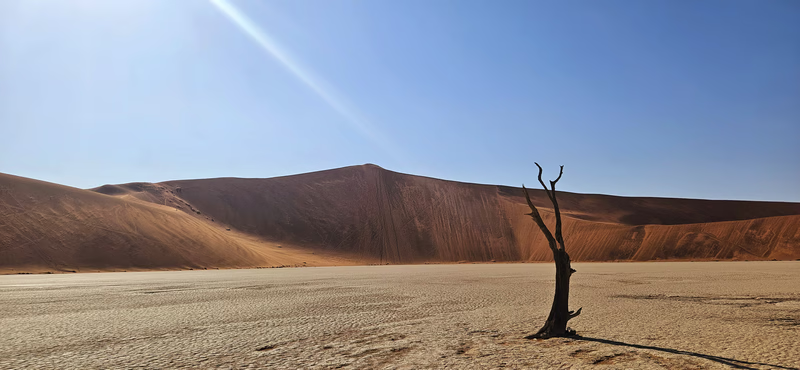
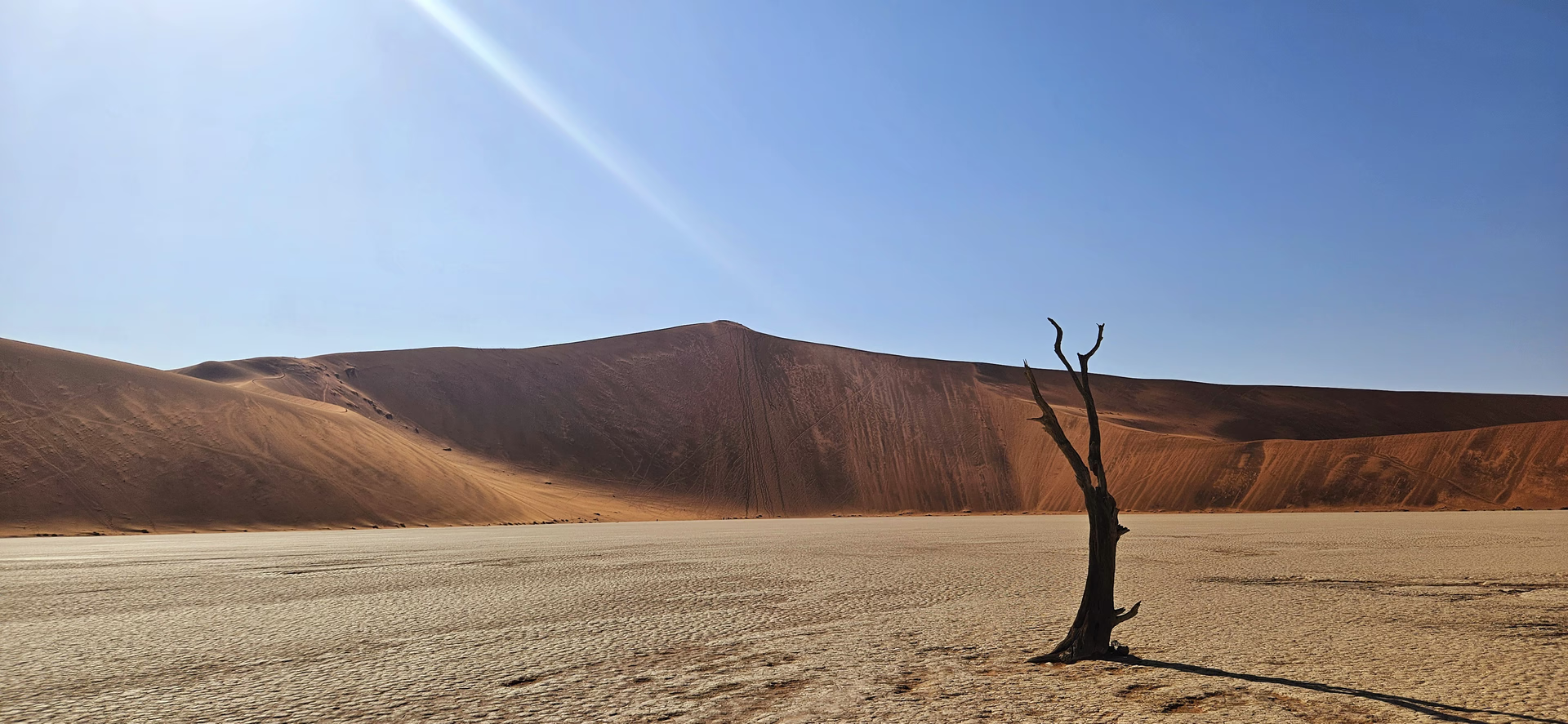
Early departure towards the heart of the dunes. We have breakfast at the start of the hike and walk towards the Crazy Dune. Optional: 4x4 shuttle, payable locally. After climbing one of the world's highest dunes (250 m), we descend via Dead Vlei, a white clay basin dotted with dead trees, then return to the campsite. We head towards the Mountain Park in the Namib-Naukluft Reserve, where we set up camp for the night in the Naukluft Mountains. Late afternoon walk. Note: Want more comfort? Opt for a lodge upgrade (optional).Day 12 -
Mountain Park - High Plateaus - Olive Trail - Windhoek
- Transportation Car - 05h - 250km
- Activity Hiking
- Duration of the activity 4h
- Accommodation 2-star hotel
- Breakfast included
- Lunch included
- Dinner not included
Early in the morning, we begin the famous Olive Trail hike in the Naukluft Mountains. We observe mountain zebras and klipspringers, and take time to swim in natural pools (these natural waterholes may be dry during the dry season). We then ascend to the Khomas Plateau and reach Windhoek in the late afternoon. Free time to explore the city (dinner on your own).Day 13 -
Windhoek - Night flight home
- Transportation Plane - 14h - 8000kmper day
- Breakfast included
- Lunch not included
- Dinner not included
Transfer to the international airport and return flight.Days 14 to 15
Note
Depending on weather and operational conditions, your guide reserves the right to modify this itinerary, for your safety and that of the group.
This trip is combined with its comfort version, which includes accommodation in lodges. You could therefore share your days with travelers on this version.
Accommodation
Access
Terrestrial:
Namibia is an adventure in itself. The journey can be enjoyed even from your vehicle, where you can request photo stops from your driver/guide.
Our vehicles are adapted to the terrain: Toyota Land Cruiser or Hilux (4x4) vehicles, or camper vans reserved for the group, depending on availability and group size. Generally, we use Toyota Land Cruiser or Hilux (4x4) vehicles for groups of fewer than 7 travelers. For groups of 7 or more, we travel in camper vans. These vehicles are equipped with charging points, coolers, and, if necessary, microphones to allow the guide to communicate during travel.
Regardless of the vehicle, each one has a window to enjoy the scenery. Our Land Cruisers have sunroofs for the Etosha safari. Don't hesitate to ask your guide (only in this park) to open the sunroof.
IMPORTANT: Our vehicles are inspected and repaired at our Windhoek base before each trip and are robustly built, but they are put to the test on increasingly challenging tracks: vibrations, minor impacts, and heat can lead to breakdowns or punctures and lengthen travel times. Solutions are always quickly found to ensure the program continues. Air conditioning, while sometimes present, is generally not functional in vehicles subjected to intense vibrations on the tracks!
Go to the starting point
Flights with one or two stopovers, depending on airline availability at the time of your booking. For flights to Namibia, we select the most economical air option.
There are no direct flights to Namibia, and all airlines make one or two stops (Addis Ababa for Ethiopian Airlines; Dubai and Johannesburg for Emirates). These are overnight flights, so you arrive at your destination the following day.
Price details
The price includes
- Flight Paris / Windhoek / Paris
- Local transfers
- Accommodation based on double occupancy
- Full board except in Swakopmund and Windhoek
- Camping equipment
- Entrance fees to the reserves
- French-speaking guide assisted by an English-speaking Namibian driver guide
The price does not include
- Lodge accommodation supplement (all stages except Day 11): see options.
- Activities in Swakopmund are among those mentioned in the "to be paid on site" section.
- As of April 1, 2025, a paid visa for Namibia will cost approximately €80.
- Personal expenses
- Drinks
- Meals in Swakopmund and Windhoek are indicated as being free in the itinerary.
- Tips for local staff (at your discretion)
POSSIBLE ACTIVITY OPTIONS IN SWAKOPMUND
Optional activities, selection and payment directly on site.
- Sandboarding, lying down (~30 € / person – 2h)
Slide headfirst onto a flexible board: thrills accessible to all, with no experience required.
- Sandboarding, standing (~20 € / person – 2h)
Desert snowboarding: reserved for those in the know who want to test their balance on the Namibian sand slopes.
- Tandem skydiving (~€100 / person – 1 hour total)
The great leap over the oldest desert in the world, offering a unique contrast between the golden dunes and the Atlantic Ocean.
- Dolphin & Sea Lion Watching Cruise (~€50 / person – 3 hours)
Catamaran trip to encounter marine wildlife, with sea lions and pelicans often joining them on board for a snack.
- Fishing excursion (~€90 / person – 3 hours)
An authentic experience in the fish-filled waters of the coast, led by experienced local guides.
- Paragliding (~€45 / person – 1.5 hours total)
Fly silently over the dunes for a peaceful aerial perspective of the surrounding lunar landscapes.
- 4x4 Sandwich Harbor excursion (from €140 / person – 4 hours)
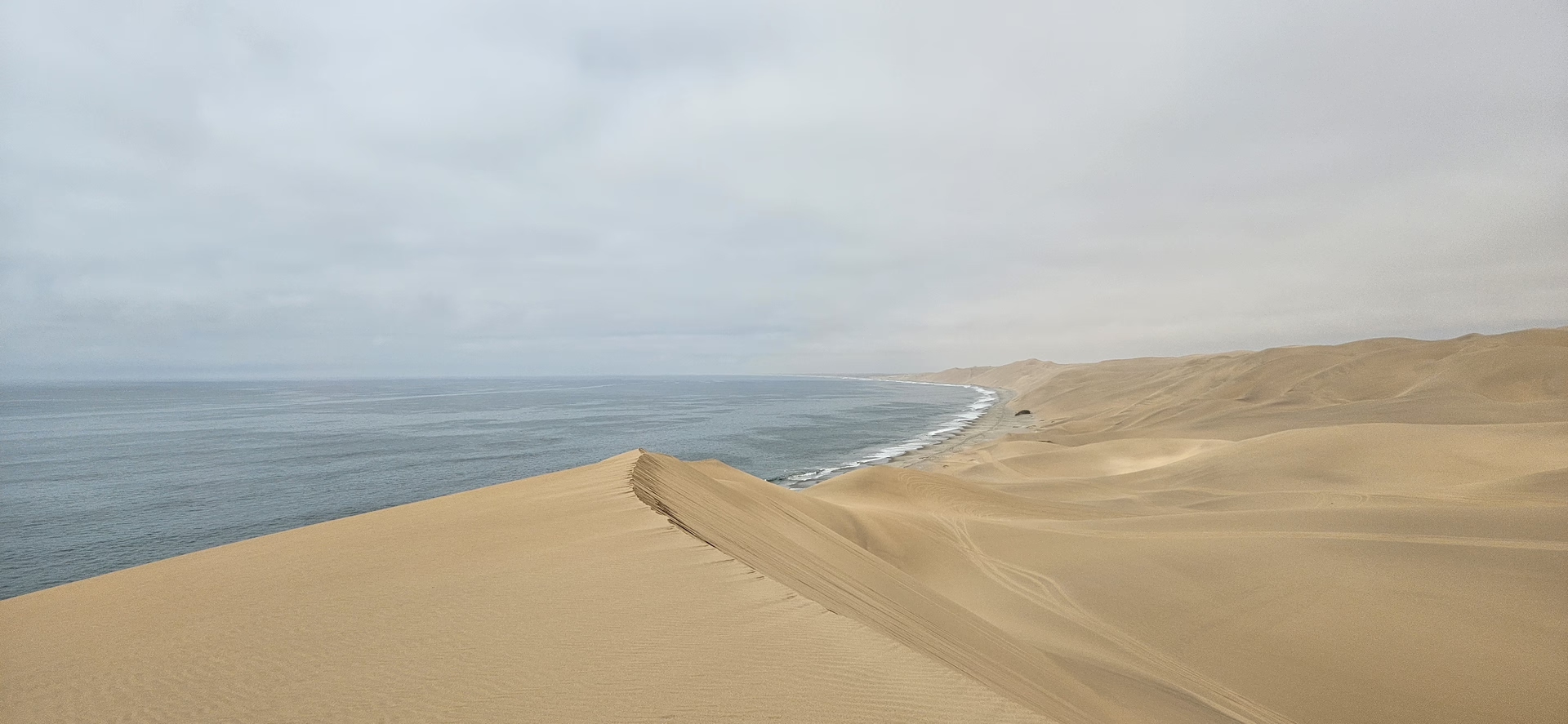
The spectacular meeting point between giant dunes and ocean, including an aperitif facing a breathtaking panorama.
- Scenic flights (2 to 5 people max – discounted rates)
- Skeleton Coast (~€250 / person – 1h30): Fly over shipwrecks and sea lion colonies along a wild and mysterious coast.
- Sossusvlei Dunes (~€275 / person – 2h20): A breathtaking view of the immensity of the world's highest red dunes and their white salt pans.
Options
- Flex fare and insurance
Practical information
Specific formalities
Specifics
Before your departure, check with the embassy or consulate regarding the entry and stay requirements for your destination country. You can also find this information on the France Diplomatie website ( https://www.diplomatie.gouv.fr/fr/dossiers-pays/ ).
In the case of flights with stopovers operated by different airlines, also check the entry requirements of the countries you are transiting through.
It is your responsibility to ensure you are in compliance, particularly regarding the validity of your identity documents (for example, some countries require your passport to be valid for at least six months after your return) , visa requirements, necessary vaccinations, and health recommendations. And don't forget to consider any customs restrictions and other potential requirements of your destination or transit country.
ℹ️ Information may change up to the departure date, remember to regularly check official websites.
Equipment
Equipment provided on site
We provide the camping and cooking equipment, both for groups and individuals.
Equipment to bring
- Earplugs or Ears
- Plastic bags for waterproofing your belongings
- Camera and external battery
- Sleeping bags down to -3°C provided (note that you should still bring an extra sleeping bag for the southern winter months, from April to August)
- Sleeping bag sheet
- Toiletries kit and bath towel
- Sunscreen cream and stick (face and lips)
- Headlamp with batteries and spare bulb
- A water bottle of at least 1 litre is recommended to preserve the fragile ecological balance of the regions traversed.
- Pocket knife, preferably a multi-purpose one
- Toilet paper + lighter for destruction
- Sunglasses
- Hat
- Binoculars (optional but recommended!)
- Plug adapter (South African type, to be purchased locally)
Clothing to bring
It's important to adapt your gear to the climate and season of your visit. Pack light, practical clothing for the day (loose trousers, T-shirts or shirts, shorts or Bermuda shorts, a swimsuit, and a sweater for the evenings). The weather is significantly warmer from September through November. Warm clothing and sleeping bags are no longer necessary at this time. However, in the desert and on the coast (Swakopmund), it can get a bit chilly in the evenings, even during the hottest part of the season. During the southern winter (June to August), the weather is colder. Pack much warmer clothing, a windbreaker, a hat, and gloves. Bring a pair of comfortable shoes or lightweight hiking boots and more flexible shoes for the evenings.
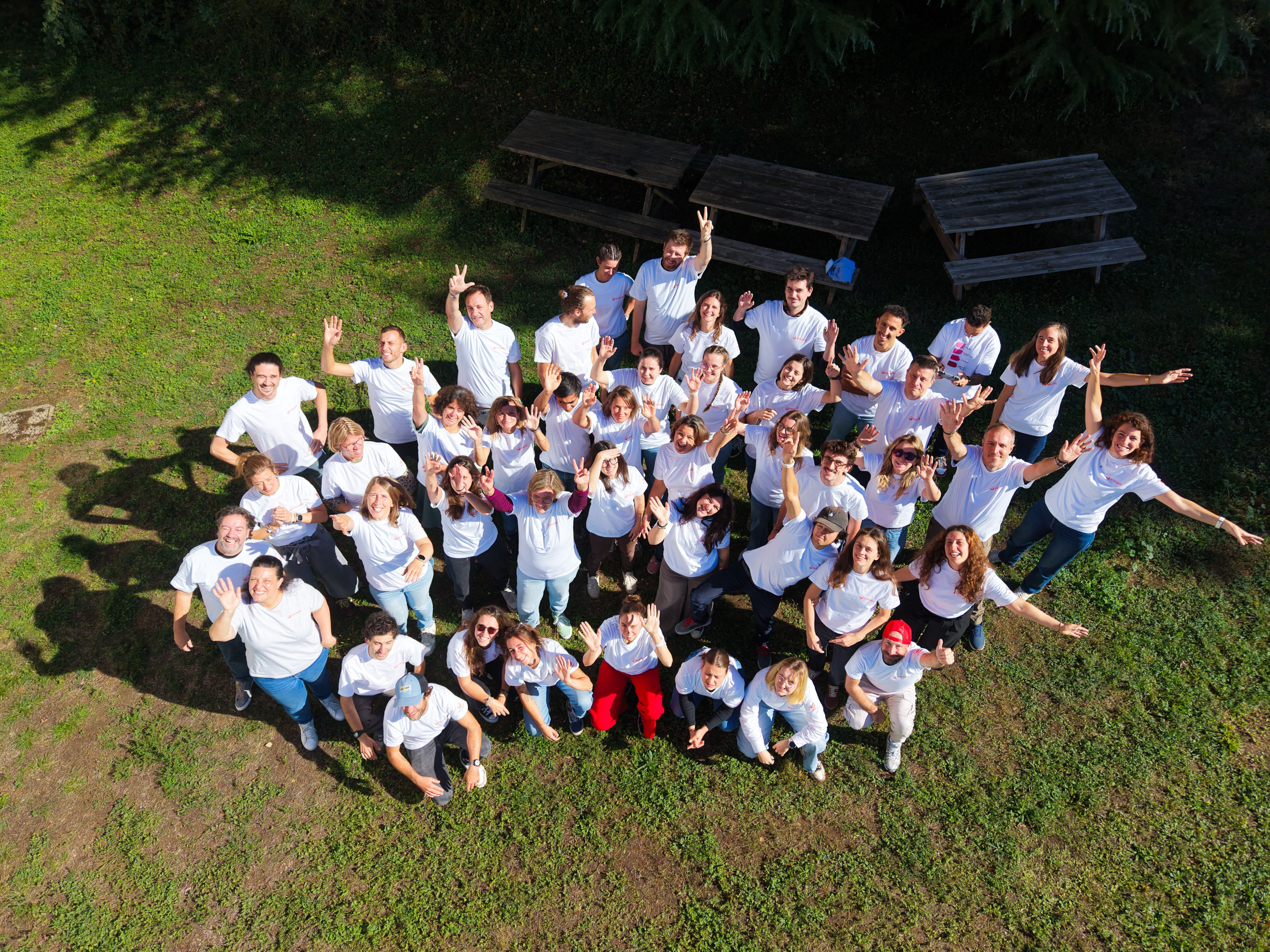
The Paulin team
Passionate about travel and connecting with people, our team will help you design meaningful adventures. From small group tours led by passionate local guides to tailor-made trips, experience unique journeys, immersing yourself in cultures and communities. From cultural discovery to challenging treks, explore the world's most beautiful destinations with us, far from the beaten path, at your own pace and according to your desires.