A week of felucca sailing
In summary
-
Sports
-
Duration8 days
-
LevelBeginner
-
DestinationEgypt / Nile Valley
-
AgeFrom the age of 18
-
CO₂-Emissions2048.8 kg CO2
-
Type of stayIn a group
-
Languages
 French
 English
In a few words
The highlights
-
Deciphering the hieroglyphs on the walls of temples and tombs
-
Write your first name in Egyptian on a papyrus
-
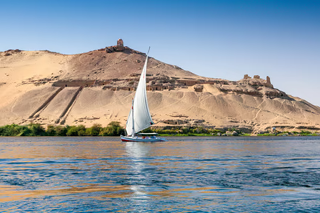
Sail and live to the rhythm of the Nile on our felucca
Photos


Sport
Level
Hiking / Trekking
In figures
Hiking
- Average duration/day: 3h
- Average distance/day: 9 km
- Average daily elevation gain: 25 m
- Average daily descent: 25 m
Management
French
English
Program
-
Flight to Luxor.
- Transportation Plane - 05h - 3135km
- Breakfast included
- Lunch included
- Dinner not included
Airport pickup, then after a quick transfer by ferry, we settle in at Hamdya and Noubi's, our hosts for the night, on the west bank of the Nile.Day 1 -
Aswan - visit to Philae.
- Transportation Minibus - 03h - 240km
- Breakfast included
- Lunch included
- Dinner included
Early in the morning, we depart for Aswan. After lunch, we visit the Temple of Isis at Philae. The evolution of its site, the relocation and reconstruction of the temple, makes it one of Egypt's most famous monuments, a survivor of the rising waters caused by the construction of the dams. We then stroll through the souks before boarding our feluccas and embarking on our river adventure.Day 2 -
Hiking on the shores (or an optional visit to Abu Simbel) and island hopping north.
- Transportation Minibus - 05h
- Activity Hiking
- Duration of the activity 4h
- Distance 10 km
- Breakfast included
- Lunch included
- Dinner included
A lovely hike along the riverbanks in the morning. After lunch, we explored Nubian villages: meeting farmers, enjoying tea with locals, and strolling among the painted houses. We walked to Koubanya before floating to Daraw. Meals and overnight stay on board.Day 3 -
Daraw Market - visit to the Kom Ombo temple.
- Transportation Minibus - 05h - 40km
- Activity Hiking
- Duration of the activity 3h
- Distance 10 km
- Breakfast included
- Lunch included
- Dinner included
Visit to the weekly market in Daraw and the farmers' market. The atmosphere is bustling, and we discover the animals and produce sold there in a fragrant, chaotic scene! In the afternoon, visit to the double temple of Kom Ombo and its museum of mummified crocodiles, a unique ancient sacred site built for two deities: Sobek, the crocodile god, and Horus, the falcon god, in a local form. Dinner and overnight on board.Day 4 -
Djebel Silsila
- Transportation Minibus - 04h - 20km
- Activity Hiking
- Duration of the activity 3h
- Distance 10 km
- Positive elevation gain 100 m
- Negative elevation 100 m
- Breakfast included
- Lunch included
- Dinner included
Explore the quarry sites dating back to the Pharaonic era in the Jebel Silsila mountains. This site reveals a little-known aspect of the great temples: their technical construction. Meals and overnight stay on board.Day 5 -
Temples of Edfu - Luxor and Karnak.
- Transportation Minibus - 02h - 130km
- Breakfast included
- Lunch included
- Dinner included
A quick stop at the Temple of Edfu and then on to Luxor. We were delighted to meet our hosts, Abdelramane and Nour. The afternoon was dedicated to visiting Karnak, one of the largest pharaonic religious complexes. Since the beginning of the second millennium BCE, it has been continuously expanded, modified, and embellished. In the early evening, we visited the illuminated Temple of Luxor.Day 6 -
Valley of the Kings - Temple of Queen Hatshepsut.
- Transportation Minibus - 02h - 25km
- Activity Hiking
- Duration of the activity 1h
- Distance 5 km
- Breakfast included
- Lunch included
- Dinner not included
Today, we're accompanied by our four-legged friends, the donkeys, who will take us to the foot of Jebel Gouranah, which overlooks the Valley of the Kings. We'll meet them again after our extraordinary visit to the necropolis of the Upper Egyptian dynasties and the temple of Queen Hatshepsut. We'll return to our host's house for lunch before enjoying a free afternoon. We can choose to stroll through the souks, attend a sound and light show in the early evening, or simply relax on the terrace of our guesthouse. Don't forget to let your children try the sugarcane juice—it's delicious and full of iron!Day 7 -
Return flight from Luxor
- Transportation Plane - 05h - 3735km
- Breakfast included
- Lunch not included
- Dinner included
Transfer to the airport for our return flight.Day 8
Note
Accommodation
- Three nights in Luxor, staying with a local family on the west bank. You'll feel right at home: the location is ideal, peaceful, and perfectly situated for exploring the fabulous Pharaonic sites of the Luxor region. After getting to know our hosts, their home, their life in their neighborhood (and even learning to cook Egyptian mezze!), you'll find it hard to leave...
- 4 nights on the Nile, we travel in a private felucca , which adapts to the size of our small group: these typical river sailboats are the ideal, slow and silent way to discover the banks of the lung of Egypt.
Access
Go to the starting point
Price details
The price includes
- The round-trip flight Paris / Luxor
- Local transfers
- Accommodation
- Full board except for the meals not included in the program
- The local team: felucca captain, cook, donkey drivers
- The boat's "dining room" assistance
- National guides at the sites on the program in Luxor and Philae
- A French-speaking tour guide
- Entrance fees to the program sites (~ €60 per adult, ~ €31 per child aged 7 to 11)
- Institutional tips (~ €22)
The price does not include
- Visa fees (~ €25)
- Personal expenses
- Drinks
- The optional meals mentioned in the program (approximately 5 meals at €12/meal)
- A tip for your tour guide (at your discretion)
- Hot air balloon flight over the west bank of Luxor, to be booked and paid for locally (weather permitting): €95 per person, including round-trip transfer from hotel to the launch site, 45-minute flight, and cancellation insurance
Options
- Guided tour of Abu Simbel : CHF96.05 / person
- Flex fare and insurance
Practical information
Specific formalities
Specifics
Before your departure, check with the embassy or consulate regarding the entry and stay requirements for your destination country. You can also find this information on the France Diplomatie website ( https://www.diplomatie.gouv.fr/fr/dossiers-pays/ ).
In the case of flights with stopovers operated by different airlines, also check the entry requirements of the countries you are transiting through.
It is your responsibility to ensure you are in compliance, particularly regarding the validity of your identity documents (for example, some countries require your passport to be valid for at least six months after your return) , visa requirements, necessary vaccinations, and health recommendations. And don't forget to consider any customs restrictions and other potential requirements of your destination or transit country.
We understand that recent geopolitical developments may cause concern. However, we want to reassure you that your safety and comfort are our top priority. We are closely monitoring the situation with local and international authorities and remain in constant contact with our teams on the ground. The main tourist areas, including our resorts, continue to operate normally and are largely secure. Please do not hesitate to contact us with any questions or concerns. We are here to support you and are committed to providing you with up-to-date information and personalized advice to ensure a worry-free trip to Egypt.
ℹ️ Information may change up to the departure date, remember to regularly check official websites.
Equipment
Equipment provided on site
Group camping and cooking equipment, both individual and communal, is provided by us. Life jackets are available on the boats.
Equipment to bring
- Comfortable sleeping bag, adapted to your size, rather mummy-shaped (closer to the body and with a hood that closes) with a side zip closure for opening at your convenience.
- Sleeping bag sheet
- Toiletry bag
- Moistened wipes
- Bath towel
- Sunscreen cream for face and lips
- Flashlight or headlamp with spare batteries
- A multi-purpose pocket knife is preferable (to be packed in checked baggage on the plane).
- Plastic bags to ensure your belongings, cameras and clothes are watertight
- Walking poles (optional). They are a great help in saving your knees on the descent.
- Pair of binoculars (optional)
- Camera
- A pouch for your passport, travel insurance leaflet, currency, credit card, and personal documents.
- A water bottle of at least 1.5 L, lightweight and insulated.
- Sunglasses
Clothing to bring
- Low-cut hiking shoes: these are a hiker's best friend and must offer two qualities: sturdiness and good foot support. Avoid wearing brand new shoes; blisters could ruin your trip. Try to break them in before you leave.
- Tennis shoes or walking sandals: whatever your trip, they're comfortable to slip on when stopping in towns, villages, or in the evening.
- Socks: light for daytime and warm for evening
- Hiking trousers and Bermuda shorts (avoid shorts)
- Lightweight and comfortable evening trousers
- Swimsuit and bath towel
- Light shirts or T-shirts for the day, warm ones for the evening
- Polar
- Rain poncho or raincoat in case of rain and/or wind
- Hat, cap or scarf for sun protection
- Warm jacket: down or Gore-Tex. The most effective jackets against wind and rain are made of Gore-Tex or Micropore, breathable materials that allow perspiration to evaporate quickly while maintaining excellent insulation.
- Cap
- Gloves