The Eastern Erg with the family!
In summary
-
Sports
-
Duration8 days
-
LevelIntermediate
-
DestinationTunisia / Djerba
-
AgeFrom the age of 18
-
CO₂-Emissions1100.65 kg CO2
-
Type of stayIn a group
-
Languages
 French
In a few words
The highlights
-
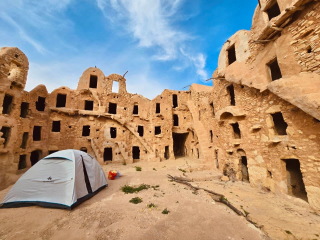
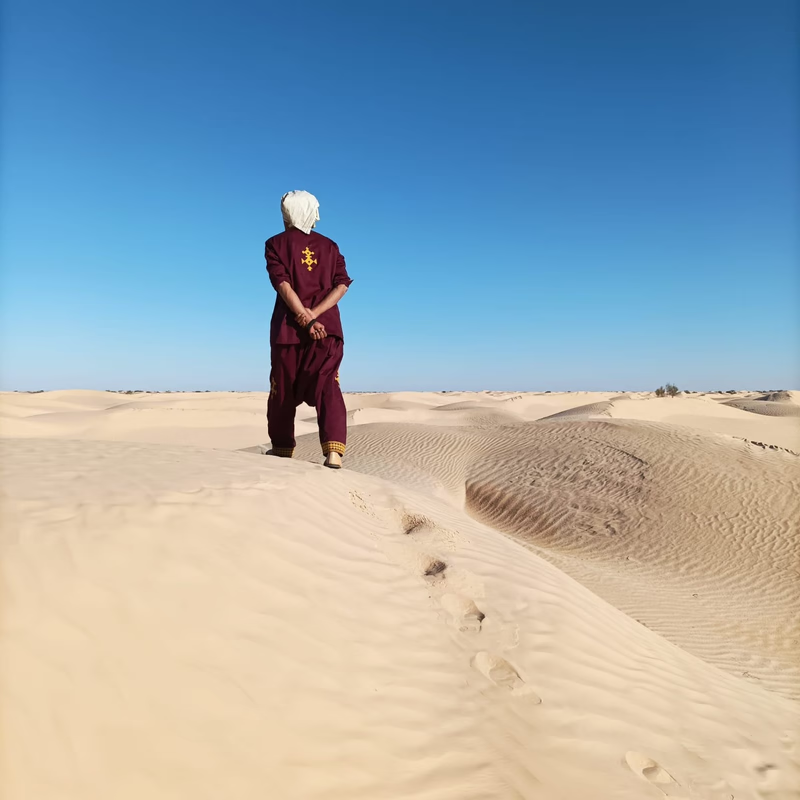
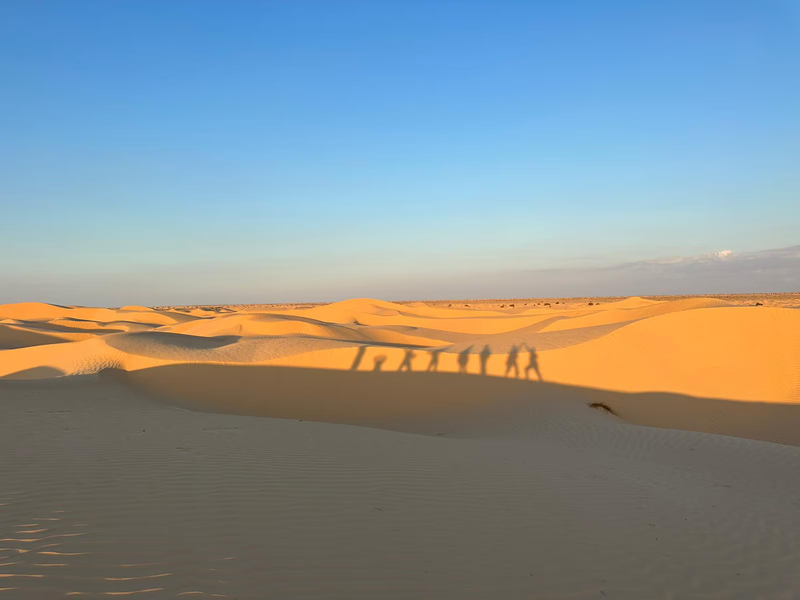
Camping in a different setting each night, like nomads
-
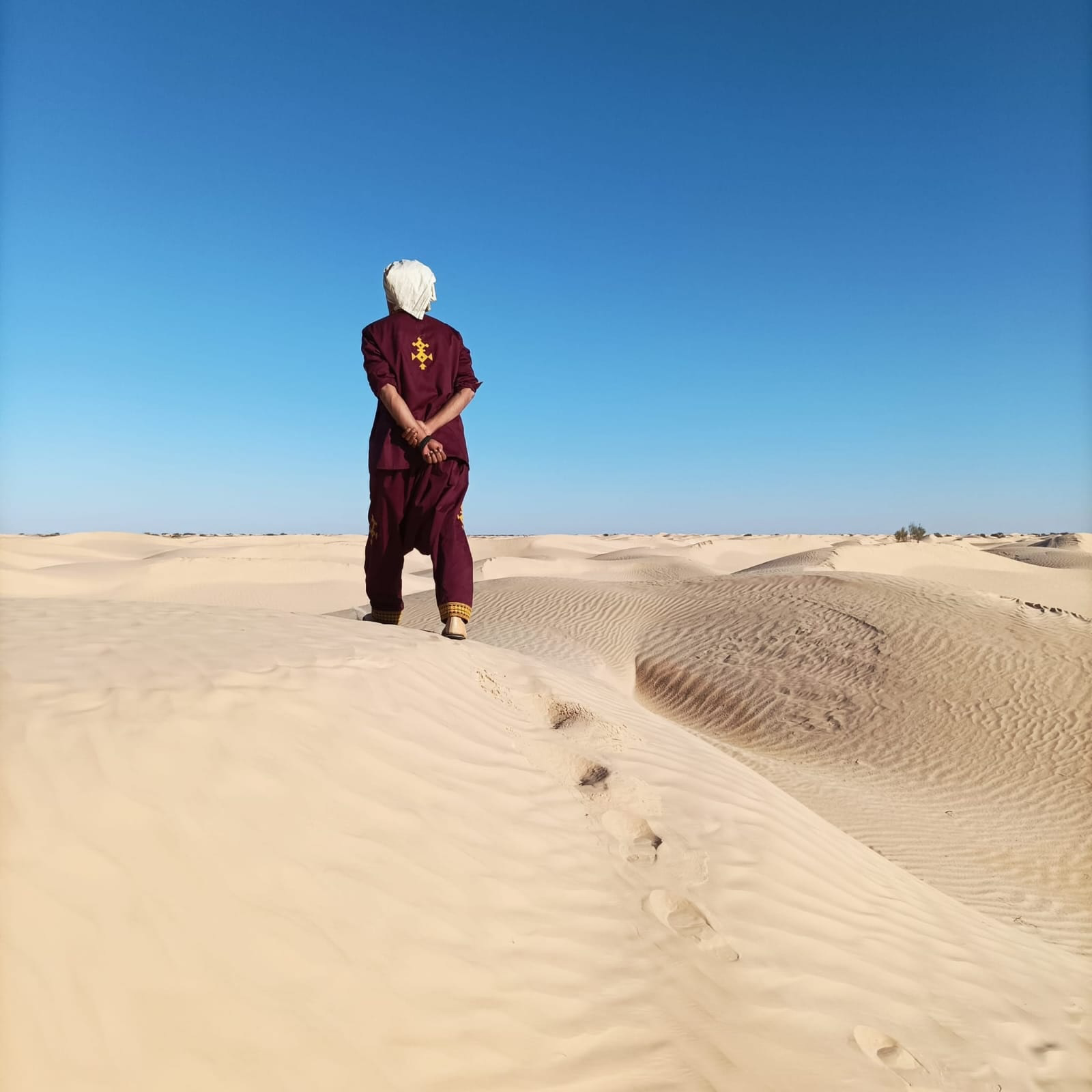
Learn how to pitch a tent and tie a cheche (headscarf) thanks to the "little nomad" workshop
-
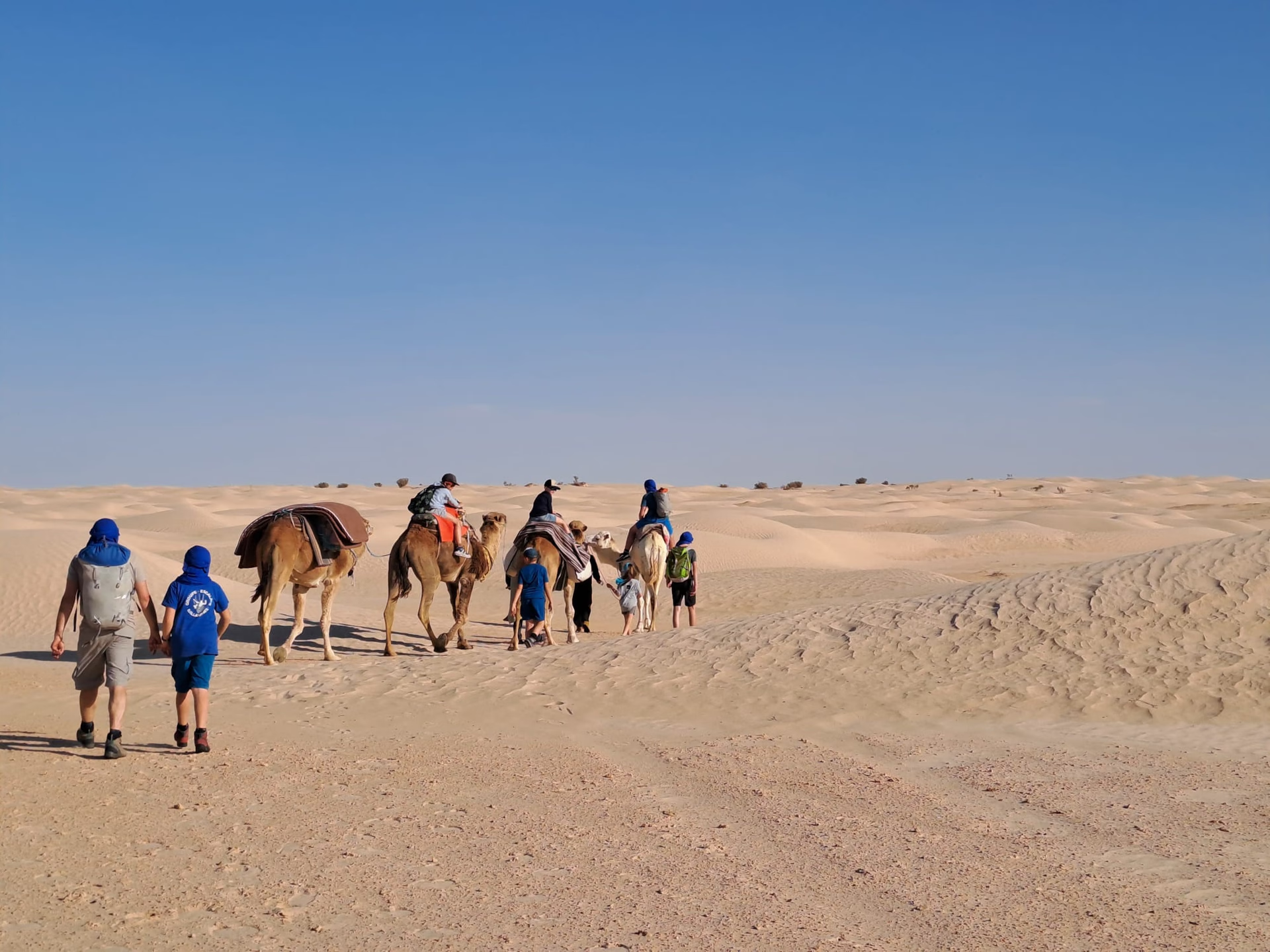
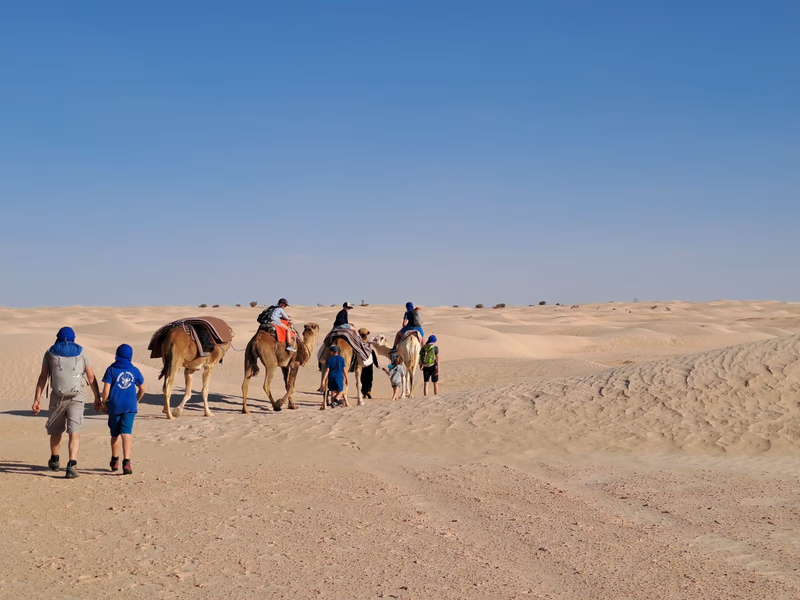
Camel rides for young and old!
Photos
Sport
Level
Hiking / Trekking
The expert's opinion
4 to 5 hours of walking or physical activity per day, little elevation gain. You walk occasionally.
In figures
Hiking
- Average duration/day: 2h30
Management
French
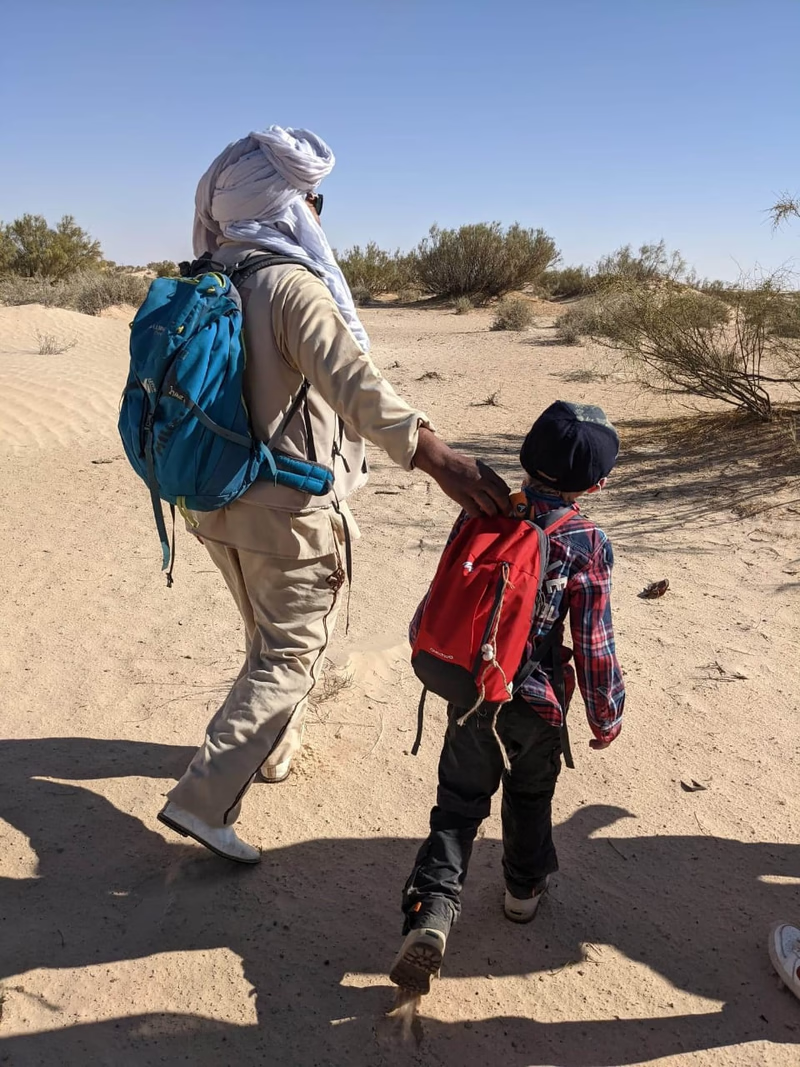
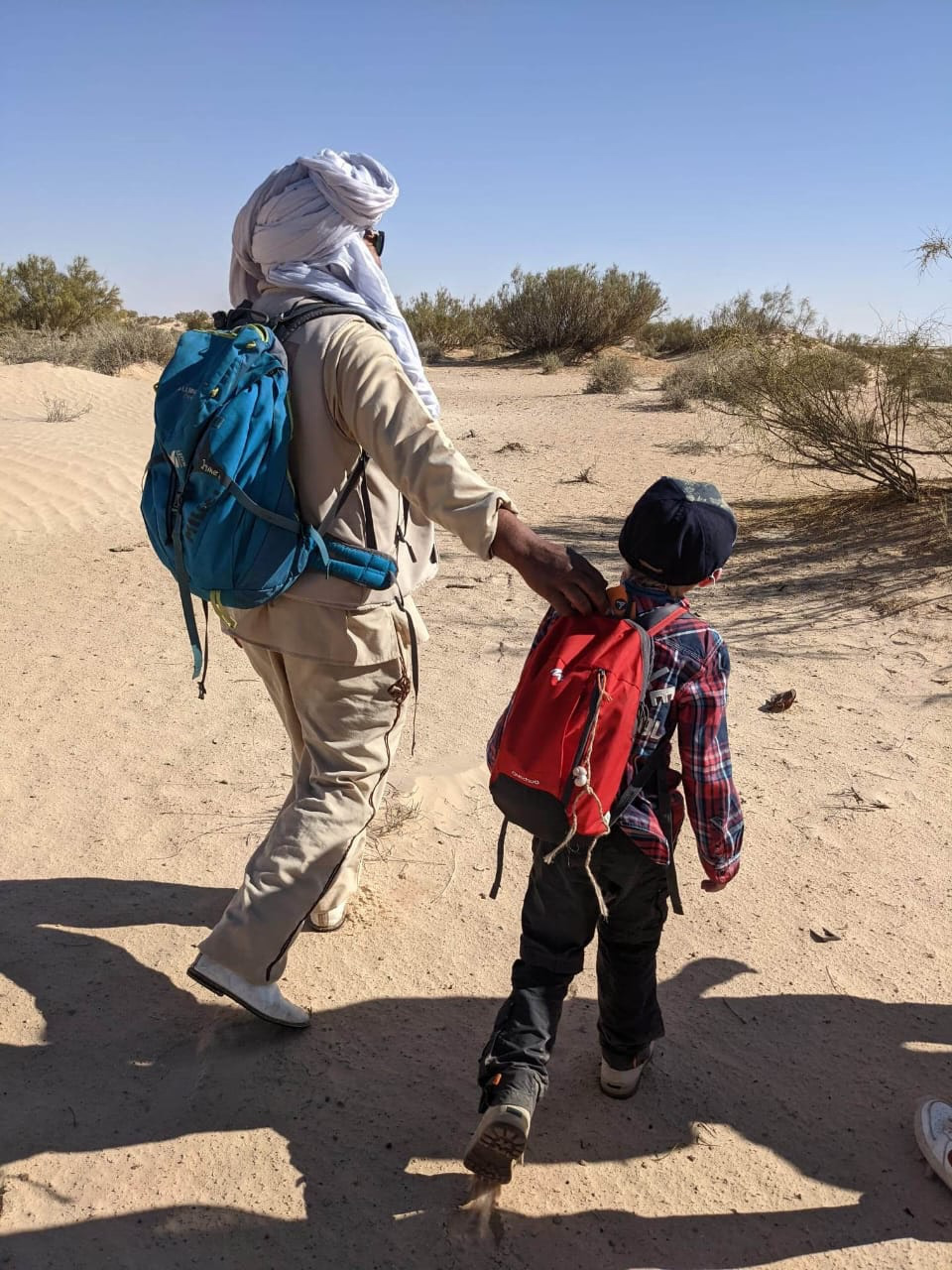
Upon arrival, you will be greeted by your French-speaking Tunisian tour guide. In every case, they have been chosen for their extensive field experience, their specific knowledge of the geographical area and its associated culture, and their passion for sharing their country. They are assisted by a team of camel drivers, chauffeurs, and a cook, who share their nomadic lifestyle with you. Their ever-present friendliness is a guarantee of success for our trips. They know the terrain intimately and will teach you the art of living in the Sahara.
Program
-
Flight to Djerba
- Transportation Plane - 03h - 1800km
- Accommodation 3-star hotel
- Breakfast not included
- Lunch not included
- Dinner not included
Flight to Djerba. Airport pick-up and transfer to our hotel. Evening and dinner at leisure. Overnight at the hotel.Day 1 -
Djerba - Matmata - Douz
- Transportation 03h30 - 1km
- Activity Hiking
- Duration of the activity 2h30
- Accommodation Bivouac / Tent
- Breakfast included
- Lunch included
- Dinner included
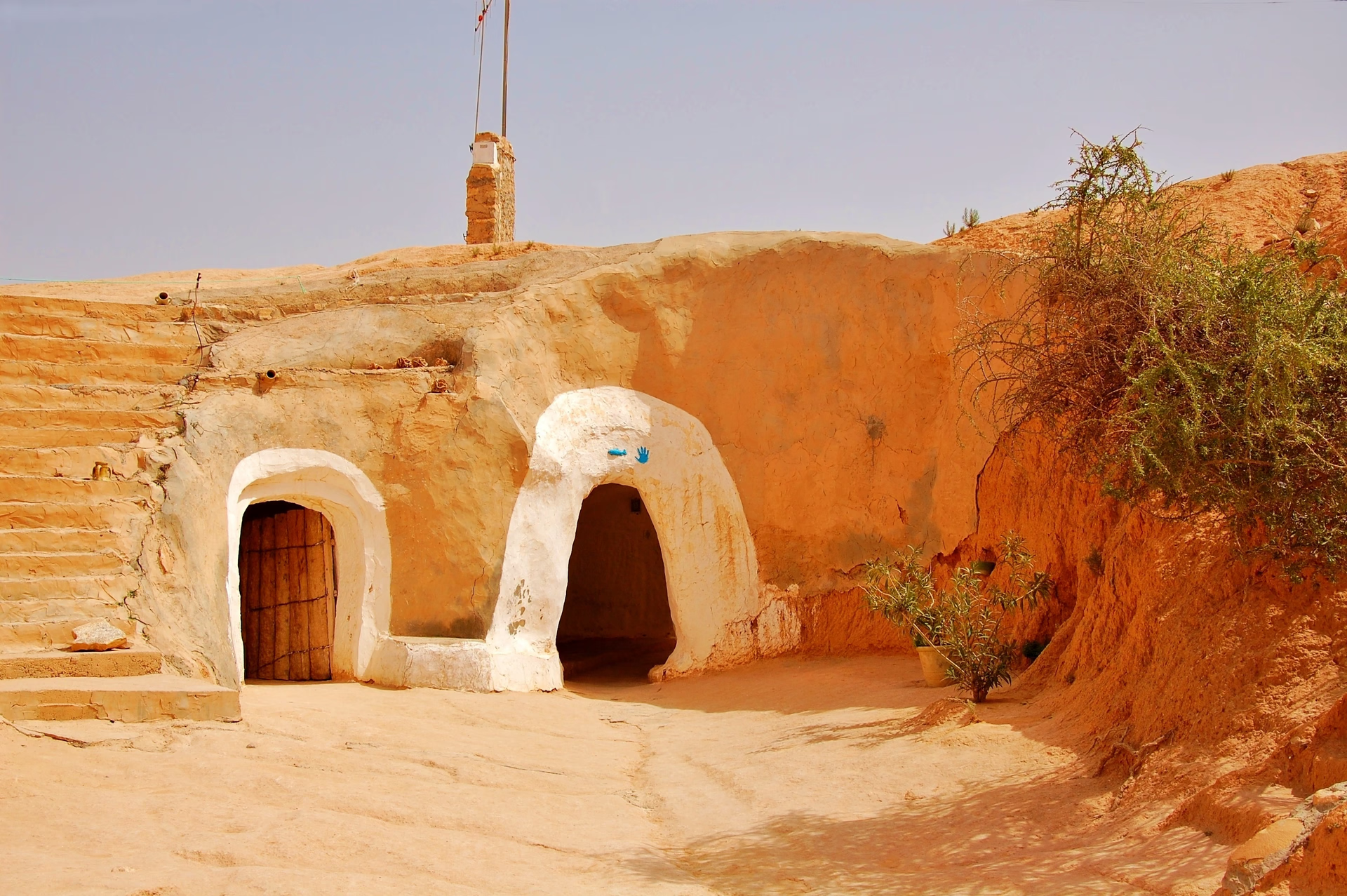
This morning, we left Djerba by ferry to reach the mainland. A short stop in Matmata immersed us in the troglodytic world before arriving in Douz, the gateway to the desert. Here we met our team of camel drivers, our companions on this great Saharan adventure. Together, we embarked on an introductory trek through the dunes. Then came the long-awaited moment of our camel baptism! The day ended with our first bivouac, lulled by the magic of the stars and stories told around the campfire.Day 2 -
Sidi Ben Mokhtar - Sidi Jemil - Sidi Boujhif - Ben Chroud
- Activity Hiking
- Duration of the activity 3h per day
- Accommodation Bivouac / Tent
- Breakfast included
- Lunch included
- Dinner included
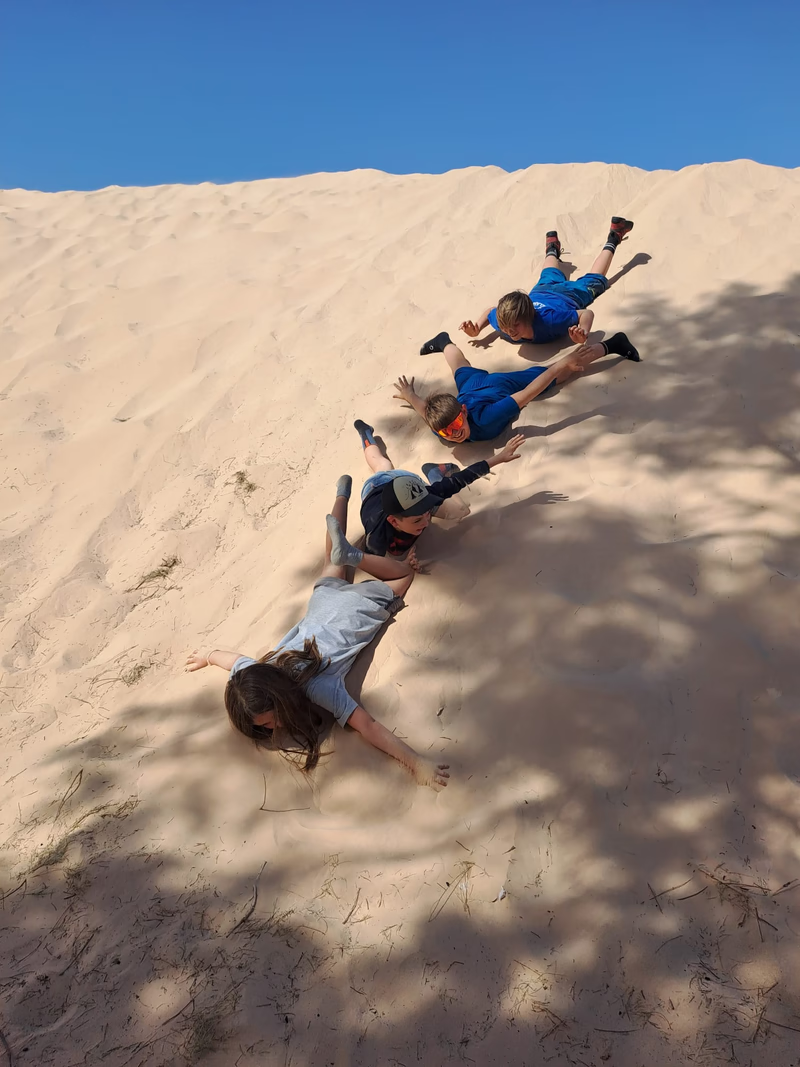
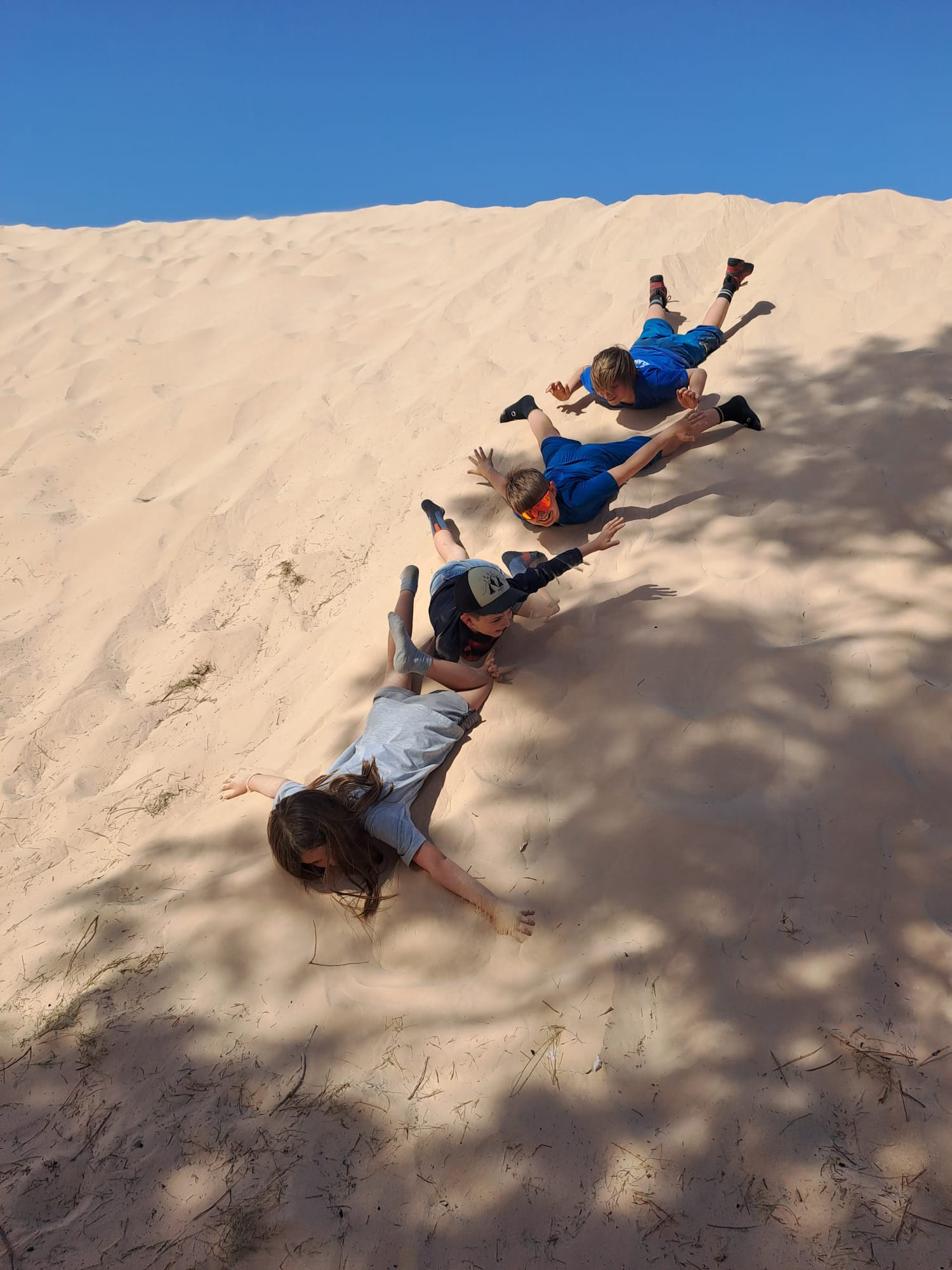
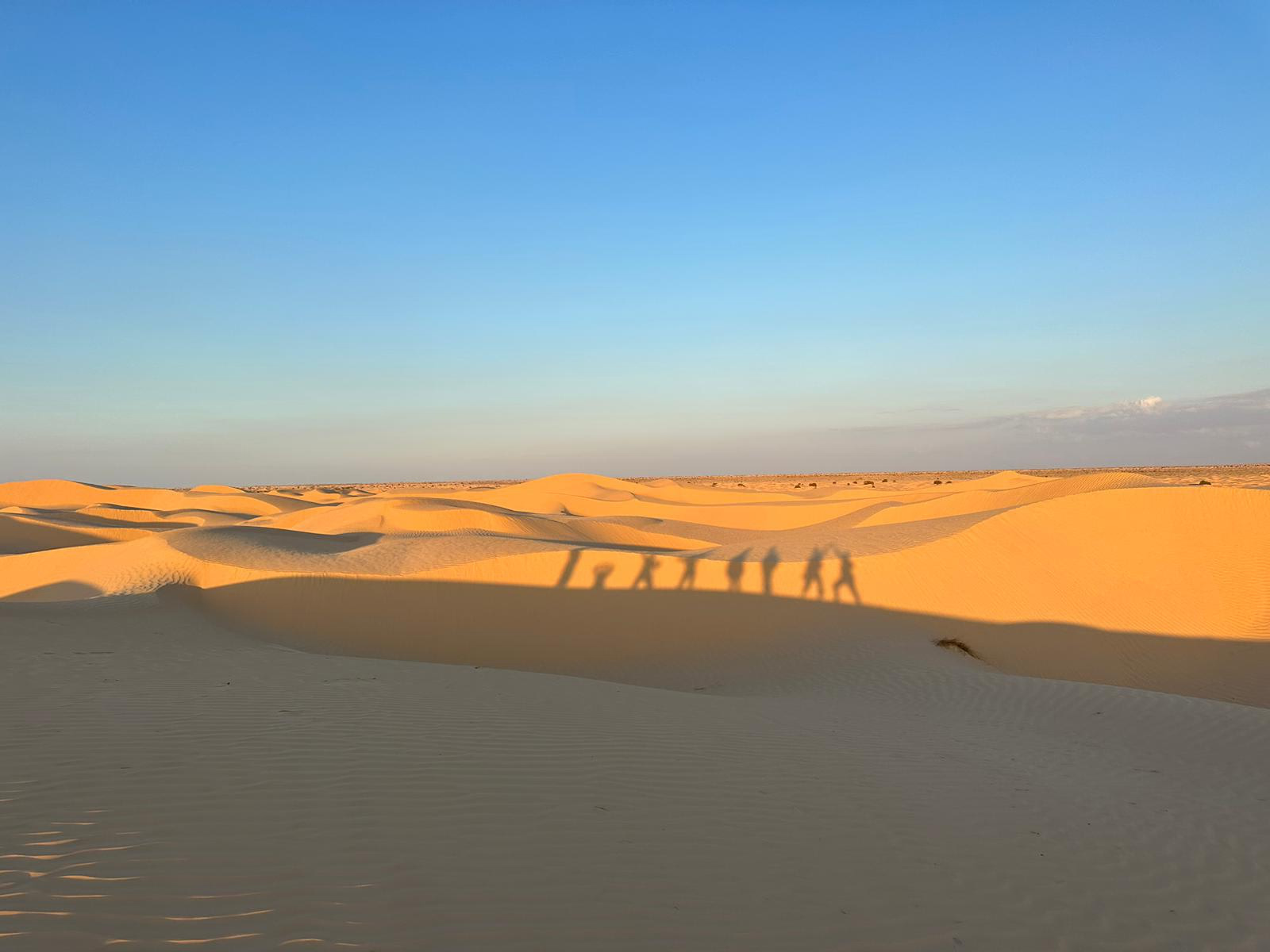
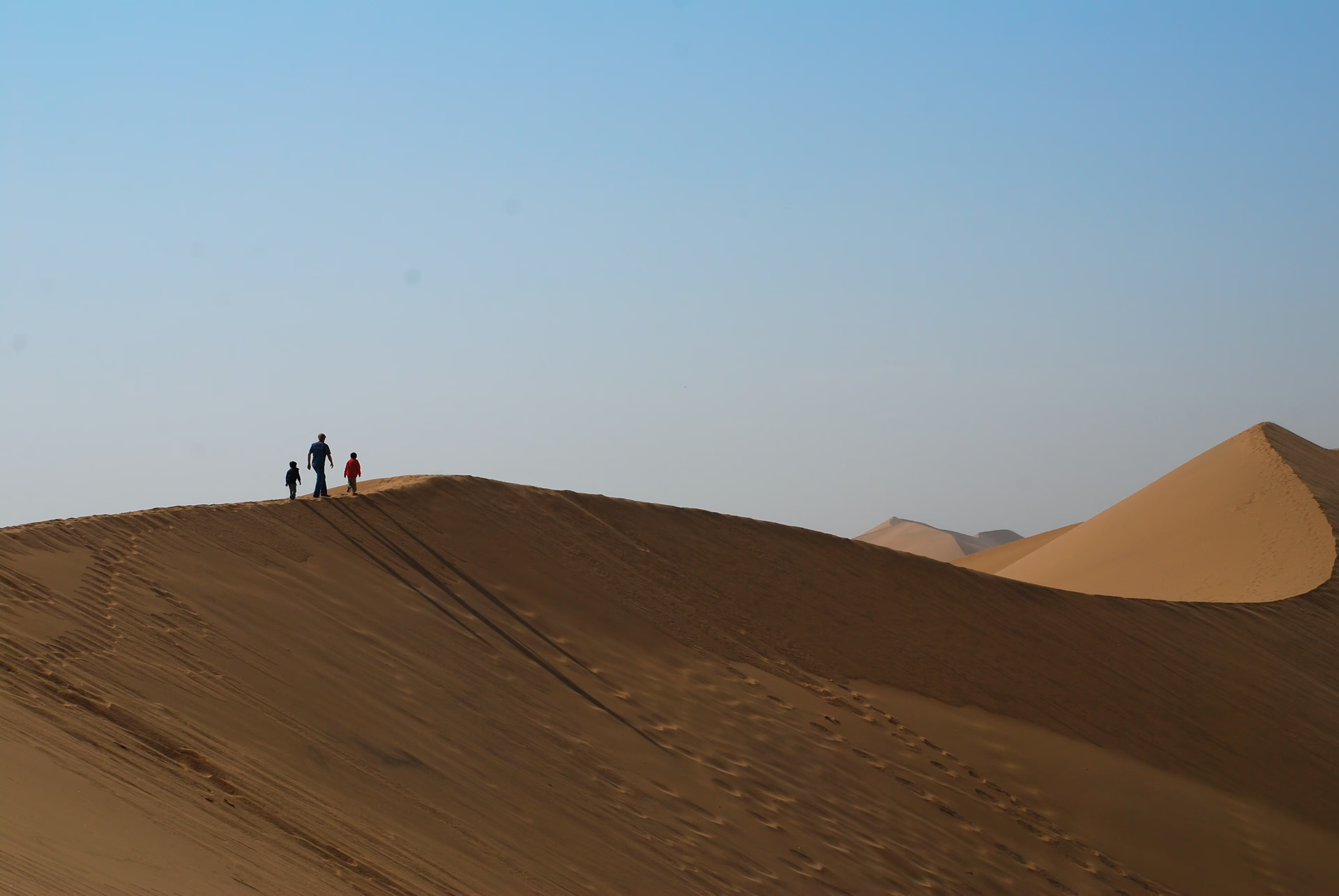
Each morning, we trek across the dunes, accompanied by the camel caravan. The afternoon is reserved for games, rest, and activities: hunting for desert roses, a creative workshop with sand and desert stones, stargazing, sliding in the dunes, a "little nomad" workshop to learn how to tie a cheche and pitch a tent, cooking classes with our camel drivers, an introduction to Berber music (rhythms and percussion)... Truly magical moments, where families discover the traditions of the Saharan world!Days 3 to 6 -
Ben Chroud - Dalia - Matmata - Djerba
- Transportation Minibus - 04h - 1km
- Activity Hiking
- Duration of the activity 2h30
- Accommodation 3-star hotel
- Breakfast included
- Lunch included
- Dinner included
We finished our trek late in the morning near the Dalia shrine. We said goodbye to the camels and our team. We drove to Djerba and arrived at the hotel at the end of the day. We shared a final meal with our guide and fellow travelers before falling asleep, reminiscing about our wonderful nights under the stars.Day 7 -
Transfer to the airport and return flight to France.
- Transportation Plane - 03h - 1800km
- Breakfast included
- Lunch not included
- Dinner not included
The tour ends after breakfast and you return to France. You can choose to stay in Djerba for a few extra days; please contact our advisors for more information.Day 8
Note
Accommodation
In Djerba, you will be accommodated in a hotel in a double room.
Bivouac:
Chosen in quiet and spectacular locations, the tents are igloo type for 2 or 3 people (for 2 people), with 5 cm thick foam mattresses for your comfort.
A mess tent, a traditional Berber tent, is provided for your meals and evenings, complete with folding chairs and a table. For your comfort, we also set up a toilet tent and a shower tent, and water is available (when possible) in a basin for washing.
Access
Transfers are by minibus to Douz, then by 4x4 from Douz. We use 4x4 vehicles and/or camels which carry all your luggage, water, food and supplies.
Go to the starting point
Flight to Djerba:
Our trips are scheduled to depart from Paris on regular Tunisair flights. On Saturdays, there are no direct flights from other cities in France to Djerba.
Here are the times of the most frequently used flight:
Outbound: departure from Paris Orly at 7:15 pm, arrival in Djerba at 10:05 pm
Return: departure from Djerba at 3:30pm, arrival at Paris Orly at 6:15pm.
Price details
The price includes
- The round-trip flight Paris / Djerba
- Local transfers and luggage transport
- Accommodation
- Full board
- The local team of drivers, camel drivers, and cooks
- A French-speaking Tunisian tour guide
The price does not include
- The optional meals mentioned in the program (approximately €9 per meal)
- Beverages other than water
- Personal expenses
- Child discount (ages 7-11): €150
- Teen discount (ages 12-15): €75
- Tips for local teams
- Personal expenses
- The optional meals mentioned in the program (approximately €9 per meal)
Options
- Flex fare and insurance
Practical information
Specific formalities
Specifics
Before your departure, check with the embassy or consulate regarding the entry and stay requirements for your destination country. You can also find this information on the France Diplomatie website ( https://www.diplomatie.gouv.fr/fr/dossiers-pays/ ).
In the case of flights with stopovers operated by different airlines, also check the entry requirements of the countries you are transiting through.
It is your responsibility to ensure you are in compliance, particularly regarding the validity of your identity documents (for example, some countries require your passport to be valid for at least six months after your return) , visa requirements, necessary vaccinations, and health recommendations. And don't forget to consider any customs restrictions and other potential requirements of your destination or transit country.
ℹ️ Information may change up to the departure date, remember to regularly check official websites.
Equipment
Equipment provided on site
Equipment to bring
- Walking sticks
- Earplugs or Hears, your choice
- A notepad and pen, a good book, a deck of cards...
- A small pillow, inflatable or not, for added comfort
- A laundry bag to keep your dirty clothes separate from your clean clothes in your travel bag
- Sleeping bag: comfortable, adapted to your size, rather mummy-shaped (closer to the body and with a hood that closes) with a side zip closure for opening at your convenience.
It is essential to choose a sleeping bag appropriate for the temperatures you will encounter, which will depend on the time of year you are traveling. In the depths of winter, nights are cold in the Grand Erg Oriental: temperatures can drop to 0°C. A 0°C comfort sleeping bag is sufficient, but a fleece liner is a good addition for chilly nights, providing an extra 5°C of warmth. Extra blankets are also available at the campsite.
A sleeping bag that is comfortable at 0°C will also be comfortable at 20°C, you just need to open it to let the air circulate inside.
- Cotton sleeping bag liner
- Toiletry bag
- Small personal pharmacy
- Towel
- Sunscreen cream and stick (face and lips)
- Headlamp with spare batteries and bulbs
- A 1.5-liter (minimum) water bottle, lightweight and insulated, or a 2-liter hydration bladder. The latter has the advantage of allowing direct drinking thanks to its drinking spout, thus avoiding having to take off your backpack to grab your bottle. This way you drink more regularly, and in small amounts, which is recommended for proper hydration. Tip: having two containers allows you to drink from one while the other is being processed.
- A multi-purpose pocket knife is preferable (note: this must be packed in your checked luggage on the plane).
- Toilet paper + lighter for destruction
Clothing to bring
Clothing, from head to toe:
- Walking shoes: we recommend high-top shoes, which should offer two qualities: sturdiness and good support for the foot and ankle (high shafts). Avoid new shoes, as blisters could ruin your trip: try to break them in before you leave.
- Lightweight shoes or sandals to slip on during stops in towns, villages, or in the evening at camp. Sandals, with their breathable design, are ideal for evenings when the temperature allows. This second pair should be carried in addition to your hiking boots.
- Socks: light for the day and warm (wool or looped) for the evening.
- Canvas trousers and/or shorts
- Cotton shirts or T-shirts
- Warm sweater or fleece: the latter has the advantage of being durable, warm, lightweight, and quick-drying, with the added benefit of being soft to the touch. The best-known fibers are Polartec, Carline, and Ulfrotté.
- A hat or cap with neck protection, and/or a shemagh: the first two offer the advantage of also protecting your face from the sun, which the shemagh (long voile scarf) does not. However, the shemagh is very useful for protecting yourself from the cold, the heat, the sand, and the wind. You can, if you wish, purchase one upon arrival. Be aware that you won't necessarily find them everywhere during your tour.
- Category 3 sunglasses.
- Warm and windproof jacket: down or Gore-Tex jacket. The most effective jackets against wind and rain are made of Gore-Tex or Micropore, "breathable" materials that allow for rapid wicking of perspiration while maintaining perfect insulation.
- Cap
- Gloves
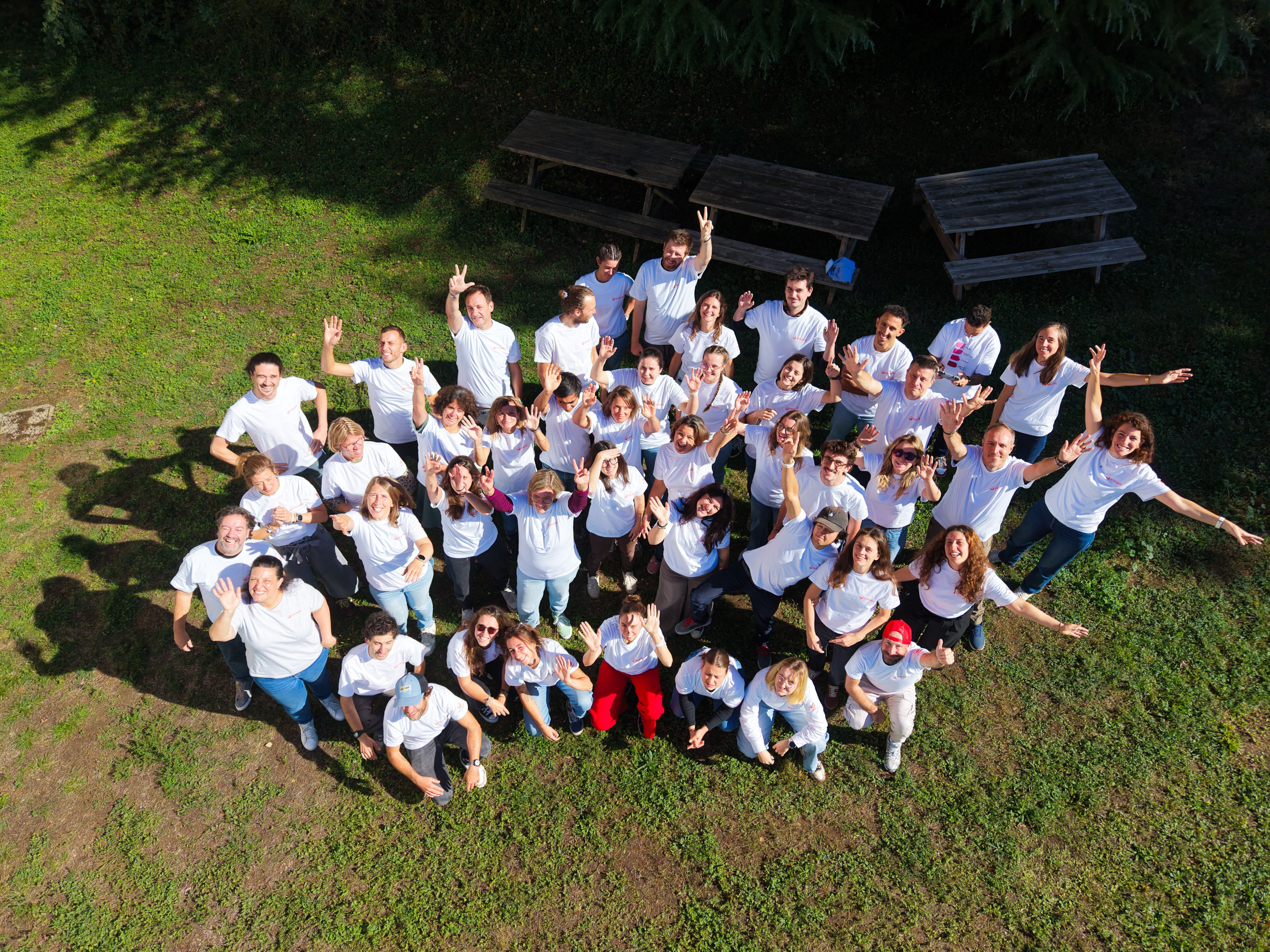
The Paulin team
Passionate about travel and connecting with people, our team will help you design meaningful adventures. From small group tours led by passionate local guides to tailor-made trips, experience unique journeys, immersing yourself in cultures and communities. From cultural discovery to challenging treks, explore the world's most beautiful destinations with us, far from the beaten path, at your own pace and according to your desires.